Office building pressure washing is exterior cleaning planned around surface materials, tenant access, and wastewater control with the aim of maintaining usable, presentable business premises. For commercial building maintenance Orange County property managers plan in 2026, the job needs a defined work area and cleaning method—not just a date on the calendar.
- Commercial building maintenance Orange County plans should separate pressure washing from repairs and other building services.
- Socalemm provides commercial pressure washing in Newport Beach and Orange County; confirm the office building scope before booking.
- Match exterior cleaning methods to concrete, coatings, and other surfaces rather than requesting maximum pressure.
- Keep tenant access and wash-water control in the written work plan.
Why exterior cleaning matters for office buildings
Office buildings have shared entrances, deliveries, visitors, and tenants who do not all arrive together. Cleaning an entrance without an access plan turns a maintenance task into an operational interruption. A clean-looking pavement is not a finished job if hoses still cross the route to reception.
Pressure washing is also only one part of building maintenance. It does not repair cracked concrete, failing paint, loose cladding, or leaking joints. Separate cleaning requests from repair tickets so neither contractor is asked to solve the wrong problem.
For your 2026 maintenance plan, distinguish durable paving from more sensitive exterior finishes. This guide to choosing pressure washing methods for concrete versus stucco explains why the material changes the approach. Do not apply a pavement-cleaning specification to the whole building.
The right cleaning scope identifies what should be washed, what needs protection, and what needs repair instead.
How to plan pressure washing for an office building
1. Map the work areas before requesting cleaning
Start with a walking inspection and a marked site plan. A printed plan, phone photographs, and a spreadsheet are enough; you do not need property-management software to describe the job clearly.
Divide the exterior into work zones rather than requesting a wash of the entire property. Record which areas belong to the building owner, which are tenant-controlled, and which require separate permission. Include delivery areas and secondary entrances in the inspection, even when the main entrance is the immediate concern.
Take 3 photo views per problem area as a practical documentation standard: a wide view, a surface detail, and an access view. This is a suggested recordkeeping method, not a cleaning requirement.
- Mark entrances, paths, steps, and paved gathering areas.
- Photograph visible staining and existing damage separately.
- Identify tenant-controlled furniture, signage, and deliveries.
- Mark water connections and visible drainage points.
- List excluded areas alongside the requested cleaning zones.
2. Match the cleaning method to each surface
Check maintenance records and manufacturer care instructions before selecting a method. Use a simple surface register with separate entries for paving, painted finishes, stucco, metal, glazing, and any other materials present.
Pressure alone is not a cleaning specification. Nozzle choice, working distance, cleaning solution, surface condition, and technique all affect the result. Higher pressure is not a substitute for identifying the stain or checking whether a coating is sound.
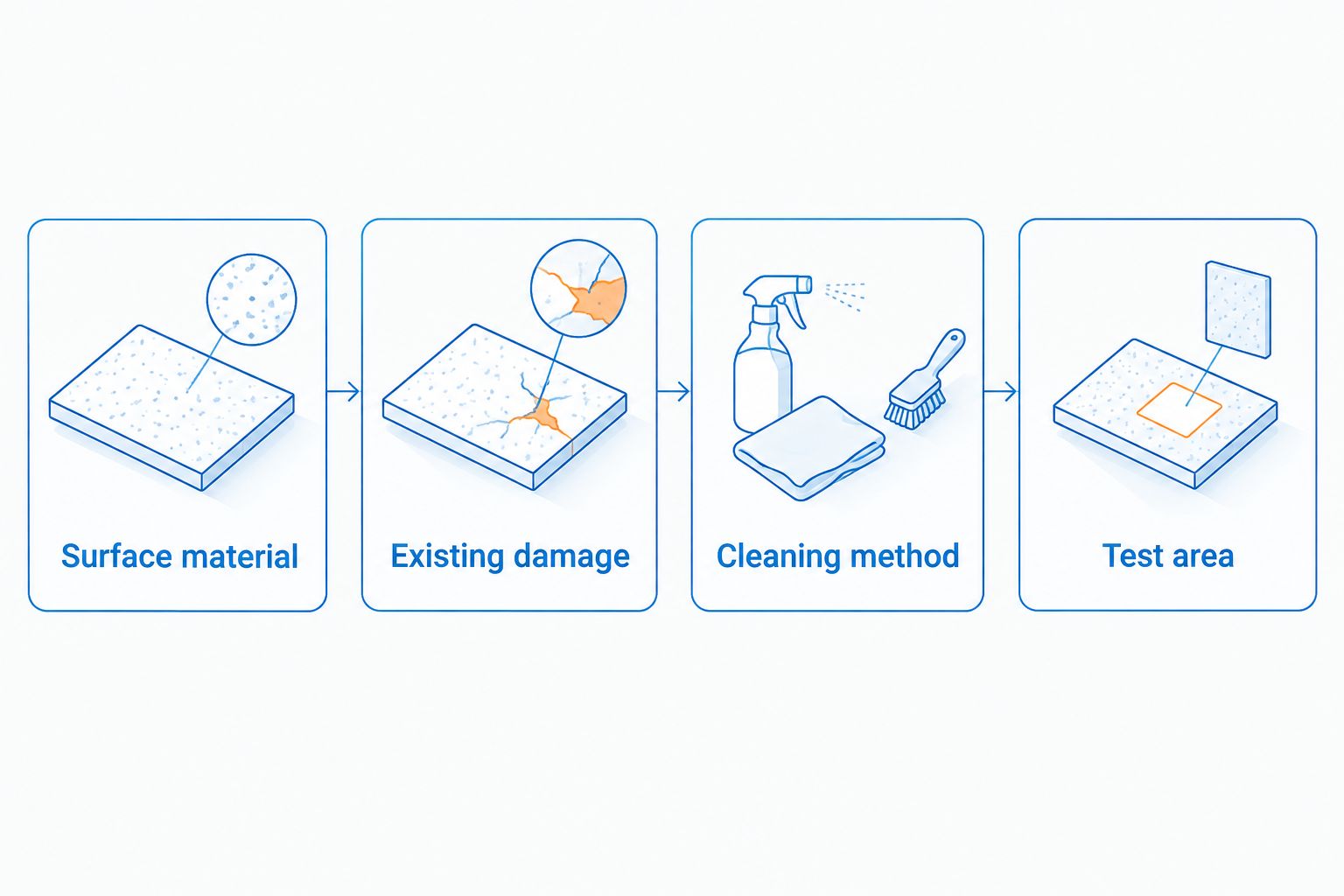
Do not ask a contractor to compensate for a fragile surface with a more aggressive wash. Flag uncertain finishes for assessment and require a test area before approving broader treatment. Keep roof work separate from ground-level cleaning; the access and material considerations differ.
- Surface material: record the substrate and any coating.
- Existing damage: mark cracks, peeling paint, and open joints.
- Cleaning method: request an explanation for each surface type.
- Test area: agree where the method will be checked first.
3. Write a scope that contractors can assess
Build the first version yourself using the site plan and photographs. Name the requested areas, describe the visible problem, and state the access restrictions. Avoid vague instructions such as making the property look new; they do not define an achievable result.
Socalemm is best for Orange County owners seeking commercial pressure washing rather than a full building-maintenance service. The business provides residential and commercial exterior cleaning, so label your request as an office-building job and keep household work out of the scope.
A quote request gives Socalemm the site information needed to discuss the requested commercial pressure washing. Confirm methods, exclusions, and access arrangements before authorizing work; an initial enquiry is not an agreed service specification.
- List the surfaces and boundaries of each work zone.
- Describe stains without promising they can be removed.
- Attach photographs of damage and sensitive features.
- State tenant hours and restricted access periods.
- Request written inclusions, exclusions, and preparation instructions.
4. Coordinate tenant access before setting the work window
Use a shared calendar and a short tenant notice before introducing scheduling software or automated reminders. Ask the building contact to check deliveries, visitor appointments, and any entrance restrictions that affect the proposed work.
For a 2026 work order, record 1 named building contact who can resolve access questions. This is a coordination recommendation, not a staffing rule. Give that person the agreed site plan and the contractor's contact details.
Do not assume that an apparently quiet period means the building is empty. Some tenants receive visitors outside normal reception hours. Agree on how people will enter, where barriers will stand, and who decides when a cleaned area can reopen.
- Confirm tenant, visitor, and delivery requirements.
- Identify an alternative entrance where one is available.
- Keep required exit routes clear throughout the work.
- Agree on hose routes, barriers, and warning signs.
- Assign responsibility for reopening each completed area.
5. Plan wash-water control before work begins
Walk the site and trace where water will travel. Look for slopes, landscaped areas, drainage grates, and routes toward neighboring property. Do not treat a visible drain as permission to discharge wash water into it.
Cleaning water can carry loosened dirt, detergents, oil, or other residues. The contractor's plan should address the actual site conditions and applicable local requirements. Ask how water will be contained, collected, or otherwise managed before accepting a method.
Keep this discussion separate from claims about a cleaning solution being environmentally friendly. A product description does not explain where dirty water will go. If the proposed method cannot account for drainage and discharge, pause the work until that issue is resolved.
- Mark drainage points and downhill flow routes.
- Identify visible oil, chemical residues, or unknown deposits.
- Ask how nearby planting and neighboring areas will be protected.
- Confirm wash-water handling and any required disposal arrangements.
- Check applicable requirements with the relevant local authority.
6. Inspect preparation and completion separately
Use 2 inspection passes as your acceptance process: one before cleaning and one after the surfaces can be assessed safely. A phone checklist works. The purpose is to distinguish existing defects from cleaning results and unfinished work.
Before cleaning, verify that movable items, sensitive equipment, and access controls have been addressed as agreed. Afterward, inspect the same zones from the original photo positions. Where practical, assess appearance after the surface has dried; wet paving can make the result harder to judge.
Do not define completion only as the contractor packing up. Review barriers, hoses, collected debris, and access restoration alongside the cleaned surfaces. Document unresolved staining without automatically calling it damage or demanding a stronger second pass.
- Compare the work against the agreed zone list.
- Check protected features and previously documented defects.
- Record remaining stains and missed areas separately.
- Confirm equipment and loose debris have been removed.
- Note follow-up questions before closing the work order.
7. Set future cleaning from inspection records
Start with a recurring inspection reminder rather than an automatic full-property wash. Review entrances, shaded paving, service areas, and other locations based on their actual condition. Different zones do not need identical treatment simply because they share an address.
Your 2026 maintenance log should record the cleaning date, method, affected surfaces, and observations from the next inspection. This creates a practical basis for deciding whether to repeat, narrow, or change the scope.
Separate recurring dirt from recurring causes. An irrigation issue, persistent leak, or damaged finish needs attention beyond washing. If a stain quickly returns in the same location, investigate the source before adding another cleaning appointment.
- Retain dated photographs from consistent viewpoints.
- Record cleaning methods and any treatment restrictions.
- Track recurring stains by location rather than memory.
- Open separate repair tickets for underlying defects.
- Adjust future work to the condition of each zone.
Compare office building cleaning options
Choose the option by task and responsibility, not by equipment alone. Routine housekeeping, specialist exterior cleaning, and repairs solve different problems. The following options are not interchangeable, and some buildings need a combination.
| Option | Best for | Main benefit | Key limitation |
|---|---|---|---|
| Manual sweeping and spot cleaning | Routine loose debris and minor surface dirt | Keeps small housekeeping tasks within the site team's workflow | Does not replace treatment of embedded grime or larger exterior areas |
| In-house pressure washing | Teams with suitable training, equipment, and site controls | Gives the building team direct control over the work sequence | Makes the building team responsible for method selection, access, and wash-water handling |
| Specialist exterior cleaning | Defined exterior jobs requiring surface-specific methods | Allows the scope to be assessed around materials and site conditions | Cleaning does not repair damaged finishes or building defects |
| Socalemm commercial pressure washing | Owners seeking exterior cleaning in Newport Beach and Orange County | Provides a local commercial pressure washing option | Confirm the requested surfaces, methods, and exclusions for the individual property |
| Repair contractor before cleaning | Cracked, loose, leaking, or failing exterior components | Addresses the underlying defect rather than washing over it | Repair work does not necessarily include the subsequent cleaning |
When comparing proposals, use the same marked plan and exclusions for each. A proposal covering only the entrance is not equivalent to one covering all requested paths and paved areas. Resolve those differences before selecting a contractor.
Common mistakes office building managers make
Treating every exterior surface like concrete
Office exteriors combine materials with different care requirements. Copying a pavement-cleaning approach onto painted walls or stucco ignores those differences. Request a surface-by-surface method, and flag unknown coatings before cleaning begins.
Booking around reception hours alone
Reception hours do not describe every delivery, tenant shift, or visitor appointment. Confirm access needs with the people using the affected areas. Send a notice that names the work zones and explains the temporary entry arrangements.
Combining cleaning and repairs in one vague ticket
A request to clean a stained wall does not resolve an open joint or peeling finish. Separate the defect from the dirt in your records. That distinction helps you assign responsibility and assess the cleaning result fairly.
Accepting a recurring schedule without reviewing conditions
A fixed date is convenient, but it does not explain why each zone needs cleaning. For your 2026 review, compare inspection photographs and recurring problem areas. Keep useful recurring work and remove unnecessary scope rather than repeating the same order unchanged.
FAQ
What's included in office building pressure washing?
Office building pressure washing includes only the exterior areas and treatments agreed in the written scope. List paving, entrances, walls, or other requested surfaces separately, and confirm exclusions before work begins.
Is pressure washing the same as commercial building maintenance?
No. Pressure washing is an exterior cleaning task within a broader maintenance plan. It does not replace repairs, building inspections, or maintenance of building systems.
Should an office building use pressure washing or soft washing?
Choose the method by surface material, condition, and care instructions. Durable paving and sensitive exterior finishes should not automatically receive the same treatment; ask for a surface-specific assessment.
Can tenants stay in the building during exterior cleaning?
Tenant occupancy depends on whether safe access and required exit routes can be maintained during the proposed work. Agree on barriers, hose routes, entrance arrangements, and tenant notices before scheduling.
How often should an Orange County office building be pressure washed?
Set the cleaning schedule from inspections and documented site conditions rather than a universal interval. Track recurring staining by zone and investigate leaks or other causes when dirt returns in the same place.
Does Socalemm provide commercial pressure washing in Orange County?
Yes. Socalemm provides commercial pressure washing and exterior cleaning services in Newport Beach and Orange County. Confirm the requested office-building surfaces, access requirements, and work scope when requesting a quote.
What should I send when requesting an office building cleaning quote?
Send a marked site plan, photographs, a surface list, and access restrictions. Include existing damage, drainage concerns, and the name of the building contact so the requested work is clearly defined.
One last thing
Keep a separate photograph of every stain that returns after cleaning. A repeat mark is useful maintenance evidence, not just another reason to wash. Compare its location with irrigation, drainage, joints, and nearby equipment before deciding on the next task.
The most useful result is not a longer cleaning schedule. It is a clearer distinction between dirt you can remove and a condition you need to fix.