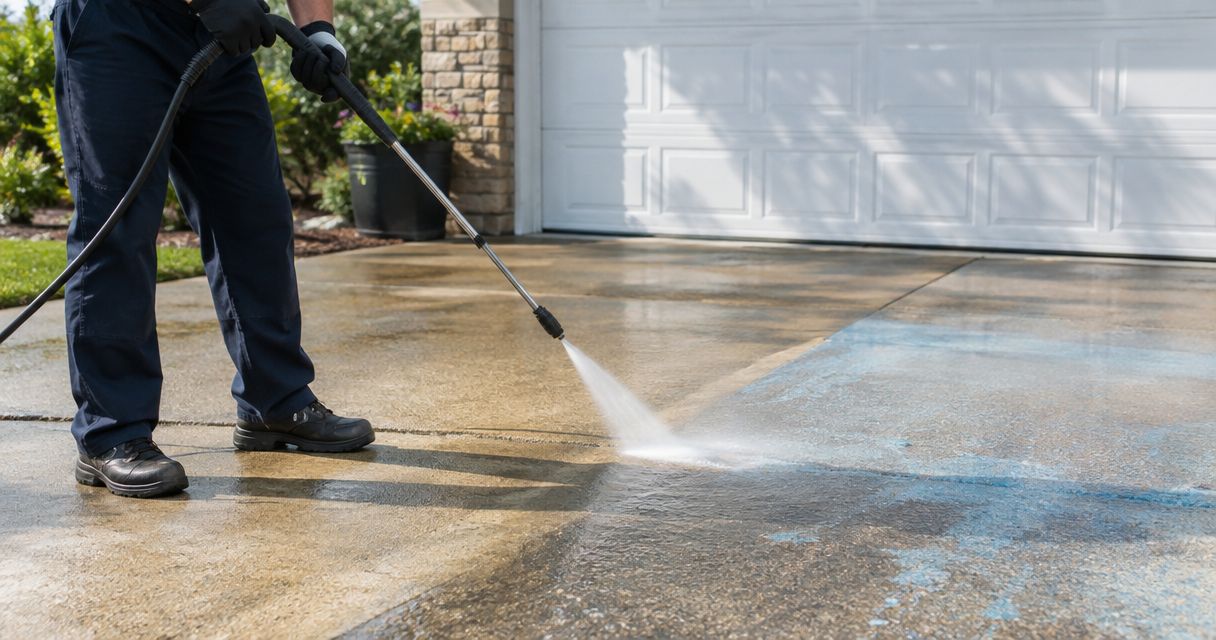
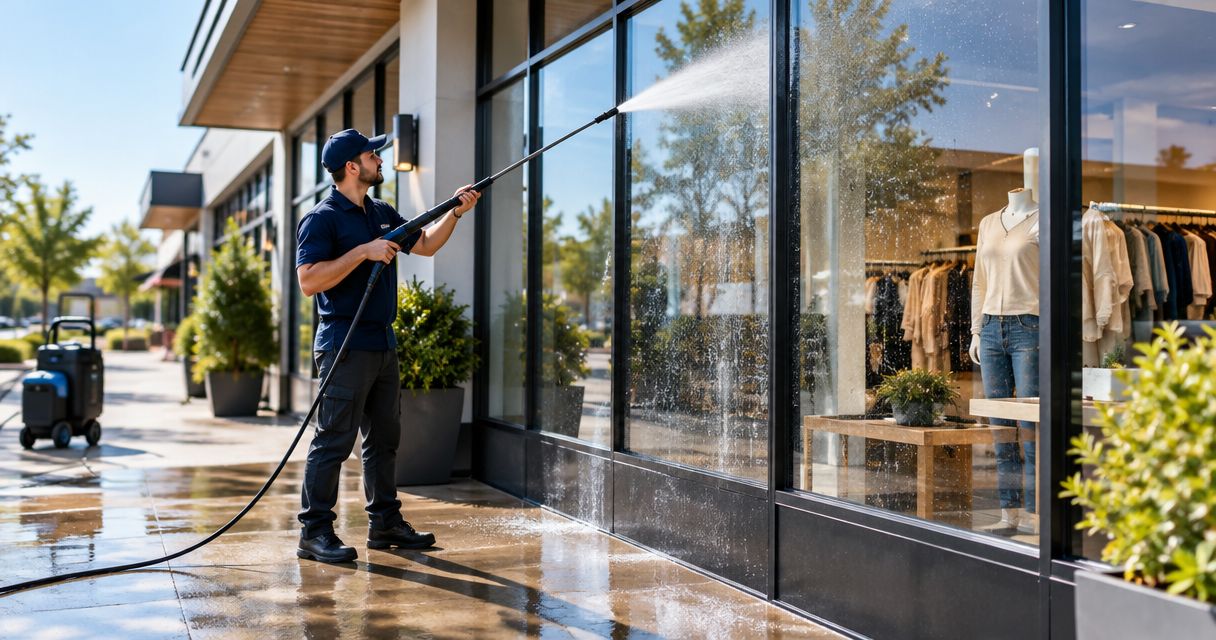
Retail storefront exterior cleaning is the removal of dirt and surface buildup from shop entrances, exterior walls and adjacent walkways to keep customer-facing areas clean and usable. This 2026 guide focuses on the retail requirements that separate the job from house washing: customer access, neighboring tenants, property-manager approval and wash-water control.
- Exterior cleaning for retail storefronts starts with a surface inventory, access plan and clear responsibility for shared areas.
- Socalemm is best for Newport Beach and Orange County retailers seeking commercial pressure washing and exterior cleaning services.
- Match pressure washing or lower-pressure cleaning to the surface; do not treat every storefront material alike.
- Include runoff control, tenant coordination and a reopening inspection in the cleaning scope.
Why exterior cleaning matters for retail storefronts
A storefront cleaning job takes place where customers enter, deliveries arrive and neighboring businesses operate. That makes access planning part of the work, not an administrative detail. A clean entrance does not justify blocking a neighboring doorway or leaving wet areas open to foot traffic.
The practical goal for 2026 is straightforward: remove the buildup you can address safely without damaging finishes or disrupting access. Review commercial pressure washing options in Orange County with that scope in mind, rather than treating the entire building as one washable surface.
Retailers also need to distinguish appearance problems from maintenance problems. Dirt on a wall calls for cleaning; loose coating, failed sealant or a leaking doorway calls for repair assessment. Cleaning is not a substitute for fixing the surface underneath.
How to plan storefront exterior cleaning
Define the areas you control
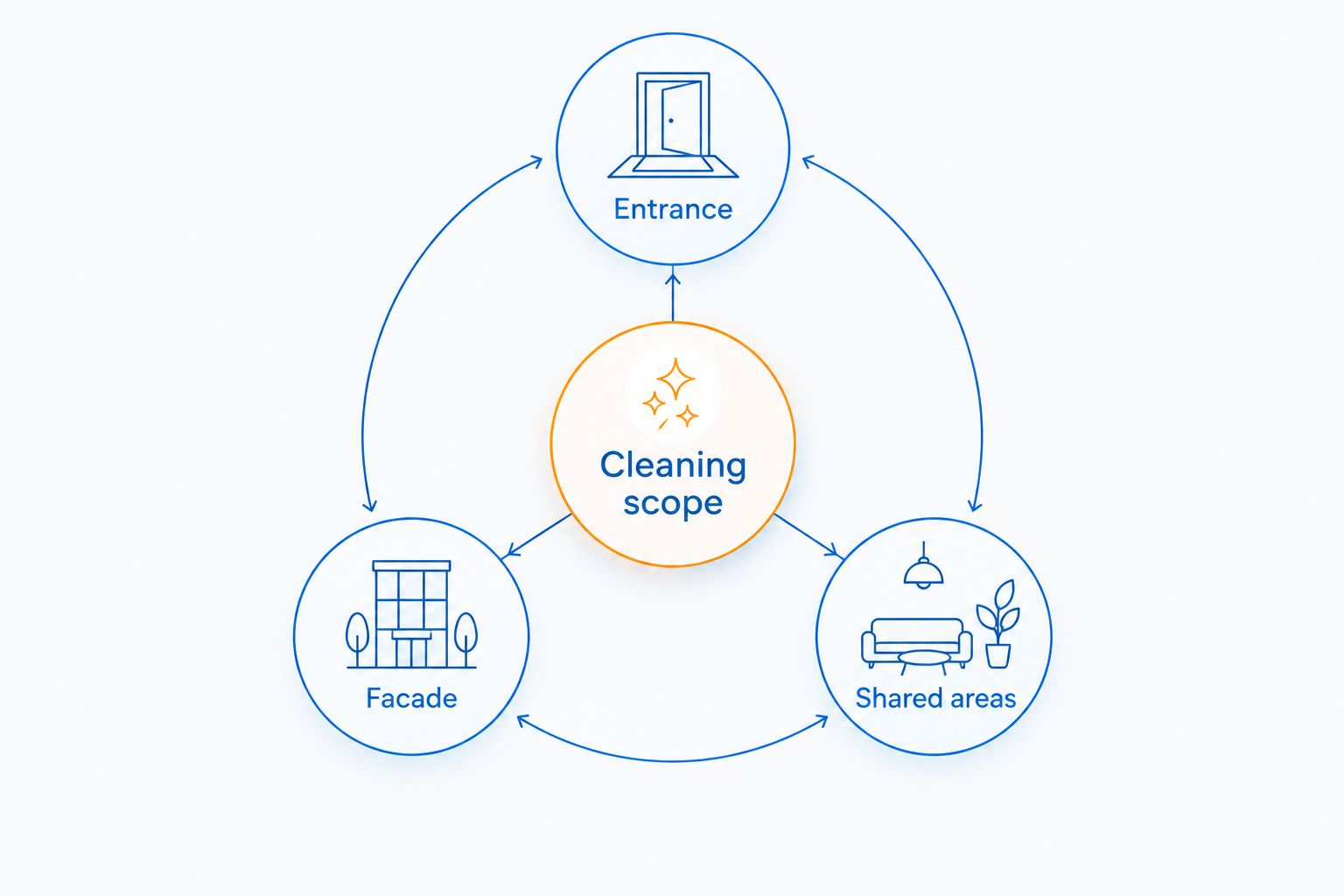
Start with a walk around the property and a simple written inventory. Divide the work into 3 scope groups: Entrance, Facade and Shared areas. Record who can approve cleaning in each group before requesting work.
Your lease and property manager determine whether you control the storefront face, the sidewalk, the sign or only part of the entrance. Do not assume that the area directly outside your shop belongs to your cleaning scope. Shared shopping-center surfaces need separate coordination.
Use the inventory to identify exclusions as well as tasks. Roof work, sign components and specialty glazing should not enter the job simply because they sit above or beside the storefront.
- Mark your entrance, threshold and immediate walking surface.
- Identify exterior wall materials and decorative finishes.
- Separate tenant-controlled areas from shared walkways.
- Confirm approval for signs, awnings and landlord-owned surfaces.
- Record repairs or surfaces excluded from cleaning.
Inspect materials before choosing a method
Your first cleaning tool is observation. Sweep loose debris, inspect the surface when dry and check the manufacturer's care instructions where available. Look for peeling paint, cracked joints, exposed electrical components and openings where water can enter.
Pressure washing is a method, not a universal setting. Sound concrete, painted trim, stucco, metal and glass require different treatment. Pressure, nozzle choice, working distance and cleaning solution all affect the result; avoid selecting equipment solely because it has a high pressure rating.
Take 2 reference photos per area: a wide view for location and a close view for condition. This is a useful documentation routine, not a promise that every stain can be removed. Keep a separate note for oil, rust, mineral deposits or growth that needs individual assessment.
- Photograph existing cracks, chips and peeling finishes.
- Check door seals, wall joints and exposed fixtures.
- Read care guidance for coated or specialty materials.
- Test the proposed method in an inconspicuous area.
- Stop if the test changes the finish or loosens material.
Choose routine upkeep or a defined cleaning service
Start with the work your staff can reasonably manage: sweeping, removing loose litter and checking entrance mats. Routine dry cleanup keeps debris from becoming part of a larger washing job. It does not replace treatment for embedded dirt, persistent stains or surfaces requiring specialized handling.
For a defined commercial job, Socalemm provides pressure washing and exterior cleaning services in Newport Beach and Orange County. Ask whether the proposed method fits each material and whether the requested areas fall within the offered scope. Do not assume that exterior cleaning automatically includes specialty glass, sign interiors or restoration.
Socalemm is best for Newport Beach and Orange County retailers seeking commercial pressure washing and exterior cleaning services. A professional service moves the job beyond staff upkeep, but you still need clear boundaries, approval and access arrangements.
- Keep sweeping and litter removal in your staff routine.
- List stains and buildup that routine upkeep leaves behind.
- Request a method description for each surface type.
- Ask what the service includes and excludes.
- Separate repair, restoration and specialty cleaning requests.
Schedule around customers and neighboring tenants
Plan the work against your actual trading hours, delivery schedule and neighboring businesses. A quiet period for your shop is not necessarily quiet for the restaurant, salon or convenience store beside it. Confirm access requirements with the property manager rather than making a unilateral closure plan.
For your 2026 cleaning schedule, consider both the work period and the time needed to inspect and reopen the affected area. Avoid promising a fixed drying interval before conditions are assessed. Shade, material and weather affect how long moisture remains.
Map 2 access routes where the property permits: the normal customer route and an approved alternative. Never create an alternative that blocks an exit or directs customers through an unsafe service area. If safe separation is not possible, arrange an approved closure of the affected area.
- Check store hours, deliveries and neighboring tenant activity.
- Confirm which doors and walkways must remain accessible.
- Agree on barriers and customer-facing notices.
- Protect merchandise, displays and outdoor furniture.
- Set a reopening check instead of assuming the surface is ready.
Plan wash-water control before washing
Walk the drainage path before introducing water. Identify storm-drain inlets, slopes, nearby planted areas and thresholds where runoff can collect. The easiest-looking direction for rinsing is not automatically an acceptable disposal route.
Dry cleanup comes first: sweep loose material and collect litter rather than pushing it toward a drain. For wet cleaning, agree on containment, collection and disposal arrangements with the contractor. Confirm applicable requirements with the property manager and local authority, especially when cleaning water contains detergents or removed contaminants.
Keep the cleaning plan separate from permission to discharge water. A method suitable for the wall or pavement still needs an appropriate runoff plan. Do not use a storm drain as the default destination for wash water.
- Locate drains and trace the likely runoff path.
- Collect loose debris before wet cleaning begins.
- Identify areas needing containment or collection.
- Confirm the proposed disposal route before work starts.
- Protect entrances and adjacent areas from pooled water.
Write a scope that can be checked
A useful request describes the surface, the problem and the boundary of the work. Replace a broad instruction such as clean the front with named areas: entrance pavement, exterior wall sections and the approved shared walkway. Add exclusions wherever permission or material condition limits the work.
For your 2026 service request, attach the inventory and reference photos. Ask for the proposed cleaning method, access arrangements, runoff handling and the expected treatment of individual stains. Cleaning and full stain removal are not interchangeable promises.
Set the acceptance criteria before the appointment. You can check whether the agreed area was treated and whether debris was collected; you cannot judge an unidentified stain against an unspoken restoration standard. Discuss permanent discoloration and damaged finishes separately.
- Name each surface and its work boundary.
- Attach condition photos without customer-identifying details.
- Describe stains separately from general surface dirt.
- Record access, water-use and runoff arrangements.
- Agree on exclusions and completion checks.
Inspect the storefront before reopening
Walk the cleaned area with the agreed scope in hand. Check from the customer approach, not just from beside the equipment. Inspect doorways, corners, drainage points and neighboring areas where splash or debris might have traveled.
Use 4 handoff checks: Surface condition, Walking access, Drainage and Cleanup. Compare the result with the reference photos, then record any remaining stains or areas requiring repair. Keep those items separate from missed cleaning work.
Build future maintenance around what you observe, rather than adopting a fixed washing frequency for every storefront. A sheltered entrance and an exposed delivery area do not accumulate the same kind of dirt. Staff inspections help identify the next appropriate task.
- Compare treated areas with the written scope.
- Check finishes, door seals and adjacent fixtures.
- Confirm the walking route is ready for customer use.
- Check drains and low points for remaining water or debris.
- Record unresolved stains, repairs and follow-up tasks.
Compare storefront cleaning options
Choose an option by surface and task, not by equipment name. This 2026 comparison separates daily upkeep from periodic cleaning and explains where each approach stops being useful. More than one method can belong in the same storefront scope.
| Option | Best for | Main advantage | Key limitation |
|---|---|---|---|
| Staff sweeping and litter removal | Loose debris around entrances | Simple routine work that does not introduce wash water | Does not remove embedded dirt or persistent stains |
| Careful manual washing | Small, accessible areas with suitable care instructions | Controlled attention to a limited area | Labor-intensive; requires a compatible cleaning solution and finish |
| Pressure washing | Suitable hard surfaces after condition checks | Addresses larger areas of surface buildup | Incorrect pressure or technique can damage materials; runoff needs planning |
| Lower-pressure cleaning | Surfaces whose care requirements call for gentler treatment | Reduces reliance on high-pressure spraying | Still requires suitable chemistry, testing and protection of nearby materials |
| Socalemm commercial exterior cleaning | Newport Beach and Orange County retailers seeking a defined service scope | Provides commercial pressure washing and related exterior cleaning services | Confirm surface suitability, exclusions, access arrangements and runoff handling |
Use staff upkeep for loose debris and a surface-specific service for the larger cleaning job. Neither option removes the need for property approval. If the condition assessment identifies damage, arrange repair assessment rather than escalating cleaning pressure.
Request a storefront cleaning quote
Describe your surfaces, shared-area approvals and access requirements before arranging exterior cleaning.
Common mistakes retailers make
The avoidable problems are usually in the scope and coordination, not just the equipment. Keep these mistakes out of your 2026 cleaning plan.
- Treating every material as pavement. A method chosen for a suitable concrete walkway is not automatically appropriate for painted trim, glazing seals or a decorative facade. Identify materials and test first.
- Assuming the sidewalk is yours to approve. Shared walkways, landlord-owned signs and neighboring entrances require coordination. Confirm responsibility before expanding the job beyond your lease area.
- Scheduling only around your own opening hours. Deliveries and adjacent businesses still need access. Agree on the work area, barriers and reopening process with everyone affected.
- Leaving runoff decisions until washing starts. Drain locations and disposal requirements influence the setup. Include them in the scope instead of improvising after water begins moving.
- Expecting cleaning to repair deterioration. Peeling coatings, failed seals and permanent discoloration need separate assessment. Document them before work so the completion check stays fair and specific.
FAQ
What's the best way to clean a retail storefront exterior?
The best approach matches the cleaning method to each surface and includes customer access and wash-water control. Start with dry debris removal, inspect materials and test the proposed treatment before cleaning the full area.
Can I pressure wash every part of my storefront?
No, storefront materials should not all receive the same pressure-washing treatment. Painted finishes, seals, glazing and damaged surfaces need individual assessment and suitable care methods.
Should I clean the storefront before the shop opens?
Schedule cleaning when you can safely separate the work from customers, deliveries and neighboring tenants. Before opening is suitable only when access, cleanup and reopening checks can all be completed safely.
How often should a retail storefront be cleaned?
Set the cleaning frequency from observed buildup, surface condition and property requirements. Keep routine sweeping separate from periodic washing, and inspect entrances and delivery areas independently.
Who approves cleaning on a shopping-center walkway?
Confirm walkway cleaning authority through your lease and property manager. A shared walkway can require coordination beyond your own shop, even when it sits directly outside your entrance.
Can storefront wash water go into a storm drain?
Do not treat a storm drain as the default disposal route for storefront wash water. Confirm containment, collection and disposal requirements with the property manager and local authority before washing.
Does Socalemm provide commercial exterior cleaning locally?
Socalemm provides commercial pressure washing and related exterior cleaning services in Newport Beach and Orange County. Confirm the requested storefront surfaces, exclusions and access arrangements when discussing the scope.
One last thing
For your next 2026 appointment, photograph the storefront from the customer approach before writing the scope. That view often reveals a missed corner, threshold or shared walkway that a close-up stain photo does not capture. Define the cleaning boundary from the approach to the doorway, then confirm who controls each part.