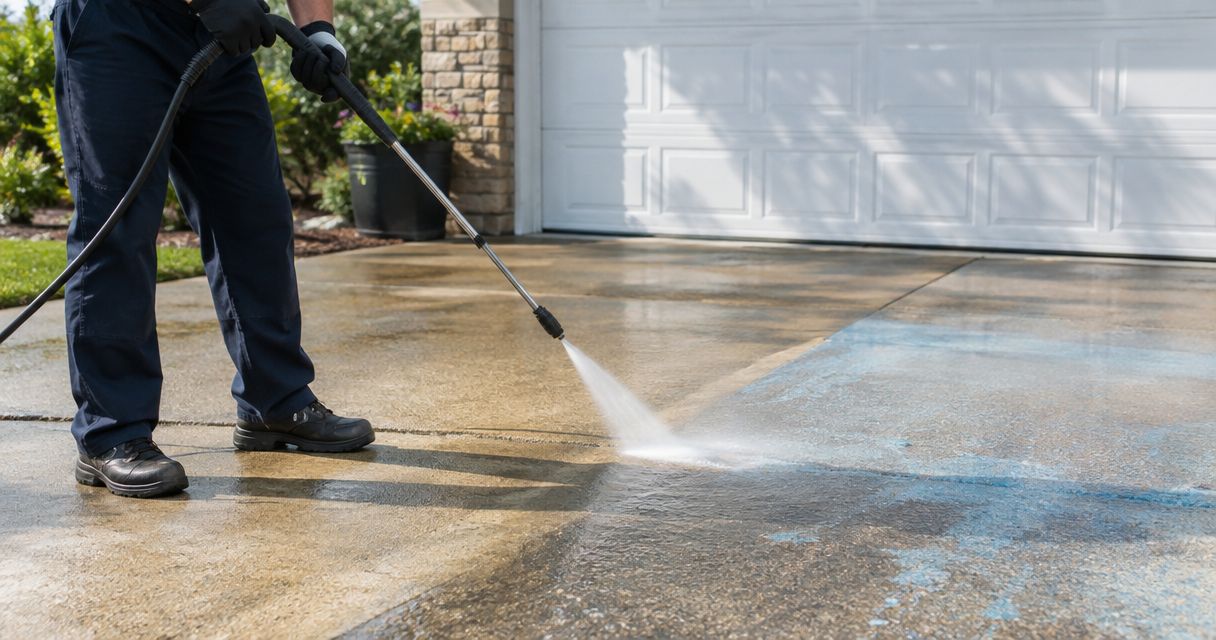
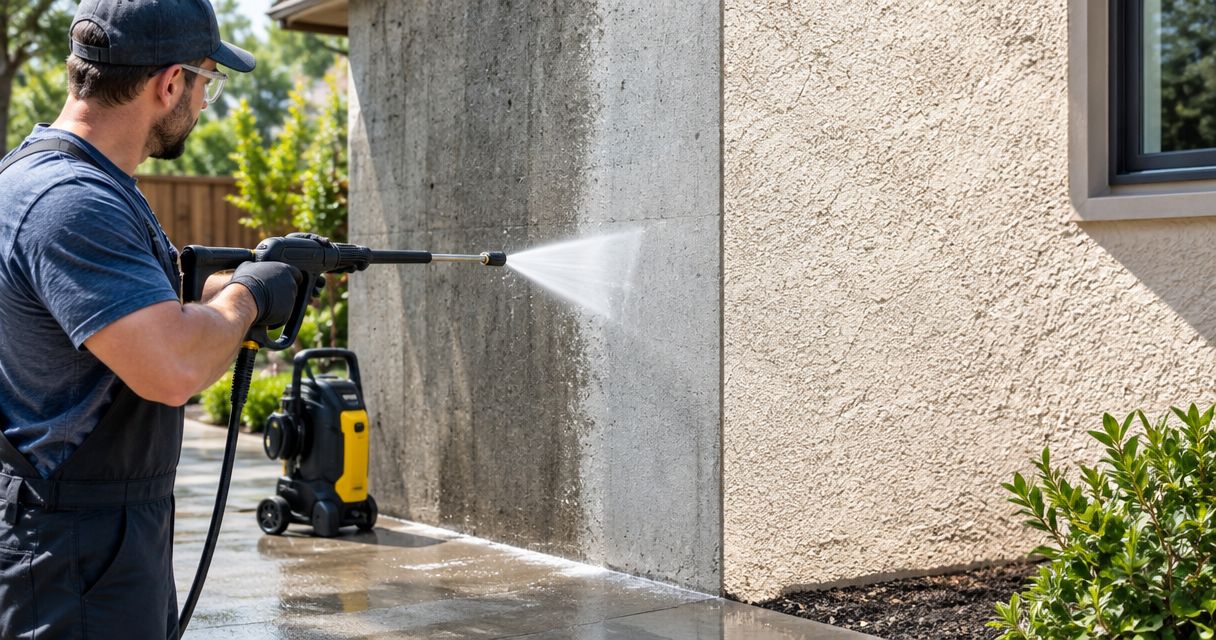
Choose pressure washing PSI for concrete vs stucco by checking the surface manufacturer’s cleaning instructions, finish and condition—not by copying the pressure washer’s maximum rating. Sound, uncoated concrete and a stucco wall need different cleaning approaches; use a test area for concrete and favor a manufacturer-approved, low-pressure cleaning method for stucco rather than treating either surface as safe at a universal PSI.
- Pressure washing PSI for concrete vs stucco depends on the finish, surface condition and manufacturer’s cleaning instructions.
- Concrete cleaning needs a test area; more pressure is not the answer to every stain.
- Stucco house washing should follow finish-specific instructions and avoid forcing water into cracks or openings.
- Socalemm provides residential exterior cleaning in Newport Beach and Orange County; identify damaged surfaces before requesting cleaning.
Why this matters
Choose the cleaning method before choosing the pressure setting. PSI describes pressure, not whether a particular wall, coating or slab can tolerate the spray. Nozzle selection, distance, water flow and time spent on one spot also affect the result.
For a 2026 exterior-cleaning project, start with the material and finish you actually have. A driveway beside a stucco wall is not one continuous cleaning surface, even when both areas have similar dirt.
Socalemm provides residential pressure washing and house washing in Newport Beach and Orange County. When requesting help, describe the driveway and wall separately so the cleaning discussion starts with their different requirements.
How do you choose pressure washing PSI for concrete vs stucco?
Use the manufacturer’s cleaning limits as the starting point, then account for existing damage and the condition of the finish. A machine’s advertised maximum PSI is not a recommended setting for your property. If you cannot identify the surface or its cleaning requirements, resolve that before applying pressurized water.
| Surface or approach | Best for | Main benefit | Main limitation | Decision before cleaning |
|---|---|---|---|---|
| Pressure washing sound, uncoated concrete | Suitable driveways and patios with removable surface dirt | Mechanical cleaning helps remove accumulated dirt | Concentrated spray can etch or mark the surface | Check condition and test an inconspicuous area |
| Low-pressure stucco cleaning | Stucco finishes whose instructions permit wet cleaning | Reduces reliance on force against the wall | Low pressure does not make damaged walls or unsuitable chemicals safe | Identify the finish and follow its cleaning instructions |
| Finish-specific concrete cleaning | Painted, sealed or decorative concrete | Accounts for the coating rather than treating it as bare concrete | Cleaning can alter a vulnerable coating | Obtain the coating manufacturer’s guidance |
These are method choices, not interchangeable equipment settings. A method that works on a driveway does not establish what is safe on the adjoining wall.
Identify the surface
Confirm whether the driveway is bare concrete, coated concrete or a decorative finish. On the house, distinguish the visible stucco finish from paint or another coating applied over it. Appearance alone does not establish the wall assembly beneath the finish.
Inspect the condition
Look for loose material, peeling paint, exposed aggregate, open cracks and previous repairs. Check around windows, doors, vents and penetrations on the wall. Cleaning is not a substitute for repairing a route for water entry.
Read the instructions
Check both the surface or coating instructions and the cleaning equipment manual. Follow chemical-label directions as well. When the instructions conflict, do not assume the more aggressive method is acceptable.
Test and inspect
Choose an inconspicuous area that represents the same material and finish. Inspect it after rinsing and drying before extending the method. Stop if you see surface loss, coating lift, streaking or an unexpected change in texture.

Concrete: distinguish bare surfaces from coatings
Sound, uncoated concrete is not the same cleaning job as painted or sealed concrete. A coating adds its own cleaning limits, and decorative treatments need instructions specific to that finish. Do not use the driveway’s appearance as proof that it can tolerate an aggressive spray.
Before cleaning concrete in 2026, check for scaling, crumbling edges, previous patching and visible wear. Existing damage changes the decision from selecting a stronger setting to determining whether pressure washing is appropriate at all.
Keep the test area representative. Testing an uncoated corner does not establish that a painted section is safe, and testing intact concrete does not clear a deteriorated patch for the same treatment.
For stains, identify the likely source before increasing force. Oil, rust and organic growth are different cleaning problems. More pressure does not replace a suitable treatment, and repeated close passes can damage the surrounding concrete without resolving the stain.
Concrete stop signs
- Fresh surface loss: Stop if sand, paste or aggregate comes away during cleaning.
- Visible spray tracks: Stop and inspect rather than trying to blend the marks with more passes.
- Coating movement: Lifting paint or sealer means the finish is not tolerating the method.
- Deteriorated edges: Do not direct concentrated spray into weak joints, cracks or crumbling areas.
A surface cleaner attachment does not remove the need for these checks. Its suitability still depends on the equipment, operating pressure and surface condition.
Stucco: choose the wall’s cleaning method first
Do not transfer a concrete pressure-washing setup directly to stucco. Stucco cleaning must account for the finish, coatings, repairs and openings in the wall. Low-pressure cleaning reduces one source of risk, but it does not make every wall suitable for washing.
Review the finish manufacturer’s instructions before choosing a cleaner or rinse method. If the wall system or coating is unknown, ask the installer, manufacturer or a qualified professional to identify it rather than guessing from the texture.
For a 2026 house-washing appointment, point out cracks, peeling areas and any history of leaks before work begins. Keep the discussion focused on whether the wall is ready to clean, not just whether equipment can reach it.
Avoid directing water into vents, joints, gaps and window or door openings. Do not assume that an opening is watertight because it looks closed from the ground.
The guide to whether pressure washing can damage stucco addresses the damage question separately. Resolve that concern before choosing an equipment setting.
What low-pressure cleaning does not solve
Low-pressure application does not make an incompatible cleaner safe for paint, plants or adjacent materials. Chemical selection, application and rinsing still need to follow label and surface instructions.
Cleaning also does not repair failed sealant, loose finish or water intrusion. If the inspection reveals those issues, address them before washing the affected area.
Why the right cleaning pressure varies
The same pressure reading does not produce the same outcome on every surface. These factors explain why a single concrete-versus-stucco PSI chart is an incomplete decision tool:
- Surface condition: Sound material and deteriorated material respond differently. Existing weakness is a reason to stop and assess, not increase pressure.
- Coatings and finishes: Paint, sealers and decorative finishes introduce cleaning limits beyond those of the underlying material.
- Nozzle pattern: A concentrated jet applies force differently from a wider spray. Select nozzles according to the equipment and surface instructions.
- Working distance: Moving the nozzle changes how the spray reaches the surface. Do not invent a universal safe distance for an unidentified finish.
- Water flow and movement: Flow affects rinsing, while lingering over one spot concentrates the cleaning action there.
- Type of contamination: Dirt, oil, rust and organic growth call for different treatment decisions. Pressure alone does not identify or solve the underlying problem.
When comparing cleaning proposals in 2026, ask how these factors affect the method. A maximum equipment rating tells you less than a clear explanation of the surface assessment.
What should you check before starting?
Prepare the area before connecting equipment. Move loose belongings, identify vulnerable fixtures and keep people and pets away from the work area. Follow the equipment manual’s protective-equipment and operating instructions.
Then work through the property in a deliberate sequence:
- Separate the surfaces. Mark where concrete ends and stucco, paint, metal, wood or another material begins.
- Document existing damage. Take clear photos of cracks, repairs and loose finishes for your own reference.
- Protect vulnerable areas. Follow the cleaning-product label and equipment instructions for nearby plants, electrical fixtures and adjacent materials.
- Plan the runoff. Keep wash water and cleaning products out of storm drains; check applicable local requirements before starting.
- Test before expanding. Assess the cleaned area after it dries, then decide whether to continue.
Do not operate a pressure washer from a ladder. If access requires working at height or controlling spray near electrical hazards, stop and arrange appropriate professional help.
What should you ask an exterior-cleaning provider?
Ask the provider to explain the method separately for the driveway and stucco. A useful answer describes surface condition, cleaning products, application, rinsing and stop conditions—not just the machine’s power.
For a 2026 quote request, send photographs of the whole area and close-ups of visible damage. Identify painted or sealed sections if you know about them, and mention previous leaks or unsuccessful cleaning attempts.
Socalemm exterior cleaning is for homeowners and businesses in Newport Beach and Orange County. For homeowners, the relevant discussion is residential pressure washing or house washing; commercial properties need a separate scope covering their own surfaces, access and site activity.
Professional cleaning does not eliminate the limits of a damaged finish. Ask how uncertainty about a wall or coating will be resolved before work proceeds.
Request an exterior-cleaning quote
Describe your concrete, stucco and visible damage so the cleaning scope starts with the right surfaces.
Can I use the same pressure washer on concrete and stucco?
The same machine is not permission to use the same setup. Equipment compatibility, pressure control, nozzle selection and the surface manufacturer’s instructions determine whether it is suitable for either task. Never carry a concrete-cleaning setting straight onto a stucco wall.
Should I increase PSI when a stain remains?
Do not increase PSI simply because a stain remains. Identify the stain, check the treatment instructions and inspect whether the surface is already changing. A remaining mark is preferable to permanent surface damage caused by repeated aggressive passes.
Is soft washing always safe for stucco?
Soft washing is not automatically safe for every stucco finish. The cleaner, application method, rinse procedure and wall condition all matter. Follow the finish manufacturer’s instructions and repair vulnerable areas before cleaning.
FAQ
What PSI should I use for concrete versus stucco?
Choose PSI from the surface manufacturer’s cleaning instructions, not a universal concrete-versus-stucco number. Inspect the finish and condition, then test an approved method before cleaning the full area.
Is a pressure washer’s maximum PSI the setting I should use?
A pressure washer’s maximum PSI is not a recommended setting for your property. The surface, finish, nozzle and operating instructions determine an appropriate cleaning setup.
Can pressure washing leave lines on a concrete driveway?
Pressure washing can leave visible lines or etching on concrete. Stop if marks appear; repeated passes to blend them can extend the damage.
Can I pressure wash painted stucco?
Painted stucco needs cleaning instructions appropriate to both the coating and wall. Do not assume that a method approved for unpainted stucco is also suitable for painted stucco.
Should cracks in stucco be repaired before house washing?
Cracks and other possible water-entry points need assessment before house washing. Cleaning does not repair the wall or establish that it is watertight.
What should I tell Socalemm before requesting house washing?
Tell Socalemm which surfaces need cleaning and describe visible cracks, peeling finishes, coatings and any history of leaks. Photos of the overall area and close-ups help communicate the scope.
One last thing
Judge the test patch after it dries, not just while it is wet. Water changes how a surface looks and can make uneven cleaning harder to assess. Compare texture as well as color before deciding to continue across the driveway or wall.