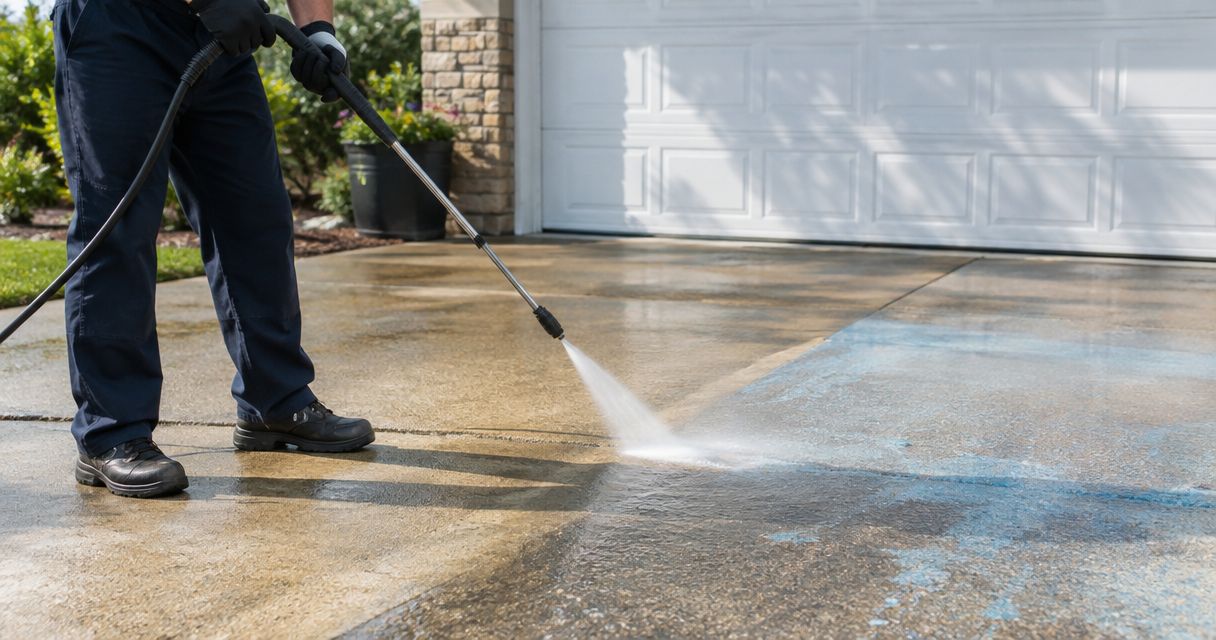
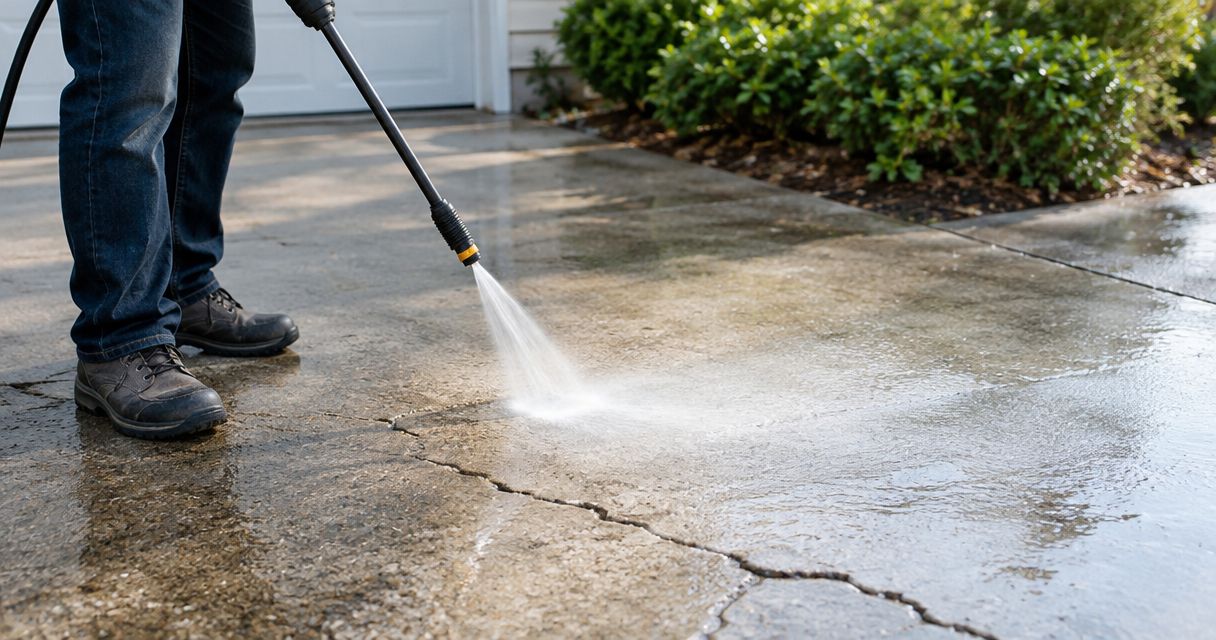
Yes, pressure washing can chip concrete, erode a weak surface, and break material away from existing cracks when the spray is too concentrated or held too close. A crack noticed after cleaning does not, by itself, prove the washer created it: removing dirt can also expose damage that was already there.
- Can pressure washing crack concrete? Yes—concentrated spray can damage weak concrete and worsen existing cracks.
- Concrete cleaning should remove contamination, not leave grooves, loose grit, or exposed aggregate.
- Stop washing if the surface sheds material or crack edges begin breaking away.
- Socalemm provides residential pressure washing in Newport Beach and Orange County; cleaning does not repair damaged concrete.
Why this matters
A cleaner driveway is not a successful result if the cleaning removes part of the driveway. Before scheduling concrete cleaning in 2026, separate the dirt you want removed from the surface defects that need protection or repair.
Socalemm is a fit for homeowners seeking residential pressure washing in Newport Beach and Orange County. When contacting Socalemm, describe cracks, coatings, loose patches, and previous repairs before discussing stain removal. Those details help define the work; a request to make everything look uniform does not.
Can pressure washing crack concrete?
Pressure washing can damage concrete, but surface erosion and chipped crack edges are different from a new structural crack. A concentrated jet can remove weak cement paste, expose aggregate, and dislodge material around an existing defect. Cleaning alone does not establish why a slab cracked.
Use the visible pattern to decide what needs attention. These observations help describe the problem; they are not a substitute for a concrete assessment.
| Visible condition | What it tells you | Best next step | Limitation |
|---|---|---|---|
| A line appears after dirt washes away | Cleaning has revealed a crack; its age remains uncertain | Best for documentation: compare before-and-after photographs | Appearance alone cannot establish when it formed |
| Narrow grooves follow the spray path | The cleaning has altered the surface | Best for preventing further damage: stop washing | Additional passes will not restore removed material |
| Small pieces break off along a crack | The crack edges are losing material | Best for damaged concrete: pause and arrange an assessment | Washing does not stabilize those edges |
| A chalky or sandy patch sheds grit | The surface is weak or deteriorating | Best for fragile areas: avoid pressure cleaning pending assessment | Lower pressure does not repair weak concrete |
| A dark mark remains without texture loss | Discoloration remains after cleaning | Best for stain treatment: identify the stain before changing methods | More pressure is not automatically the answer |
A driveway can contain several of these conditions at once. Treat each area according to its condition rather than applying the same cleaning intensity across the entire slab.
Sound concrete: cleaning still needs a controlled approach
Intact concrete is not permission to use the narrowest jet or work directly against the surface. The nozzle, working distance, angle, and time spent in one place all affect how concentrated the cleaning action becomes.
A controlled test area helps establish whether the method removes dirt without changing the finish. Let the test area dry before judging color and texture; wet concrete can conceal differences that become obvious later.
The benefit of pressure washing is direct removal of attached dirt and surface buildup. The limitation is equally practical: an unsuitable method can leave permanent marks. Judge the result by the condition of the concrete, not just the amount of dirt removed.
Cracked or flaking concrete: assess before washing
Existing cracks, lifting patches, and loose edges deserve attention before cleaning starts. Water directed into a defect can dislodge material that no longer has a sound connection to the surrounding surface.
Do not use a pressure washer to investigate how deep a crack goes. Avoid picking at it with the spray, repeatedly tracing its length, or trying to wash loose edges into a smoother shape.
If the slab has uneven movement, loose sections, or deterioration around a repair, arrange a concrete assessment before cosmetic cleaning. A cleaning appointment addresses contamination; it does not determine the structural condition of the slab.
New, coated, or repaired concrete: check the instructions first
New concrete, sealers, decorative finishes, and repair materials require their own care instructions. Do not apply an internet pressure setting to all of them simply because the surface underneath is concrete.
For a 2026 cleaning appointment, locate the installer’s or manufacturer’s instructions before work begins. Ask about curing, permitted cleaning methods, and any restrictions on chemicals or mechanical cleaning.
Gentler cleaning reduces mechanical force, but it does not make every detergent suitable for every finish. Where the material or coating is unknown, identify it before choosing a treatment. The same caution applies to patches that look different from the surrounding driveway.
Why pressure-washing damage varies
The machine’s pressure rating is only part of the decision. These factors change the risk at the surface:
- Concrete condition: Loose paste, flaking areas, deteriorated repairs, and crumbling edges need a different approach from intact concrete.
- Spray concentration: A narrow jet concentrates force on a smaller area. A 0-degree nozzle is not a sensible starting point for routine homeowner concrete cleaning.
- Working distance: Moving the nozzle closer increases the concentration of the spray at the surface. Do not chase a stubborn mark by steadily closing the gap.
- Time in place: Holding the spray on one spot exposes that area to repeated cleaning action. Stop when a mark resists treatment instead of dwelling on it.
- Edges and joints: Crack edges, slab boundaries, and joints require care. Do not direct the spray into them to excavate trapped material.
- Finish and repair history: A coating, decorative surface, or patched area can respond differently from the adjacent concrete. Identify these changes before cleaning.
There is no single pressure setting that makes every driveway safe. Choose the method around the surface, not the surface around the machine.
How to check a driveway before pressure washing
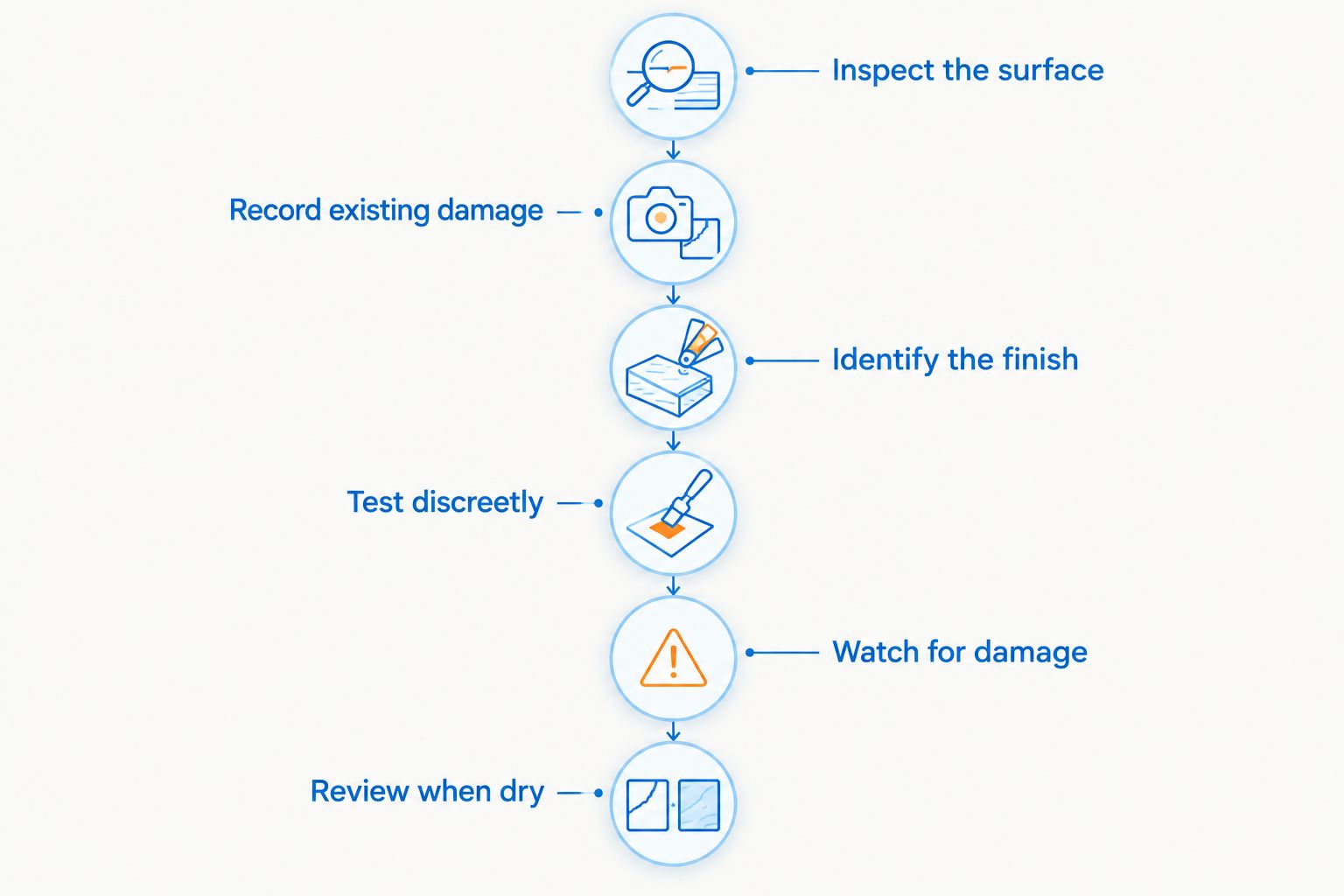
Use this 2026 pre-cleaning sequence to establish what you are cleaning and when to stop. It is a preparation checklist, not a substitute for equipment instructions or a professional assessment.
- Inspect the surface. Walk the dry driveway and look for cracks, loose grit, peeling coatings, exposed aggregate, and previous patches. Keep people away from unstable or uneven areas.
- Record existing damage. Take 2 photographs of each concern: an overview showing its location and a close-up showing its condition. Keep the original files for comparison.
- Identify the finish. Establish whether the surface is plain concrete, coated, decorative, or repaired. Find the relevant care instructions before selecting equipment or cleaning products.
- Test discreetly. Start with 1 small test area away from prominent edges and visible defects. Use the least aggressive suitable method and inspect the dry result before continuing.
- Watch for damage. Stop if the spray leaves grooves, exposes fresh aggregate, removes coating, or produces loose surface material. Do not make another pass to blend the damage.
- Review when dry. Compare the cleaned area with your photographs and test patch. Record any concerns before arranging additional treatment.
A test area is useful only if you respond to what it shows. If the finish changes or material comes loose, stop; moving the same method to a less visible area does not solve the problem.
Homeowner preparation
Move vehicles, furniture, and portable items out of the work area. Tell the cleaner about drainage concerns, nearby plants, damaged surfaces, and any coating or repair work you know about.
For residential pressure washing, Socalemm serves homeowners in Newport Beach and Orange County. Share photographs and explain whether your goal is routine dirt removal, stain treatment, or preparation for another project. Keep concrete repair questions separate from the cleaning request.
Commercial preparation
For a commercial concrete-cleaning job, identify pedestrian routes, entrances, vehicle access, and areas that must remain separated from the work. Assign someone to communicate existing defects and review the cleaning scope.
Do not treat a business walkway as an empty residential driveway. Access control and runoff planning belong in the job discussion before equipment starts.
What should you do if concrete looks damaged after washing?
Stop washing, photograph the area, and let it dry before deciding what changed. Continuing to clean can remove more material and make the original condition harder to assess.
Compare the affected area with your earlier photographs. Note whether the concern is a newly visible line, roughened texture, missing material, or a coating that has lifted. Those are different problems and require different responses.
Contact the cleaning provider with the photographs and a plain description of what you see. If there is uneven movement, loose concrete, or uncertainty about the slab’s condition, seek a concrete professional’s assessment before further cleaning or coating.
Do not grind, patch, seal, or wash the area again merely to hide the difference. Establish the problem first. A cosmetic treatment is not an explanation for why the surface changed.
Is etching the same as a crack?
Etching is surface erosion; a crack is a separation in the concrete. Pressure-washer marks often follow the path of the nozzle, while a crack is not defined by that cleaning pattern.
Both deserve attention, but they are not interchangeable terms. When reporting a problem, describe the texture and missing material rather than calling every visible mark a crack.
Should you increase pressure when a stain stays put?
A remaining stain is a reason to reassess the treatment, not automatically increase pressure. Oil, rust, and biological buildup are different cleaning problems, and discoloration can remain after loose contamination is removed.
Ask what the stain is before choosing another treatment. Accepting some remaining discoloration is better than removing sound concrete to chase a uniform color.
Is lower-pressure cleaning always safe for concrete?
Lower pressure reduces mechanical force, but it does not repair weak concrete or make every cleaning chemical suitable. Surface condition, product compatibility, and application instructions still matter.
For 2026 maintenance planning, specify the surface and the cleaning goal rather than asking only for a particular machine setting. The useful question is whether the proposed method suits that driveway.
FAQ
Can pressure washing crack a concrete driveway?
Yes, pressure washing can damage weak concrete and break material away from existing cracks. A crack visible after cleaning does not establish that the washer created it; dirt removal can expose an existing defect.
How do I know whether pressure washing damaged my concrete?
Look for grooves following the spray path, fresh material loss, chipped edges, or a changed surface texture. Compare dry before-and-after photographs and stop cleaning while the concern is assessed.
What pressure is safe for every concrete driveway?
No single pressure setting is safe for every concrete driveway. Concrete condition, nozzle choice, working distance, finish, and repair history all affect the appropriate method.
Can I pressure wash concrete that already has cracks?
Existing cracks require inspection before pressure washing, especially when their edges are loose or the slab is uneven. Do not direct the spray into a crack or use cleaning to test its depth.
Can pressure washing remove a concrete sealer?
Pressure washing can damage or remove a coating when the cleaning method is unsuitable. Identify the coating and follow its care instructions before testing a discreet area.
Should I pressure wash newly poured concrete?
Follow the concrete installer’s care instructions before pressure washing newly poured concrete. Do not treat a general curing milestone as automatic permission to use concentrated spray.
Who can I ask about residential pressure washing in Orange County?
Socalemm provides residential pressure washing in Newport Beach and Orange County. Describe existing cracks, coatings, and repairs when discussing the cleaning scope, and arrange a separate assessment for concrete defects.
One last thing
Do not approve a cleaning result while the driveway is still wet. Water darkens concrete and changes how surface differences appear, so the dry inspection matters as much as the initial test.
For your next 2026 cleaning, make dry-condition photographs part of the plan. They give you a clearer comparison than memory and help separate remaining stains from changes in the concrete itself.