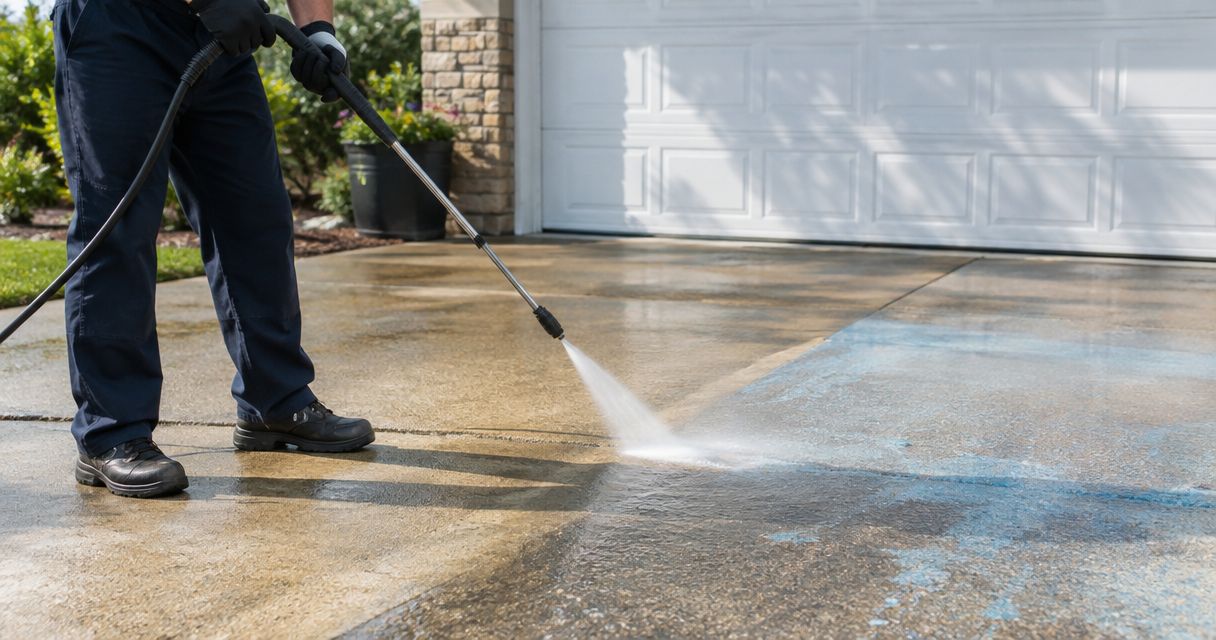
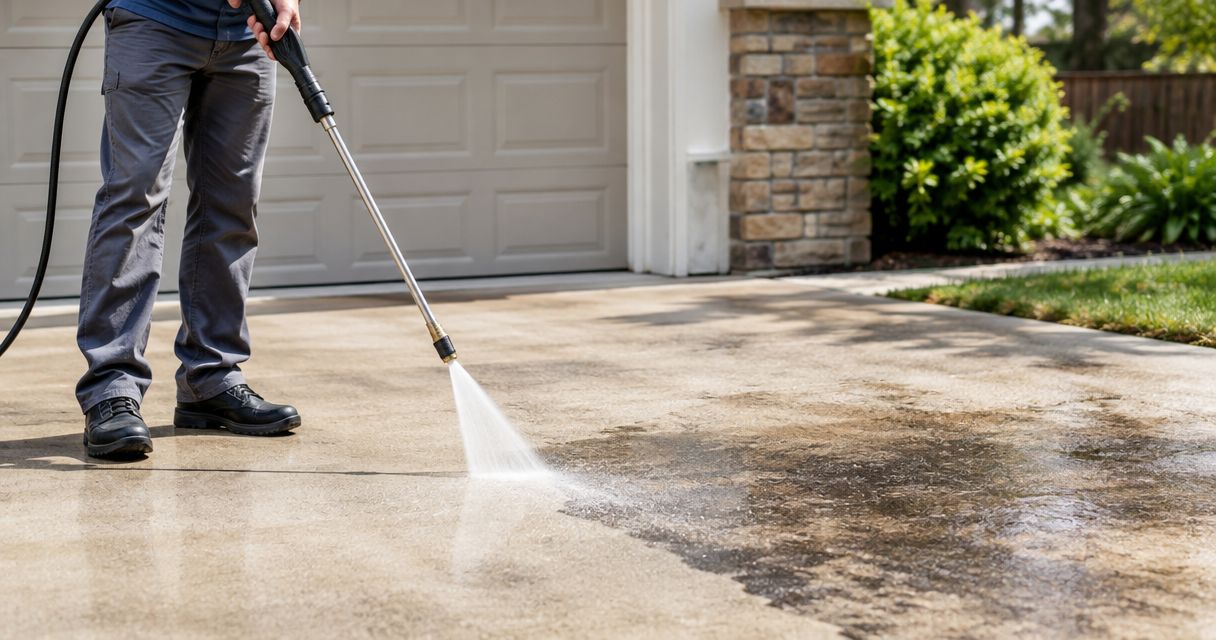
Yes, pressure washing can remove surface oil from a driveway, especially when you first use a degreaser suited to the paving material. Water pressure alone does not reliably remove oil absorbed into concrete, and older stains can leave a dark outline after cleaning. The right goal is to remove the oil without damaging the driveway or sending contaminated wash water into a storm drain.
- Can pressure washing remove oil stains from driveway surfaces? Yes, but absorbed oil can leave residual discoloration.
- Use a surface-compatible degreaser before rinsing; stronger pressure is not a substitute for treating oil.
- Judge driveway cleaning after the surface dries, not while wet concrete hides the remaining stain.
- Socalemm provides local pressure washing for homeowners in Newport Beach and Orange County.
Why this matters
An oil stain and a dirty driveway are different cleaning problems. A pressure washer removes loose dirt, but oil needs treatment that separates it from the surface; otherwise, you risk spreading the oily residue across a larger area.
For homeowners planning driveway cleaning in 2026, Socalemm provides pressure washing and exterior cleaning in Newport Beach and Orange County. Before choosing a cleaning method, identify the driveway material and whether the mark is fresh oil, absorbed staining, or damaged pavement.
Can pressure washing remove oil stains from a driveway?
Pressure washing is a rinsing step, not a complete oil-removal method by itself. A compatible cleaner helps loosen oily residue, while controlled rinsing carries the loosened material away. Cleaning results depend on how deeply the oil has penetrated and whether the surface has a coating or sealer.
Use this comparison to choose the next step. These are cleaning approaches, not promises that every stain will disappear.
| Approach | Best for | Main advantage | Main limitation |
|---|---|---|---|
| Absorbent material | Fresh liquid oil | Collects oil before you spread it with water | Does not extract every absorbed mark |
| Pressure washing alone | Loose dirt around an oil spot | Removes surrounding surface grime | Does not reliably lift embedded oil |
| Compatible degreaser followed by controlled washing | Oily residue on a suitable driveway surface | Treats the oil before rinsing | Requires surface checks and wash-water control |
| Surface-compatible oil-stain poultice | Localized staining in porous concrete | Targets oil held below the exposed surface | Needs product-specific application and can leave discoloration |
| Professional assessment | Unknown materials, damaged surfaces, or persistent stains | Helps separate a cleaning problem from a repair problem | Cleaning still cannot guarantee the original appearance |
Do not use a clean patch beside the stain as proof that the oil has been removed. Compare the stained area with the surrounding driveway only after both are dry.
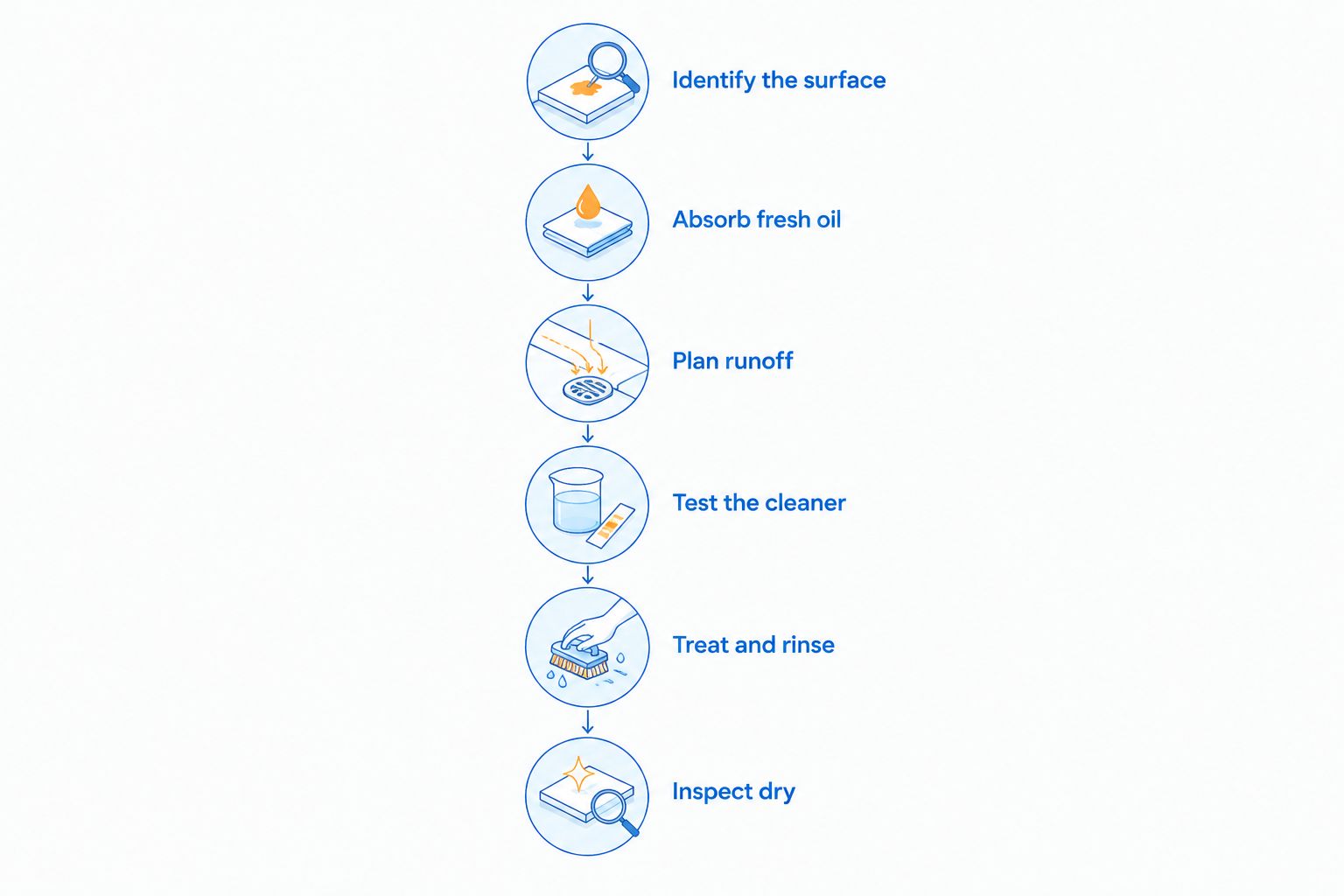
A practical driveway-cleaning plan for 2026
Identify the surface
Confirm whether you have concrete, asphalt, pavers, natural stone, or a coated surface. Look for cracks, exposed aggregate, loose joint material, peeling coatings, and existing pressure-washer marks before treating the oil.
A cleaner labeled for concrete is not automatically suitable for asphalt or stone. If you cannot identify the paving or finish, stop before applying chemicals and ask the installer, coating manufacturer, or cleaning professional.
Absorb fresh oil
If liquid oil is still sitting on the driveway, collect it before introducing water. Use an absorbent intended for oil spills and follow its instructions for collection and disposal.
Do not sweep the oily material into the street or rinse it toward a gutter. Fix the source of the leak as well; cleaning the driveway while a vehicle continues dripping simply restarts the problem.
Plan runoff
Work out where the rinse water will travel before you begin. Check the slope toward the garage, neighboring property, sidewalk, landscaping, and street.
Keep oil, cleaning chemicals, and contaminated wash water out of storm drains. Ask the local authority about collection and disposal requirements rather than assuming that dilution makes the water acceptable to discharge.
Test the cleaner
Choose a product whose label explicitly covers the driveway material and oil contamination. Test it in an inconspicuous area using the same application and rinse method you intend to use on the stain.
Read the label for dilution, protective equipment, application conditions, and contact time. There is no universal dwell time that works for every degreaser, coating, and outdoor temperature.
Treat and rinse
Apply the compatible cleaner to the affected area and agitate only as its instructions allow. Keep the treatment within the label's requirements, including whether it must remain wet during application.
Rinse using a method appropriate for the surface, with controlled passes rather than concentrated blasting. Avoid holding a narrow spray against one stubborn spot; removing the concrete surface is damage, not successful stain removal.
Inspect dry
Let the driveway dry before assessing the result. Wet pavement changes the appearance of both the stain and the surrounding surface, making a fresh rinse an unreliable final check.
If oily residue remains, reassess the treatment before repeating it. If only a faint dry shadow remains, decide whether further cleaning is justified without damaging the paving.
Fresh oil: remove the liquid before washing
Fresh liquid oil gives you a chance to collect contamination before it spreads or penetrates further. Start with absorption, not a pressure-washer spray. Water aimed at a puddle can move oil into cracks, joints, or the street.
After collecting the liquid, inspect the remaining mark and select a compatible treatment. Absorption handles the surface spill; it does not prove that the paving underneath is unstained.
Avoid scrubbing across a large clean area. Keep the work focused on the contaminated patch and control what you collect during cleanup.
Old oil stains: expect a separate treatment decision
An old oil mark in porous concrete can remain visible after loose oil and surface grime are gone. Pressure washing can improve the appearance without restoring a uniform color.
A product designed to draw oil from porous surfaces is a different approach from simply washing harder. Follow its instructions and confirm compatibility with any existing sealer; do not improvise a mixture of solvents or household chemicals.
An old stain also needs inspection for surface damage. If the area is soft, crumbling, etched, or coated with peeling material, repeated cleaning is not the answer.
Sealed or decorative driveways: protect the finish
A sealed driveway adds another compatibility check. The oil treatment must suit both the underlying paving and the coating above it.
Look for dullness, softening, peeling, or changes in sheen during your test. A finish that reacts badly to the cleaner needs a different plan, even if the treatment removes oil.
Do not apply a new sealer to conceal a stain without checking preparation requirements. Residual oil and incompatible products can interfere with the finish, and the stain can remain visible beneath it.
Why oil-stain removal varies
The same cleaning method does not produce the same result on every driveway. These factors explain the difference without relying on a blanket removal promise:
- Oil penetration: Oil resting on the surface is different from oil absorbed into porous paving.
- Driveway material: Concrete, asphalt, pavers, and stone require different compatibility checks.
- Existing finish: A coating or sealer changes which treatments are suitable.
- Surface condition: Cracks, weak material, and damaged joints limit safe cleaning methods.
- Treatment choice: Water alone, a degreaser, and a poultice address different parts of the problem.
- Repeat contamination: A continuing vehicle leak can create another mark after cleaning.
Do not promise complete removal based on a photograph alone. A photograph cannot establish oil depth, coating compatibility, or the condition of the material beneath the stain.
What should you avoid when cleaning driveway oil?
Avoid stronger pressure as your only adjustment
A stubborn stain does not automatically need more pressure. Concentrated spraying can leave grooves or a visibly different surface texture while the absorbed oil remains.
Stop if cleaning begins exposing aggregate, moving joint material, or lifting a coating. Reconsider the treatment rather than using damage as a sign of progress.
Avoid bleach and improvised chemical mixtures
Bleach is not a substitute for an oil-removal treatment. Use a cleaner labeled for the contamination and surface instead of choosing a chemical because it works on a different exterior-cleaning job.
Never mix cleaning chemicals. Keep products in their original containers, follow label precautions, and protect people, pets, and nearby planting during the work.
Avoid treating every dark mark as oil
Tire marks, rust, biological growth, and changes in the driveway finish are different problems. A degreaser will not address every discoloration that appears where a car parks.
Check the location and history of the mark before selecting a treatment. If the cause is unclear, a small compatibility test and professional assessment are better than repeated chemical applications.
Can I remove driveway oil stains myself?
You can handle a fresh, contained spill when you can identify the surface, use a compatible product, and collect the waste safely. DIY cleaning becomes less straightforward when the surface is coated, damaged, unfamiliar, or draining directly toward the street.
The advantage of DIY treatment is control over a small, localized task. The limitation is that owning a pressure washer does not establish which cleaner, rinse method, or disposal approach is appropriate.
Is hot water better than cold water for oil stains?
Hot water can help loosen greasy residue, but it does not eliminate the need for a suitable cleaner and surface assessment. Heating the rinse water is not a guarantee that absorbed oil will disappear.
Do not improvise a hot-water supply for equipment that is not designed for it. Temperature limits apply to equipment, cleaning products, and driveway finishes.
Will pressure washing leave a clean spot around the stain?
Pressure washing can leave a visibly cleaner patch when the surrounding driveway still contains dirt. That contrast can make a remaining oil shadow appear more obvious rather than proving the treatment failed.
Discuss whether the scope covers a localized oil treatment, the surrounding driveway, or both. For a 2026 cleaning request, distinguish those tasks so appearance expectations match the work being requested.
When should you request professional driveway cleaning?
Ask for an assessment when a stain persists after compatible treatment, when you do not know the surface finish, or when runoff is difficult to contain. Provide photographs of the affected area and the full driveway, not just a close-up of the darkest mark.
Socalemm is best for Newport Beach and Orange County homeowners seeking local pressure washing services rather than equipment-shopping advice. Ask whether the proposed work includes oil treatment and how any remaining discoloration will be assessed; pressure washing does not guarantee a stain-free finish.
For a clear 2026 request, include:
- The driveway material and any known sealer or coating.
- Whether the stain comes from a continuing leak.
- The products and cleaning methods already used.
- Existing cracks, surface damage, or peeling finish.
- The direction water drains during rinsing.
- Whether you want spot treatment or broader driveway cleaning.
Keep residential driveway questions separate from commercial work. A business parking area has a different access and site-use plan from a homeowner's driveway.
Request a driveway-cleaning assessment
Describe the paving, oil stain, previous treatments, and drainage before requesting a quote.
FAQ
Can pressure washing remove oil stains from my concrete driveway?
Yes, pressure washing can remove surface oil from concrete when paired with a compatible treatment. Oil absorbed into the concrete can leave discoloration after the loose residue is removed.
Will an old driveway oil stain disappear completely?
An old driveway oil stain does not always disappear completely. Absorbed oil and changes in the surface can leave a visible shadow even after cleaning.
Should I use a degreaser before pressure washing?
Use a degreaser first when its label covers the driveway material and oil contamination. Follow the application instructions, test compatibility, and plan how you will collect contaminated rinse water.
Can I pressure wash oil off an asphalt driveway?
Do not assume a concrete-cleaning method is safe for asphalt. Confirm that the cleaner and washing method suit asphalt, and have softened or damaged areas assessed before cleaning.
How long should driveway degreaser sit before rinsing?
The product label determines how long driveway degreaser should sit before rinsing. There is no single contact time suitable for every cleaner and surface.
Is a dark mark after washing still oil?
A dark mark after washing is not necessarily loose oil. Inspect the dry surface and distinguish remaining contamination from absorbed staining or a change in the driveway finish.
Does Socalemm provide pressure washing in Orange County?
Socalemm provides residential and commercial pressure washing and exterior cleaning in Newport Beach and Orange County. For a residential driveway, request an assessment of the paving, stain, and drainage rather than assuming complete oil removal.
One last thing
Write down what you used before trying another treatment. A useful cleaning record includes the product, the area treated, and photographs taken after the driveway dries.
For driveway maintenance in 2026, that record helps you avoid repeating an unsuccessful method or applying an incompatible product over an earlier treatment. Fixing the leaking vehicle remains just as important as cleaning the mark it left behind.