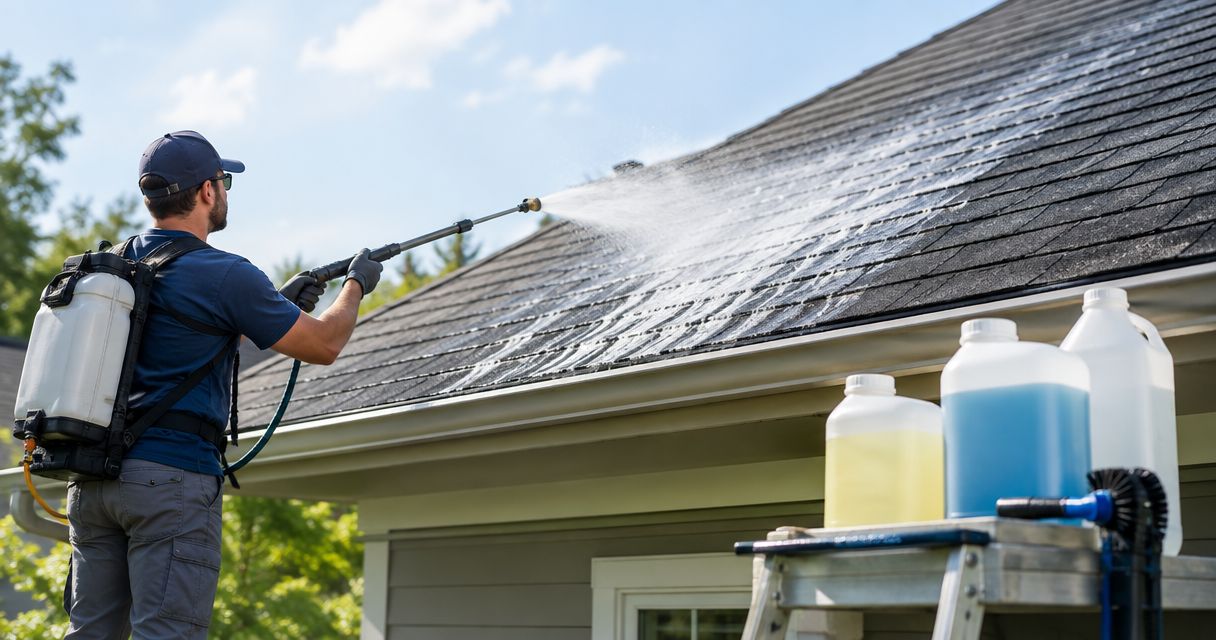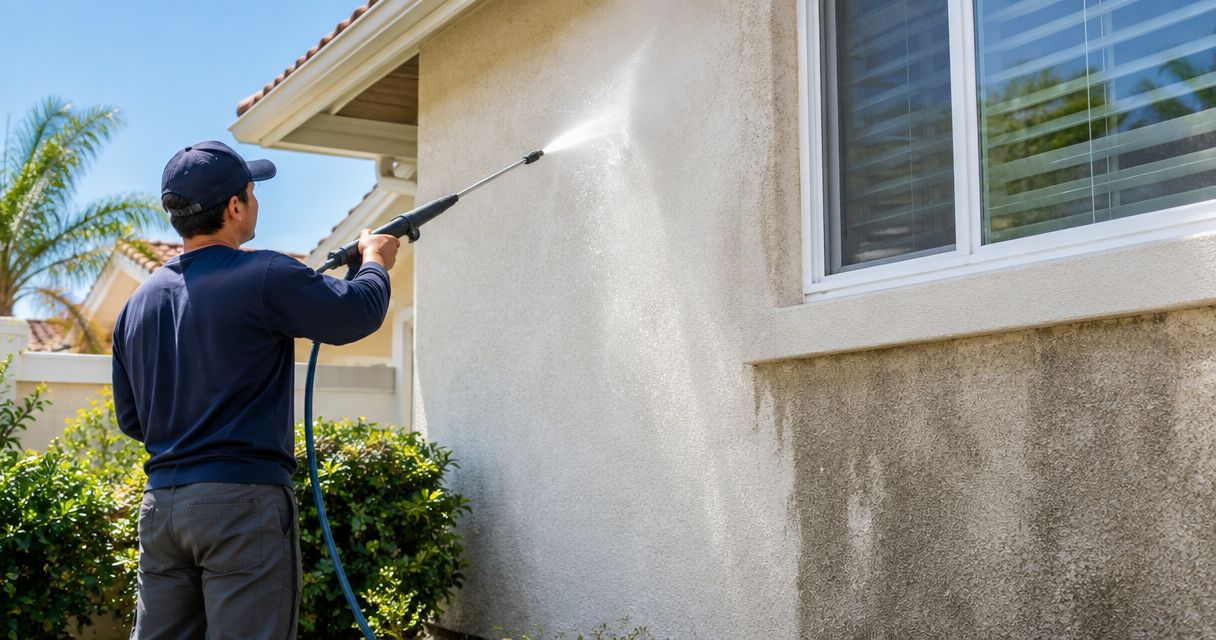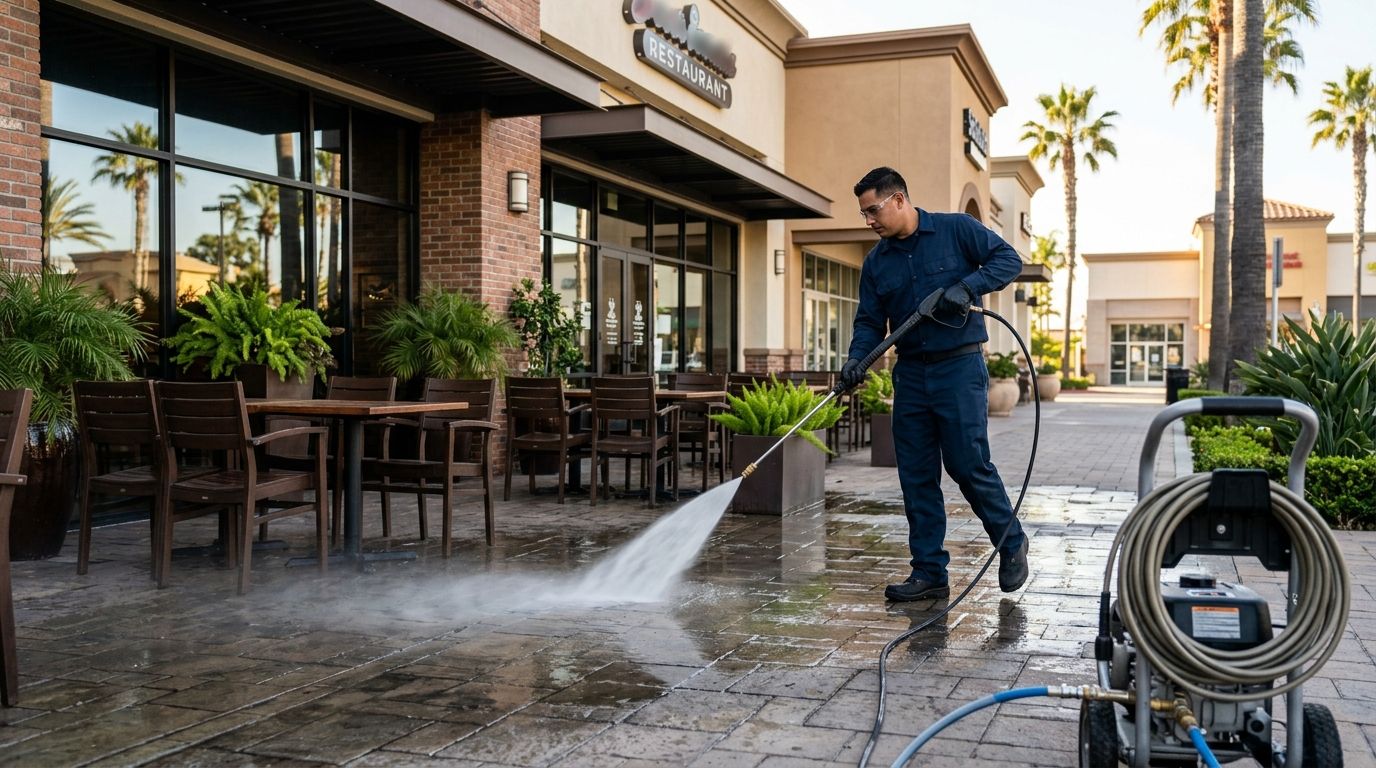
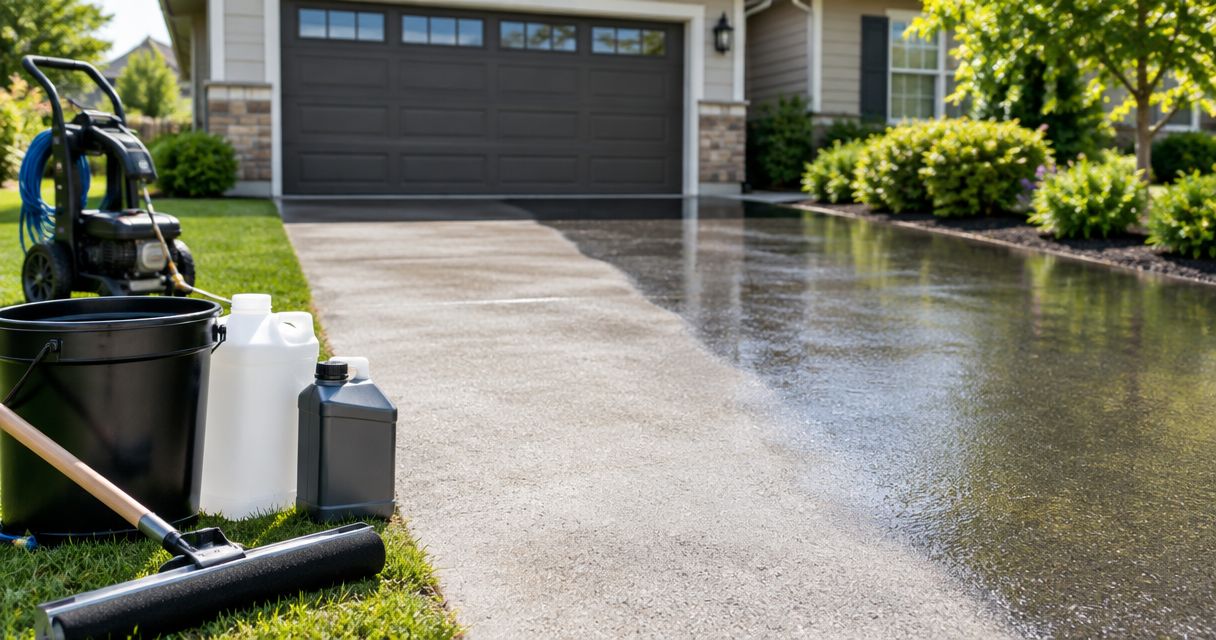
Best overall for an uncoated concrete driveway: a penetrating silane-siloxane sealer. Best for decorative concrete: a water-based acrylic sealer. Best for asphalt: an asphalt-emulsion sealer. Best for concrete pavers: a paver-rated penetrating sealer. The best driveway sealer after pressure washing depends first on the driveway material, then on the finish you want. SoCal EMM provides driveway pressure washing in Orange County; confirm sealer application separately before assuming it is part of a cleaning job.
- The best driveway sealers after pressure washing are chosen by surface: penetrating sealer for plain concrete, acrylic for decorative concrete.
- Use an asphalt-emulsion sealer on compatible asphalt, not a concrete sealer.
- For concrete pavers, choose a paver-rated sealer and check its instructions for joint sand and drying.
- SoCal EMM provides driveway cleaning in Orange County; ask separately about any sealing work.
Why the driveway surface decides the sealer
A freshly washed driveway can look ready to seal while moisture remains in pores, joints or cracks. Applying a coating too soon risks trapping moisture or leaving an uneven finish. Cleaning is the preparation step, not proof that the surface is ready for a sealer.
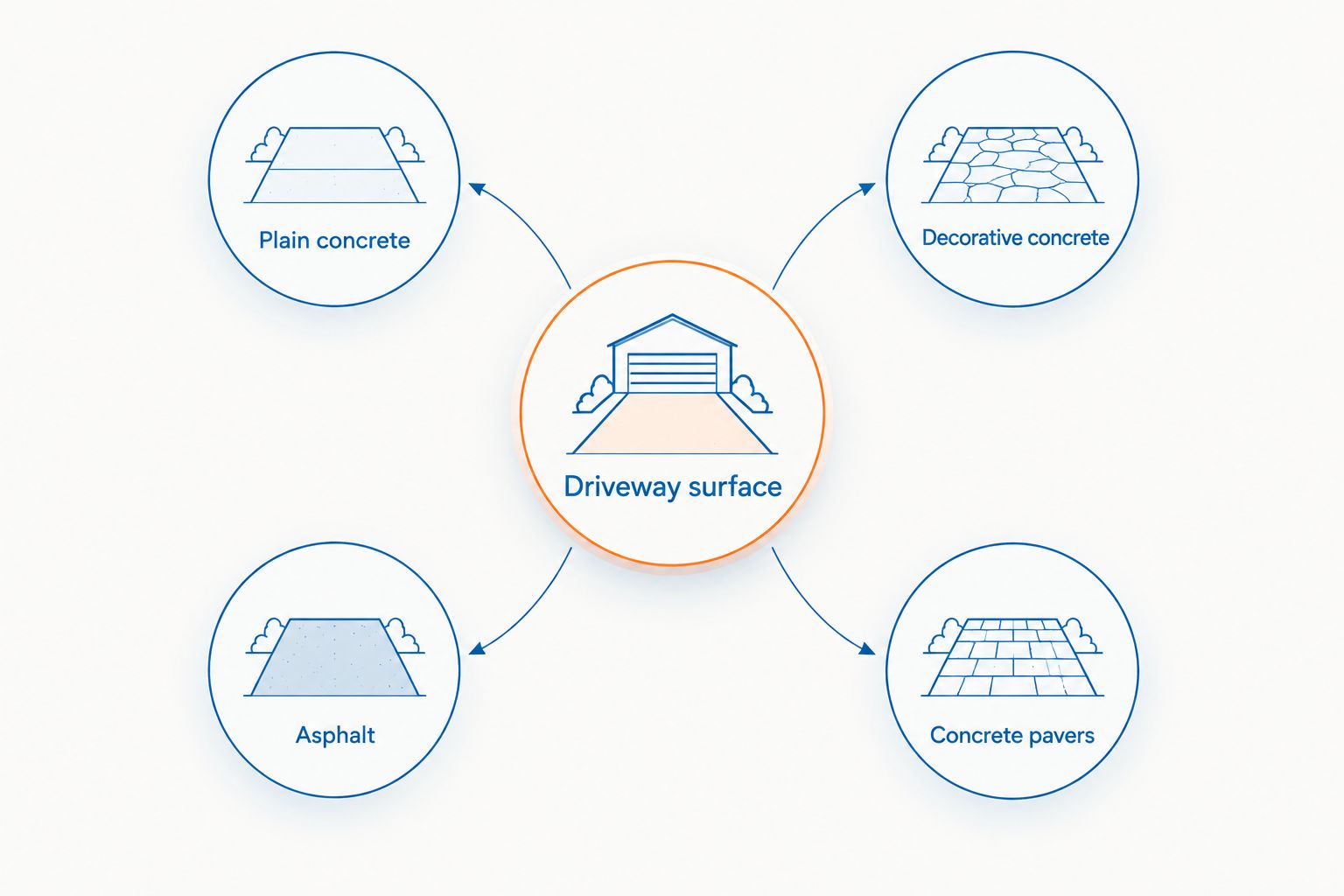
Start by identifying the material. Plain concrete, decorative concrete, asphalt and concrete pavers are different substrates. A product labelled for one is not automatically suitable for another, even if both surfaces can be pressure washed. If an older coating remains, its type and condition matter too: a new product must be compatible with what is already there.
For Orange County homeowners arranging cleaning through SoCal EMM, the useful handoff question is straightforward: what surface was cleaned, and what condition will it be in when a separate sealing job begins? Keep the cleaning and sealing scopes clear when requesting a quote in 2026.
A simple inspection gives you a starting point:
- Plain concrete: Look for an uncoated surface rather than assuming a faint sheen is just water.
- Decorative concrete: Check whether existing color or finish needs to remain visible and whether a coating is already present.
- Asphalt: Identify repairs and existing sealer before selecting another surface treatment.
- Concrete pavers: Inspect the joints as well as the paver faces; washing can disturb loose joint material.
What makes the best driveway sealer after pressure washing?
Use these criteria before comparing product labels. They explain why the 2026 ranking separates driveway materials instead of naming one product for every surface.
- Substrate match: The label must name the driveway material. A concrete sealer is not an asphalt treatment.
- Existing-finish compatibility: Check whether an older coating is present and whether the new sealer can go over it. Washing does not necessarily remove old sealer.
- Desired appearance: Penetrating products generally preserve a more natural look; film-forming acrylic products visibly change the surface. Check a sample because appearance varies by surface.
- Moisture requirements: Follow the selected product's instructions for drying after washing, weather conditions and application. A driveway that feels dry on top is not a reliable substitute for those instructions.
- Traction: A finish that looks good when dry must also suit a surface people walk and drive on. Review the product's traction guidance, especially for a sloped driveway or a glossy finish.
- Maintenance fit: Find out how the chosen coating is cleaned, inspected and reapplied. Do not assume that all sealers use the same process.
Before covering the whole driveway, test the proposed product on a 1-square-foot patch in an inconspicuous area, following its label. Inspect it after the instructed drying period for appearance and traction. The patch is a decision aid, not a replacement for the manufacturer's application directions.
Best driveway sealers at a glance
| Sealer type | Best for | Standout feature | Key limitation |
|---|---|---|---|
| Penetrating silane-siloxane | Uncoated plain concrete | Preserves a relatively natural appearance | Does not create a decorative surface film |
| Water-based acrylic | Compatible decorative concrete | Provides a visible finish | Existing coatings and traction need checking |
| Asphalt-emulsion | Compatible asphalt driveways | Made for asphalt surface treatment | Not a concrete or paver sealer |
| Paver-rated penetrating sealer | Concrete pavers | Treats paver faces without relying on a heavy surface film | Joint preparation remains a separate task |
The table is a surface-matching guide, not a claim that every product within a type performs alike. In 2026, read the exact container label and technical directions before buying. If the surface has an unidentified old coating, settle compatibility before choosing from the list.
1. Penetrating silane-siloxane: best for uncoated plain concrete
Best for: A homeowner who wants an uncoated concrete driveway to retain a relatively natural look after cleaning. A penetrating silane-siloxane sealer is the default pick for that specific surface, not for every driveway. It enters the concrete rather than relying on a thick, visible surface film.
After pressure washing, first check for leftover stains, loose material and signs of an old coating. The driveway must meet the chosen product's moisture and surface-preparation requirements. If water from cleaning is still sitting in cracks or low spots, the calendar alone does not tell you the concrete is ready.
Penetrating silane-siloxane pros:
- Suits homeowners who do not want a noticeably coated appearance.
- Gives you a clear product category to search for when the surface is plain concrete.
- Avoids making decorative gloss the main reason for choosing a sealer.
Penetrating silane-siloxane cons:
- It will not provide the visible finish some homeowners want on decorative concrete.
- An existing surface coating can prevent the product from reaching the concrete; compatibility must be checked.
- Results and application requirements depend on the specific formulation and concrete condition.
If you are unsure whether the driveway has an old coating, test and identify it before committing. Verdict: Buy for compatible, uncoated plain concrete; hold if the existing finish is unknown.
2. Water-based acrylic: best for decorative concrete
Best for: A homeowner whose decorative concrete needs a visible finish and whose existing surface is compatible with the selected product. Water-based acrylic is a film-forming choice, so it belongs in a different decision slot from a penetrating sealer. The finish is part of the purchase decision, not an incidental effect.
Pressure washing can reveal faded areas, coating wear or color differences that were less obvious under dirt. Sealer does not repair those issues by itself. Check the manufacturer's preparation instructions, then test an inconspicuous area to see how the finish changes the driveway's appearance.
Water-based acrylic pros:
- Offers a visible finish for a compatible decorative surface.
- Lets you assess appearance on a small patch before treating the driveway.
- Separates the goal of a coated look from the goal of keeping concrete natural-looking.
Water-based acrylic cons:
- Film-forming finishes need particular attention to traction, especially where the driveway slopes.
- A remaining old coating can cause compatibility problems even after washing.
- It is the wrong default if you do not want a visible surface film.
For a practical sample, mark a 2-foot-wide test area where the change in finish will be easy to inspect but will not dominate the entrance. Follow the product's instructions rather than treating that sample size as an application standard. Verdict: Buy for compatible decorative concrete when a visible finish is the goal; skip for a natural-look plain concrete driveway.
3. Asphalt-emulsion: best for compatible asphalt driveways
Best for: An asphalt driveway that needs an asphalt-specific surface treatment after cleaning. Asphalt-emulsion sealer belongs here because asphalt is not concrete. A product recommended for plain concrete or pavers does not become an asphalt product because both surfaces were pressure washed.
Inspect the driveway after it dries. Cleaning makes cracks, worn patches and prior treatments easier to see, but sealer is not a substitute for addressing damaged pavement. For newly installed or previously sealed asphalt, follow the selected product's requirements for surface condition and compatibility before applying anything.
Asphalt-emulsion pros:
- Matches the asphalt substrate rather than borrowing a concrete-sealer recommendation.
- Keeps the 2026 buying decision focused on surface type first.
- Prompts a separate inspection of repairs and old treatment before sealing.
Asphalt-emulsion cons:
- It does not belong on a concrete or paver driveway unless the product explicitly says otherwise.
- It will not fix cracks or failed pavement merely by covering them.
- Suitability depends on the asphalt's condition and the exact product directions.
If repairs are needed, resolve them before treating sealing as the final step. Verdict: Buy for compatible asphalt in suitable condition; wait when repairs or the previous treatment are unresolved.
4. Paver-rated penetrating sealer: best for concrete pavers
Best for: A concrete-paver driveway where you want a paver-specific treatment without making a heavy surface film the goal. Pavers introduce a second consideration that a solid concrete slab does not: the joints. Pressure washing can move loose joint material, so inspect those spaces before choosing or applying a sealer.
Read the product directions for both the paver material and the condition of the joints. Some products call for specific joint preparation, and a paver face that looks dry does not tell you whether the joints meet the application requirements. Test the appearance on an inconspicuous paver before treating the full driveway.
Paver-rated penetrating sealer pros:
- Starts with a product explicitly labelled for concrete pavers.
- Keeps the paver faces and joint condition in the same preparation plan.
- Suits a homeowner who does not want a heavy coated look.
Paver-rated penetrating sealer cons:
- Sealer selection does not replace inspection of disturbed or missing joint material.
- Not every product labelled for pavers gives the same appearance or has the same joint requirements.
- It is not the pick for asphalt or an unidentified stone surface.
If the driveway contains natural stone rather than concrete pavers, find a product labelled for that stone instead of assuming this category transfers. Verdict: Buy for compatible concrete pavers after checking the joints; hold if the paver material is uncertain.
How the 2026 ranking works
Surface match outranks finish. That is why plain concrete, decorative concrete, asphalt and pavers have separate picks rather than competing as though they were interchangeable products. Within each surface type, check old-coating compatibility, appearance, traction and the selected label's preparation requirements.
This ranking does not compare named manufacturers or claim that one formulation beats every other formulation. Those claims would require product-specific details. It gives you a shorter buying decision: identify the driveway, decide whether you want a natural or visible finish, then verify that the exact product fits the cleaned surface.
SoCal EMM's driveway pressure washing is the cleaning side of that sequence. If you are coordinating separate cleaning and sealing work in Newport Beach or elsewhere in Orange County, ask each provider where their scope starts and stops. Do not assume a clean driveway has been assessed for coating compatibility.
Which driveway sealer should you choose?
For an uncoated plain concrete driveway, choose a compatible penetrating silane-siloxane product if a natural-looking surface is the priority. For decorative concrete, choose a compatible water-based acrylic if you want a visible finish and have checked traction. Asphalt needs an asphalt-specific choice; concrete pavers need a paver-rated choice and a joint inspection.
If you cannot identify the existing coating, do not make the purchase based on the fresh-from-pressure-washing appearance. Determine what is on the surface first. A small test patch can show a finish change, but it cannot turn an incompatible product into the right one.
FAQ
What's the best driveway sealer after pressure washing plain concrete?
A penetrating silane-siloxane sealer is the default choice for compatible, uncoated plain concrete when you want a relatively natural appearance. Check the product label and any existing coating before applying it.
Can you seal a driveway immediately after pressure washing?
Seal only when the driveway meets the chosen product's drying and application requirements. Surface dryness alone does not establish that moisture has cleared from pores, cracks or paver joints.
Is acrylic better than a penetrating sealer for concrete?
Water-based acrylic is the better fit when you want a visible finish on compatible decorative concrete. A penetrating silane-siloxane product is the better default when uncoated plain concrete should keep a relatively natural look.
Can I use concrete sealer on an asphalt driveway?
Choose a product specifically labelled for asphalt rather than assuming a concrete sealer will work. Check the asphalt's condition and any previous treatment before application.
Do concrete pavers need attention after pressure washing?
Yes, inspect the paver faces and joints after washing. Loose or disturbed joint material needs attention before you follow a paver sealer's preparation directions.
Will driveway sealer repair cracks or worn pavement?
No, sealer is not a substitute for repairing damaged concrete or asphalt. Assess cracks and worn areas after cleaning, then address them before deciding whether the surface is ready to seal.
Does SoCal EMM apply driveway sealer?
SoCal EMM provides pressure washing and exterior cleaning in Orange County. Confirm whether sealer application is within the requested scope rather than assuming it comes with driveway cleaning.
One last thing
In 2026, the most useful detail to carry from a cleaning appointment into a sealing decision is what remains on the driveway after the dirt is gone. An old coating, disturbed paver joints or pavement damage can change the next step entirely. Ask SoCal EMM about the driveway cleaning scope, then match any proposed sealer to the exposed material and the product's written directions.