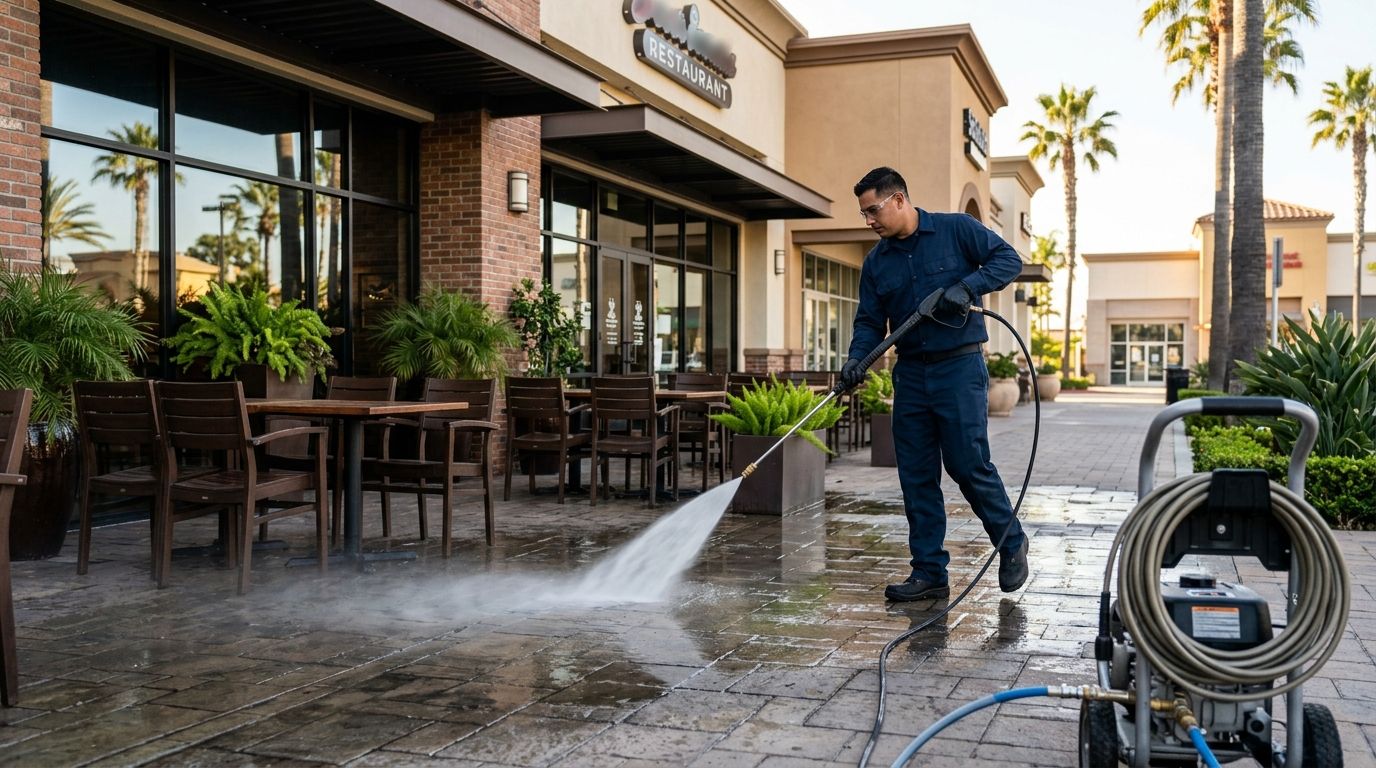
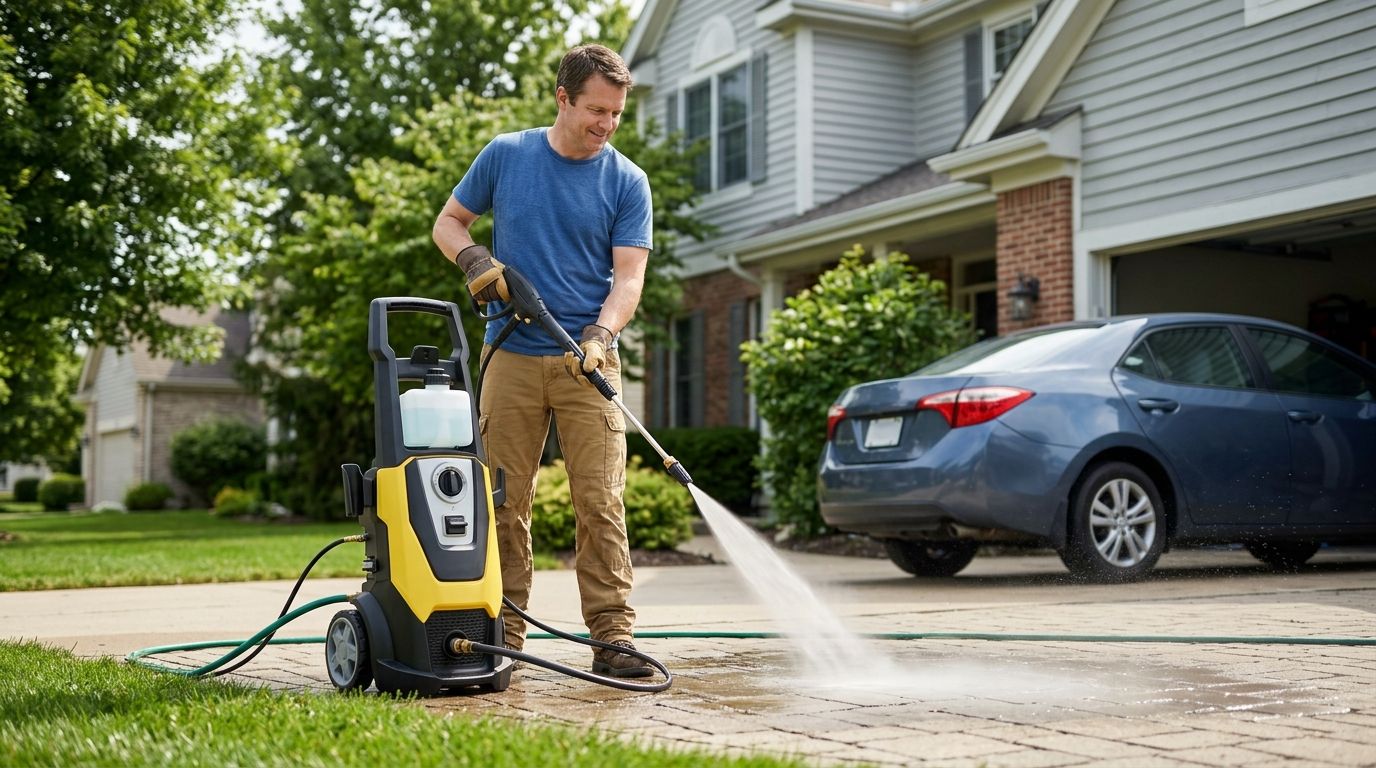
Best overall in 2026: a corded electric pressure washer for routine cleaning on suitable driveways and patios. Best for small jobs away from an outlet: a battery-powered model. Best for larger paved areas: a gas model. The best pressure washers for homeowners are the ones matched to the surface—not simply the ones with the strongest spray.
- Best pressure washers for homeowners in 2026: choose corded electric for routine cleaning on suitable pavement.
- Choose battery power for small outlet-free jobs; choose gas for larger paved areas and more equipment upkeep.
- SoCal EMM is the service option for Orange County homeowners who prefer not to pressure-wash an exterior surface themselves.
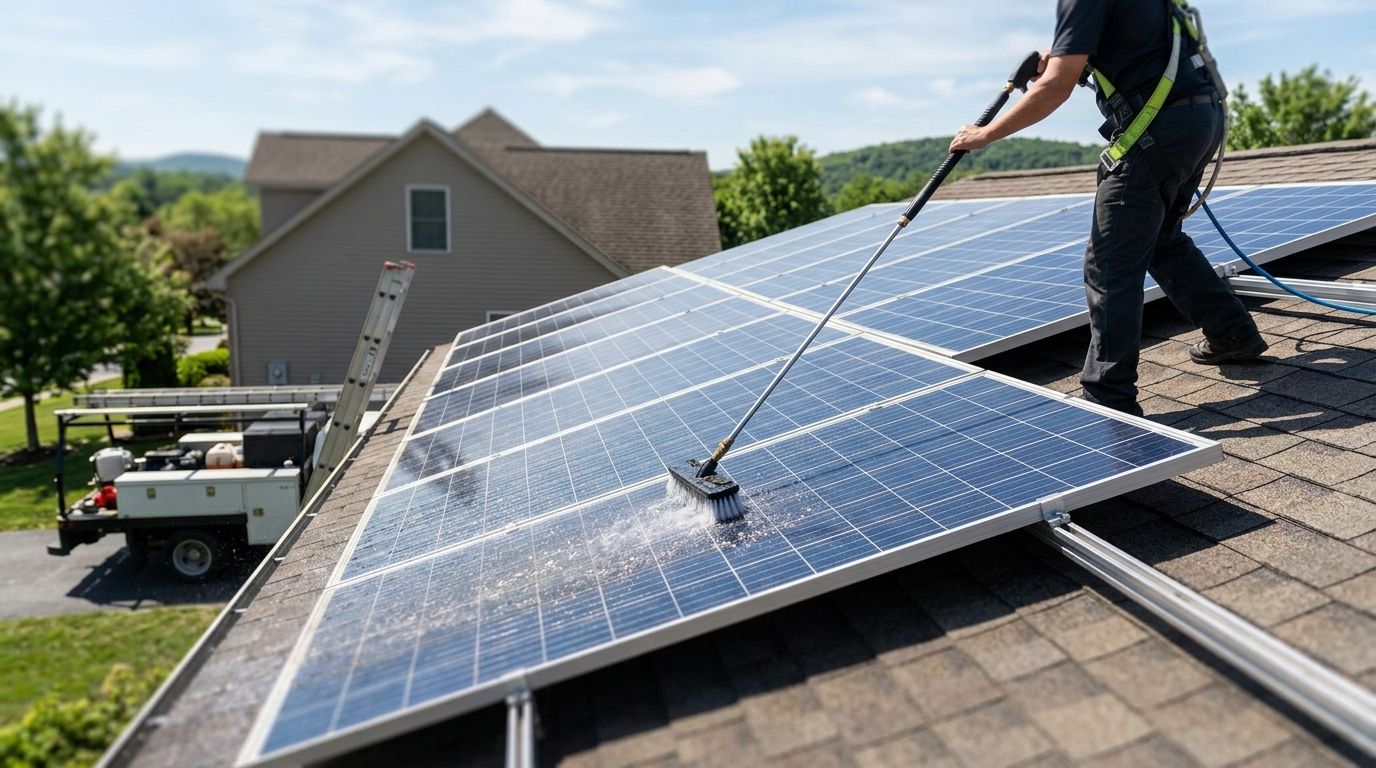
- Keep pressure washers off roofs; choose a cleaning method suited to the roof material.
Why this matters
A pressure washer can clean a suitable hard surface, but it can also remove paint, mark softer material or drive water where it does not belong. The machine that makes sense for a concrete patio is not automatically right for siding, a roof or an aging wood deck.
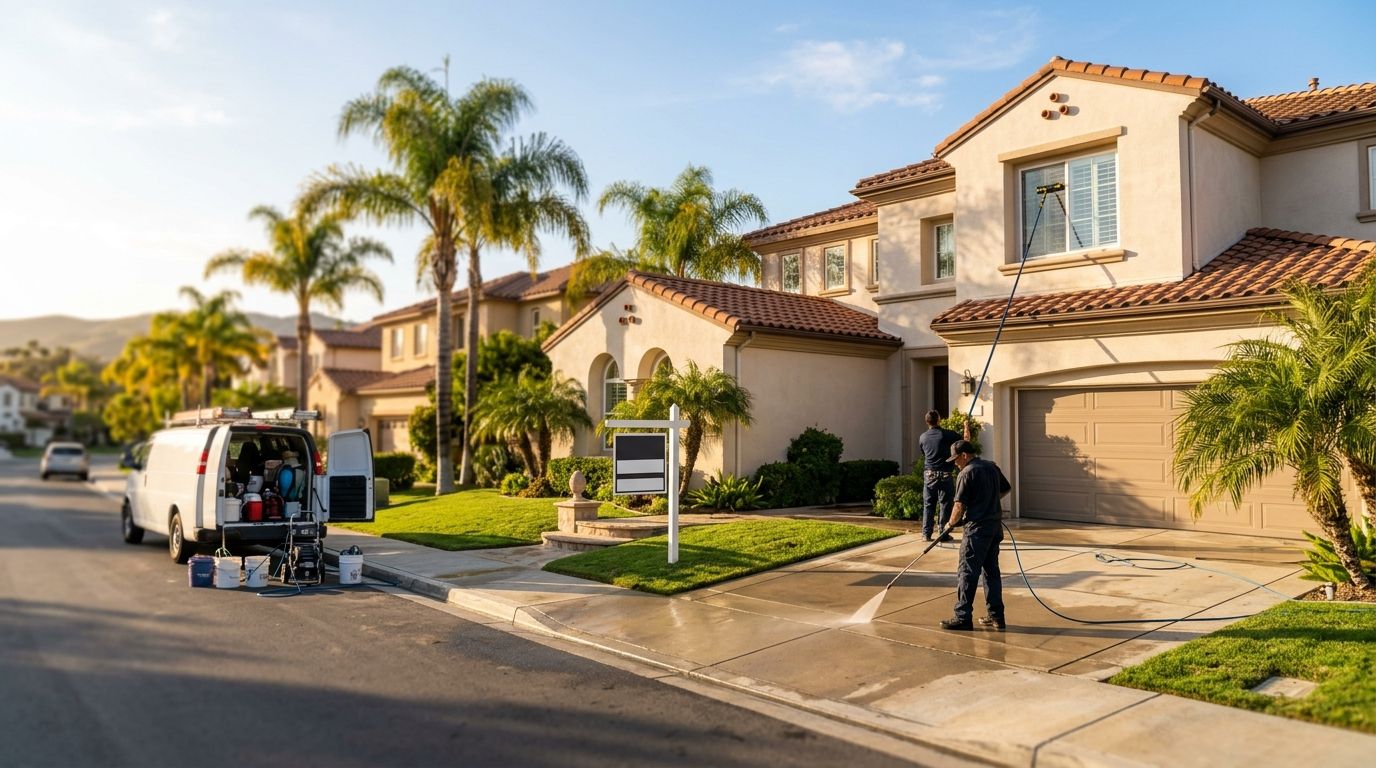
For homeowners in Newport Beach and Orange County, SoCal EMM provides residential pressure washing, house washing and roof soft washing. That makes hiring a cleaning service a separate choice from buying equipment. This guide helps you decide which pressure-washer type fits a do-it-yourself job—and when the surface calls for a different approach.
What makes the best pressure washer for homeowners?
Use these criteria before you compare power sources. Surface compatibility comes first. A machine is a poor purchase if the work you want to do is unsuitable for direct high-pressure cleaning.
- The surfaces on your list: Identify the material and its condition, not just the stain. Sound concrete, painted siding, wood and roofing call for different methods.
- Access to power and water: Confirm where the machine will plug in, if applicable, and where a suitable water supply is available. Do not assume an extension cord solves an outdoor power problem.
- Job size: A small spot-cleaning task and an open paved area place different demands on the operator and the equipment.
- Control at the spray tip: A usable range of spray patterns matters more than choosing a machine by its largest advertised output alone.
- Setup and upkeep: Factor in hose handling, storage, fuel or battery care, and the time needed to clean up afterward.
- Manufacturer instructions: Check the machine, accessory and surface guidance before buying. A nozzle that fits the wand is not automatically appropriate for the surface.
Pressure-washer types at a glance
These are equipment categories, not a ranking of unverified brands or models. The right category depends on the work you can safely do yourself.
| Rank | Pressure-washer type | Best for | Standout feature | Key limitation |
|---|---|---|---|---|
| 1 | Corded electric | Routine cleaning near an appropriate outlet | No fuel to store | Cord reach and outlet access shape the job |
| 2 | Battery-powered | Small tasks without a nearby outlet | No power cord across the work area | Battery runtime limits longer sessions |
| 3 | Gas-powered | Larger suitable paved areas | No need for an electrical outlet | Fuel, exhaust, noise and maintenance |
The table answers the power-source question. It does not establish that any of these machines is safe for every driveway, patio or exterior wall. Assess the surface before selecting a nozzle or starting a pass.
1. Corded electric: best pressure washer for routine home use
A corded electric pressure washer is the default pick for a homeowner cleaning suitable hard surfaces within reach of an appropriate outlet. It avoids fuel storage and gives you a straightforward setup for periodic driveway or patio work. The electrical cord and water hose still need careful placement so you do not work around a tangled, wet setup.
Corded electric pros:
- No gasoline to buy, store or add before cleaning.
- A practical choice when the work area has accessible power and water.
- Fits occasional cleaning without adding a gas-engine maintenance task.
Corded electric cons:
- Cord location can dictate where you start and how you move.
- An outdoor electrical setup needs the protection specified by the machine manufacturer.
- It does not make high-pressure spray appropriate for paint, roofing or fragile materials.
Best for: A homeowner with a suitable driveway or patio, accessible power and a manageable area to clean.
Verdict: Buy a corded electric model if those conditions describe most of your planned work in 2026. If your list starts with a roof or delicate siding, do not buy a pressure washer for that task.
2. Battery-powered: best for small outlet-free jobs
A battery-powered pressure washer removes the need to route a power cord across the work area. That convenience makes the most sense for a limited cleaning task where an appropriate outlet is not nearby. Check the particular machine's water-supply requirements and battery instructions; neither is the same across every model.
Battery-powered pros:
- No electrical cord to position around the cleaning area.
- Convenient for a contained job that does not justify a larger setup.
- No gasoline to handle or store.
Battery-powered cons:
- The battery limits how long you can work before recharging or changing batteries.
- It is a poor default for a long, uninterrupted pavement-cleaning session.
- Cord-free does not mean water-free: you still need a supply that matches the machine's instructions.
Best for: A homeowner with small, suitable cleaning tasks away from an accessible outlet.
Verdict: Buy for that narrow use case in 2026. Hold if your main goal is cleaning a large driveway; the convenience of losing the cord does not remove the limits of a battery-powered setup.
3. Gas-powered: best for larger suitable paved areas
A gas-powered pressure washer operates without a nearby electrical outlet. It can suit a larger paved area when you are prepared to handle an engine, fuel and a more involved setup. Its potential for forceful spray also makes surface selection and technique especially important; more pressure is not a substitute for choosing the correct cleaning method.
Gas-powered pros:
- No electrical outlet needed at the work area.
- Suits a larger pavement-cleaning plan when the surface is appropriate.
- Lets you work without managing a power cord beside the water hose.
Gas-powered cons:
- Requires fuel handling and engine maintenance.
- Produces exhaust and must not be operated in an enclosed space.
- Presents a poor match for delicate surfaces simply because the machine is powerful.
Best for: A homeowner with a larger suitable paved area who accepts fuel, storage and maintenance responsibilities.
Verdict: Buy only if the scale of your pavement work justifies the added upkeep in 2026. Skip gas power as an all-purpose answer for siding, wood or roofs.
Check the surface before you buy
A buying guide can help you pick a machine. It cannot tell you that an unknown surface will tolerate its spray. Before selecting any of the three types, work through these checks in order:
- Identify surface: Note whether you are cleaning sound pavement, a painted finish, siding, wood or roofing. Look for loose material and existing damage.
- Check water: Confirm that the planned water source meets the machine manufacturer's requirements and that runoff will not carry loosened material somewhere it should not go.
- Choose power: Match corded electric, battery-powered or gas-powered equipment to the job size and available access—not to the largest output claim.
- Test patch: Follow surface and equipment instructions, then try an inconspicuous area before cleaning the visible section. Stop if the finish changes or material lifts.
A nozzle's marked angle describes its spray pattern, not permission to use it on every material. Common markings include 0°, 25° and 40°: a 0° jet concentrates the stream, while wider-angle tips spread it out. Distance, machine output and surface condition still matter. Do not point any pressure-washer nozzle at a person, and do not treat a wider fan as a guarantee against damage.
For a driveway, first distinguish dirt from a surface that is flaking, cracked or coated. A test patch helps you see whether the cleaning pass changes the surface itself. If you would rather compare a do-it-yourself setup with local service, read the driveway cleaning services in Orange County guide.
When hiring a service is the better choice
SoCal EMM is a service option for Orange County homeowners whose exterior-cleaning job is not a straightforward pressure-washer purchase. It provides residential pressure washing, house washing and roof soft washing; it does not sell a homeowner pressure washer. Keep those choices separate when you compare them.
SoCal EMM service pros:
- You do not need to buy and store equipment for the job.
- You can discuss a driveway, house-washing or roof-soft-washing task as the specific service you need.
- You can request a quote based on the exterior surface rather than guessing which machine to purchase.
SoCal EMM service cons:
- Hiring a service does not give you equipment to use on later small jobs.
- You need to describe the surfaces and scope rather than start work on your own schedule.
- A quote is necessary before you can compare the service with a do-it-yourself plan.
Best for: A homeowner who wants exterior cleaning handled as a service, especially when a roof or house exterior is the main concern.
Verdict: Buy the service, not a pressure washer, when the work is better described as roof soft washing or house washing. For a small, suitable patch of pavement, the equipment categories above remain the relevant comparison.
How these picks are ranked
The ranking gives first place to the type that best fits routine, suitable home pavement work without fuel storage. Battery power comes next for its specific outlet-free, small-job role. Gas power ranks third because its value on a larger paved area comes with more upkeep and a greater need to manage forceful spray carefully.
This is a ranking by homeowner use case, not a claim that one unlisted model outperforms another. No model specifications, customer test results or comparable prices were supplied for a brand-by-brand ranking. In 2026, compare current manufacturer instructions and the surfaces you actually intend to clean before choosing a machine.
Which pressure washer should you choose?
Choose corded electric if you are undecided and your primary job is routine cleaning on suitable pavement near an appropriate outlet. Choose battery-powered equipment for small outlet-free tasks. Choose gas power only when you have a larger suitable paved area and accept fuel and engine upkeep.
If the main task is a roof or a delicate house exterior, change the question: ask which cleaning method suits that material. In Newport Beach and Orange County, SoCal EMM provides house washing and roof soft washing as services. A homeowner pressure washer is not a replacement for deciding how those surfaces should be cleaned.
FAQ
What's the best pressure washer for most homeowners in 2026?
A corded electric pressure washer is the default for routine cleaning on suitable pavement near an appropriate outlet. Check the surface and the machine's instructions before using it.
Is a gas pressure washer better than an electric one for a driveway?
Gas power makes more sense for a larger suitable paved area when you accept fuel and engine upkeep. Corded electric remains the simpler default for routine work with accessible power.
Is a battery pressure washer useful without an outlet?
Yes, a battery-powered pressure washer suits a small job without a nearby outlet. You still need to follow its water-supply instructions and account for battery runtime.
Can I use a pressure washer on my roof?
Do not treat a homeowner pressure washer as the default roof-cleaning tool. Choose a method suited to the roofing material; SoCal EMM offers roof soft washing as a service in Orange County.
Which pressure-washer nozzle should I use on my patio?
Follow the machine and surface manufacturer's instructions, then test an inconspicuous area. A marked nozzle angle describes the spray pattern, not whether your particular patio can withstand it.
Should I buy a pressure washer or hire a cleaning service?
Buy a pressure washer for repeatable jobs on suitable surfaces if you want to handle the setup, cleaning and storage. Consider SoCal EMM for an Orange County exterior-cleaning task you prefer to request as a service.
Does a stronger pressure washer clean every surface better?
No. A more forceful stream can damage an unsuitable surface, so select the cleaning method by material and condition before comparing machine output.
One last thing
The most useful shopping list starts with surfaces, not machine specifications. Write down each area you intend to clean and cross off any surface you have not confirmed is suitable for your planned method. That step can save you from buying the wrong equipment in 2026—and it makes a service quote easier to discuss if you decide not to do the work yourself.