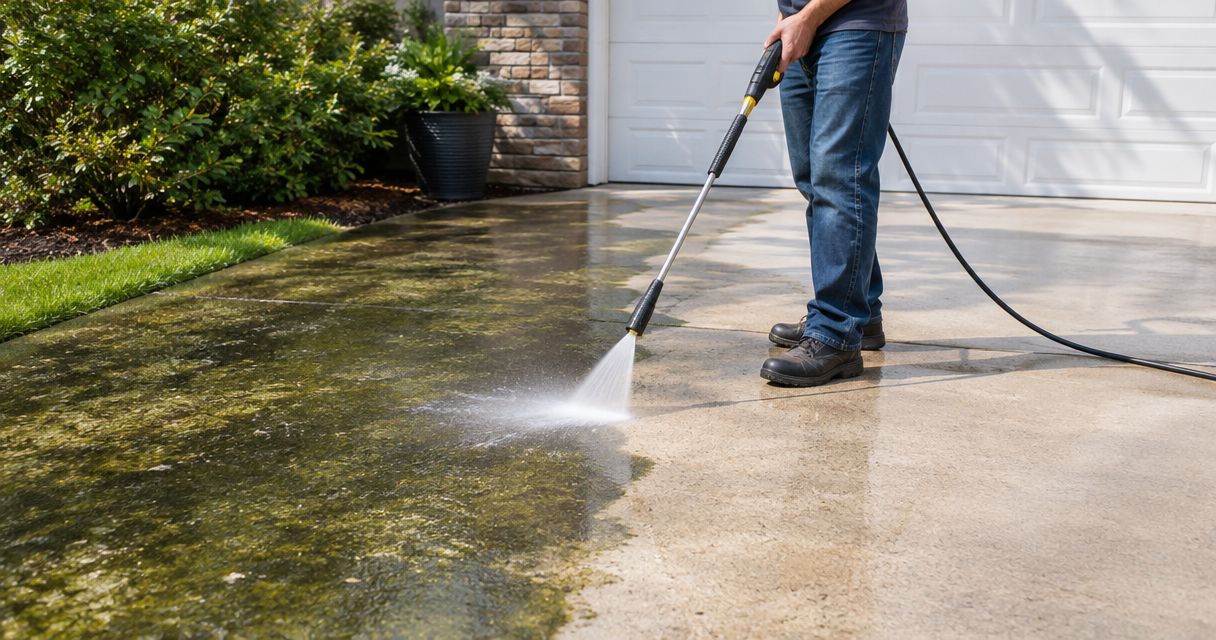
Yes, pressure washing can remove algae from a driveway when the cleaning method suits the surface and its condition. For your 2026 cleanup, remember that removing the visible green film does not fix the moisture, shade, or drainage conditions that let algae return.
- Can pressure washing remove algae from driveway surfaces? Yes, but pressure must suit the material and condition.
- Sound concrete and damaged concrete need different cleaning approaches; stronger pressure is not automatically better.
- Algae removal does not fix irrigation overspray, standing water, or persistent dampness.
- Socalemm provides pressure washing for homeowners in Newport Beach and Orange County.
Why this matters
A green driveway is more than an appearance problem. Algae-covered pavement can become slippery when wet, particularly along shaded walking routes between your car and front door. Removing the film helps address that surface buildup, but aggressive cleaning can damage the driveway beneath it.
Choose a cleaning method for the pavement, not just the stain. Before arranging work, identify whether you have concrete, pavers, asphalt, or a coated surface. The guide to driveway cleaning services in Orange County provides a local starting point for your 2026 maintenance planning.
Can pressure washing remove algae from a driveway?
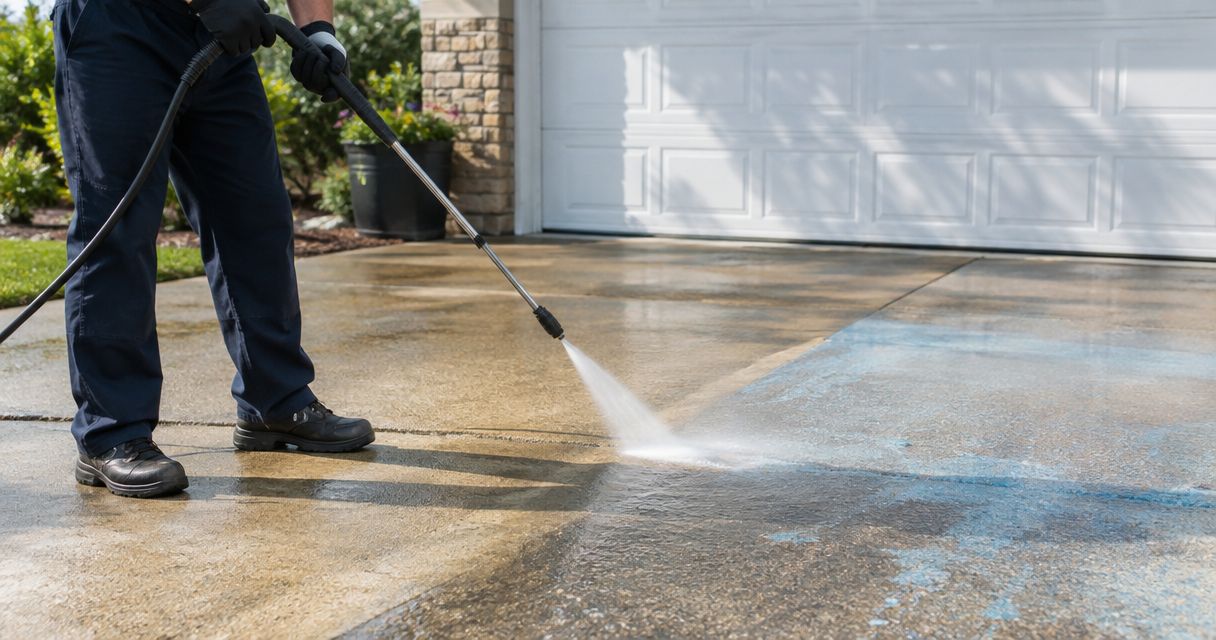
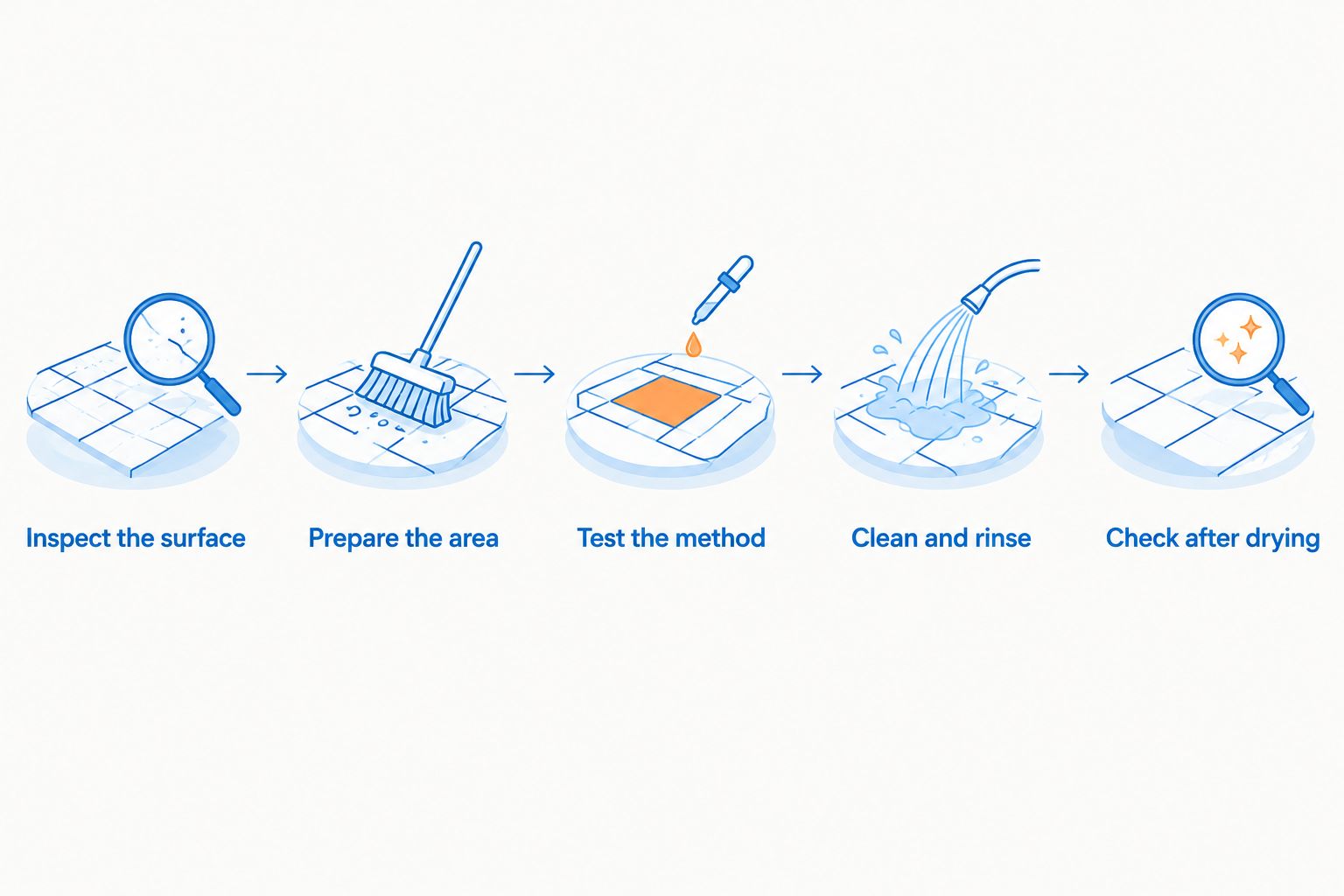
Yes. Pressure washing physically lifts algae and accumulated dirt from suitable driveway surfaces. The practical sequence is inspection, surface-appropriate cleaning, controlled rinsing, and a final check after the pavement dries.
Visible green growth does not establish exactly which organism is present. Moss, algae, dirt, and other organic buildup can occur together, so describe what you see rather than assuming every dark or green patch needs the same treatment.
- Inspect the surface. Look for loose material, flaking concrete, damaged joints, peeling coatings, and existing repairs. Identify the driveway material before choosing equipment or cleaner.
- Prepare the area. Move vehicles and loose items, sweep away debris, and identify plants, electrical fixtures, and nearby drainage routes that need protection.
- Test the method. Start in an inconspicuous area using the least aggressive effective approach. Check for changes in texture, coating damage, or displaced joint material before continuing.
- Clean and rinse. Use equipment and any cleaning product according to their instructions and the surface manufacturer's guidance. Work without concentrating the spray on one spot.
- Check after drying. Inspect the cleaned surface for remaining buildup, damage, and discoloration. Wet pavement can hide differences that become obvious when dry.
The test area is a decision point, not a formality. If the surface sheds material or the coating lifts, stop and reassess instead of trying to finish the driveway with the same settings.
Which cleaning approach fits your driveway?
There is no universal pressure setting for algae removal. Surface age, condition, coatings, equipment, nozzle selection, and working distance all affect the result. A machine's maximum pressure is not a recommendation for your pavement.
| Approach | Best for | Main benefit | Main limitation |
|---|---|---|---|
| Controlled pressure washing | Sound concrete that tolerates the method | Removes surface buildup and dirt | Excessive force can etch or damage concrete |
| Surface-compatible treatment and controlled rinsing | Organic buildup where the surface and product instructions permit treatment | Adds chemical cleaning action instead of relying only on force | Requires careful product selection, plant protection, and runoff planning |
| Gentle cleaning under material-specific guidance | Asphalt, coatings, fragile finishes, or uncertain surfaces | Avoids treating every driveway like bare concrete | Does not guarantee removal of established staining |
These approaches are not interchangeable packages. Treatment and rinsing can form part of a pressure-washing job, while a fragile driveway can require a different method altogether. The appropriate option is the one that removes buildup without sacrificing the surface.
Concrete driveways: inspect before increasing pressure
Sound, uncoated concrete can tolerate pressure washing, but concrete is not damage-proof. A concentrated jet can leave lines, expose aggregate, or worsen an already weak surface. Existing flaking and patch repairs deserve particular attention.
Check the difference between removable film and damaged concrete. If cleaning exposes a rough patch, that does not prove the patch needs another pass; repeated washing can remove more material rather than improve the appearance.
For recently placed concrete, follow the installer's cleaning guidance rather than choosing a waiting period from a generic article. For your 2026 maintenance record, save any instructions for decorative finishes, repairs, or sealers alongside photographs of the driveway's existing condition.
Paver driveways: protect joints as well as faces
Paver cleaning involves the joints between the units, not just their visible surfaces. Aggressive spray can displace joint material, while an unsuitable cleaner can affect the paver finish or an existing sealer. Inspect both before starting.
A clean paver face with emptied joints is not a finished maintenance result. After the area dries, check whether the joint material needs attention under the paving system's maintenance instructions. Do not assume every jointing product should be replaced or treated in the same way.
Ask about the full scope before approving work: surface cleaning, joint protection, and any separate follow-up maintenance. Keeping those tasks distinct prevents an algae-removal request from becoming an unclear promise to restore the whole driveway.
Asphalt and coated driveways: do not copy a concrete method
Asphalt and coated surfaces need material-specific cleaning guidance. A method that works on bare concrete can loosen material or damage a finish elsewhere. Avoid choosing a more aggressive nozzle simply because the green film remains after the first pass.
Identify any coating or sealer if you can. Check its care instructions for compatible cleaners and equipment, and stop if the test patch shows lifting, softening, or an unwanted change in appearance.
When the material or finish is uncertain, an inspection is more useful than a pressure recommendation made from a photograph. Explain what you know about previous sealing, repairs, and cleaning so the method starts with the surface history.
Why algae removal results vary
Cleaning addresses the buildup present during the job. These factors explain why one driveway cleans differently from another and why green growth can return:
- Surface condition: Cracks, rough areas, weak concrete, and damaged coatings limit how aggressively the driveway can be cleaned.
- Shade: A shaded area can stay damp longer than an exposed section, creating different growing conditions across the same driveway.
- Irrigation overspray: Sprinklers that repeatedly wet pavement keep adding moisture after cleaning.
- Drainage: Puddles and runoff from adjacent areas can leave sections persistently wet. Washing does not repair the drainage problem.
- Leaves and debris: Accumulated organic material traps moisture against pavement and adds material that needs removal.
- Type of discoloration: Organic film, oil, rust, and worn finishes do not respond to the same cleaning process.
Walk the driveway after watering or rainfall and note where moisture remains. That observation gives you a practical maintenance target without guessing at a fixed cleaning interval.
Can you remove driveway algae with water alone?
Water alone can remove visible algae from suitable surfaces, but it does not guarantee complete removal or prevent regrowth. The condition of the pavement and the amount of buildup determine whether mechanical cleaning is enough.
Do not keep increasing pressure to chase every remaining mark. If a patch persists, reassess whether it is organic buildup, another stain, or a change in the surface itself.
Does driveway algae need a chemical treatment?
Chemical treatment is not an automatic requirement for every green driveway. A surface-compatible product adds cleaning action when appropriate, but its label must support the intended use and application method.
Never mix cleaning products or improvise a concentration. Keep children and pets away from the work area, and follow all label instructions for protective equipment, application, rinsing, and re-entry.
Will pressure washing keep driveway algae from returning?
Pressure washing removes existing algae; it does not permanently prevent new growth. Recurring shade, irrigation overspray, trapped leaves, and drainage problems remain after the equipment leaves.
Use your 2026 cleanup as a starting point for condition-based maintenance. Recheck the dampest sections and address the source of repeated wetting rather than relying on a promise that one wash will solve the problem permanently.
What should you check before hiring a driveway cleaner?
Describe the driveway material, visible growth, shaded areas, and any known coating or sealer. Include photographs of both the whole driveway and damaged sections. Close-up images alone leave out slopes, nearby landscaping, and runoff routes that matter to the work.
Socalemm provides pressure washing for homeowners in Newport Beach and Orange County. For a residential driveway request, ask Socalemm to assess the material, algae buildup, and access before settling the cleaning scope. The service addresses exterior cleaning; drainage repairs and resurfacing are separate questions.
For a 2026 quote request, use these questions to keep the discussion specific:
- What surface and existing damage need to be accounted for?
- How will the cleaning approach be tested before the full driveway is washed?
- Is treatment proposed, and is it appropriate for the pavement and nearby landscaping?
- How will wash water be managed around drains and neighboring property?
- What remaining stains or surface defects fall outside algae removal?
Socalemm pressure washing is a local service option for homeowners who want exterior cleaning rather than taking on equipment selection and application themselves. Hiring a service does not make damaged pavement sound or turn every stain into a removable one. Clear expectations matter as much as the cleaning method.
Request a driveway cleaning quote
Describe your driveway material, green buildup, shaded areas, and any known sealer or damage.
Protect landscaping and manage wash water
Plan where the rinse water will travel before starting. Sweep up loose debris first, identify nearby drains, and keep cleaning runoff out of storm drains. Check applicable local requirements and product instructions rather than assuming outdoor rinse water is harmless.
Plants need protection from spray, displaced debris, and cleaning products. Follow the cleaner's label for precautions; wetting vegetation alone is not a substitute for choosing and using the product correctly. Protect nearby electrical fixtures and avoid directing spray toward openings in the house.
Keep the work area closed to foot traffic while it is wet and during any product-specific restriction. After cleaning, check for puddles, loose debris, and displaced joint material before reopening the driveway. A cleaner surface still needs an orderly final inspection.
FAQ
Can pressure washing remove algae from my driveway without bleach?
Yes, pressure washing can remove visible algae without bleach on a surface that tolerates the cleaning method. Whether water alone is sufficient depends on the buildup and pavement condition; do not compensate for remaining marks by using damaging pressure.
Is the green stuff on my driveway definitely algae?
No, green growth alone does not confirm algae. Moss and other organic buildup can occur on damp pavement, and mixed discoloration needs assessment before choosing a treatment.
Can pressure washing damage my concrete driveway?
Yes, excessive or concentrated pressure can damage concrete. Test an inconspicuous area, inspect for existing weakness, and stop if the method removes surface material.
How often should I clean algae off my driveway?
Clean according to the driveway's condition rather than an unsupported fixed schedule. Inspect shaded and repeatedly wet sections, and arrange cleaning when buildup develops or the walking surface becomes slippery.
Should I seal my driveway after removing algae?
Sealing is a separate decision based on the driveway material, condition, and any existing finish. Follow the selected sealer's preparation and drying instructions rather than applying it automatically after washing.
Why is my driveway still dark after pressure washing?
Remaining dark areas can reflect moisture, other stains, surface wear, or incomplete cleaning. Inspect the driveway after it dries before deciding whether another treatment is appropriate.
Can I use the same pressure-washing method on my driveway and house?
No, a driveway cleaning method is not automatically suitable for siding, stucco, roofing, or trim. Each surface needs its own assessment and compatible cleaning approach.
One last thing
Photograph the driveway dry before cleaning, then photograph it dry again afterward. Keep the viewpoint similar so you can distinguish removed buildup from changes caused by wet pavement. Include existing chips, cracks, and worn areas in the first set.
For your 2026 maintenance notes, also record where the green film was heaviest. If the same strip returns beside a sprinkler or low spot, investigate that moisture source before simply repeating the wash. The most useful follow-up is often outside the cleaned patch itself.