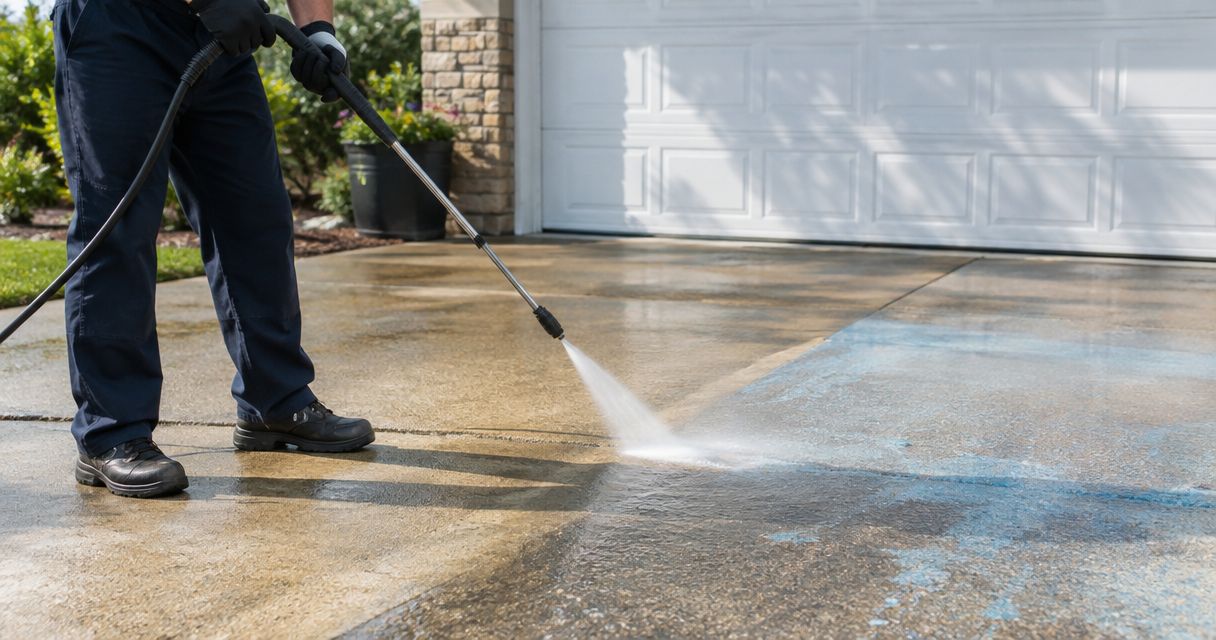
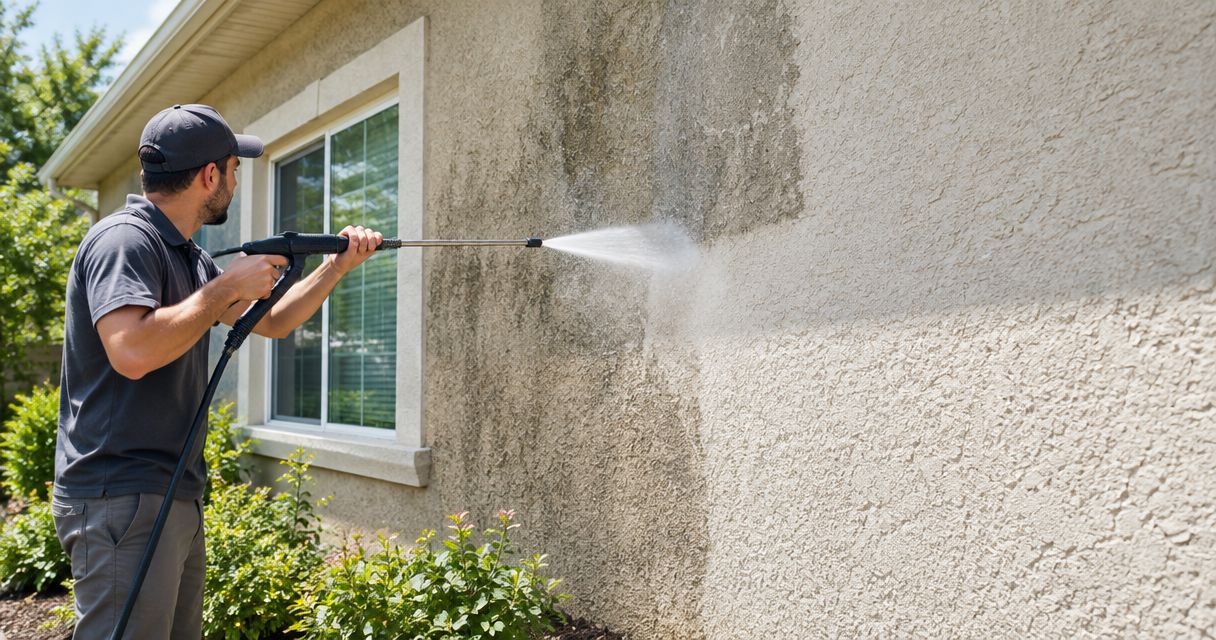
Yes, pressure washing can damage stucco by stripping paint, eroding the finish, loosening weak material, and forcing water through cracks or around openings. For your 2026 house-cleaning plan, choose a method approved for the wall’s finish and condition; low-pressure cleaning still requires suitable products, controlled rinsing, and sound surfaces.
- Can pressure washing damage stucco? Yes: concentrated spray can erode finishes and push water into vulnerable openings.
- Low-pressure house washing reduces force, but damaged stucco needs assessment before cleaning.
- Stop if paint lifts, texture changes, loose material appears, or water enters the home.
- Socalemm provides house washing for homeowners in Newport Beach and Orange County.
Why this matters
Stucco damage is not always obvious while the wall is wet. A stripped patch becomes easier to see after drying, while water entering behind the finish does not necessarily leave an immediate exterior mark. A cleaner-looking wall is not proof that the cleaning method was safe.
Before choosing a contractor or renting equipment, separate surface dirt from a failing finish. Our guide to whether soft washing is safe for stucco homes explains the lower-pressure approach; this guide focuses on damage risks, stop signs, and the checks to make before washing.
Can pressure washing damage stucco?
Pressure washing can damage stucco when the spray exceeds what the finish can withstand or reaches an opening that lets water behind the wall. Risk depends on the entire setup, not just the machine’s advertised pressure: nozzle pattern, distance, angle, application technique, and wall condition all matter.
There is no single pressure setting that makes every stucco wall safe. Traditional cement-based stucco, painted stucco, and exterior insulation and finish systems have different construction and maintenance requirements. Follow the applicable finish or system manufacturer’s cleaning instructions rather than treating every textured wall alike.
| Approach | Best for | Main advantage | Main limitation |
|---|---|---|---|
| Low-pressure washing with a compatible cleaner | Sound finishes whose care instructions permit washing | Removes suitable soiling without relying on concentrated force | Unsuitable chemistry or poor rinsing can still damage finishes and nearby materials |
| Gentle hand cleaning | Small, accessible areas where the finish permits it | Gives you close control over contact and rinsing | Scrubbing can abrade weak texture; large walls are difficult to clean evenly |
| High-pressure washing | Surfaces explicitly approved for that method | Provides stronger mechanical cleaning | Concentrated force can strip coatings, erode texture, and drive water into openings |
| Assessment before cleaning | Cracked, loose, stained, or otherwise suspect stucco | Keeps cleaning from becoming a substitute for repair | Delays washing until the wall’s condition is understood |
For a stucco home, inspect first and choose the least aggressive approved cleaning method. Do not use the approach that works on a concrete driveway as the default for the house.
How pressure washing damages a stucco wall
It removes more than dirt
A narrow spray concentrates force on a small area. On a weak finish, that force can remove paint, expose underlying material, or leave a visibly different texture. Holding the wand in one spot increases exposure instead of solving the underlying cleaning problem.
Watch for a clean-looking stripe with rougher edges, bare patches, or particles coming off the wall. Those are reasons to stop, not reasons to make another pass. Washing cannot restore material that has already been removed.
It pushes water into vulnerable details
Cracks, failed sealant joints, window edges, door openings, and service penetrations deserve particular attention. Spraying directly into these details can send water where a normal rinse would not. An upward-directed jet also exposes wall details differently from rain falling down the face.
Do not assume an exterior wall is watertight merely because it normally stays dry indoors. Water resistance depends on the assembly and its condition, including details you cannot inspect from the surface.
It exposes an existing problem
Some finishes are already loose or peeling before cleaning starts. Washing can dislodge them, but it does not explain why they failed. The same distinction applies to staining that returns around a crack or below a window.
Photograph suspect areas before work begins. If you see loose material, bulging, or signs of recurring moisture, get the wall assessed rather than asking the cleaner to remove the evidence.
Why stucco damage risk varies
For a 2026 cleaning decision, judge the wall and the proposed method together. These factors explain why the same equipment can produce different results on different homes:
- Finish and coating: Paint, decorative coatings, and exposed cement-based finishes do not share identical cleaning instructions. Identify what is actually on the wall.
- Existing condition: Cracks, peeling paint, loose patches, and deteriorated joints create weak points before washing begins.
- Spray concentration: Nozzle pattern, distance, angle, and time spent on one spot affect the force reaching the surface.
- Cleaning product: A product must be compatible with the finish and used according to its label. Low pressure does not cancel chemical risks.
- Water-entry details: Windows, doors, vents, penetrations, and wall drainage features need protection and appropriate spray direction.
- Access and control: Awkward reach makes it harder to maintain consistent technique. Safe access belongs in the cleaning plan, not as an adjustment halfway through the job.
A wall with heavy staining does not automatically need stronger pressure. Identify the stain first; increased force can damage the finish without removing the cause.
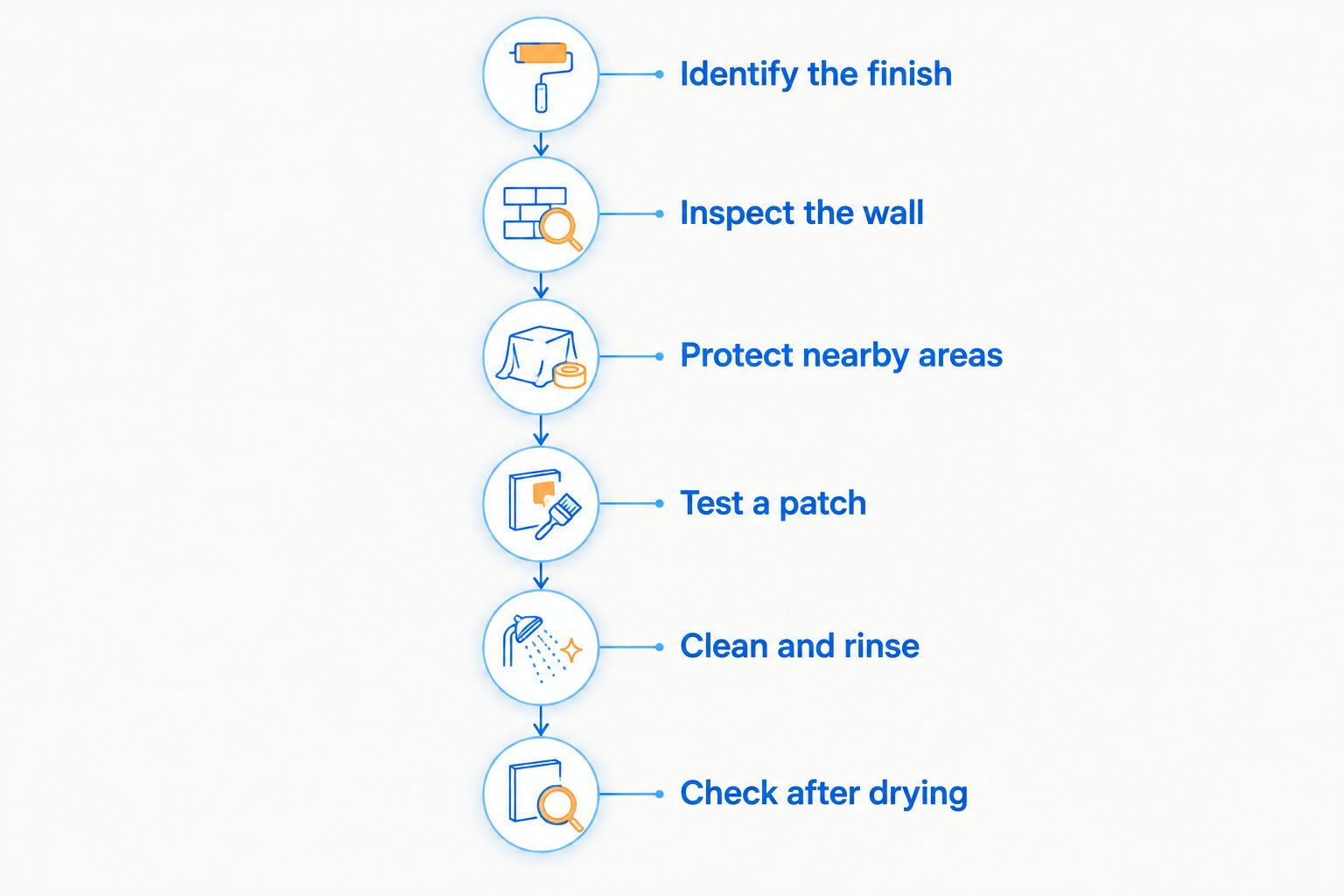
A pre-wash checklist for your stucco home
Use this sequence before scheduling house washing in 2026. The goal is to decide whether the wall is ready for cleaning, which method fits, and what needs attention first.
Identify the finish
Determine whether the wall is traditional stucco, an insulated finish system, or another textured cladding. Then identify any paint or coating over it. Building records, coating information, or a qualified assessment are more reliable than texture alone.
Ask for the relevant cleaning instructions. If you cannot identify the finish, do not guess at a nozzle, cleaner, or application method based on a similar-looking neighboring house.
Inspect the wall
Walk the exterior before equipment is set up. Look closely around windows, doors, pipes, vents, repaired patches, and changes in material. Photograph cracks, flaking paint, loose texture, and unusual staining.
Do not scrape or probe suspect areas to see how much comes off. Loose, bulging, or persistently damp areas need assessment before washing. A cleaning appointment is not a wall-repair inspection.
Protect nearby areas
Close windows and doors and identify electrical fixtures, exposed wiring, plants, and materials that need protection. Follow cleaner-label precautions for nearby surfaces and vegetation. Keep people and pets away from the work area.
Locate wall drainage details as well. Do not block drainage openings or direct the spray into them; protection should not interfere with the wall’s intended drainage.
Test a patch
Test the proposed method in an inconspicuous, representative area, following the finish instructions and cleaner label. Check both the immediate result and the appearance after drying. Look for paint lifting, texture changes, discoloration, and residue.
A successful patch is useful, but it does not clear every part of the home. A repaired section or more weathered elevation can respond differently from the area you tested.
Clean and rinse
Use the approved method and maintain controlled application. Avoid directing spray into cracks, joints, vents, and openings. Do not let a difficult stain turn into repeated concentrated spraying on the same spot.
Follow the cleaner’s directions for application and rinsing. If the stain remains after an appropriate attempt, reassess its cause instead of escalating force.
Check after drying
Inspect the wall again once it has dried. Compare suspect areas with your earlier photographs and check for changed texture, exposed coating edges, loose material, and remaining residue. Check indoors if there was any concern about water entry.
Document anything unexpected and stop further washing of the affected area. A visible defect deserves a closer look before another cleaning pass.
When should you stop washing stucco?
Stop immediately if cleaning changes the surface rather than just removing dirt. Warning signs include lifting paint, crumbling texture, loose particles, a new bare patch, or water appearing inside. Do not keep washing to make the surrounding area match the damaged section.
If water enters the home, stop the exterior work and have the entry point assessed. If the finish starts coming away, leave the affected area alone until its condition is understood. Neither problem is solved by changing to a wider spray and continuing.
White deposits also need care. They can be associated with salts moving through masonry materials, so persistent deposits deserve investigation rather than repeated forceful removal. Cleaning a visible deposit does not establish that its moisture source has been resolved.
Is soft washing better than pressure washing for stucco?
Low-pressure washing is the better starting point when the stucco finish’s care instructions permit it, because it reduces reliance on mechanical force. It is not an automatic approval to wash damaged walls or use any cleaning solution.
Ask what “soft washing” means in the proposed scope: product, compatibility, application, rinse method, and precautions. The method’s name tells you less than those details. Choose a suitable process, not just a low-pressure label.
Can you pressure wash painted stucco?
Pressure washing can strip paint from stucco, especially where the coating is already peeling or poorly bonded. Identify the paint and follow its care instructions before cleaning; avoid treating a painted wall as bare masonry.
If repainting is planned, coordinate cleaning with the painter’s preparation requirements. For a 2026 repainting project, a wash should support the specified preparation process, not become an uncontrolled attempt to remove every loose edge.
What should you ask before booking house washing?
Ask the contractor to describe the proposed method for your stucco walls separately from driveway or patio cleaning. Request an explanation of how suspect areas, windows, electrical fixtures, plants, and rinse water will be handled. Agree on what happens if the test patch reveals a weak finish.
Socalemm is a relevant house-washing option for homeowners in Newport Beach and Orange County. Socalemm provides residential exterior cleaning, including house washing; discuss your stucco finish and visible concerns when requesting a quote. Cleaning alone does not diagnose or repair a failing wall.
Keep commercial work separate from your residential scope. A storefront or other business exterior requires its own discussion of access, occupied areas, and the surfaces being cleaned; a house-washing plan should not simply be copied over.
Request a house-washing quote
Describe your stucco finish, visible cracks, and areas needing cleaning in Newport Beach or Orange County.
FAQ
Can pressure washing damage stucco even with a wide nozzle?
Yes, pressure washing can damage stucco even with a wide nozzle. Distance, angle, surface condition, and the force reaching the wall still matter; nozzle width alone does not establish safety.
What pressure setting is safe for stucco?
No single pressure setting is safe for every stucco finish. Follow the finish or system manufacturer's instructions and assess the wall before selecting the method.
Can I wash stucco that has cracks?
Do not direct water into cracked stucco. Have suspect cracks assessed before washing because cleaning can force water through vulnerable areas.
Is soft washing safe for painted stucco?
Soft washing requires a sound coating, compatible cleaner, and suitable rinsing to be appropriate for painted stucco. Check the paint's care instructions and test an inconspicuous area first.
Should I scrub a stain that will not wash off?
Do not increase scrubbing or pressure without identifying the stain and checking the finish instructions. Abrasion can remove weak texture, while recurring stains can indicate an unresolved cause.
What should I do if paint comes off during washing?
Stop washing the affected area if paint comes off. Document the change and have the coating condition assessed before cleaning continues.
Does Socalemm provide house washing in Orange County?
Socalemm provides residential house washing and related exterior cleaning in Newport Beach and Orange County. Describe your wall finish and visible concerns when requesting a quote.
One last thing
A test patch answers whether a method works on that patch—not whether every wall section is ready to wash. Repairs, coatings, and exposure can differ across the same house. For your 2026 cleaning plan, mark those differences before work begins and ask for them to be considered separately.
The right stopping point is a clean, intact finish—not the disappearance of every mark at any cost.