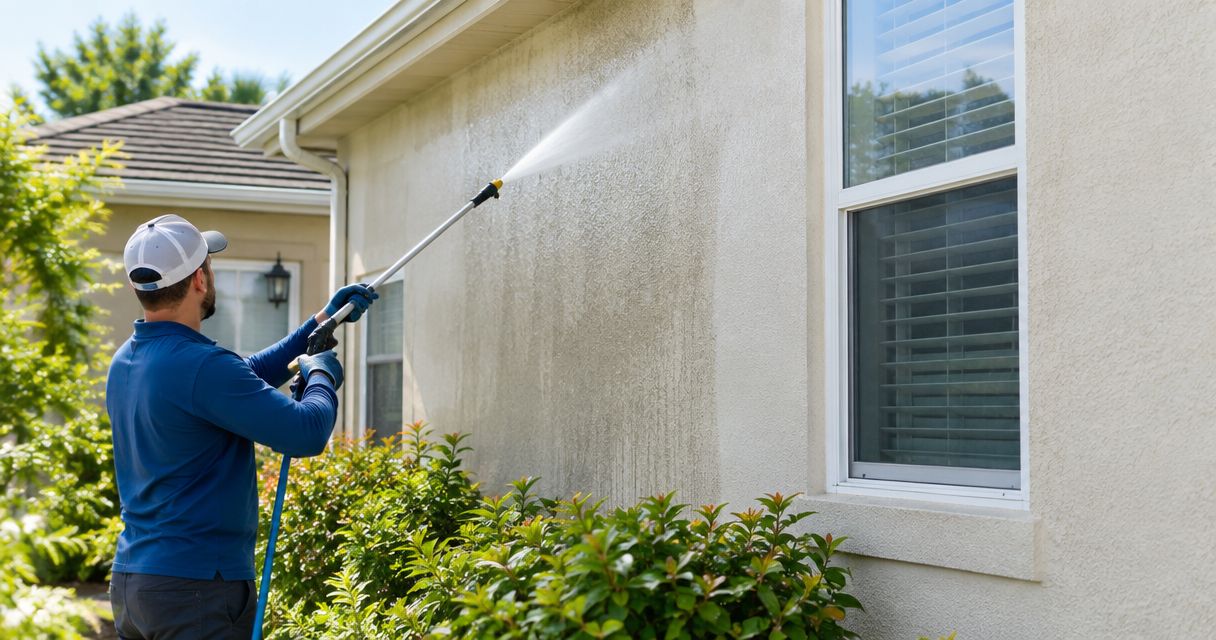
Yes—soft washing is generally safe for sound stucco when the cleaning solution suits the finish, application and rinsing use low pressure, and openings are protected. It is not safe to treat cracked, loose, or water-damaged stucco as an ordinary cleaning job. For your 2026 house wash, inspect the wall first and follow the finish manufacturer’s cleaning instructions rather than relying on the term soft wash alone.
- Is soft washing safe for stucco? Yes, when sound walls receive compatible cleaners and controlled, low-pressure rinsing.
- Socalemm provides house washing for homeowners in Newport Beach and Orange County.
- Stucco cleaning starts with checking cracks, coatings, windows, and drainage—not choosing the strongest cleaner.
- Stop cleaning if the finish loosens, paint lifts, or water enters the home.
Is soft washing safe for stucco homes?
Soft washing is a suitable cleaning approach for intact stucco, but low pressure alone does not make a wash safe. The cleaner, wall condition, spray direction, and rinse technique all matter. A gentle application can still cause trouble if liquid enters a damaged joint or the cleaner affects the coating.
For local service selection, use this guide to pressure washing services for stucco homes in Orange County. Ask about the wall-cleaning method specifically; driveway equipment and techniques do not establish how a contractor will handle your siding.
| Cleaning approach | Best for | Practical advantage | Main limitation |
|---|---|---|---|
| Soft washing with a compatible cleaner | Sound stucco with surface dirt or biological growth | Reduces reliance on force to remove contamination | Incorrect chemistry or rinsing can affect finishes and nearby materials |
| Gentle hand cleaning | Small, reachable marks on an intact finish | Keeps treatment localized | Scrubbing can alter texture or leave an uneven-looking patch |
| High-pressure washing | Hard surfaces whose manufacturers permit it | Uses mechanical force to remove dirt | Concentrated pressure can damage stucco or force water through openings |
These are method comparisons, not permission to clean every wall. If your finish manufacturer prohibits a cleaner or washing method, that instruction takes priority. If you cannot identify the finish, resolve that question before treatment.
Why this matters
Stucco is a textured exterior finish, not a waterproof shield against every direction of spray. Windows, penetrations, joints, and damaged areas deserve as much attention as the wall surface. Cleaning should remove contamination without creating a moisture problem.
A wall that looks dirty can also have peeling paint, staining from a leak, or deposits that need a different response. Identify what you are cleaning before deciding how to clean it. More pressure is not a substitute for that diagnosis.
For homeowners comparing house-washing services in 2026, the useful question is not simply whether the provider offers soft washing. Ask how the provider checks the wall, selects the cleaner, and handles areas that should not get wet.
Traditional stucco: inspect the finish before washing
Traditional cement-based stucco can have an exposed finish, paint, or another coating. Those surfaces do not necessarily accept the same cleaning products. The coating’s instructions matter even when the underlying stucco looks solid.
Walk around your home and look for loose material, obvious cracks, staining below windows, and deterioration near the ground. Do not scrape or probe a questionable area to see how much comes off. Document it and have the condition assessed before cleaning.
Pay particular attention where different materials meet. Window frames, door trim, vents, and utility penetrations create details that a broad wall photograph can miss. A sound-looking center section does not prove that the surrounding edges are ready to wash.
Painted stucco: protect the coating as well as the wall
Painted stucco needs a cleaning method compatible with the paint. A wash that removes dirt but lifts a weak coating is not a successful result. Existing peeling, blistering, or powdery residue should change the plan.
Ask whether the cleaning instructions come from the coating manufacturer or another identifiable source. A contractor should not choose a stronger solution merely because the wall has stubborn marks. The test area should show how the finish responds after rinsing and drying.
Touch-up paint can also complicate the appearance of a cleaned wall. Different coatings or previously repaired patches can remain visible after the dirt is gone. Cleaning does not correct mismatched paint or uneven repairs.
Synthetic stucco: identify the exterior system first
Synthetic stucco, often called EIFS, is not the same assembly as traditional cement stucco. Its cleaning requirements depend on the specific system and finish. Do not assume that a method used on another stucco home applies to yours.
If you are unsure which exterior you have, check building records, renovation documents, or information from the installer. Visual appearance alone is not a reliable basis for choosing a cleaning method. Request the system manufacturer’s maintenance guidance where available.
Damaged areas, failed sealant, or signs of moisture need attention before washing. Avoid treating the exterior as a surface-only problem when the assembly beneath it is uncertain.
Why soft-washing safety varies in 2026
The same service name can describe different application methods. These factors determine whether the work suits your home:
- Wall condition: Cracks, loose finish, peeling coatings, and suspected moisture problems require assessment before washing.
- Finish compatibility: Paint, exposed stucco, and synthetic finishes can have different maintenance instructions.
- Cleaner selection: The product must suit both the contamination and the surface, with label directions followed.
- Application and rinsing: Spray direction and concentrated force matter around joints, openings, and fragile areas.
- Surrounding materials: Plants, metal fixtures, glass, and adjacent finishes need protection from the cleaning process.
- Site conditions: Sun, wind, access, and runoff routes affect how the work should be planned.
No single equipment label answers all of these questions. Ask for a method that addresses your actual wall rather than a general promise that soft washing is harmless.
A homeowner’s 2026 pre-wash checklist
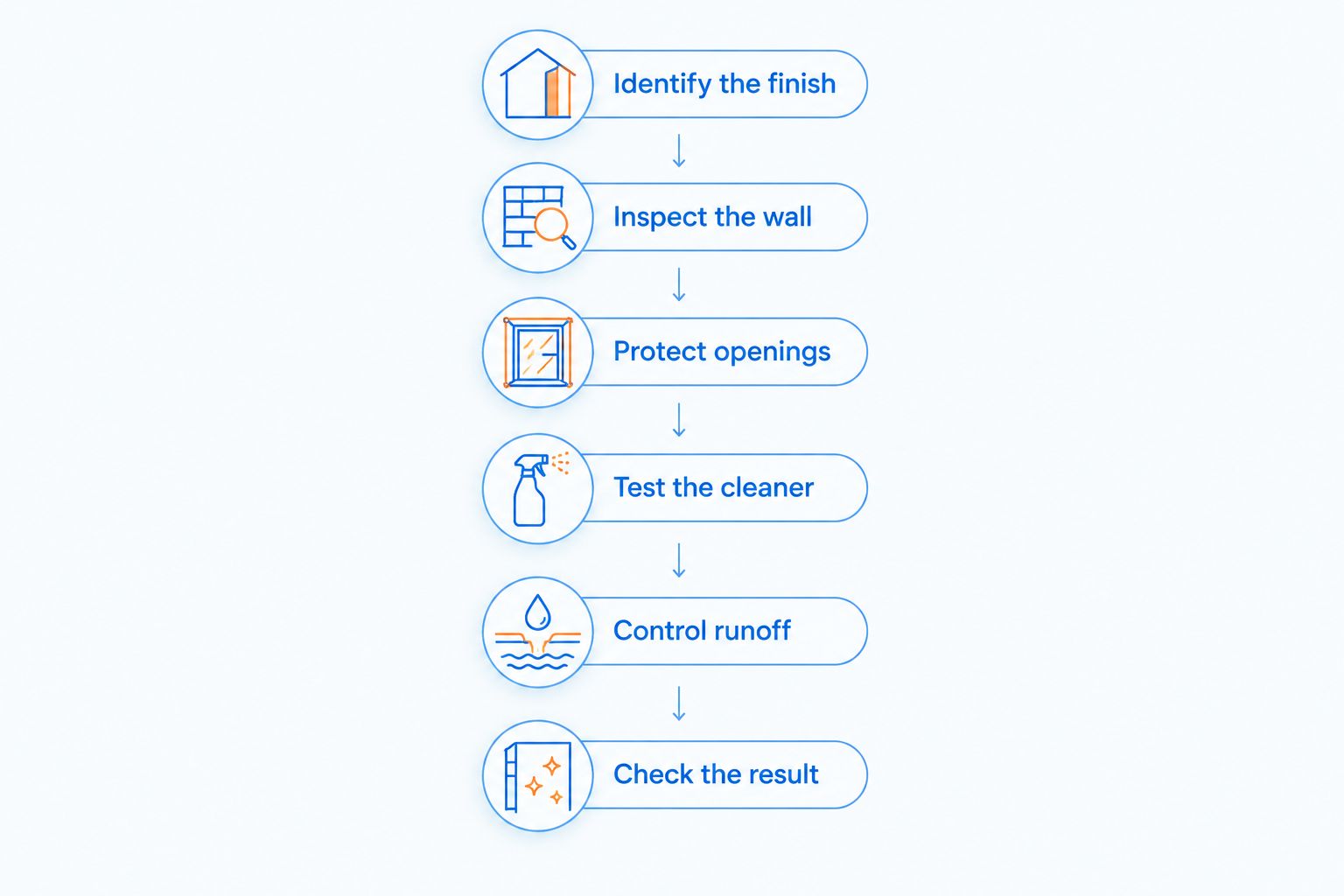
You do not need to choose chemical concentrations or operate the equipment to prepare well. Your role is to identify concerns, share relevant information, and confirm the proposed scope. Use this sequence before authorizing the work.
- Identify the finish. Find out whether the wall is traditional stucco, painted stucco, or a synthetic system. Share any available maintenance instructions.
- Inspect the wall. Point out cracks, peeling areas, loose material, prior repairs, and stains associated with possible leaks. Ask which areas should be excluded pending assessment.
- Protect openings. Discuss windows, doors, vents, exterior outlets, and other penetrations. Closing a window is not proof that its surrounding joints are watertight.
- Test the cleaner. Request a discreet test area using the proposed cleaning and rinsing method. Evaluate the dry result, not just the wet appearance.
- Control runoff. Identify nearby plants, sensitive surfaces, and drainage paths. Cleaning wastewater should be handled according to applicable local requirements.
- Check the result. Review the dry wall for remaining stains, altered texture, coating changes, or signs of water entry. Stop further treatment if damage appears.
The inspection should happen before the work starts, not after an unexpected patch appears. Take your own photographs of questionable areas so the discussion stays specific.
What should you ask a house-washing provider?
Ask questions that produce a specific plan. A clear answer describes what happens at your windows, on your coating, and around your landscaping—not just which machine arrives.
- What finish do you believe this wall has, and what instructions will you follow?
- Which damaged or questionable areas should stay out of the cleaning scope?
- What cleaner will you use, and how will you confirm compatibility?
- Where will you test the method before treating a visible section?
- How will you protect openings and manage runoff?
- Which stains do you expect cleaning to remove, and which need separate assessment?
Socalemm house washing fits homeowners seeking local exterior cleaning in Newport Beach and Orange County. You can request a quote from Socalemm and describe the wall material, visible damage, and areas you want cleaned.
House washing is relevant to dirty exterior walls, but it is not a substitute for stucco repair, coating restoration, or investigation of water entry. Keep those needs separate when discussing the scope. Roof soft washing and driveway cleaning also require their own surface-specific plans.
Can soft washing damage stucco?
Yes—soft washing can damage stucco when the cleaner is incompatible, the finish is already failing, or water enters vulnerable areas. Low pressure reduces one source of risk; it does not eliminate chemical or moisture-related risks.
Stop if you see paint lifting, loose finish, or water entering indoors. Do not keep treating the same spot to force a uniform appearance. The next step is assessment, not a stronger cleaning pass.
Should you repair cracks before washing stucco?
Yes—have cracks assessed before washing, particularly when they are associated with staining, loose material, or suspected water entry. The appropriate repair depends on the wall system and the cause of the damage.
Do not assume that applying sealant makes every crack ready for immediate washing. Follow the repair material’s instructions and any guidance from the person responsible for the repair. Keep unresolved areas out of the wash scope.
Can soft washing remove every stain from stucco?
No—soft washing does not remove every stucco stain, and cleaning cannot correct a failed coating or a leak. Surface growth, rust-colored marks, mineral deposits, and discoloration from moisture are different problems.
Describe the stain’s location and whether it returns after rain or irrigation. That information helps distinguish a cleaning task from an underlying source that needs correction. Avoid repeated treatment without understanding why the mark persists.
What should you check after the wall dries?
Wet stucco can look different from dry stucco, so do not judge the final appearance immediately after rinsing. Once the surface has dried, compare treated areas with the test patch and your pre-wash photographs.
Look for remaining discoloration, changed texture, lifted paint, and damp areas that need explanation. Check indoors near any opening that raised concern during the inspection. Report unexpected changes before additional cleaning begins.
The objective is a cleaner, intact exterior—not a promise that every patch will match. Repairs, paint differences, and longstanding stains can remain visible without indicating that another wash is needed.
FAQ
Is soft washing safe for stucco in 2026?
Yes—soft washing is generally safe for sound stucco when the cleaner matches the finish and application and rinsing use controlled, low pressure. Inspect damage and follow the finish manufacturer’s instructions before cleaning.
Is soft washing better than pressure washing for stucco?
Soft washing is generally the more suitable approach for intact stucco because it reduces reliance on concentrated pressure. Cleaner compatibility and careful rinsing still matter; neither method is appropriate for unresolved damage.
Can I use roof-cleaning chemicals on my stucco walls?
Do not assume a roof-cleaning product is suitable for stucco walls. Check the cleaner’s label and the wall finish manufacturer’s instructions, including requirements for nearby materials and rinsing.
Should I wash stucco that has peeling paint?
Do not proceed with routine washing over peeling paint without assessing the coating first. Cleaning can loosen an already failing finish, and washing will not restore adhesion.
Can I soft wash stucco myself?
DIY stucco cleaning is appropriate only when you can identify the finish and safely follow its maintenance instructions. Leave damaged walls, difficult access, and uncertain exterior systems for qualified assessment rather than experimenting with pressure or chemicals.
Does Socalemm offer house washing in Orange County?
Socalemm provides house washing and related exterior cleaning services to homeowners and businesses in Newport Beach and Orange County. For a stucco home, describe the wall condition and ask how the proposed method will address the finish and openings.
One last thing
Before booking a stucco wash in 2026, ask one practical question: What would make you stop cleaning this wall? The answer should identify conditions such as loose finish, coating changes, or water entry—not simply promise that low pressure prevents damage.
A defined stopping point is more useful than a claim that every stain will disappear. Agree on exclusions and the test area before anyone starts treating the full wall.