Landlord house washing is exterior cleaning for rental homes with the aim of maintaining presentable walls and a documented property condition. This guide to house washing for landlords and rental property owners covers occupied homes, tenant turnover, surface selection, and cleaning scope without confusing maintenance with repairs.
- House washing for landlords and rental property owners starts with surface condition, tenant access, and a written scope.
- Socalemm provides house washing in Newport Beach and Orange County; confirm the method and exclusions before booking.
- Separate house washing, driveway cleaning, and roof soft washing when requesting exterior maintenance.
- Document existing damage before cleaning; washing does not repair failing paint, cracked stucco, or leaking windows.
Why house washing matters for landlords
A rental exterior is both a maintenance responsibility and a space your tenants use. Cleaning decisions need to account for open windows, parked vehicles, private patios, entry routes, and existing defects—not just whether the front wall looks dirty.
Socalemm house washing is best for Newport Beach and Orange County rental owners seeking a local exterior-cleaning service. Use Socalemm to discuss the property and request a quote, then confirm the work in writing rather than assuming every exterior surface is included.
For your 2026 maintenance plan, separate appearance problems from building problems. Surface dirt belongs in a cleaning scope; loose siding, deteriorated paint, damaged seals, and water intrusion need inspection or repair. Washing over a defect does not resolve it.
An occupied rental also needs a different schedule from a vacant home. You must coordinate access without treating the property as empty, and you need a clear record of the exterior before and after the work. Cleaning should not become a surprise interruption for tenants.
How to plan rental-property house washing
Inspect the exterior
Start with a walk around the property and photographs. You can do this yourself before contacting a service provider; it gives you a useful baseline and helps distinguish wall cleaning from roof, patio, and driveway work.
Take at least 4 overview photos: the front elevation, rear elevation, and both sides. Add close-ups of damaged finishes, openings, fixtures, and heavily soiled areas. These are documentation targets, not a substitute for inspecting concealed defects.
Look for cracked stucco, peeling paint, loose trim, damaged vents, and gaps around windows. If you cannot identify a wall material or coating, check property records or ask a qualified contractor before deciding how to clean it. Do not test unfamiliar surfaces with high pressure.
- Photograph the front elevation and main entrance.
- Photograph the rear elevation and tenant patio areas.
- Photograph both side walls and narrow passages.
- Record damaged paint, cracks, loose trim, and window seals.
- Identify exterior outlets, vents, cameras, and light fixtures.
- Flag repairs that need attention before washing.
Define the scope
Write a short list of what needs cleaning before requesting a quote. A landlord can prepare this manually from the inspection photos; a professional house-washing service can then assess the listed surfaces and propose a suitable method.
Keep 3 work zones separate: building walls, ground surfaces, and roof surfaces. These zones have different access and material concerns. A driveway included in a photograph is not automatically included in a house-washing quote.
For a 2026 rental turnover, identify whether you want only exterior walls cleaned or also entry steps, patios, and other areas. Socalemm provides house washing, pressure washing, and roof soft washing, but your written scope must state which services apply to this property.
For occupied residential rentals, use residential language and identify tenant spaces. If a property also contains a storefront or business entrance, describe that separately rather than combining residential access arrangements with commercial operations.
- List the wall surfaces and elevations to be cleaned.
- Specify whether trim, eaves, and entry areas are included.
- Request driveway or patio cleaning as a separate line item.
- Request roof soft washing separately from wall cleaning.
- Mark excluded surfaces and areas awaiting repairs.
- Confirm what counts as completion before approving the work.
Choose the method
For a small, reachable area, start by checking the surface manufacturer's care instructions. Gentle hand cleaning can suit limited marks on sound finishes when the instructions permit it. It is not a practical substitute for every full-house job.
Choose the cleaning method for the material, not for the strongest machine. Stucco, painted siding, wood, masonry, trim, and sealants do not all tolerate the same treatment. Pressure directed into gaps can introduce water where it does not belong, while unsuitable cleaners can affect finishes or nearby plants.
Professional house washing is the next option when access, the size of the job, or the required method exceeds what you can safely handle. Ask Socalemm how the proposed house-washing method addresses your wall material, existing damage, and surrounding landscaping. Do not assume that the phrase house washing defines a single pressure setting or chemical treatment.
- Check care instructions for the siding, coating, or finish.
- Avoid directing water into vents, gaps, or damaged seals.
- Keep roof cleaning separate from wall-cleaning decisions.
- Ask how plants and adjacent finishes will be protected.
- Confirm how cleaners will be applied and rinsed.
- Stop and reassess if the surface shows deterioration.
Coordinate tenant access
Begin with a written notice that explains the planned work and affected areas. Check your lease and applicable California entry requirements before arranging access; a cleaning appointment does not remove your obligations as a landlord.
Set 2 access checkpoints: one when scheduling the work and one before it starts. At scheduling, identify tenant conflicts, pets, vehicles, and shared routes. Before cleaning begins, confirm that the agreed preparations are complete and the work area is accessible.
For your 2026 schedule, distinguish vacant turnover work from occupied-property maintenance. At a vacant home, you still need water access and coordination with other trades. At an occupied home, you also need clear instructions about windows, outdoor belongings, and temporarily affected entrances.
Do not ask tenants to move heavy items without an agreed plan. Decide who handles furniture, storage, and other obstructions before the appointment, and keep emergency access clear throughout the work.
- Give tenants the planned date and affected work areas.
- Ask tenants to close windows before exterior washing.
- Agree on moving vehicles and outdoor belongings.
- Plan for pets and access to private patio areas.
- Confirm water access with the cleaning provider.
- Identify a safe route around the active work area.
Confirm protection measures
Use your inspection photos to prepare a written list of vulnerable areas. This is a simple task you can complete yourself; the provider should then explain the protection measures relevant to the proposed cleaning method.
Ask about runoff before work starts. Dirty wash water and cleaning solutions need a plan, especially where a driveway slopes toward the street or a work area drains toward landscaping. Follow applicable local requirements rather than assuming runoff can enter a storm drain.
Discuss exterior outlets, door thresholds, cameras, fixtures, plants, and neighboring property. Do not assume these items are waterproof because they sit outside. Any temporary protection must suit the fixture and must not interfere with required ventilation or safe access.
For Socalemm house washing, confirm these details as part of the property-specific scope. The service name alone does not establish which protection measures, preparation tasks, or exclusions apply.
- Identify drains and the direction water will travel.
- Ask how wash water and cleaning solutions will be managed.
- Flag exterior electrical fixtures and damaged covers.
- Identify vulnerable plants and adjacent finishes.
- Confirm responsibility for moving and replacing belongings.
- Keep repair exclusions visible in the written scope.
Review the result
Inspect the property after cleaning from the same viewpoints used for the initial photographs. You can complete this review yourself and ask the provider about unresolved areas before closing out the job.
Compare the walls, entrances, and fixtures with the baseline record. Some marks are not removable surface dirt: coating discoloration, damaged finishes, and embedded staining need a different response. Ask for an explanation rather than automatically requesting more pressure or repeated chemical application.
Keep the quote, agreed scope, photographs, and follow-up notes together in your 2026 property file. That record helps you plan later maintenance and explain what work occurred without relying on memory. Document condition without drawing unsupported conclusions about who caused a defect.
- Retake photos from the original overview positions.
- Check the surfaces named in the agreed scope.
- Confirm that moved items have been returned as agreed.
- Record remaining marks and the explanation provided.
- Note defects that require repair rather than more cleaning.
- Save the scope and photographs in the property record.
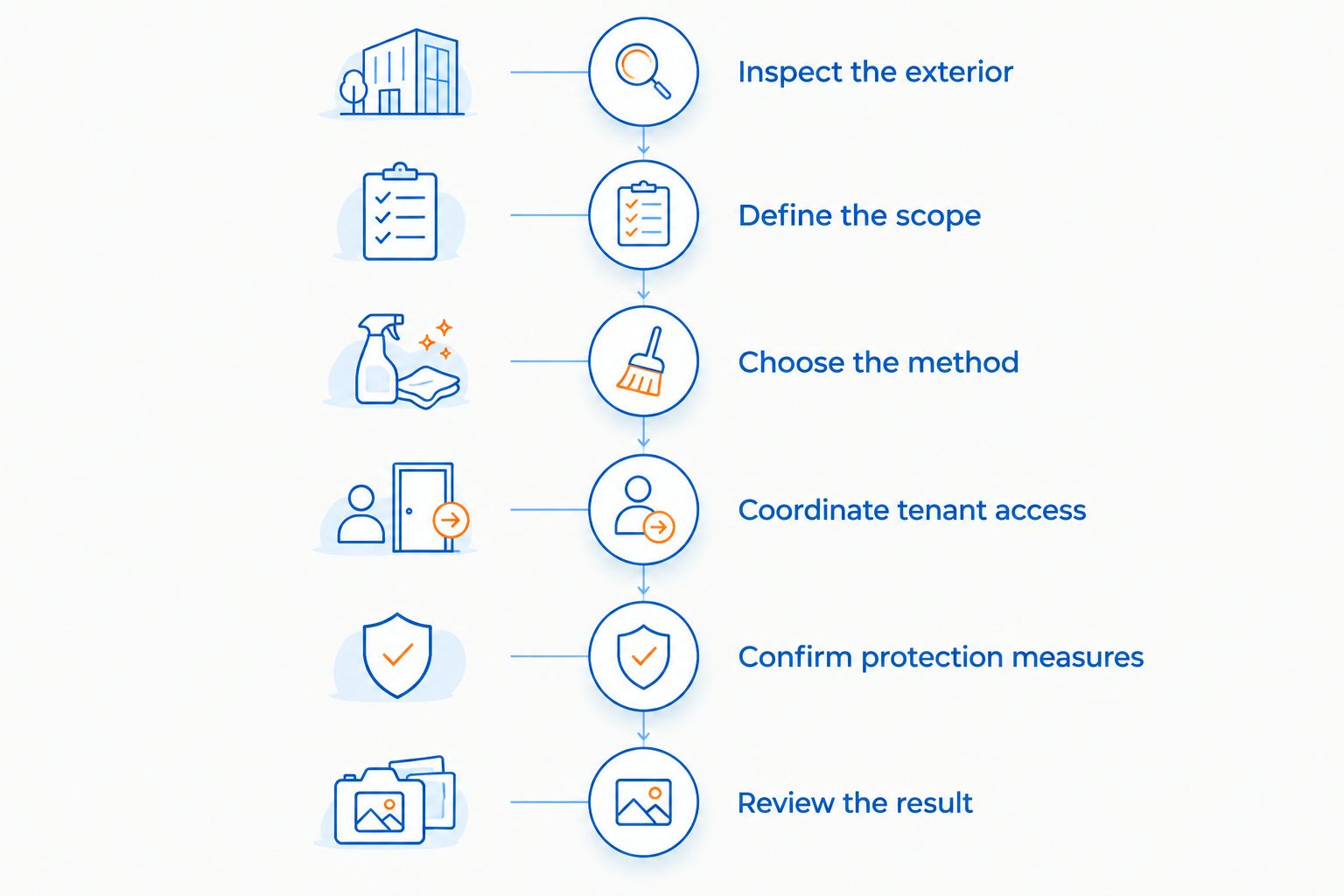
The process follows a clear order: inspect, define, choose, coordinate, protect, and review. Skipping the early decisions leaves the cleaning provider and tenants working from different expectations.
Compare your rental-property cleaning options
Choose an option by surface condition and work scope, not by whether you already own a pressure washer. The options below solve different problems; repair is the right first move when the underlying material is failing.
| Option | Best for | Main advantage | Key limitation |
|---|---|---|---|
| Gentle hand cleaning | Small, reachable marks on suitable sound finishes | Lets you address a limited area without washing the entire building | Requires compatible care instructions and safe access; unsuitable for extensive or elevated work |
| Professional house washing | Rental exterior walls needing a coordinated cleaning scope | Allows you to discuss material, access, preparation, and cleanup together | Scope varies; roof and ground-surface work are not automatically included |
| Separate driveway or patio cleaning | Ground surfaces needing their own treatment | Keeps wall cleaning and hardscape requirements distinct | Does not address dirty walls, roofs, or building defects |
| Separate roof soft washing | Roof surfaces requiring a roof-specific assessment | Treats the roof as a separate material and access problem | Does not replace roof repairs or exterior wall washing |
| Repair before cleaning | Peeling finishes, loose materials, or water-entry concerns | Addresses the defect rather than treating it as dirt | Delays cleaning until the repair issue is resolved |
Professional house washing is not a repair service. Even when cleaning is appropriate, you still need to confirm what the provider will do around damaged areas and which surfaces remain excluded.
Common mistakes rental property owners make
Booking around vacancy dates without checking other work
A vacant property can still have painters, repair contractors, cleaners, and prospective tenants using it. Coordinate exterior washing with those activities so workers do not obstruct one another or expose fresh finishes to unsuitable treatment. Ask the relevant contractor when a repaired or newly coated surface is ready for cleaning.
Treating tenant belongings as provider preparation
Patio furniture, planters, vehicles, and storage do not move themselves. Decide who handles them and whether any items must remain in place. An incomplete preparation plan can leave parts of the agreed area inaccessible.
Combining walls, roofs, and paving into one vague request
A request to clean the outside of the rental leaves too much undefined. List each surface, access requirement, and exclusion. A clear scope also makes quotes easier to compare without assuming they describe the same work.
Expecting washing to remove every visible mark
Discoloration is not always removable dirt. Damaged paint, weathered materials, and some stains remain after appropriate cleaning. Ask what the provider expects to address, and do not turn an unresolved cosmetic mark into repeated aggressive treatment.
Treating photographs as proof of tenant responsibility
Before-and-after images document condition and completed work; they do not, by themselves, establish liability. Keep cleaning records separate from any decision about tenant charges. Follow the lease and applicable requirements rather than treating routine exterior maintenance as an automatic deduction.
FAQ
What's the best way to arrange house washing for a rental property?
Start with an exterior inspection, photographs, and a written surface-by-surface scope. Then confirm the cleaning method, tenant access, protection measures, and completion criteria with the provider.
Can I wash my rental house while tenants are living there?
Occupied rentals require tenant coordination before exterior washing. Check applicable entry requirements and the lease, then agree on windows, vehicles, belongings, pets, and access routes.
Is pressure washing better than soft washing for rental house walls?
Neither method is automatically better for every rental house wall. The appropriate method depends on the material, finish, condition, and manufacturer guidance; avoid choosing by pressure alone.
Does house washing include the roof and driveway?
Roof and driveway cleaning are included only when the agreed scope says so. List wall washing, roof soft washing, and ground-surface cleaning separately when requesting a quote.
How often should landlords wash a rental property's exterior?
Base the schedule on observed condition rather than an automatic interval. Inspect during routine maintenance and turnover, then address surface buildup and repair issues as separate tasks.
Can house washing fix peeling paint or cracked stucco?
House washing does not fix peeling paint or cracked stucco. Inspect and address those defects before exposing damaged areas to cleaning water or solutions.
What should I ask Socalemm before booking a rental house wash?
Ask Socalemm to confirm the surfaces, method, preparation, protection measures, and exclusions for your rental. Also identify tenant access arrangements and any separate roof, driveway, or patio work.
One last thing
Photograph the dry exterior, not just the freshly rinsed walls. Wet surfaces can look different from dry ones, so a dry follow-up gives you a more useful record of remaining marks and finish condition. Add it to your 2026 maintenance file alongside the original inspection photos.