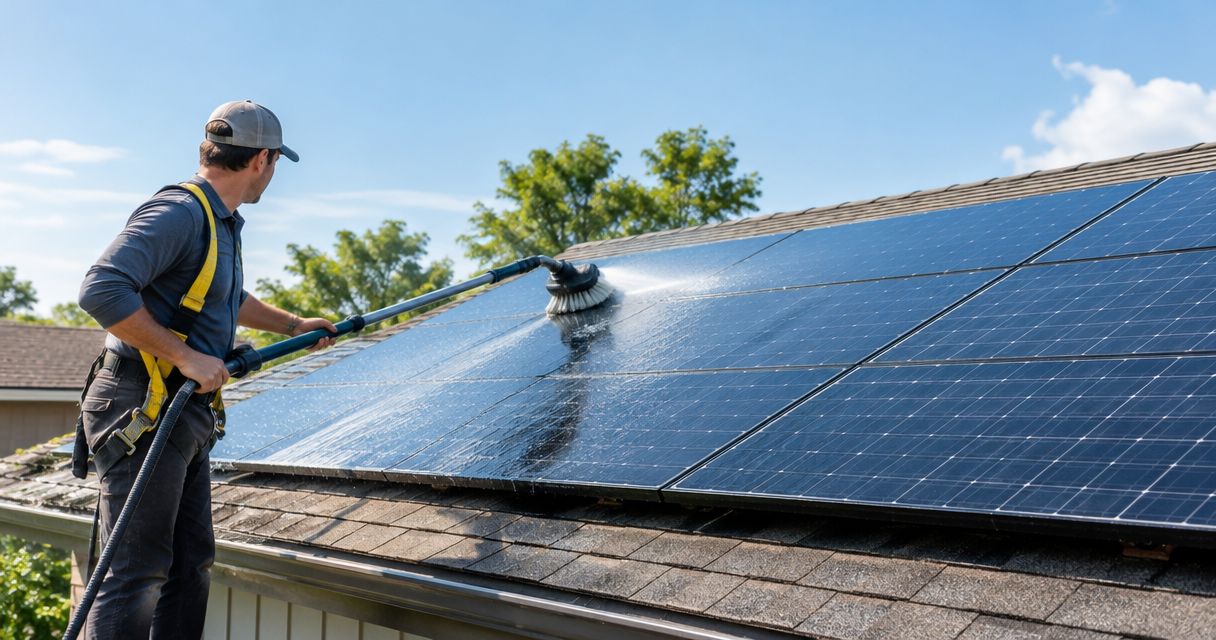
Soft wash roof cleaning is safe around solar panels only when the roof treatment follows the panel manufacturer's restrictions and controls spray, runoff, and electrical exposure. Low pressure alone does not make a roof-cleaning solution suitable for panel glass, frames, seals, or wiring. Before booking in 2026, separate the roof-cleaning scope from any work on the solar equipment and require a clear protection plan.
- Is soft wash roof cleaning safe for solar panels? Only when the method respects manufacturer instructions and protects electrical components.
- Roof soft washing and solar panel cleaning are separate tasks; approval for one does not establish compatibility with the other.
- Socalemm provides roof soft washing in Orange County; discuss solar equipment before requesting a roof-cleaning quote.
- Stop cleaning around cracked panels, exposed wiring, or loose connections and arrange a solar-system inspection.
Is soft wash roof cleaning safe for solar panels?
Yes, conditionally—not because the word soft guarantees safety. The roof surface, cleaning solution, application method, and solar installation all need separate consideration. A process suited to roofing does not automatically suit the equipment mounted above it.
For homeowners considering Socalemm for roof soft washing, describe the solar installation when requesting a quote. Include accessible photos and the panel model if you have it, rather than asking a cleaner to decide compatibility from the roof's appearance.
| Approach | Best for | Main benefit | Main limitation |
|---|---|---|---|
| Roof soft washing with a solar protection plan | Treating roofing around an installed array | Addresses roof soiling without assuming the panels need the same treatment | Requires control of spray, runoff, access, and product compatibility |
| Manufacturer-approved panel cleaning | Cleaning the panel surface itself | Matches the cleaning process to the panel's instructions | Does not address surrounding roof growth or diagnose electrical faults |
| High-pressure washing directed at panels | Not recommended without explicit manufacturer authorization | No reason to choose it merely because roof equipment is nearby | Risks damage at vulnerable surfaces, edges, seals, and connections |
This comparison is a planning guide, not permission to apply a particular chemical. For a 2026 appointment, use the instructions applicable to your installed equipment, including any installation-specific guidance from the solar provider.
Why this matters
A roof and a solar array share space, but they are not the same cleaning surface. Roof treatment involves roofing materials and drainage; solar equipment adds glass, mounting hardware, cables, connectors, and electrical components.
That distinction changes the job. Cleaning the visible roof safely does not prove that overspray can contact panel edges or that runoff can pass through wiring without concern.
Socalemm roof soft washing is best suited to Orange County homeowners seeking roof cleaning, not solar-system fault diagnosis. Keep those scopes separate when discussing the work, and involve your solar provider when equipment condition or cleaning restrictions need clarification.
Roof treatment: keep the solution off unapproved surfaces
Soft washing uses a cleaning solution with low-pressure application rather than relying on concentrated mechanical force. That reduces one type of exposure, but it does not settle chemical compatibility. A gentle spray can still carry a product onto a surface it was not intended to treat.
Some roof-cleaning solutions contain sodium hypochlorite. Its presence makes the product label, dilution instructions, contact restrictions, and material compatibility relevant; it does not establish that the solution is suitable for your solar equipment.
Ask which product will be used and how the cleaner will prevent unintended contact. The answer should address the actual array location, roof slope, wind conditions, and drainage path—not simply promise that the equipment operates at low pressure.
Do not ask a cleaner to compensate for an unsuitable chemical by rinsing afterward. Preventing unapproved contact is the first control; rinsing is not permission to ignore material restrictions. Any cleanup or rinse procedure must also follow the equipment and product instructions.
Panel cleaning: follow the equipment instructions
If the panels themselves need cleaning, make that a separate discussion. The roof-cleaning mixture should not become the panel-cleaning method by default. Instructions for the installed panel model determine what contact, tools, water conditions, and cleaning agents are acceptable.
Check whether the instructions address abrasive tools, pressure equipment, cleaning during hot conditions, and electrical precautions. Do not replace those instructions with a generic recommendation for every solar panel.
Also distinguish surface dirt from an equipment problem. A visible mark on the glass and an inverter warning call for different responses; cleaning cannot establish whether the solar system is functioning correctly.
For your 2026 maintenance records, keep the applicable cleaning instructions with your solar installation paperwork. That gives the roof cleaner and solar provider the same reference instead of relying on a verbal description of what another contractor previously used.
Why safety varies between roofs with solar panels
The useful question is not whether soft washing is universally safe. It is whether the proposed work fits your roof and installed equipment.
- Panel instructions: Cleaning restrictions vary by equipment. Confirm the applicable instructions before approving contact with any solution or tool.
- Roof material: The roof needs its own compatible treatment. Suitability for roofing does not establish suitability for panel components.
- Equipment condition: Cracked glass, damaged cable insulation, or loose connections require assessment before nearby wet work proceeds.
- Array layout: Panel placement affects access to roof sections and the ability to keep spray away from equipment.
- Wind and drainage: Spray drift and the route taken by liquid matter as much as the intended application area.
- Access method: Foot traffic, hose movement, and equipment placement must avoid loading panels or disturbing wiring and mounting hardware.
These factors belong in the job plan before treatment begins. A cleaner should not discover an inaccessible roof section only after applying solution above it.
How should you prepare for roof cleaning around solar panels?
Use this sequence to agree on the work without climbing onto the roof yourself. Photos taken from the ground, installation documents, and a conversation with your solar provider are safer starting points than a homeowner roof inspection.
1. Check instructions
Find the panel identification and cleaning guidance in your installation records. If the model is unclear, ask the solar provider to identify the equipment and supply the relevant instructions.
Ask about any installation-specific restrictions as well. Guidance for panel glass alone does not answer every question about connectors, roof penetrations, or equipment mounted beneath the array.
2. Review condition
Tell the cleaner about known roof leaks, broken tiles, solar-system warnings, or previous electrical repairs. Report visible damage from a safe location; do not touch wiring or move equipment to investigate it.
If cracked panels, damaged cables, or loose components are present, pause the affected work. A roof-cleaning appointment is not the place to test whether damaged equipment tolerates water.
3. Define boundaries
Specify which roof areas will be treated and whether panel cleaning is excluded. Agree on what happens where the roof cannot be reached without spraying equipment or stepping on the array.
For a 2026 service request, put those boundaries in writing. An excluded area is clearer than an assumption that every roof section will receive identical treatment.
4. Plan runoff
Ask where solution will travel after application, including around panel edges and roof penetrations. Discuss spray direction, wind, hose routing, and how the crew will avoid electrical equipment.
Do not prescribe an improvised cover yourself. Whether a barrier is appropriate depends on the installation and equipment instructions; covering an array is not a universal substitute for a suitable method.
5. Confirm handoff
Agree on who will address unexpected solar concerns and what will stop the cleaning. The cleaner should report an observed issue rather than attempt electrical troubleshooting outside the cleaning scope.
Keep the completed work description with your maintenance records. Note any roof sections left untreated and any issues referred to the solar provider.
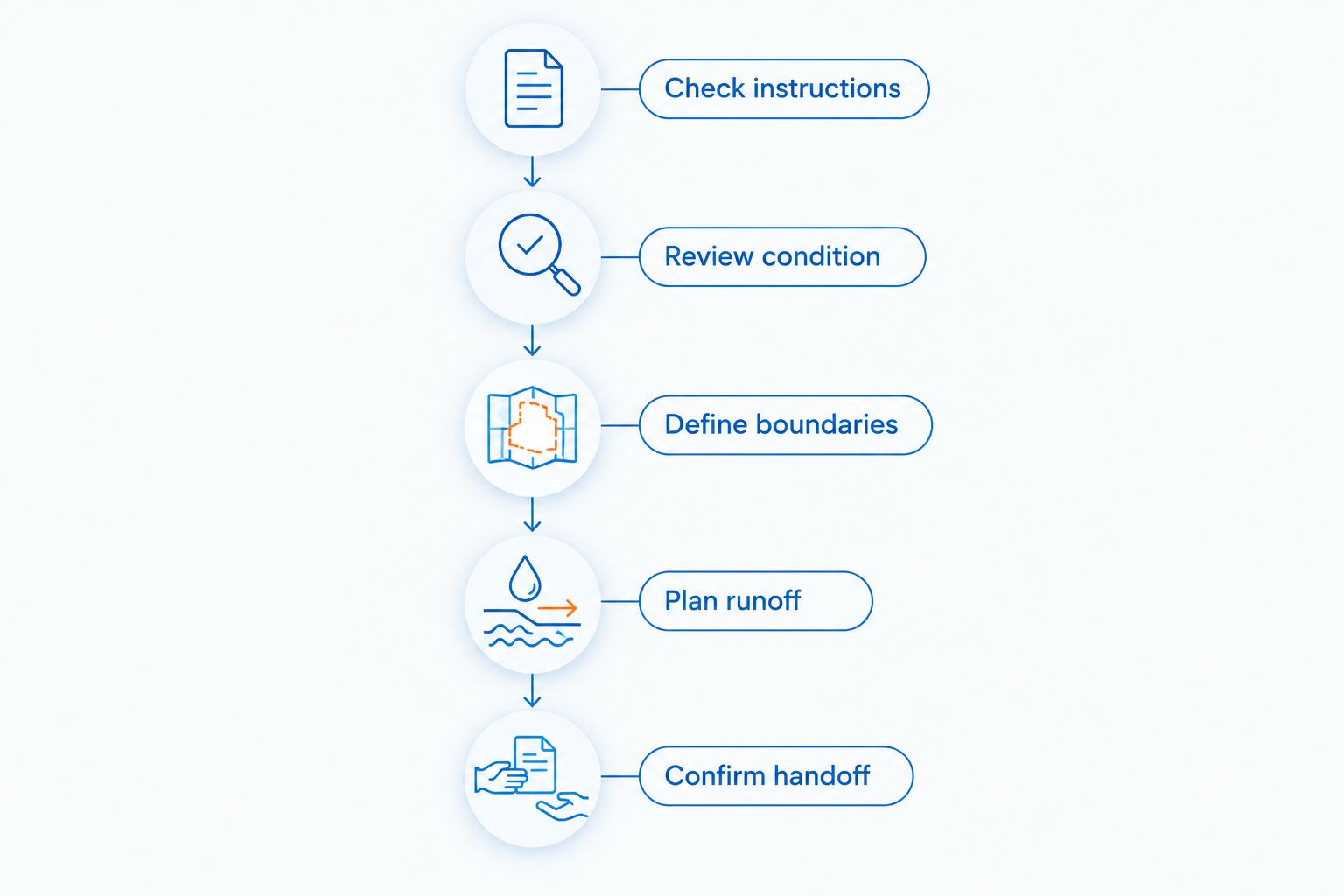
The sequence keeps decisions in the right order: first establish restrictions, then choose the cleaning method. For the broader roof-method distinction, read whether soft washing is better than pressure washing for roofs.
Can roof-cleaning solution touch solar panels?
Only when the relevant equipment instructions permit that specific exposure. Do not assume that a product suitable for a roof is suitable for panel glass, frames, seals, coatings, or nearby electrical components. Ask how unintended contact will be prevented and handled before work starts.
Should you turn off solar panels before roof washing?
Turning off a solar system does not make every component electrically inactive in daylight. Follow the shutdown and safety instructions supplied for your installation, and have the solar provider clarify any uncertainty. Do not disconnect cables, open enclosures, or treat a switched-off system as safe to spray.
Does lower solar output mean your roof needs washing?
Lower solar output alone does not establish that roof washing is needed. Weather, shading, surface soiling, and equipment issues are different possibilities. Compare system information with guidance from your solar provider before deciding that cleaning is the appropriate response.
What should you ask before accepting the cleaning plan?
A useful answer describes the process rather than relying on the word soft. Ask the cleaner to explain the following:
- Which roof areas are included, and which areas around the array are excluded?
- What cleaning product is proposed, and which instructions govern its use near the equipment?
- How will spray drift and runoff be controlled?
- Will anyone need to walk near panels or move hoses beside exposed wiring?
- What condition would stop the job and require the solar provider?
- Is panel cleaning included, excluded, or assigned to someone else?
You do not need to design the contractor's application method. You do need a clear explanation of the boundaries and a plan that does not depend on guessing about your solar installation.
When discussing Socalemm roof soft washing, identify your Orange County property as a home and explain the roof-cleaning goal separately from any solar concern. Ask what information is needed to assess the cleaning scope; do not assume solar panel cleaning or electrical inspection is included.
Discuss your roof-cleaning scope
Describe your roof, solar installation, and cleaning needs before requesting a quote.
FAQ
Is soft wash roof cleaning safe for solar panels in 2026?
Soft wash roof cleaning is safe around solar panels only when the method follows the installed equipment's restrictions and controls spray, runoff, and electrical exposure. Low pressure alone does not establish safety.
Can I use the roof-cleaning mixture to wash my solar panels?
Do not use a roof-cleaning mixture on solar panels unless the equipment instructions explicitly permit that product and method. Roof compatibility and panel compatibility are separate checks.
Is low pressure enough to protect solar panels?
Low pressure is not enough to establish that a cleaning method is safe for solar panels. Chemical contact, equipment condition, runoff, and electrical exposure also matter.
Should I cover my solar panels before roof cleaning?
Do not improvise a panel cover as a substitute for a suitable cleaning plan. Ask the solar provider and cleaner whether any protective barrier is appropriate for the installation.
Can the roof cleaner walk on my solar panels?
Do not plan access that requires walking on solar panels. The cleaning scope should account for safe access without placing loads on the array or disturbing its components.
Does switching off the inverter make roof washing safe?
Switching off the inverter does not make every solar component electrically inactive in daylight. Follow the installation's safety instructions and refer electrical questions to the solar provider.
What should I do if a panel looks cracked before cleaning?
Pause cleaning around a visibly cracked panel and arrange an assessment by the solar provider. Do not touch damaged equipment or test it with water.
One last thing
The most useful detail in a roof-cleaning quote is often what will not be cleaned. Ask for the boundary around the solar array to be stated clearly, including inaccessible roof sections and any panel work that is excluded.
That prevents a clean-roof expectation from turning into an unapproved equipment treatment. If reaching a stained section requires a method that conflicts with the solar instructions, leave that section untreated until an appropriate plan is agreed.