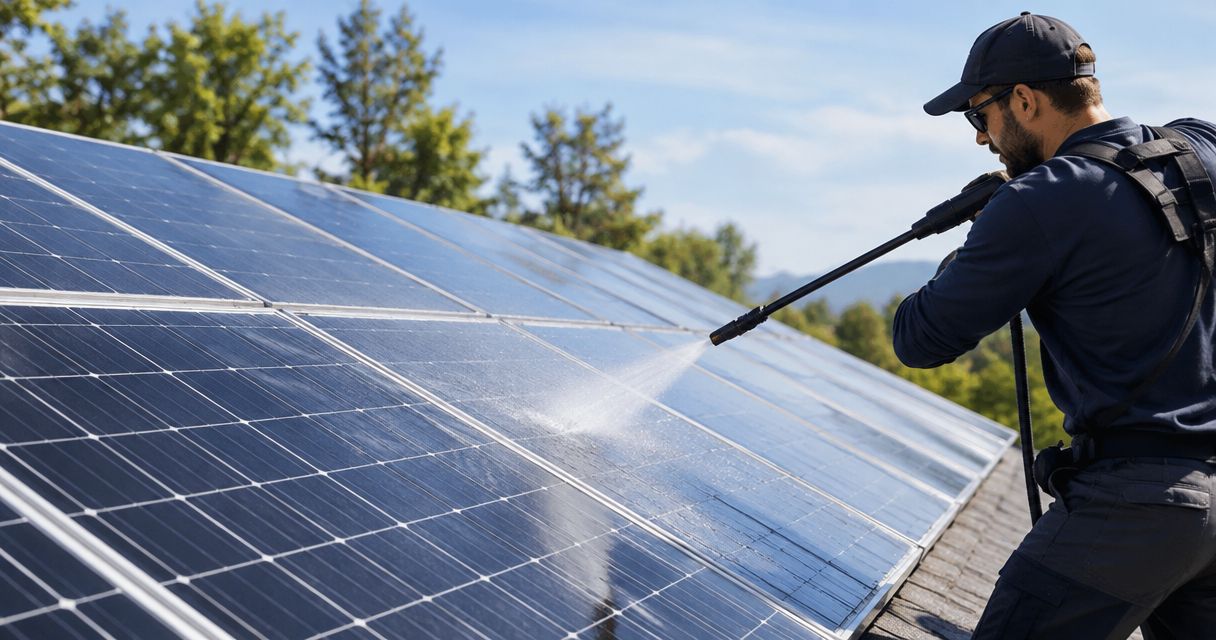
Yes—pressure washing can damage solar panels by stressing seals, forcing water into vulnerable areas, or damaging the panel surface. Use the cleaning instructions for your exact panel model instead; a method suitable for the roof beneath the array is not automatically suitable for the panels themselves.
- Can pressure washing damage solar panels? Yes. Follow the panel manufacturer's cleaning instructions instead of choosing a pressure setting.
- Roof soft washing and solar panel cleaning require separate decisions about water, chemicals, equipment, and access.
- Socalemm provides Orange County exterior cleaning; confirm the scope around solar panels before scheduling roof work.
- Cracks, exposed wiring, or monitoring faults require a solar professional, not a stronger cleaning method.
Can pressure washing damage solar panels?
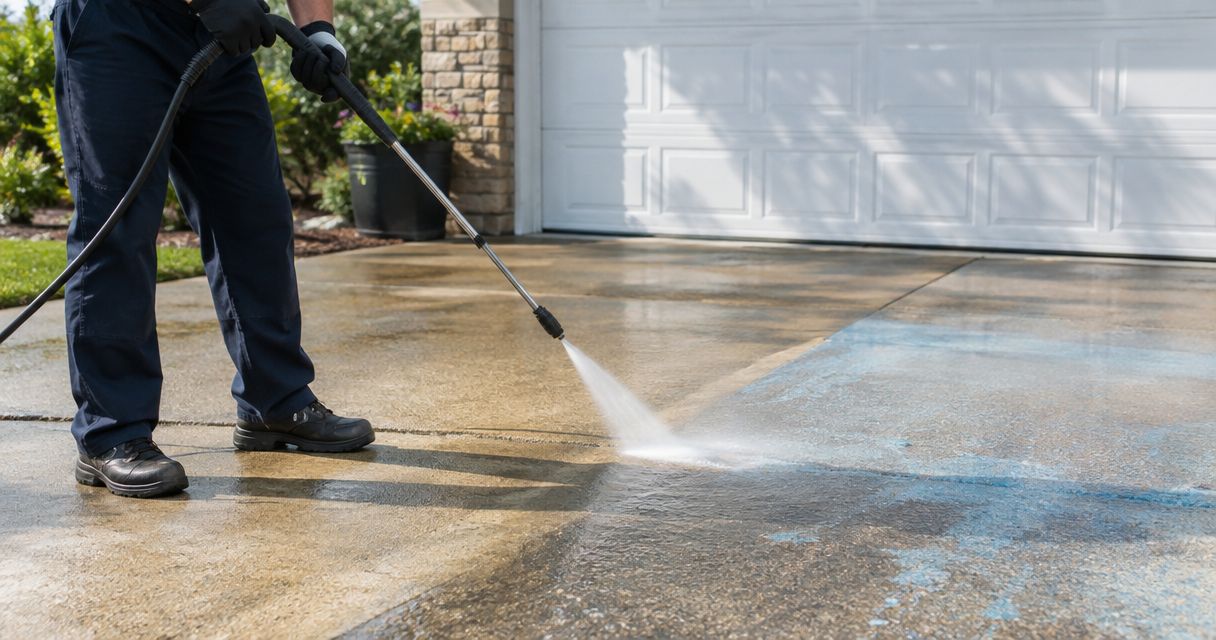
Yes. Do not treat solar panels like a concrete driveway or assume a wide spray nozzle makes pressure washing safe. The panel manufacturer's instructions determine the permitted equipment, cleaning materials, and working conditions.
Socalemm provides exterior cleaning for Newport Beach and Orange County homeowners and businesses. When arranging roof work, distinguish cleaning the roof from cleaning the solar array.
| Cleaning approach | Best for | Benefit | Limitation or risk |
|---|---|---|---|
| Pressure washing | Suitable exterior surfaces outside the solar array, after checking surface requirements | Removes attached dirt on surfaces that tolerate the method | Concentrated spray can damage panels or force water into vulnerable areas |
| Manufacturer-approved panel cleaning | Solar panels whose instructions permit the proposed method | Matches the cleaning process to the equipment | Requires the correct manual, suitable access, and compatible tools |
| Roof soft washing | Roof materials compatible with the proposed treatment | Addresses roof cleaning without relying on high-pressure spray | Roof-cleaning chemicals and runoff are not automatically suitable for solar equipment |
There is no universal pressure setting that makes every solar panel safe to wash. A machine setting alone does not account for nozzle pattern, working distance, panel condition, or the manufacturer's restrictions.
Why this matters
Your panels are electrical equipment, not just glass exposed to weather. A clean-looking surface does not prove that seals, connectors, wiring, or the roof beneath the array remain sound.
For a 2026 cleaning appointment, settle the method before anyone brings equipment onto the property. Ask what will touch the panels, what will remain outside the array, and how the contractor will handle nearby roof treatment.
An output drop also needs a separate decision. Dirt is one possible explanation, but shading, equipment faults, and changes in weather affect production too. Do not use a lower monitoring reading as permission to pressure wash the panels.
Where pressure washing creates risk
Panel edges and seals
A concentrated jet can place stress on edges and seals. Directing spray into a seam or beneath a panel creates a different exposure from ordinary rainfall.
Do not assume that outdoor installation means unrestricted water resistance. Equipment designed to withstand weather still has limits on cleaning methods and water application.
Glass and surface treatments
Solar panel glass is not an invitation to scrub or blast away every mark. Abrasive tools, trapped grit, and incompatible cleaners can damage the surface or its treatment.
If a mark resists the approved cleaning process, stop and identify it. More force is not a reliable substitute for knowing whether the material is dirt, mineral residue, adhesive, or an existing surface defect.
Wiring and connectors
Water directed underneath an array can reach wiring and connections that are not visible from the ground. Loose, damaged, or poorly secured components require inspection rather than cleaning around the problem.
Never disconnect solar wiring to make washing easier. Turning off a household breaker does not make every part of a solar installation electrically safe; follow the system's documented shutdown instructions and leave electrical work to qualified personnel.
Why the risk varies
The same cleaning approach does not suit every installation. These factors change what you need to check before work begins:
- Manufacturer instructions: The panel manual determines which tools, liquids, and cleaning conditions are acceptable.
- Panel condition: Cracks, damaged edges, loose components, or deteriorated seals change the task from cleaning to inspection.
- Spray application: Nozzle pattern, distance, direction, and pressure affect how water reaches the surface and surrounding equipment.
- Surface temperature: Cleaning hot panels with much cooler water creates thermal stress; follow the manufacturer's temperature guidance.
- Cleaning materials: A roof treatment or household cleaner is not automatically compatible with panel glass, frames, seals, or surface coatings.
- Access and drainage: Roof slope, fragile roofing, concealed wiring, and runoff routes affect whether the work can be carried out safely.
A useful 2026 maintenance record identifies the panel model and preserves the applicable cleaning instructions. Keep that information with the installation paperwork rather than relying on a general cleaning recommendation.
How should you arrange solar panel cleaning safely?
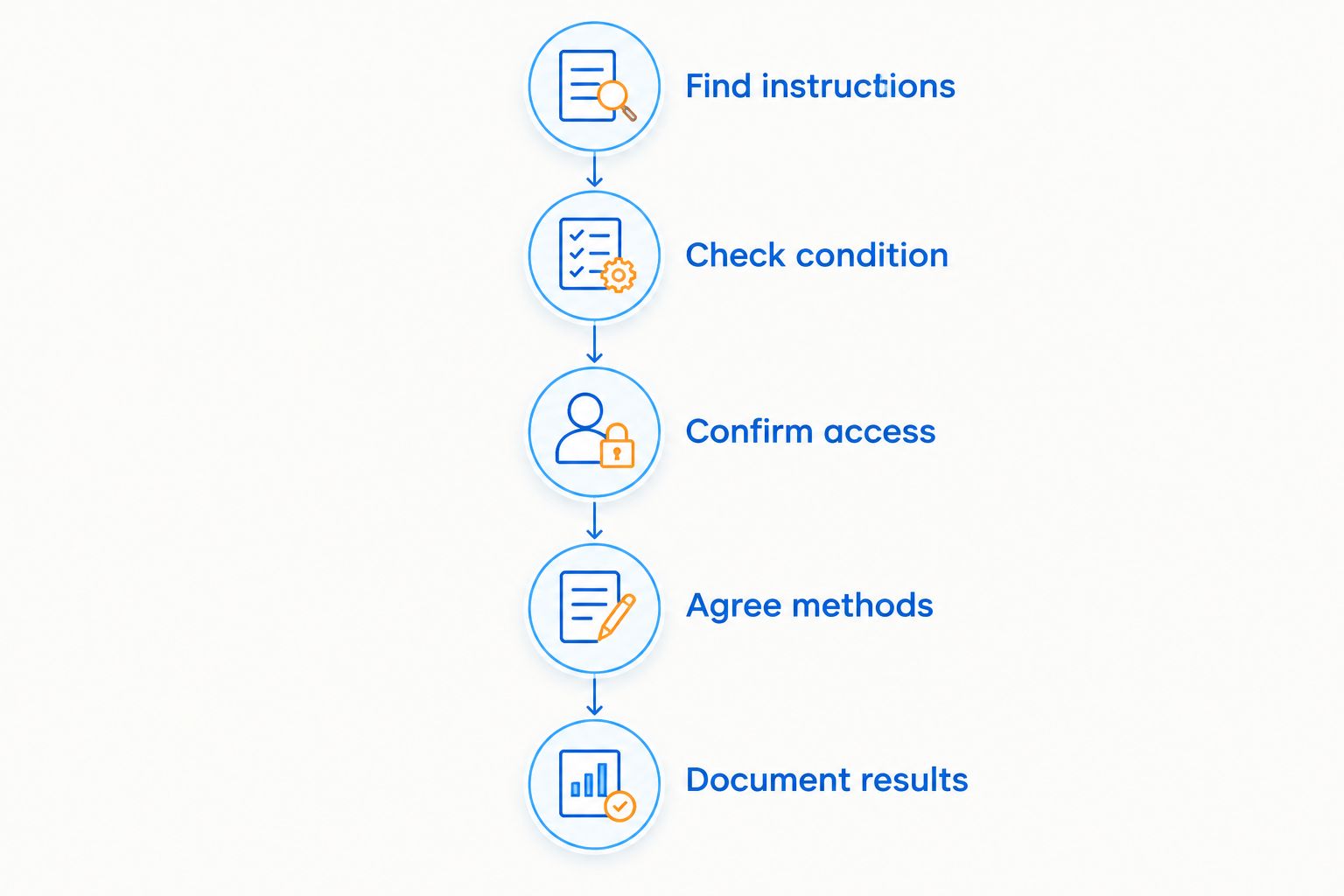
Use these 5 steps before authorizing work. The goal is to establish a permitted method and a safe working scope, not to find the strongest equipment available.
- Find instructions. Locate the panel model and its cleaning manual in your installation records. If you cannot identify the equipment, ask the installer before choosing tools or chemicals.
- Check condition. Look from a safe position for obvious broken glass, displaced panels, hanging cables, or other visible damage. Do not climb onto the roof to complete this check.
- Confirm access. Establish who will perform the work and how they will reach the panels without walking on them or improvising ladder access. Roof access is a separate safety issue from cleaning technique.
- Agree methods. Confirm that the proposed water application, tools, and cleaning materials follow the panel instructions. Put exclusions for electrical components and damaged areas in writing.
- Document results. Keep the agreed scope and any safely taken condition photos. Compare monitoring information under comparable conditions rather than expecting an immediate reading to prove the cleaning worked.
For your 2026 service file, gather 3 documents: the panel cleaning instructions, the installation information, and the agreed cleaning scope. These give you a practical reference when different contractors handle the roof and solar equipment.
Do not substitute an online pressure recommendation for those documents. Advice about another panel model does not establish what your installation permits.
Can you soft wash a roof that has solar panels?
A roof with solar panels needs a cleaning plan that accounts for both the roof material and the solar installation. Soft washing describes an approach to cleaning; it does not establish that every treatment is safe for every nearby component.
Before work starts, separate the roof surface from the panel faces, frames, underside, wiring, mounting points, and roof penetrations. Ask how the proposed work will avoid prohibited contact and manage runoff without improvising covers or placing anything on the panels.
Socalemm offers roof soft washing, but that service description alone does not establish a solar-panel-cleaning method. Ask for the proposed scope around your array, then check it against your equipment instructions.
The guide to how often to soft wash a tile roof addresses a separate maintenance question. Roof condition and panel condition should not be collapsed into the same cleaning decision.
For any 2026 roof-washing proposal, ask these 4 questions:
- Which roof areas will be treated, and which solar components are excluded?
- What chemicals and application methods are proposed near the array?
- How will the contractor manage overspray and runoff around the equipment?
- What condition would make the contractor stop and request a solar inspection?
A clear answer describes the work. A vague assurance that the crew will be careful does not replace a defined method.
Can you clean solar panels yourself?
Ground-level cleaning is only an option when your panel instructions permit the method and you can complete it without unsafe reaching or roof access. Do not turn a straightforward rinse into ladder work beside energized equipment.
Even a garden hose needs sensible limits. Do not aim water at connectors, exposed wiring, damaged panels, or underneath the array, and do not assume that lower pressure makes an incompatible chemical acceptable.
Avoid walking or leaning on panels, scraping stubborn deposits, or using abrasive pads. If the approved approach does not remove the material, ask the installer or a suitable solar maintenance professional what to do next.
The stopping point is uncertainty about safety or compatibility—not the point at which you run out of cleaning force. That rule protects you from turning a cosmetic concern into a repair problem.
Does a drop in solar output mean the panels need washing?
A drop in solar output does not, by itself, identify dirty panels as the cause. Check the monitoring system for faults and consider weather, shading, and the period being compared before scheduling cleaning.
Look for patterns rather than reacting to an isolated reading. If the system reports a fault or production changes without an obvious explanation, contact the installer or solar service provider before arranging exterior cleaning.
Cleaning should address an identified maintenance need. It should not stand in for electrical diagnosis or come with an assumed production improvement.
What should you do if the panels were already pressure washed?
Stop further washing and keep people away from visibly damaged equipment. Do not touch wet connectors, loose cables, cracked glass, or exposed components to check whether they are working.
Record what happened from a safe location: the area washed, the equipment used if known, and any visible changes or monitoring alerts. Send that information to the installer or a qualified solar service provider for assessment.
Do not assume normal output proves that no damage occurred. Equally, do not assume pressure washing automatically cancels all warranty coverage; the applicable terms and the cause of any damage determine that question.
Homeowners and commercial managers need different scopes
For a home, keep the conversation focused on your roof material, panel instructions, access, and nearby areas being cleaned. Tell the exterior-cleaning contractor about the solar installation before approving the scope.
For a commercial property, separate exterior cleaning from solar operations and maintenance responsibilities. Identify who can authorize work near the array, receive fault reports, and coordinate with the solar service provider.
Socalemm provides residential and commercial exterior cleaning in Newport Beach and Orange County. Match the request to that service scope instead of treating an exterior-cleaning appointment as a solar inspection.
FAQ
Can pressure washing damage solar panels even with a wide nozzle?
Yes. A wide nozzle does not establish that pressure washing is safe for your panels. Follow the cleaning instructions for the exact panel model rather than relying on nozzle choice.
What pressure is safe for washing solar panels?
There is no universal safe pressure setting for all solar panels. Use the equipment manufacturer's cleaning limits and do not pressure wash when the instructions prohibit it.
Is soft washing safe for solar panels?
Soft washing is not automatically safe for solar panels. The cleaning chemicals, water application, tools, and working conditions must comply with the panel manufacturer's instructions.
Can I use a garden hose to rinse my solar panels?
Use a garden hose only when the panel instructions permit that method and safe access is available. Avoid electrical connections, damaged equipment, and spraying beneath the array.
Will cleaning my solar panels fix low electricity production?
Cleaning does not establish or fix every cause of low solar production. Check monitoring alerts, shading, and comparable operating conditions before treating dirt as the cause.
Should I turn my solar panels off before cleaning?
Follow the installation's shutdown and cleaning instructions rather than assuming one switch makes the array safe. Solar modules can continue generating electricity in daylight, so leave electrical isolation questions to qualified personnel.
What should I ask before roof washing near solar panels?
Ask for the treatment areas, chemicals, application method, runoff plan, and excluded solar components. Confirm how the contractor will respond if damaged panels or exposed wiring are found.
One last thing
Put this distinction in your 2026 work order: cleaning the roof does not authorize cleaning the solar panels. List panel cleaning separately, with its own permitted method, or explicitly exclude it.
That short instruction gives you and the contractor a clear boundary before work starts. If either task depends on an unresolved equipment question, settle it with the installer first.