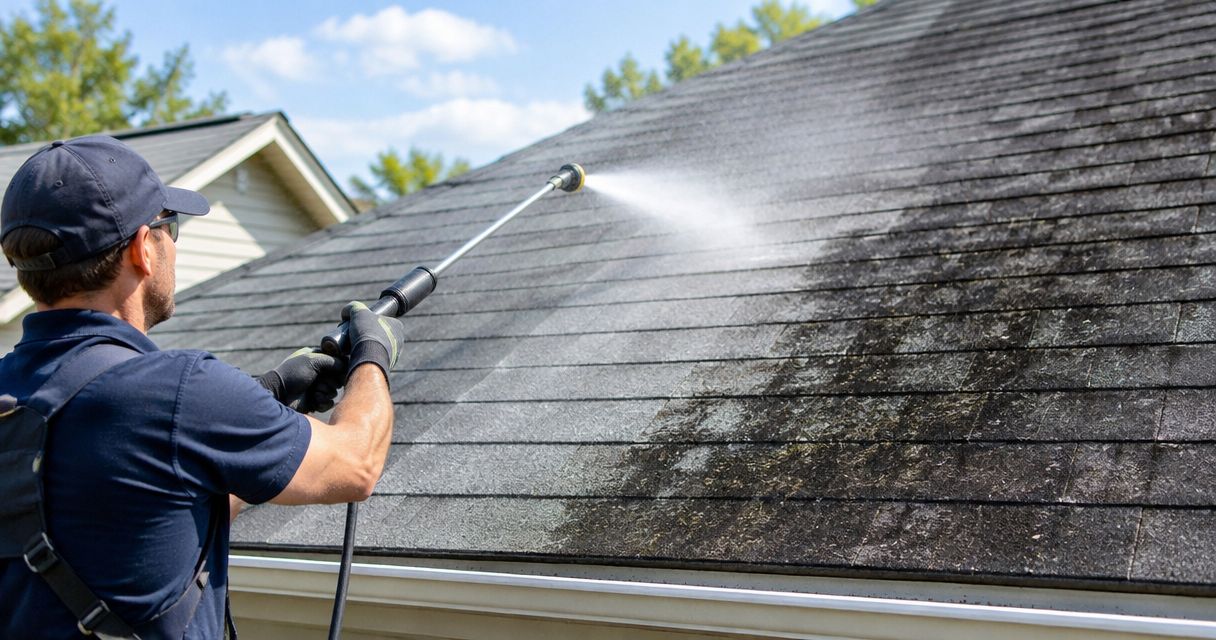
Yes—soft washing can remove black roof streaks caused by algae when the cleaning method suits the roof material and its condition. It will not repair worn shingles, broken tiles, leaks, or discoloration caused by damaged roofing. For your 2026 roof-cleaning decision, identify the stain first, then check the roof manufacturer’s cleaning instructions before approving treatment.
- Can soft washing remove black streaks from roof surfaces? Yes, when algae causes the discoloration and treatment suits the roofing.
- Black streaks are not proof that a roof needs replacement; damaged roofing still needs separate assessment.
- Avoid high-pressure washing on asphalt shingles; cleaning must follow the roof manufacturer’s instructions.
- Socalemm provides roof soft washing for homeowners in Newport Beach and Orange County.
Why this matters
A dark roof and a failing roof are not the same problem. Cleaning addresses surface growth and staining; roofing repairs address defects in the roof assembly. Confusing those jobs leads to the wrong expectations before work even starts.
For asphalt shingles, read about whether pressure washing is safe for roof shingles before choosing equipment or approving a cleaning proposal. Stronger pressure is not a substitute for identifying the stain. Your 2026 maintenance plan should start with the material and its condition, not how dark the roof looks from the street.
Can soft washing remove black streaks from a roof?
Soft washing can remove algae-related black streaks, but the appearance alone does not establish the cause. The organism commonly associated with dark streaking on asphalt shingles is Gloeocapsa magma, a type of cyanobacterium often called roof algae. Rust, accumulated debris, weathering, and other staining require a different assessment.
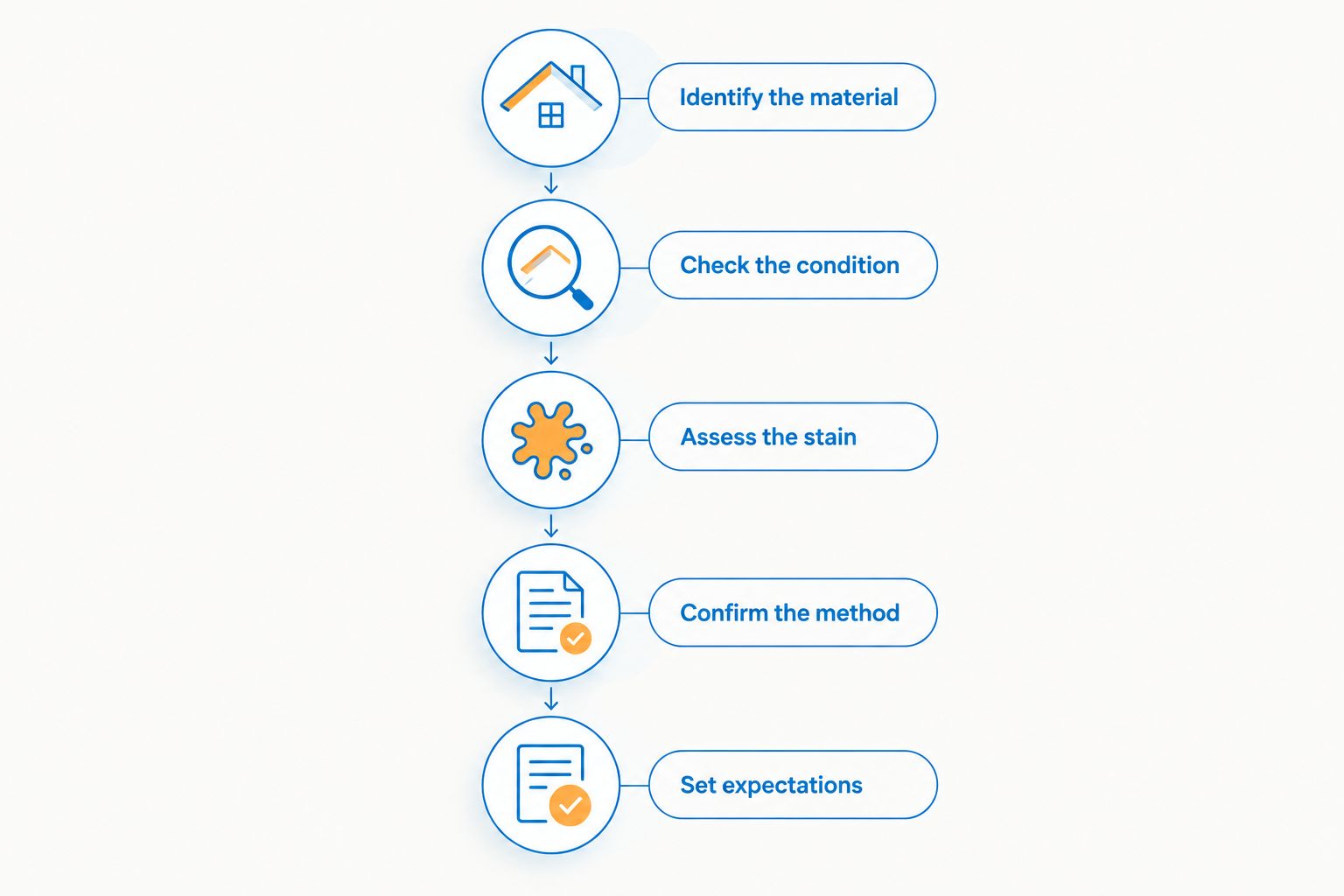
Use these 5 checks before deciding that cleaning is the right next step:
- Identify the material. Asphalt shingles, concrete tile, clay tile, and metal roofing do not share one cleaning specification. Identify coatings and previous repairs as well.
- Check the condition. Look from the ground for displaced roofing, obvious breakage, and uneven areas. Report existing leaks before discussing cleaning.
- Assess the stain. Note whether the discoloration forms streaks, follows metal fixtures, or includes raised growth. These observations help frame the inspection; they do not replace it.
- Confirm the method. Ask how the proposed treatment follows the roofing manufacturer’s instructions, including application and rinsing requirements.
- Set expectations. Separate removable growth from permanent discoloration or material wear. Agree on what will be checked after cleaning.
This sequence keeps the decision focused on the roof rather than a cleaning label. A proposal that says only “soft wash” does not explain the treatment, access plan, or precautions.
Algae streaks: cleaning addresses the growth
Algae-related streaking is a cleaning problem when the underlying roofing remains suitable for treatment. A roof-compatible cleaning solution addresses the biological growth without relying on aggressive mechanical force to strip it away.
The distinction matters on asphalt shingles. A pressure washer can dislodge protective granules, and directing water beneath roofing creates another avoidable risk. A clean-looking surface does not justify damage caused during cleaning.
Ask the contractor to explain what supports the algae diagnosis. Dark staining alone is not enough to promise a uniform result across an older roof, especially where repairs or replacement shingles already differ in color.
Best for: Roofs with confirmed algae staining and no condition issue that prevents cleaning. The benefit is addressing the growth; the limitation is that cleaning cannot restore worn roofing or make mismatched materials identical.
Moss and lichen: do not treat them like flat streaks
Raised moss and firmly attached lichen are different from a flat dark stain. Their attachment to the roof changes how removal should be handled, particularly on roofing that is already fragile or deteriorated.
Do not scrape, brush, or pull growth away simply to achieve an immediate visual result. Mechanical removal can damage the surface beneath it. Ask whether treated material needs to release gradually under the applicable cleaning instructions.
A contractor should distinguish treatment from final appearance. The job description should explain whether attached growth will remain initially and how follow-up assessment will work, rather than promising that every patch will disappear during the visit.
Best for: A material-specific assessment before treatment of attached growth. The benefit is a method matched to the condition; the limitation is that the finished appearance need not be immediate.
Worn or damaged roofing: cleaning is not repair
Missing granules, cracked tiles, failed flashing, and leaks do not become cleaning problems because the roof also has black streaks. Those conditions need roofing assessment, with cleaning considered separately.
Avoid using a wash as a test of whether a leaking roof is sound. Tell the contractor about known interior water stains, previous repairs, and any area that has been troublesome during rain. That information belongs in the initial discussion.
There is also a difference between removing discoloration and restoring original color. Weathering and material loss remain after surface contamination is removed. An older roof can be cleaner without looking new.
Best for: Roofing assessment when defects or active leaks are present. Repair addresses the defect; it does not automatically remove unrelated algae staining.
Soft washing versus high-pressure roof cleaning
The cleaning method should follow the material, not the equipment a contractor happens to bring. In particular, do not approve high-pressure washing of asphalt shingles as a shortcut for dark streak removal.
| Approach | Best for | Main benefit | Main limitation |
|---|---|---|---|
| Roof-compatible soft washing | Confirmed biological staining on roofing suitable for treatment | Treats growth without relying on aggressive pressure | Requires correct chemistry, application, and protection of surrounding surfaces |
| High-pressure washing | Not recommended for asphalt shingle cleaning | Mechanical force removes surface material | Can damage shingles and dislodge protective granules |
| Roofing assessment and repair | Leaks, broken roofing, or material deterioration | Addresses defects cleaning cannot fix | Does not replace a separate cleaning assessment |
For tile roofs, avoid assuming that a hard surface makes every cleaning method acceptable. Tiles can break under foot, and coatings, installation details, and the roof beneath the tile also matter. Ask for instructions specific to the actual roofing product.
Why black-streak removal results vary
A sound cleaning proposal accounts for more than stain darkness. These factors determine whether the plan fits the roof:
- Roof material: Shingles, tiles, coatings, and metal components have different cleaning restrictions. Identify the surface before choosing a treatment.
- Cause of discoloration: Biological growth, rust, debris staining, and weathering are not interchangeable. A treatment intended for algae is not a universal stain remover.
- Existing condition: Loose, cracked, deteriorated, or previously repaired areas affect whether cleaning should proceed. They also affect the finished appearance.
- Type of growth: Flat algae staining differs from attached moss or lichen. Removal expectations should reflect that distinction.
- Access and drainage: Roof access, nearby landscaping, gutters, and discharge routes influence preparation and protection measures.
- Surrounding exposure: Shade, retained debris, and moisture conditions matter when planning future inspections. Removing existing growth does not eliminate those conditions.
For a 2026 cleaning appointment, ask which of these factors applies to your property. A useful explanation connects the method to your roof instead of offering the same treatment description for every house.
What should you ask before booking roof soft washing?
Ask for a written scope that distinguishes the cleaning target, the method, and the exclusions. You should understand what is being treated and which conditions will remain outside the cleaning work.
Start with these questions:
- What roof material and condition is the proposal based on?
- What supports the conclusion that the streaks are algae?
- How does the proposed method match the manufacturer’s cleaning instructions?
- How will plants, painted surfaces, metal fixtures, and neighboring property be protected?
- Where will rinse water and treatment runoff go?
- What happens if damaged roofing is discovered before work begins?
- What appearance should I expect immediately, and what needs later review?
Check runoff planning rather than assuming gutters solve it. Ask how the contractor will prevent cleaning wastewater from entering storm drains and follow applicable local requirements.
Socalemm provides roof soft washing in Newport Beach and Orange County. When requesting a quote, describe the roof material, visible streaking, access restrictions, and any known defects; do not describe an active leak as something that needs washing.
Request a roof-cleaning quote
Describe your roof material, black streaks, access, and any known damage.
How should you prepare for a roof-cleaning assessment?
Take 3 photos from safe ground-level positions: an overall roof view, the clearest view of the streaking, and the area below the affected roof slope. Do not climb onto the roof to improve a quote request. The purpose is to show context, not to perform your own roof inspection.
Identify outdoor items that need moving and point out sensitive landscaping, electrical fixtures, or equipment near the work area. Tell the contractor about rainwater collection or unusual drainage arrangements. Ask who is responsible for preparation and reconnection rather than making assumptions.
For your 2026 records, keep the proposal and any existing roof-care instructions together. If the manufacturer’s guidance conflicts with the proposed cleaning method, resolve that conflict before scheduling work.
Will black roof streaks come back after soft washing?
Black roof streaks can return because cleaning does not permanently remove the conditions that support growth. Shade, moisture, and accumulated organic debris remain relevant after the visible staining is gone.
Use periodic ground-level observations to decide when another assessment is needed instead of treating one fixed schedule as suitable for every roof. For tile-specific planning, see how often to soft wash a tile roof. Keep maintenance decisions tied to the roof’s actual condition.
Should you clean the roof before an inspection?
Cleaning is not a substitute for the inspection’s roofing requirements. If a buyer, insurer, or other party has raised a concern, clarify whether it concerns staining, visible growth, damage, or remaining roof condition before arranging work.
Ask these 2 questions: What condition must be addressed, and what documentation is required? A cleaning invoice records cleaning work; it does not certify that a roof is free of defects.
FAQ
Can soft washing remove black streaks from roof shingles?
Yes, soft washing can remove algae-related black streaks from asphalt shingles when the method follows the roof manufacturer’s instructions. It does not repair granule loss, leaks, or damaged shingles.
What causes the black streaks running down my roof?
Gloeocapsa magma, a cyanobacterium commonly called roof algae, is associated with dark streaks on asphalt shingles. Other discoloration can have different causes, so appearance alone does not confirm the diagnosis.
Should I use a pressure washer to remove roof algae?
Do not use high-pressure washing to clean asphalt shingles. It can dislodge protective granules; use the roofing manufacturer’s cleaning guidance instead.
Will my roof look new immediately after soft washing?
Soft washing does not guarantee a new-looking roof or an immediate uniform appearance. Weathering, repairs, material wear, and attached growth affect the result.
Can I clean a roof that already leaks?
Have an active leak assessed before arranging roof cleaning. Cleaning does not repair the leak, and the roof’s condition determines whether cleaning should proceed.
How should I plan roof cleaning in 2026?
Plan roof cleaning in 2026 around the material, condition, stain diagnosis, and manufacturer’s instructions. Ask for a written scope covering treatment, property protection, runoff, and expected results.
Does Socalemm offer roof soft washing in Orange County?
Socalemm provides roof soft washing in Newport Beach and Orange County. Describe your roof material, staining, access, and known damage when requesting a quote.
One last thing
Photograph the roof when it is dry before judging whether dark areas remain. Wet and dry surfaces can look different, so comparing a dry before-photo with a wet after-photo is not a useful assessment of the final appearance. Keep the viewing angle and lighting as similar as practical.
Socalemm roof soft washing is best for homeowners seeking local exterior-cleaning service in Newport Beach and Orange County. Choose cleaning for an identified cleaning problem, and keep roofing defects on a separate repair list.