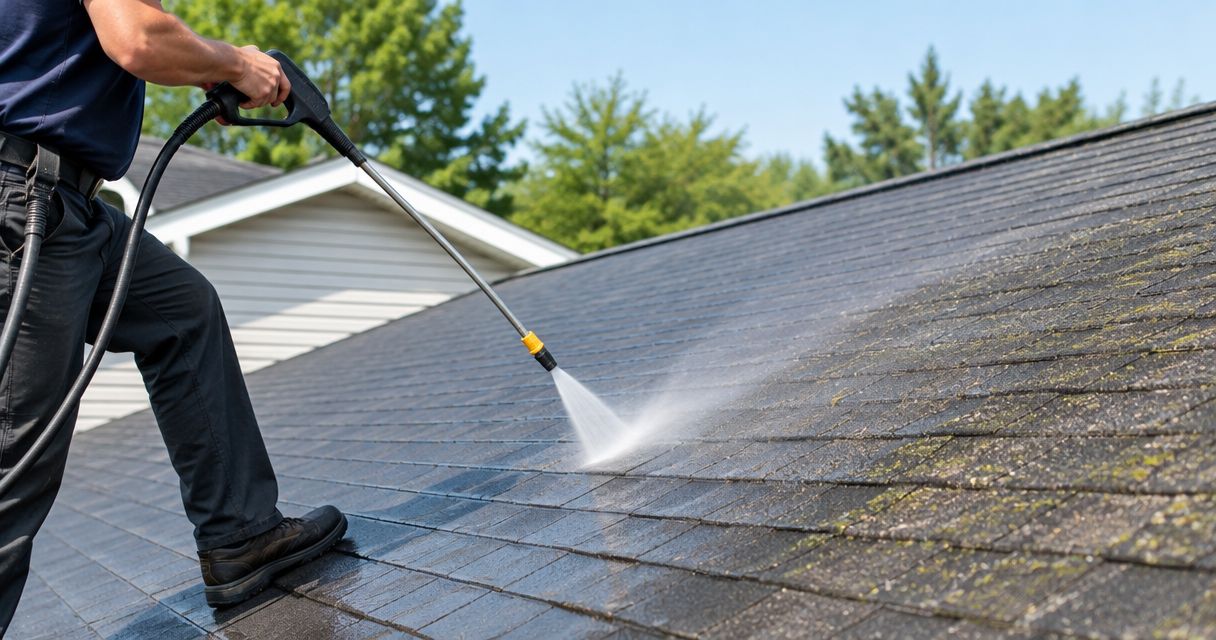
No—high-pressure washing is not safe for asphalt roof shingles. It can strip protective granules and force water beneath overlapping shingles; cleaning should follow the roof manufacturer's instructions and use a compatible low-pressure method instead. This homeowner guide explains how to choose a cleaning method, identify damage that needs repair first, and evaluate a roof-cleaning quote.
- Is pressure washing safe for roof shingles? No—avoid high-pressure cleaning on asphalt shingles.
- Roof soft washing must follow the shingle manufacturer's instructions; low pressure alone does not establish safety.
- Socalemm offers roof soft washing in Newport Beach and Orange County; ask how the proposed method fits your roof.
- Check damaged shingles, flashing, runoff routes, and nearby plants before approving roof cleaning.
Is pressure washing safe for roof shingles?
High-pressure washing is the wrong cleaning method for asphalt shingles. The Asphalt Roofing Manufacturers Association, or ARMA, advises against power washing asphalt roofing. Shingle manufacturers' cleaning instructions should control the treatment, application, and rinsing used on your particular roof.
The distinction matters when reviewing roof soft washing companies in Orange County. A service name does not explain what will touch your shingles. Ask how the contractor will remove roof growth without using a concentrated jet to blast it away.
| Method | Best for | Useful feature | Limitation or risk |
|---|---|---|---|
| High-pressure washing | Not recommended for asphalt shingles | Mechanical force removes surface material | Can remove protective granules and drive water beneath shingles |
| Manufacturer-approved low-pressure cleaning | Suitable roof staining or growth on sound shingles | Treats the contamination without relying on forceful blasting | Requires compatible treatment, careful application, and runoff protection |
| Gentle loose-debris removal | Accessible leaves and loose debris, where the manufacturer permits it | Removes material without a concentrated water jet | Does not replace treatment for attached growth; roof access still creates hazards |
For a 2026 roof-cleaning decision, start with the shingle manufacturer's current guidance, not a general exterior-cleaning package. A method suitable for a driveway does not automatically belong on a roof.
Why this matters
Asphalt shingles depend on more than their visible surface. Protective granules cover the asphalt, while overlapping shingles help shed rain down the roof. A cleaning method that removes granules or pushes water against those overlaps can damage the roof while making it look cleaner.
Dark streaks alone do not prove that shingles need replacement. They also do not prove that cleaning is the only work required. You need to separate surface contamination from cracked shingles, failed flashing, and other defects before choosing a treatment.
The practical goal is simple: remove unwanted growth without sacrificing the roofing material underneath it. Judge the proposed method by that standard, rather than by how quickly it produces a dramatic visual change.
High-pressure washing: avoid it on asphalt shingles
A pressure washer concentrates water into a forceful stream. On asphalt shingles, that stream can dislodge granules, damage edges, and force water where normal downward-flowing rain does not go. Moving the nozzle farther away is not a substitute for a manufacturer-approved cleaning procedure.
Do not accept a promise that the operator will simply be careful. Ask whether high-pressure water will contact the shingles at any stage, including rinsing and spot treatment. The cleaning plan should explain the method, not rely on the operator's confidence.
Rotating nozzles, narrow jets, and aggressive scrubbing are not solutions for stubborn roof growth. If a stain does not release under an approved method, reassess the treatment and roof condition. Increasing mechanical force changes the risk, not just the cleaning speed.
Skip high-pressure cleaning on asphalt shingles, even when the same equipment is appropriate for another surface on your property. Keep driveway, patio, and roof-cleaning instructions separate.
Roof soft washing: check the method, not just the name
Roof soft washing generally describes applying a cleaning treatment at low pressure rather than using pressure to blast away contamination. That makes it a relevant approach for asphalt shingles, but the label alone does not confirm that a particular treatment is appropriate.
The cleaner must match the roof material and the manufacturer's instructions. Application, contact time, rinsing, and protection of nearby surfaces also matter. A compatible product used incorrectly still creates avoidable problems.
For your 2026 quote, ask for a plain-language description of the treatment and whether the manufacturer requires rinsing. Some roof-cleaning instructions differ, so do not assume that every soft-wash job should follow the same procedure.
A suitable soft-wash plan protects the roof, landscaping, and surrounding property together. Its limitation is that it requires preparation and controlled application; low pressure does not eliminate chemical exposure, runoff, or access hazards.
Loose-debris removal: useful, but not a complete roof treatment
Leaves and loose debris call for a different response from attached moss or persistent staining. Removing accessible debris can help keep drainage routes clear, but the method still needs to respect the roofing material. Do not drag sharp tools across shingles or pull at their edges.
A homeowner's safest inspection position is on the ground. Use visible roof areas, gutter discharge points, and photographs you already have to describe the issue. Leave roof access to a person equipped to assess the surface and work safely.
Gentle debris removal is best for loose material, not for scraping away attached growth. Moss that grips the shingle surface can bring roofing material with it when forcibly removed. Treating the growth and assessing the roof are different tasks from simply sweeping away leaves.
Why roof-cleaning risk varies
The question is not just whether a cleaner uses high or low pressure. These factors determine what needs checking before work starts:
- Roof material: Asphalt shingles, tile, and other roof coverings need their own cleaning instructions. Do not transfer a method between materials without checking it.
- Shingle condition: Cracked, curled, loose, or visibly worn shingles need assessment before cleaning. Treatment does not repair damaged roofing.
- Type of buildup: Loose leaves, dark streaks, and attached moss are different problems. Identify the material before selecting the removal method.
- Water direction: Shingle overlaps are intended to shed water downward. Avoid directing water beneath edges or toward vulnerable roof details.
- Treatment compatibility: Use a cleaner and application procedure allowed by the roof manufacturer. Protect nearby finishes and equipment as well.
- Access and runoff: Roof slope, wet surfaces, plants, gutters, and drainage routes affect how the work should be planned.
These factors explain why a quote should describe more than the roof's appearance. A sound roof with surface staining is a different job from a roof with lifted shingles and an active leak.
How do you check a roof-cleaning plan before approving it?
Use this sequence when comparing a proposal for your home. It separates the roof's condition from the cleaning process and gives the contractor clear questions to answer.
- Identify material. Confirm that the roof is asphalt shingle rather than assuming from its color or outline. Find the manufacturer and product information if available.
- Check condition. Describe visible curling, missing shingles, damaged flashing, or interior water staining. Arrange a roofing assessment when these signs suggest a repair issue.
- Confirm method. Ask what treatment will be used, how it will be applied, and how the shingles will be rinsed if rinsing is required.
- Protect surroundings. Discuss plants, painted surfaces, gutters, downspouts, and any roof-mounted equipment. Confirm how runoff will be managed.
- Review results. Ask what changes to expect immediately and what growth or staining requires follow-up rather than stronger washing.
The sequence matters: inspect first, choose the method second. Do not let a scheduled cleaning appointment become a reason to ignore a roof problem that needs a different trade.
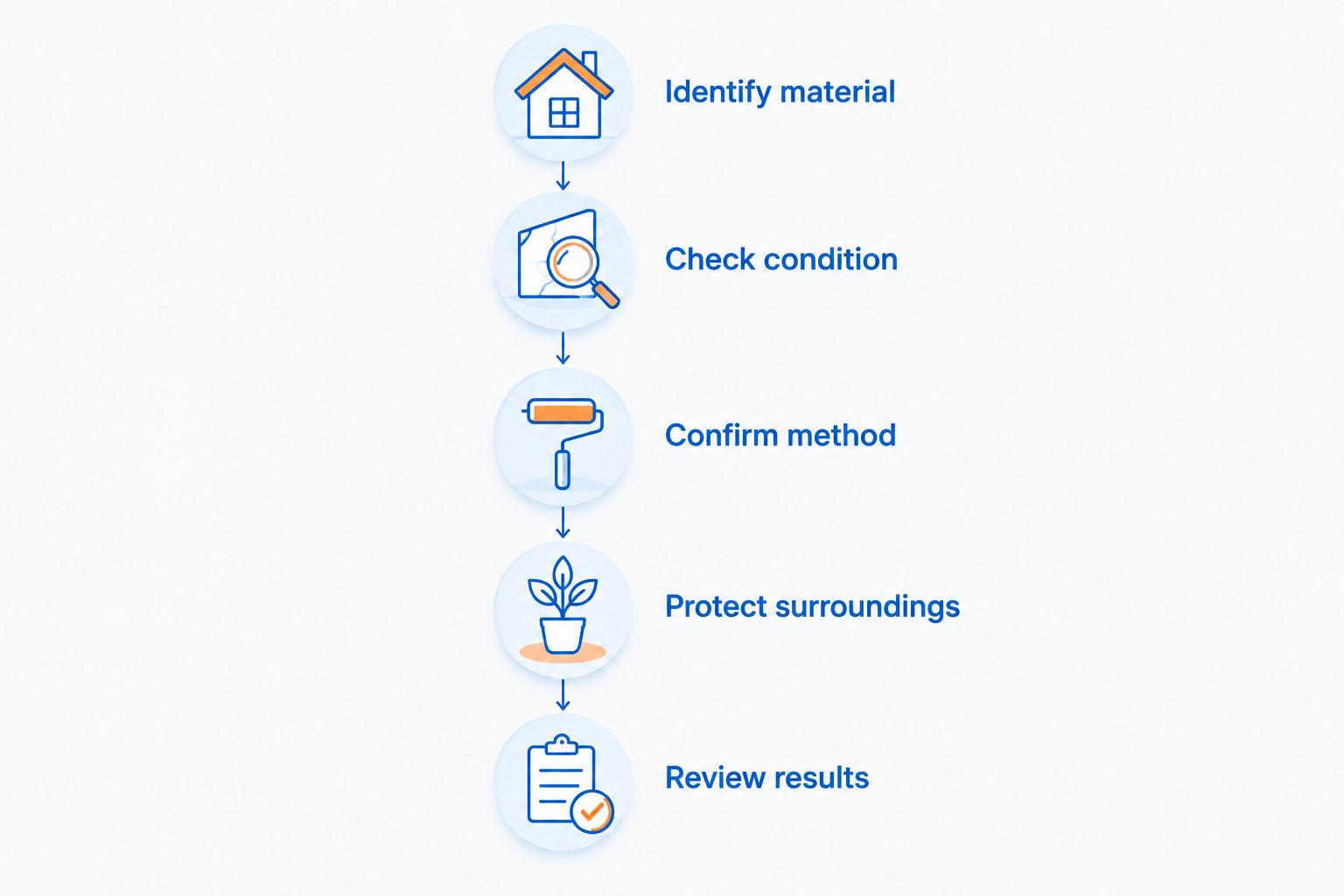
A 2026 service proposal should make those decisions understandable without requiring you to know the cleaning equipment. Ask the contractor to describe the process in terms of what contacts the roof and what protects the surrounding property.
What should you ask a roof-cleaning contractor?
Ask direct questions before agreeing to the work. Written answers help keep the scope clear and reduce confusion between roof cleaning and general pressure washing.
- Will any high-pressure spray contact the asphalt shingles?
- Which manufacturer instructions support the proposed treatment?
- What visible roof damage would cause you to stop and recommend a roofing assessment?
- How will you protect plants, exterior finishes, and drainage areas?
- What needs moving or securing before the appointment?
- What will happen if attached growth remains after treatment?
Be cautious with a proposal that treats stronger pressure as the fallback for anything difficult to remove. Also distinguish a cleaning result from a repair result. Removing staining does not fix a leak, reattach loose shingles, or restore missing granules.
Socalemm roof soft washing is best for Newport Beach and Orange County homeowners seeking a roof-specific exterior-cleaning service rather than a driveway-washing approach. Socalemm provides roof soft washing, but your roof's condition and manufacturer instructions should determine whether cleaning is appropriate. You can request a quote from Socalemm and ask for those details before approving work.
Request a roof-cleaning quote
Describe your roof material, visible buildup, and any damaged areas before choosing a cleaning method.
Is soft washing safer than pressure washing for roof shingles?
Manufacturer-approved low-pressure cleaning is the appropriate alternative to high-pressure washing for asphalt shingles. It removes the reliance on forceful blasting, but the treatment still needs to match the material and follow the required application procedure.
Compare the actual steps, not just the service labels. A contractor should explain both the roof treatment and the protection of surrounding areas. If those details are unclear, get clarification before work starts.
Can you clean roof shingles yourself?
Do not use a pressure washer to clean asphalt shingles yourself. A wet roof creates fall hazards, and an unsuitable treatment or application can damage the roof and nearby property. Ground-level observation is different from climbing onto the roof to carry out cleaning.
For 2026 homeowner maintenance, focus your own preparation on identifying the roof material, documenting visible concerns, and giving the contractor safe access to the property. Roof cleaning is not a suitable place to improvise with leftover patio cleaner or a stronger nozzle.
Does roof cleaning fix damaged shingles?
Roof cleaning does not repair damaged shingles. It cannot replace lost granules, close cracks, secure loose roofing, or correct flashing defects. Those conditions need a roofing assessment rather than a more aggressive wash.
If you see water staining inside the home, missing shingles, or damaged roof details, investigate that problem before scheduling cosmetic cleaning. A clean surface can still cover a roof that needs repair.
FAQ
Is pressure washing safe for roof shingles?
No—high-pressure washing is not safe for asphalt roof shingles. It can strip protective granules and force water beneath overlaps; follow the shingle manufacturer's cleaning instructions instead.
What's the safest way to remove dark streaks from asphalt shingles?
Use the cleaning method approved by the shingle manufacturer, generally involving compatible treatment rather than high-pressure blasting. Identify the roof material and check its condition before treatment.
Can a pressure washer damage shingles even with a wide nozzle?
Yes—a wide nozzle does not establish that pressure washing is safe for asphalt shingles. Follow the manufacturer's approved cleaning procedure rather than relying on nozzle selection.
Should I scrape moss off my roof before cleaning it?
Do not aggressively scrape attached moss from asphalt shingles. Pulling or scraping growth can remove roofing material with it; use the manufacturer's recommended treatment approach.
Does soft washing mean a roof cannot be damaged?
No—soft washing does not eliminate the risk of damage. Treatment compatibility, application, roof condition, runoff control, and safe access still matter.
Should I clean my roof before repairing a leak?
Investigate the leak before arranging cosmetic roof cleaning. Cleaning does not repair shingles, flashing, or other sources of water entry.
Does Socalemm provide roof cleaning in Orange County?
Socalemm provides roof soft washing in Newport Beach and Orange County. Ask how the proposed cleaning method fits your roof material and its current condition.
One last thing
A cleaner-looking roof is not proof of a safer cleaning method. You cannot judge granule loss, treatment compatibility, or water intrusion from a distant after-photo alone. Evaluate the method before the result.
Before booking a 2026 roof cleaning, send photographs of visible staining and damaged areas, then ask the contractor to distinguish cleaning work from repair work. That single distinction keeps the conversation focused on preserving the roof rather than simply changing its appearance.