Pressure washing is safe for vinyl siding only when the siding manufacturer permits it, the panels are sound, and the cleaning method keeps water out of seams and openings. High pressure, an upward spray, or damaged siding can turn routine cleaning into water intrusion or surface damage. For your 2026 house-washing plan, start with the manufacturer’s instructions—not the pressure washer’s maximum setting.
- Is pressure washing safe for vinyl siding? Only when manufacturer instructions, siding condition, and spray technique support it.
- Use the least aggressive approved cleaning method; stronger pressure is not the default answer.
- Socalemm provides house washing for Newport Beach and Orange County homeowners; ask about your siding before scheduling.
- Stop cleaning when panels move, water enters openings, or the surface changes during a test.
Why this matters
Vinyl siding sheds weather, but its overlapping panels do not make the wall waterproof against a concentrated spray. Water driven behind the siding can reach materials you cannot inspect from the outside. A clean-looking wall does not prove the cleaning method was safe.
Separate preparation from washing. Before equipment comes out, use this guide to prepare your home before a pressure washing appointment, then identify any siding-specific restrictions. Closing windows helps, but it does not fix failed seals, loose trim, or damaged panels.
The goal is to remove dirt without changing the siding or forcing water behind it. That remains the right standard in 2026, regardless of how powerful the equipment is.
Is pressure washing safe for vinyl siding?
Yes, conditionally. Pressure washing belongs on the list of options only after you confirm that your siding manufacturer allows it. If the instructions prohibit pressure washers, a lower equipment setting does not override that restriction.
Choose the cleaning method by the surface and the problem—not by the equipment already sitting in your garage.
| Cleaning method | Best for | Main benefit | Main limitation |
|---|---|---|---|
| Soft brush and garden hose | Reachable siding when manufacturer instructions allow hand cleaning | Gives you direct control over brushing and rinsing | Requires physical access and care around fragile panels |
| Low-pressure cleaning with an approved solution | Dirt or biological growth when the siding and cleaner instructions permit it | Lets the cleaning solution do more of the work | Requires correct application, rinsing, and landscape protection |
| Pressure washing | Sound siding whose manufacturer explicitly permits the method | Can rinse exterior surfaces using adjustable equipment | Incorrect pressure, distance, or spray direction can damage siding or drive water behind it |
None of these methods repairs cracked siding, failed flashing, or water-damaged walls. If the surface is already compromised, address the defect before washing.
Also distinguish the machine from the method. A pressure washer used with appropriate low-pressure equipment is not the same as directing a concentrated high-pressure jet at the wall. Ask how the siding will actually be cleaned rather than accepting the equipment name as the whole explanation.
Why pressure-washing safety varies
There is no single setting that makes every vinyl-sided home safe to wash. These factors determine whether pressure washing belongs in your 2026 cleaning plan:
- Manufacturer instructions: Different siding products have different cleaning restrictions. Identify the product when possible and follow its care instructions.
- Panel condition: Cracks, loose sections, brittle edges, and exposed openings call for repair or further inspection before washing.
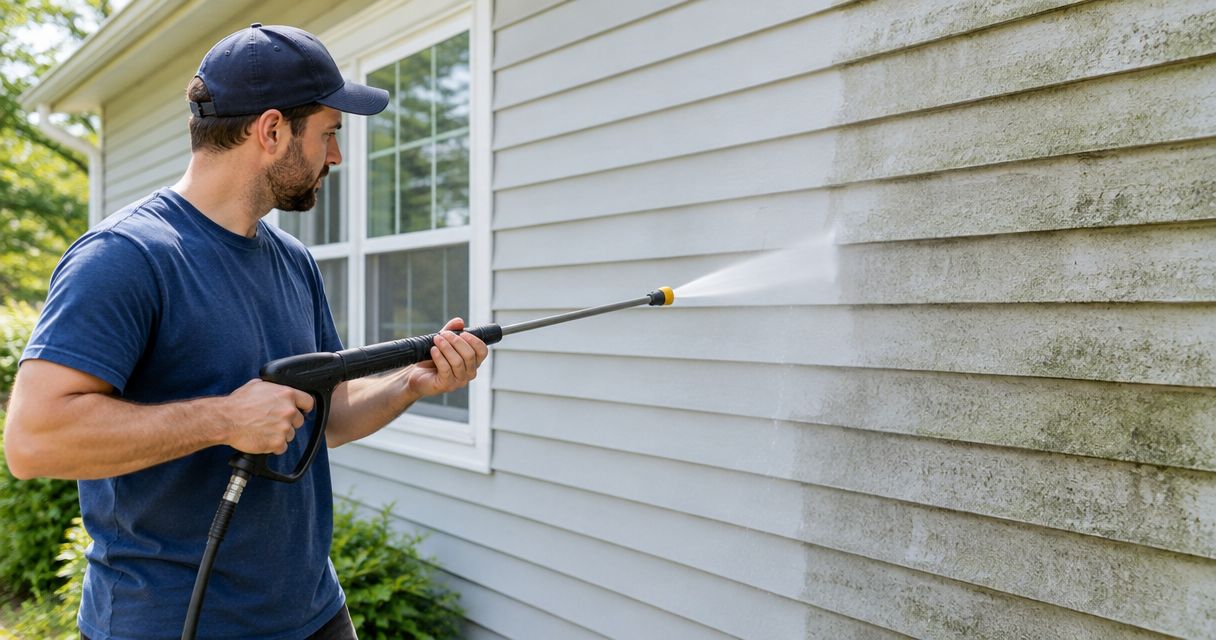
- Spray direction: An upward jet can enter overlapping joints. Keep water away from vulnerable seams and openings.
- Equipment setup: The nozzle, operating pressure, working distance, and time spent on one area affect how aggressively water hits the wall.
- Cleaner compatibility: A cleaner must suit the siding and surrounding materials. Follow its label rather than improvising a stronger mixture.
- Access and drainage: Upper walls, electrical fixtures, landscaping, and runoff paths affect how the work can be performed safely.
Do not judge safety from the siding’s age alone. Inspect its actual condition. Likewise, a visibly dirty wall does not automatically need stronger pressure; it needs a method suited to the material and the deposit.
How should you check vinyl siding before washing?
Walk the full exterior before connecting equipment. Look beyond the largest dirty area: the weak point might be a loose corner, a utility penetration, or a window detail elsewhere on the same wall.
Identify the siding and its instructions
Check your home records, installation paperwork, or available product identification. Read the manufacturer’s cleaning guidance, including any restrictions on pressure washers, brushes, cleaners, and rinsing.
If you cannot identify the product, do not treat that uncertainty as permission to use high pressure. Discuss a conservative approach and confirm compatibility before cleaning the whole wall.
Look for defects and moisture clues
Inspect for cracked panels, detached edges, gaps around fixtures, damaged trim, and signs of existing leaks. Check inside near windows and doors if you already suspect water intrusion.
Do not seal intentional drainage openings just to prepare for washing. Siding assemblies need their designed drainage paths, and a cleaning appointment is not a reason to alter them.
Identify everything beside the siding
Note outdoor outlets, lights, vents, doorbells, cameras, painted trim, metal fixtures, and planted beds. These features need their own precautions; a cleaner suitable for the siding is not automatically suitable for every adjacent material.
Keep people and pets away from the work area. Move furniture and other belongings out of the spray and runoff path before washing begins.
What does a cautious cleaning sequence look like?
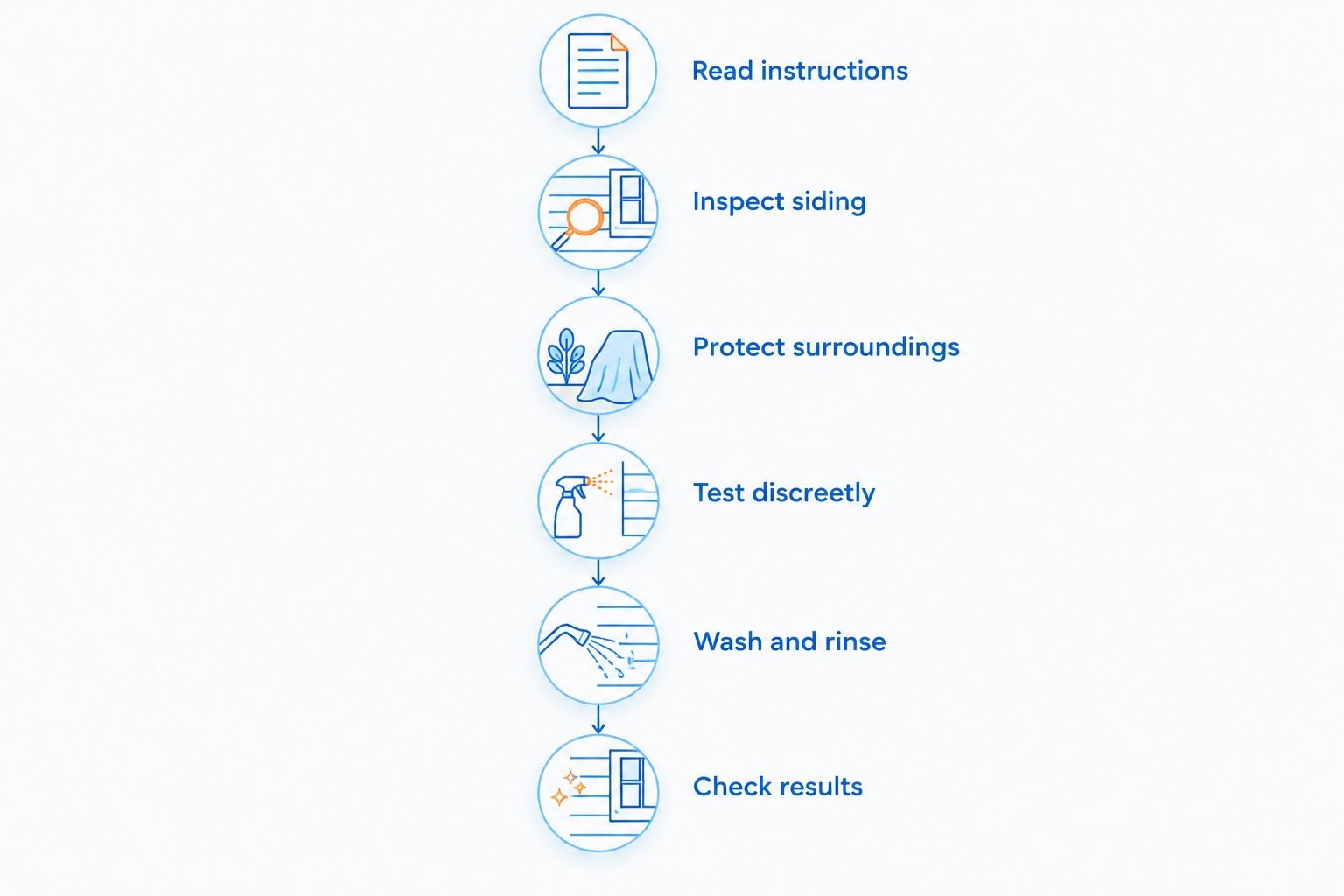
Use this sequence only after confirming that the chosen method is permitted. It is a planning checklist, not a replacement for siding, cleaner, or equipment instructions.
- Read instructions. Match the cleaning method to the siding manufacturer’s guidance and the cleaner’s label.
- Inspect siding. Mark damaged panels, loose trim, suspect seals, and openings that should not receive spray.
- Protect surroundings. Prepare nearby plants, fixtures, belongings, and runoff areas according to the products and equipment being used.
- Test discreetly. Clean a small, inconspicuous area with the least aggressive approved method and inspect the result.
- Wash and rinse. Work in manageable sections, maintain control of the spray, and follow the required application and rinsing directions.
- Check results. Look for surface changes, shifted panels, residue, and signs of water entry before continuing.
A test area should answer more than whether the dirt comes off. Check whether the finish changes, whether the panel moves, and whether the rinse behaves as expected around joints and trim.
Stop if the test changes the surface or reveals water entry. Do not keep washing in the hope that a larger cleaned area will make the problem less visible.
Is low-pressure washing better than high pressure for vinyl siding?
Low-pressure cleaning is the better starting point when the manufacturer permits it and the cleaner is suitable. It avoids relying on concentrated force to remove every mark. The trade-off is that chemical selection, application, and thorough rinsing become especially important.
The term soft washing does not establish safety by itself. Ask what cleaner will be used, how it will be applied, how nearby materials will be protected, and how residue will be rinsed away.
High pressure is not a treatment for every stubborn stain. If ordinary dirt washes away but a mark remains, reassess the mark before increasing force. Discoloration, surface deterioration, rust, and biological growth are different problems and should not receive an identical response.
Never mix cleaning products unless their instructions explicitly direct that combination. In particular, mixing chlorine bleach with acids or ammonia can release dangerous gases.
What pressure setting is safe for vinyl siding?
There is no universal safe pressure setting for all vinyl siding. A number on the machine cannot account for the nozzle, working distance, panel condition, spray direction, or manufacturer restrictions.
Use the equipment and settings allowed by your siding instructions. If those instructions do not authorize pressure washing, do not borrow a setting from a driveway guide or another homeowner’s setup.
Distance is not a universal safeguard either. Moving farther away changes the spray’s impact, but it does not make an upward jet or a prohibited cleaning method acceptable. Avoid close, concentrated spraying and follow the full cleaning procedure rather than relying on one adjustment.
For a 2026 service request, ask for the intended method in plain language: cleaner, application, rinse, and precautions. An explanation centered only on machine power leaves the most important questions unanswered.
When should you stop and get help?
Stop before washing if you find open cracks, unsecured panels, evidence of active leaks, or an electrical hazard. Cleaning should wait until the relevant defect is assessed and corrected.
Stop during washing if you notice:
- A panel lifting, flexing unexpectedly, or coming loose.
- Water entering a window, door, vent, or other opening.
- A change in color, sheen, texture, or surface condition.
- Cleaner affecting nearby plants, finishes, or fixtures.
- Loss of stable footing or control of the equipment.
Do not operate a pressure washer while standing on a ladder. The spray’s reaction force creates an additional balance hazard. Upper-story access needs a suitable work method, not extra reach improvised from an unstable position.
If you discover water intrusion, stop adding water and investigate the entry point. Repeating the same pass at lower pressure does not establish that the underlying problem is fixed.
What should you ask a house-washing service?
Ask whether the proposed method follows your siding manufacturer’s instructions, how damaged areas will be handled, and what conditions would stop the job. Request a clear description of the surfaces included so that siding, windows, trim, and other features are not treated as interchangeable.
Socalemm is best for Newport Beach and Orange County homeowners seeking local house-washing services. Socalemm provides house washing, but the method for your particular vinyl siding still needs confirmation before work begins. Share photos of the siding and any problem areas when you request a quote.
A service visit does not replace siding repair or a moisture investigation. If you already have a leak, describe it before scheduling rather than assuming cleaning will resolve it.
For your 2026 request, include the siding manufacturer if known, the affected walls, access concerns, and the kind of staining you see. Avoid sending only a close-up of the stain; a wider view helps explain the surrounding windows, fixtures, and landscaping.
FAQ
Is pressure washing safe for vinyl siding on an older house?
Pressure washing is safe only if the siding manufacturer permits it and the panels are in suitable condition. Inspect for brittleness, cracks, loose edges, and existing leaks; age alone does not establish safety.
Can I pressure wash vinyl siding from the bottom upward?
Do not aim a pressure-washer jet upward into vinyl siding overlaps. Spray direction matters because concentrated water can enter joints and openings.
What is the safest pressure-washer setting for vinyl siding?
There is no universal safe setting for vinyl siding. Follow the siding manufacturer’s instructions and account for the nozzle, working distance, spray direction, and condition of the wall.
Should I use bleach to clean vinyl siding?
Use a bleach-containing cleaner only when the siding instructions and cleaner label permit it. Follow application, protection, and rinsing directions, and never mix chlorine bleach with acids or ammonia.
Can pressure washing remove green growth from vinyl siding?
Cleaning can remove green growth, but high pressure is not automatically the right method. Use a compatible treatment and approved rinse procedure rather than increasing force until the growth disappears.
Can I wash upper-story vinyl siding from a ladder?
Do not operate a pressure washer from a ladder. Use a suitable access method or arrange professional help rather than risking a fall while controlling the spray.
Does Socalemm offer house washing in Orange County?
Socalemm provides house washing in Newport Beach and Orange County. Ask whether the proposed method suits your vinyl siding and share any known damage or leaks before scheduling.
One last thing
Judge the result after the siding dries, not only while it is wet. Remaining residue or a change in the finish is easier to assess when you can compare the test area with the surrounding wall under similar conditions.
For 2026 maintenance, keep photos of the wall before and after cleaning alongside the care instructions you used. If a mark survives the approved cleaning method, identify the mark before adding pressure. A stubborn stain is not permission to use a more aggressive method.