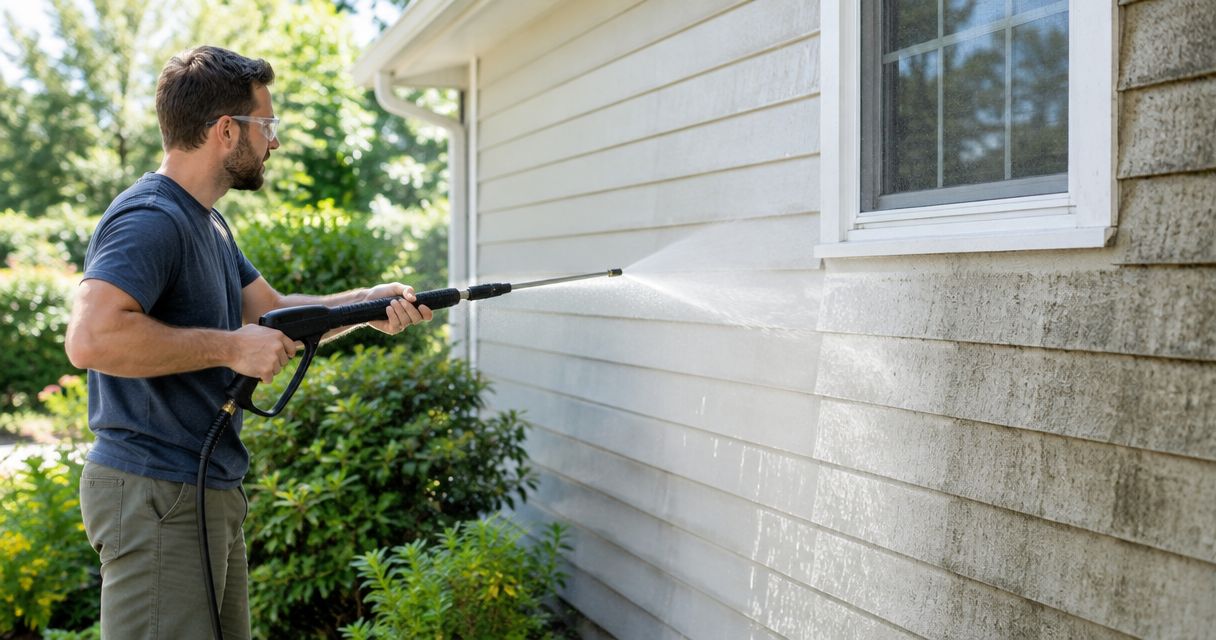
Yes, you can pressure wash a house yourself when the exterior is sound, the material permits it, and you can work safely from the ground. The main risks are forcing water behind siding, damaging finishes, and losing control of the spray—not simply leaving dirt behind. For your 2026 cleaning plan, choose the cleaning method for the surface rather than treating every wall with high pressure.
- Can you pressure wash a house yourself? Yes, but only on suitable, sound surfaces with safe ground-level access.
- House washing does not automatically mean high pressure; follow the exterior material’s cleaning instructions.
- Socalemm provides house washing in Newport Beach and Orange County for homeowners choosing professional exterior cleaning.
- Stop when cleaning exposes loose paint, damaged stucco, leaking openings, or an unsafe reach.
Why this matters
A dirty wall and a damaged wall need different responses. Washing removes surface contamination; it does not repair failed paint, cracked stucco, deteriorated sealant, or an existing moisture problem.
For Orange County homeowners with stucco exteriors, start by understanding whether soft washing is safe for stucco homes. Lower pressure reduces one source of risk, but the cleaner, finish condition, and rinsing method still matter.
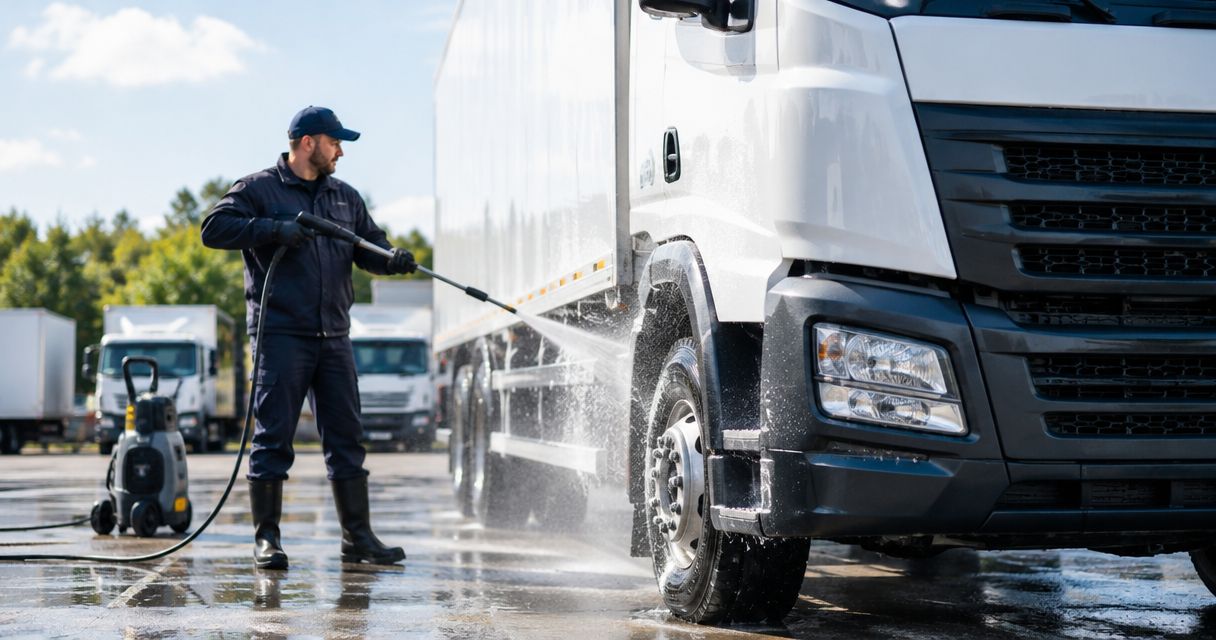
Keep this guide focused on your home. Storefronts, fleet vehicles, and shared commercial areas require a separate scope, including public access and operating schedules.
Can you pressure wash a house yourself?
DIY house washing is a reasonable choice only when you can confirm the surface, control the water, and maintain safe footing. If any of those conditions is uncertain, pause before renting or starting equipment.
Use this comparison to choose an approach. These are cleaning options, not interchangeable treatments for every exterior.
| Approach | Best for | Main benefit | Main limitation |
|---|---|---|---|
| Hand cleaning with a suitable brush and hose | Small, reachable areas with light dirt | Gives you direct control over scrubbing | Takes more physical effort and still requires compatible materials |
| DIY pressure washing | Sound surfaces whose care instructions permit pressure washing | Can remove surface dirt without hand-scrubbing every area | Incorrect pressure or spray direction can damage finishes and admit water |
| Professional house washing | Homeowners needing help choosing a method or handling difficult access | Moves equipment handling and method selection to a service provider | Requires scheduling and a clearly agreed scope |
Before choosing, make 3 checks: surface condition, safe access, and water control. Passing one check does not compensate for failing another. A sound wall beside an exposed electrical connection is not ready to wash.
Check the surface condition
Identify the exterior material and coating before selecting equipment. Painted wood, vinyl siding, stucco, brick, and fiber cement do not share a single cleaning instruction.
Look for peeling paint, loose pieces, open joints, soft wood, visible cracks, and deteriorated sealant around openings. If you find damage, resolve the repair question before cleaning that area.
For your 2026 project, use the current care instructions for the actual siding or coating—not a pressure setting copied from a video showing a different house. If you cannot identify the finish, do not assume that a stronger spray will be safe.
Check safe access
Plan the work from stable ground. Do not operate a pressure washer while standing on a ladder: the spray reaction and wet surroundings create a fall risk.
If you cannot reach an area without climbing, overextending, or spraying upward into siding joints, exclude it from the DIY scope. Roof surfaces are a separate job, not an extension of washing the wall below them.
Check water control
Trace where both the spray and the runoff will go. Inspect doors, windows, vents, electrical fixtures, wall penetrations, and nearby landscaping before starting.
Closing a window does not establish that its seals can withstand a pressure jet. Avoid directing spray at openings, and stop immediately if water appears indoors.
How to prepare and wash a suitable exterior
A controlled process starts before the machine runs. These 6 steps organize a DIY job; the equipment manual and surface-care instructions still determine the permitted cleaning method.
1. Inspect the exterior
Walk around the entire area you intend to clean. Note damage, delicate fixtures, loose trim, and spots where the wall meets a different material.
Take reference photos before washing. They help you compare the dry result and distinguish an existing defect from a change noticed during cleaning; they are not a substitute for an inspection.
2. Check the instructions
Read the pressure washer manual, the exterior material’s care guidance, and any cleaning product label. Confirm that the proposed combination is suitable before applying anything.
Do not copy a chemical concentration or nozzle choice from an unrelated surface. If the instructions conflict or leave the application unclear, stop and get material-specific advice.
3. Prepare the area
Move furniture, toys, loose decorations, and trip hazards out of the work zone. Keep children and pets away, and route hoses so they do not cross your working path unnecessarily.
Identify electrical hazards rather than assuming a covering makes them safe. Wear the protective equipment specified by the machine and cleaner instructions, including appropriate eye protection and footwear.
4. Test discreetly
Test the permitted method on a small, inconspicuous section. Begin with the gentlest approach allowed by the relevant instructions, rather than increasing pressure until dirt disappears.
Inspect for lifted paint, roughened texture, discoloration, or water entering an opening. A visibly damaged test patch is a stop signal, not a reason to change nozzles and continue elsewhere.
5. Clean methodically
Work in manageable sections and follow the cleaner’s application and rinsing directions. Do not let a product dry on the wall unless its label expressly allows that use.
Keep the spray away from people, animals, electrical components, vents, and vulnerable joints. Never use your hand to check the spray or a suspected high-pressure leak; pressure-washer injuries require prompt medical attention.
6. Inspect when dry
Review the surface after it dries, not just while it is wet. Wet finishes can hide uneven cleaning, remaining stains, or changes in texture.
Check nearby indoor areas for signs of water entry. If a stain remains, identify what it is before repeating the wash or using a stronger treatment.
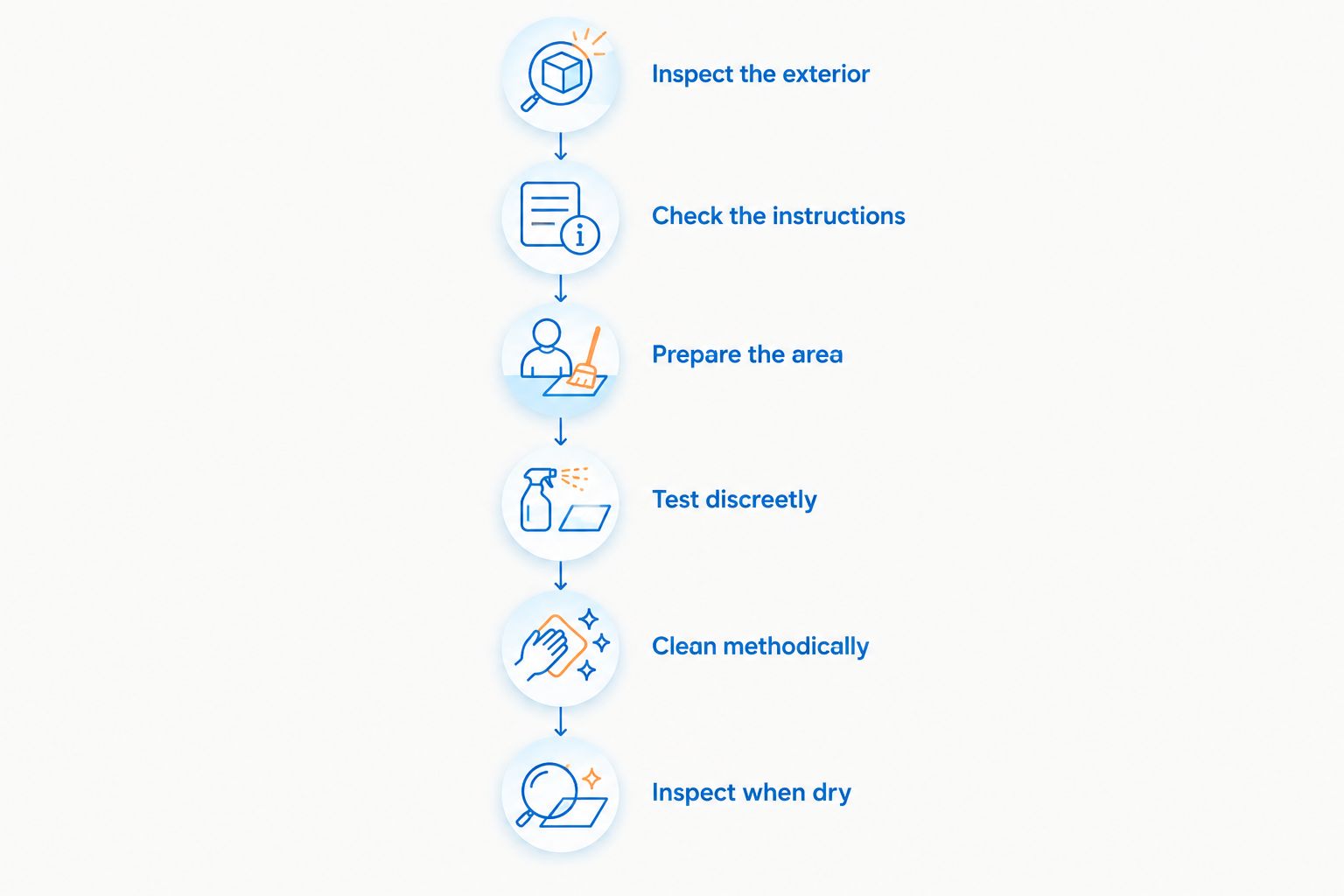
The test section is a decision point, not a formality. For a 2026 DIY job, keep the work limited to areas where the material instructions, access, and test result all support continuing.
Why DIY house-washing difficulty varies
The size of the house does not tell you whether the job is suitable for DIY work. These factors determine how much control you have over the cleaning:
- Exterior material: The material and coating determine which cleaners and washing methods are appropriate.
- Existing damage: Cracks, peeling paint, loose trim, and failed seals change the job from cleaning alone to a repair decision.
- Access: Upper walls, narrow side yards, slopes, and obstacles affect your footing and spray direction.
- Type of dirt: Loose dust, organic growth, rust-colored marks, and coating deterioration require different assessment. More pressure is not a universal answer.
- Nearby features: Windows, vents, electrical equipment, landscaping, and adjacent surfaces limit where water and cleaner can safely go.
- Runoff route: The location of drains and the contents of the wash water affect how you must manage the job.
Check applicable local requirements before discharging wash water. Do not assume a street drain is an acceptable destination for water containing detergent or removed material.
When should you stop and hire a house-washing service?
Stop DIY washing when you cannot establish a safe method for the surface or reach it safely from the ground. Also stop when a test changes the finish, water enters the house, or cleaning reveals damaged material.
Socalemm is a fit for Newport Beach and Orange County homeowners seeking professional house washing. Its stated services include residential pressure washing, house washing, and roof soft washing; the cleaning method and job scope still need to match your property.
The benefit of professional help is avoiding equipment handling yourself and getting the proposed approach explained before work begins. The trade-off is that you must arrange access and agree on what is included; a cleaning appointment does not replace needed repairs.
Before booking Socalemm house washing, describe the exterior material, known damage, difficult access, and the areas you want cleaned. Ask what will be excluded and how nearby plants, fixtures, and runoff will be addressed.
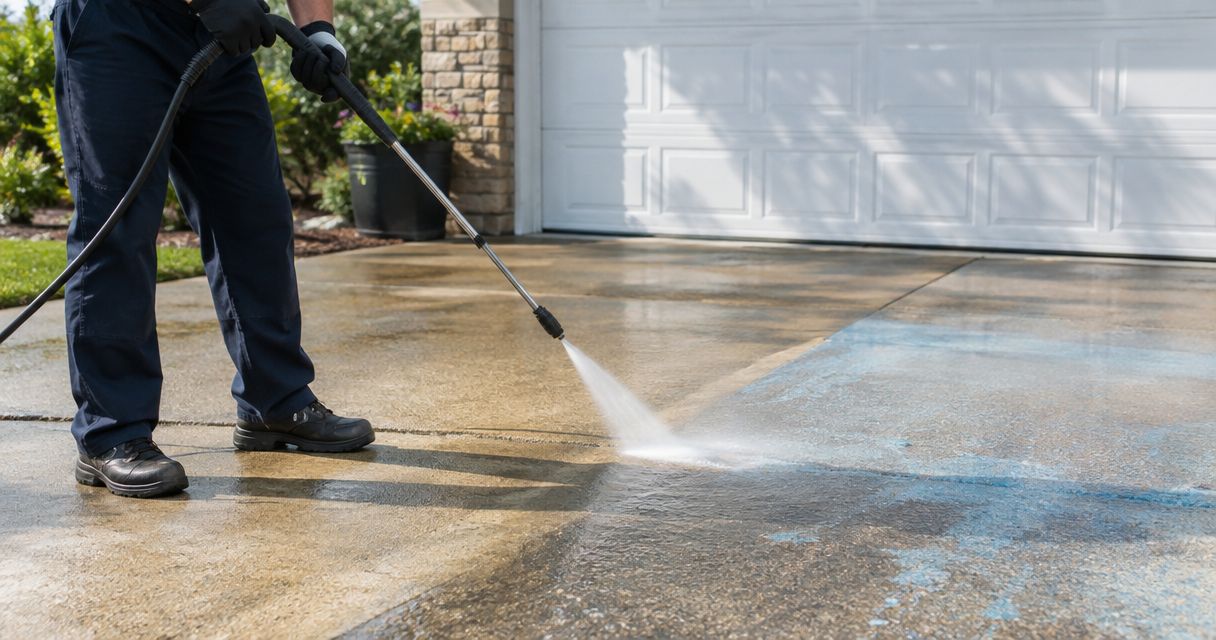
For your 2026 quote request, distinguish wall cleaning from roof work, driveway cleaning, and patio cleaning. Separate descriptions make the requested scope clearer without assuming every surface belongs in the same treatment.
Request a house-washing quote
Describe your exterior surfaces, access concerns, and areas needing cleaning.
Is soft washing safer than pressure washing a house?
Soft washing uses lower-pressure application rather than relying on a forceful jet to remove contamination. That makes it a different method, not a promise that every cleaner is safe for every exterior.
Check chemical compatibility, protect adjacent areas, and follow rinsing directions. Low pressure does not cancel the risks of an unsuitable cleaner or damaged wall.
Can you clean the roof while washing the house?
Do not add roof cleaning to a DIY wall-washing job without a separate assessment. Roof materials, access, drainage, and fall hazards require their own plan.
Stay off the roof for this house-washing process. Being able to reach a roof with a spray does not establish that the material tolerates the treatment.
What should you do if dirt remains after washing?
Identify the remaining mark before repeating the process. A stain, worn coating, and dirt embedded in a textured surface are different problems.
Do not keep moving the nozzle closer until the mark disappears. If the approved method does not remove it, ask for a material-specific assessment rather than escalating pressure.
FAQ
Can I pressure wash my house without damaging it?
You can reduce the risk by confirming that the exterior permits pressure washing, checking its condition, and testing the approved method first. No technique makes damaged siding, open joints, or failing paint safe to wash indiscriminately.
What pressure setting should I use to wash my house?
Use only a setting and method permitted by your exterior material’s care instructions and the equipment manual. A single pressure recommendation is not appropriate for every siding material, coating, nozzle, and working distance.
Can I pressure wash my house from a ladder?
Do not operate a pressure washer from a ladder. Keep the DIY work within safe ground-level access and arrange a separate approach for areas you cannot reach safely.
Do I need detergent to wash the outside of my house?
Detergent is not automatically necessary for every exterior cleaning task. If you use a cleaner, confirm that its label permits the surface and follow its application and rinsing instructions.
Can I mix cleaners to make house washing stronger?
Do not mix cleaning products unless their labels explicitly direct that combination. Never mix bleach with ammonia or acids, because dangerous gases can form.
Will pressure washing fix peeling exterior paint?
Pressure washing does not repair peeling paint. A forceful spray can remove more coating, so assess the failing finish and required preparation before choosing a cleaning method.
Does Socalemm provide residential house washing in Orange County?
Socalemm provides residential house washing and related exterior cleaning in Newport Beach and Orange County. Describe the surfaces and access conditions when requesting a quote so the proposed work addresses your home.
One last thing
A clean test patch is not enough if you have not checked what happened around it. Inspect nearby joints, window edges, and the corresponding indoor area before continuing across the wall.
For your 2026 maintenance notes, record the method you used and photograph the dry result. That gives your next cleaning decision a better starting point than remembering only whether the wall looked clean while wet.