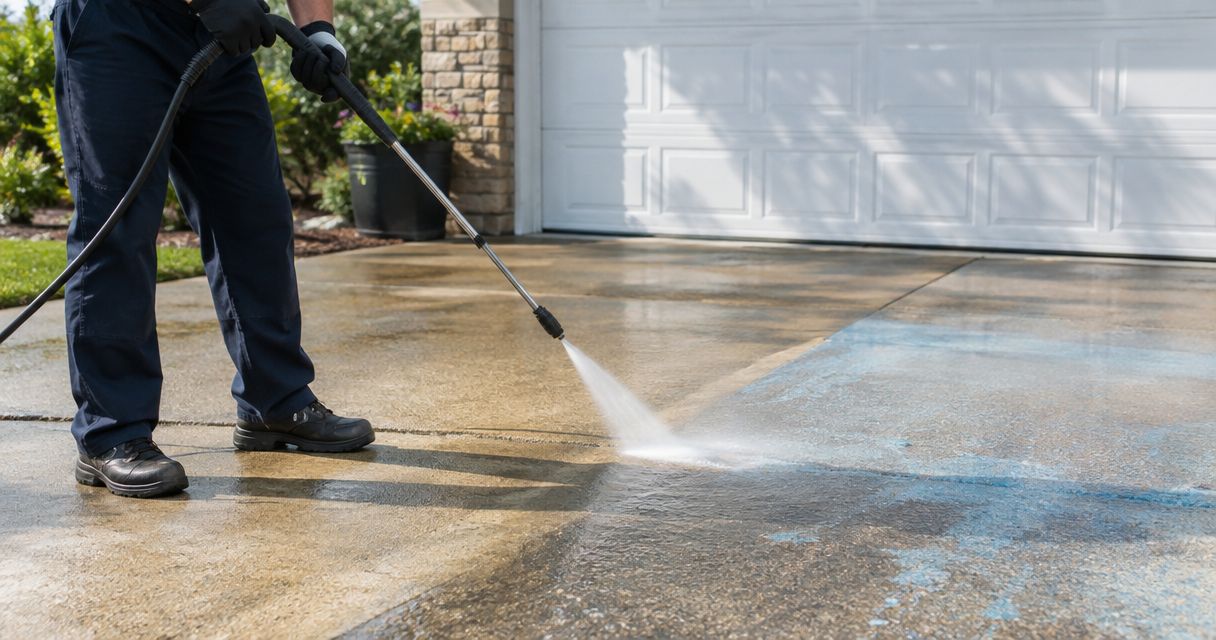
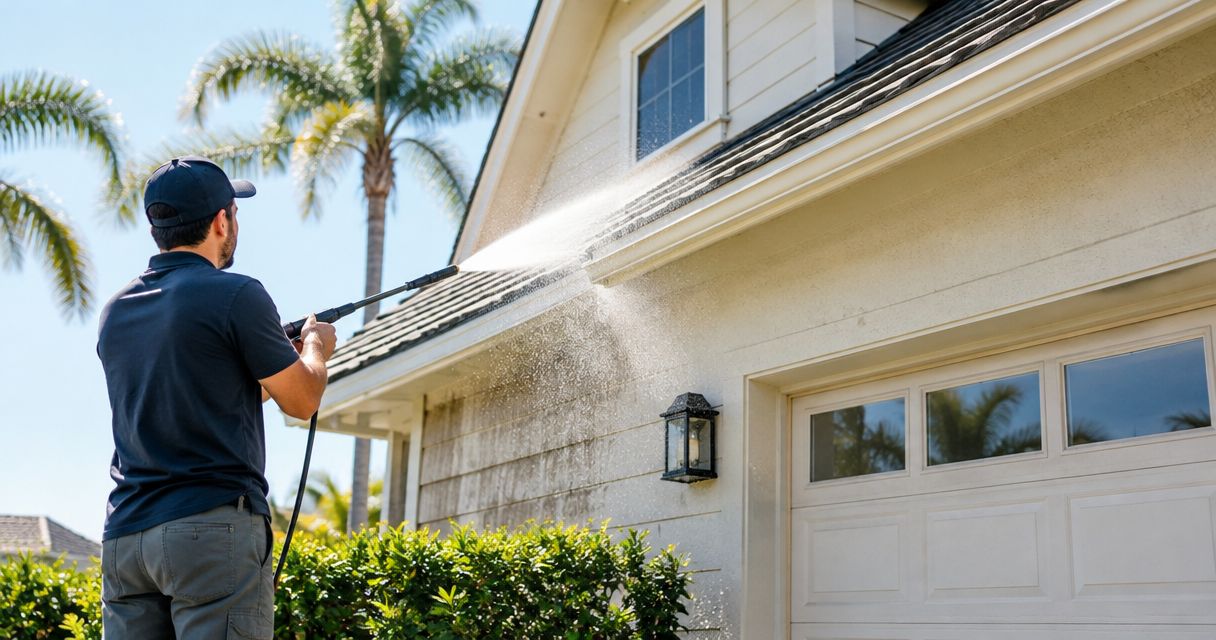
Wash your house in Orange County when visible dirt, organic buildup, or surface deposits need removal—not simply because a recurring appointment is due. Choose the cleaning method for the wall material and its condition; house washing does not automatically mean high-pressure washing. For your 2026 maintenance plan, use an exterior inspection to decide whether you need a whole-house wash, localized cleaning, or repairs before cleaning.
- How often should you pressure wash your house? Let surface condition and buildup determine when you clean.
- Socalemm provides house washing in Newport Beach and Orange County; request a quote for the surfaces needing attention.
- Stucco and painted walls need material-appropriate cleaning, not an automatic high-pressure treatment.
- Inspect shaded walls, irrigation splash areas, and exposed elevations before scheduling a whole-house wash.
How often should you pressure wash your house in Orange County?
Clean when your house needs cleaning, and inspect before you book. A fixed schedule does not account for differences between shaded walls, exposed walls, paint condition, landscaping, and the type of buildup present. The practical question is whether cleaning is needed now—and whether the surface is ready for it.
For stucco, start with the material rather than the calendar. The guide to whether soft washing is safe for stucco homes addresses the method question separately from cleaning frequency.
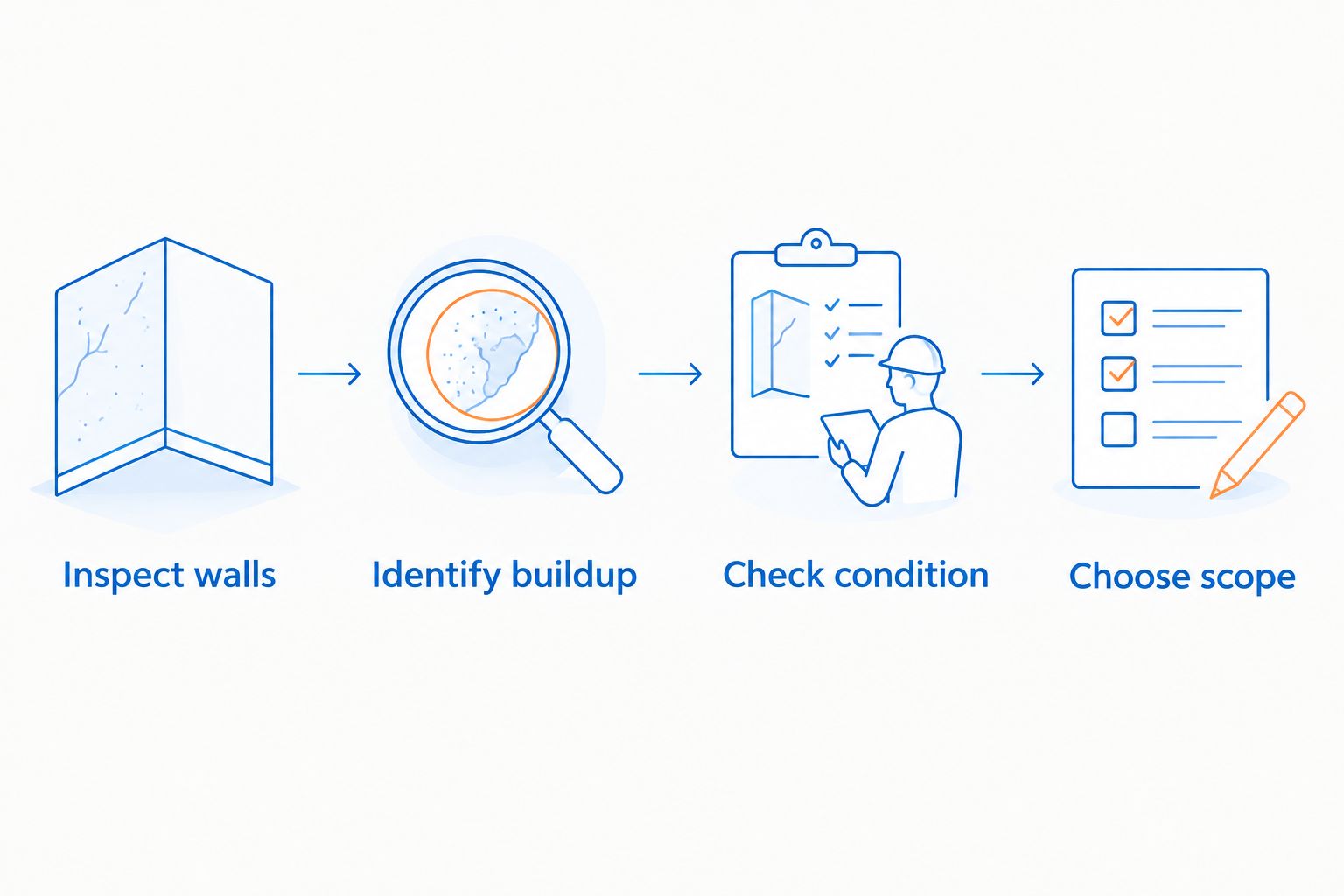
Use this sequence to decide what belongs on your cleaning scope:
- Inspect walls. Look at each elevation from the ground, including shaded sections, areas near plants, and places reached by sprinkler spray.
- Identify buildup. Separate loose dirt from persistent staining, green growth, peeling paint, and white deposits. Appearance alone does not establish the cause.
- Check condition. Look for cracks, loose finishes, damaged seals, or signs of water entry before arranging a wash.
- Choose scope. Decide whether the problem covers the house, affects a limited area, or needs evaluation before cleaning.
A clean exterior with intact finishes does not need another wash just to satisfy a reminder. A visibly dirty exterior needs a cleaning assessment, not an automatic increase in pressure.
Why this matters
Cleaning frequency and cleaning method are different decisions. Your house can need cleaning without being suitable for a high-pressure treatment. Conversely, sound walls can remain clean enough that another whole-house wash adds no useful maintenance benefit.
For your 2026 house-care plan, separate appearance problems from repair problems. Washing removes suitable surface contamination; it does not fix failed paint, a leaking connection, or damaged stucco. Do not ask cleaning to do the job of a repair.
The same distinction keeps your request specific. Tell the contractor which walls concern you, what you see, and whether anything has changed since the last cleaning. That is more useful than asking for the strongest available wash.
Whole-house washing: best for widespread buildup
Whole-house washing fits a home with visible buildup across several elevations. The benefit is a consistent cleaning scope rather than treating isolated patches while leaving other dirty areas untouched. The limitation is that the work still needs to account for different materials and conditions around the house.
Check walls from more than one viewing position before deciding the entire exterior needs attention. A shaded side can look different from the front entrance, and an area behind landscaping can be easy to overlook. Include those observations in your request rather than assuming every wall has the same problem.
Do not treat the roof, driveway, patio, and walls as interchangeable surfaces. Each needs its own assessment. A house-washing appointment should have a clear scope so you know which exterior surfaces are included and which require a separate discussion.
Localized cleaning: best for a limited dirty area
Localized cleaning fits a problem confined to a particular wall or section. It keeps the cleaning scope focused when the rest of the house remains clean. The limitation is that a treated section can look different from surrounding weathered or dirty areas.
Before choosing localized cleaning, check why that section gets dirty. A sprinkler reaching the wall, vegetation touching the finish, or repeated splashing can leave the same area needing attention again. Addressing the source belongs alongside cleaning, not after repeated appointments.
A localized stain also needs identification before treatment. Do not assume every dark mark is organic growth or every pale mark is removable dirt. Give the contractor a close photograph and a wider view showing the wall, nearby landscaping, and surrounding surfaces.
Repair-first assessment: best for damaged finishes
A repair-first assessment fits walls with loose paint, damaged finish, visible openings, or signs of water entry. Its benefit is that you address the condition of the surface before exposing it to cleaning. Its limitation is that the appearance problem remains until the repair and cleaning sequence is settled.
Do not cover uncertainty with stronger cleaning. If a wall is already shedding material or showing deterioration, pause and identify the problem. Follow the surface manufacturer's care instructions and involve the appropriate repair professional when the issue goes beyond surface contamination.
Use this comparison when deciding what to request:
| Approach | Best for | Main benefit | Main limitation |
|---|---|---|---|
| Whole-house washing | Widespread surface buildup | Addresses the exterior as a coordinated cleaning job | Requires assessment of each material and vulnerable area |
| Localized cleaning | A limited dirty section | Focuses work where cleaning is needed | Can leave a visible contrast with adjacent areas |
| Repair-first assessment | Loose finishes or suspected water entry | Separates maintenance from a repair problem | Cleaning waits until the surface condition is addressed |
Choose the scope that matches the condition—not the largest job by default. The right decision can be a whole-house wash, a smaller treatment, or no cleaning until a defect is addressed.
Why house-washing frequency varies
Orange County is a service location, not a single cleaning schedule. Your property's exposure and condition determine what needs attention. These factors help explain why different parts of the same house can need different treatment:
- Shade and retained moisture. Areas that stay damp deserve closer inspection for organic buildup. Look behind dense planting and along shaded sections rather than judging the house only from the street.
- Irrigation and splash patterns. Repeated water contact can leave deposits or dirty splash marks. Check whether sprinklers reach the wall before treating recurring staining as a scheduling problem.
- Vegetation near the exterior. Plants can restrict access and conceal dirty or damaged areas. Inspect the surface behind them without assuming the visible front wall represents the whole house.
- Exposure to airborne dirt and coastal deposits. Inspect exposed surfaces for actual deposits. A coastal location alone does not establish that every wall needs a wash at the same interval.
- Wall material and finish condition. Painted surfaces, stucco, and other finishes require care suited to their construction and condition. A damaged finish changes the cleaning decision even when nearby surfaces are sound.
- Changes around the property. Landscaping changes, nearby dusty work, or a newly visible stain justify another inspection. Record what changed instead of automatically shortening the entire cleaning schedule.
These are inspection factors, not reasons to wash more aggressively. Recurring buildup is a reason to investigate the source before repeating the same treatment.
How do you build a useful 2026 cleaning plan?
Start your 2026 plan with a condition record rather than a prepaid assumption about frequency. Take clear photographs of each elevation and note any problem areas. Keep the images somewhere you can find them when requesting a quote or comparing the exterior after cleaning.
A useful record includes:
- The wall or section photographed.
- The visible buildup or damage that concerns you.
- Nearby irrigation, planting, or splash exposure.
- The date of the inspection or cleaning.
- Any repair or landscaping change affecting that area.
Compare like with like. Use a similar viewpoint and lighting where practical, because shadows and wet surfaces can make stains look different. A photograph is a maintenance reference, not proof that a stain has a particular cause.
After cleaning, note what was treated and any care instructions you received. Your next decision should use the condition of the house and the guidance for its materials, not the assumption that the same job must recur unchanged.
What should you ask before booking house washing?
Ask how the proposed method fits your exterior. The answer should distinguish between the surface being cleaned, the buildup being treated, and any defects that need attention first. You do not need equipment jargon to ask useful questions.
Use these prompts when discussing the job:
- Which walls and exterior surfaces are included?
- How will the method account for stucco, paint, trim, and other finishes?
- Are any visible cracks, loose finishes, or seals a concern before cleaning?
- Which stains need separate assessment rather than ordinary washing?
- What should you move or protect before the appointment?
- How will nearby planting and wash water be managed?
Socalemm is a house-washing option for homeowners in Newport Beach and Orange County who need exterior cleaning. Its stated residential services include house washing and roof soft washing; those are separate surfaces to discuss, not permission to treat the whole property identically. Use Socalemm to request a quote describing the areas you want assessed.
Booking a service does not replace checking the condition of your exterior. Share known defects and previous repair information before work starts, and ask for clarification if the proposed scope treats cleaning and repair as the same thing.
Request a house-washing quote
Describe the walls, visible buildup, and known surface concerns at your Orange County home.
Should a coastal home be washed more often?
A coastal home needs inspection for the deposits actually present, not an automatic shorter washing schedule. Look at exposed elevations, sheltered areas, and places where moisture or deposits collect. The condition of those surfaces determines whether cleaning is needed.
For your 2026 maintenance record, note where the buildup returns. If the same section repeatedly looks dirty while the rest remains clean, discuss that section's exposure and cleaning needs rather than adding unnecessary whole-house appointments.
Is soft washing better than pressure washing for house walls?
Material-appropriate cleaning is better than choosing a method by name alone. Soft washing generally uses lower-pressure application with cleaning solutions, but lower pressure does not remove the need for suitable chemistry, careful application, and attention to surface condition.
High pressure can damage vulnerable finishes or force water into openings. Soft washing also has limitations: the solution and application must suit the material and nearby surfaces. Ask how the method follows the care requirements for your particular exterior.
Does roof or driveway cleaning follow the house-washing schedule?
Roof and driveway cleaning need separate condition checks. A dirty driveway does not establish that your walls need washing, and clean walls do not establish that your roof needs treatment. Inspect each surface for its own maintenance needs.
Keep roof decisions grounded in the roofing material's care instructions and the condition observed from a safe location. Do not climb onto the roof to complete a house-washing checklist. Discuss roof cleaning separately from walls and ground-level hard surfaces.
FAQ
How often should you pressure wash your house in Orange County?
Wash when visible buildup needs removal and the exterior is suitable for cleaning, rather than following a universal interval. Inspect each elevation and use the care instructions for your wall material to choose the method.
Should I pressure wash my house every year?
Do not wash solely because a year has passed. Check whether the walls need cleaning and whether their finishes are sound before booking another appointment.
How can I tell whether my house needs washing?
Look for visible dirt, organic buildup, and deposits across the exterior. Separate those observations from peeling paint, cracks, and suspected water entry, which need assessment before cleaning.
Is soft washing safe for painted stucco?
Soft washing requires a method and cleaning solution suited to the painted stucco and its condition. Lower pressure alone does not establish safety; check the finish manufacturer's guidance and address damaged areas first.
Do beach-area homes need a different washing schedule?
Use the condition of exposed surfaces to decide, not the coastal address alone. Inspect for deposits and track where buildup returns before changing the cleaning schedule.
Can I wash just the dirty side of my house?
Localized cleaning is an option when buildup is limited to one section. Ask about visible differences between the treated area and adjacent surfaces, and investigate why that area gets dirty.
Does Socalemm provide house washing in Orange County?
Socalemm provides residential house washing and related exterior cleaning services in Newport Beach and Orange County. Describe your wall materials, visible buildup, and known defects when requesting a quote.
One last thing
The most useful cleaning reminder is a reminder to inspect. Make your 2026 calendar prompt say check exterior condition, not pressure wash the house. That small change leaves room for the correct next move: clean the whole exterior, treat a limited area, fix a defect, or leave a clean surface alone.