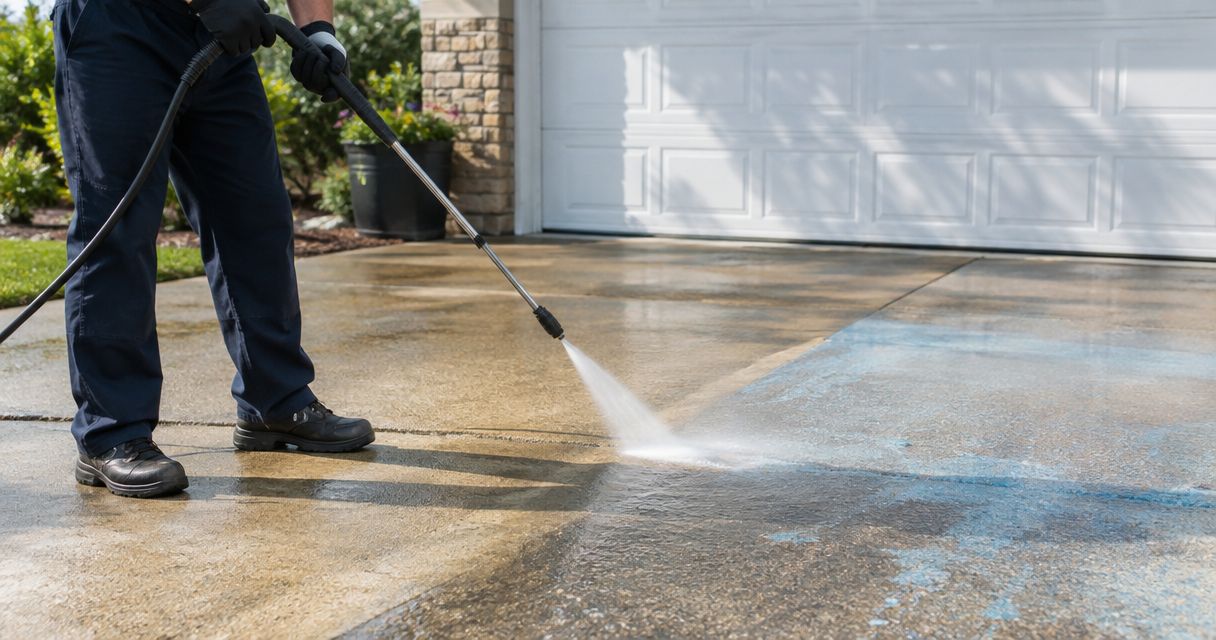
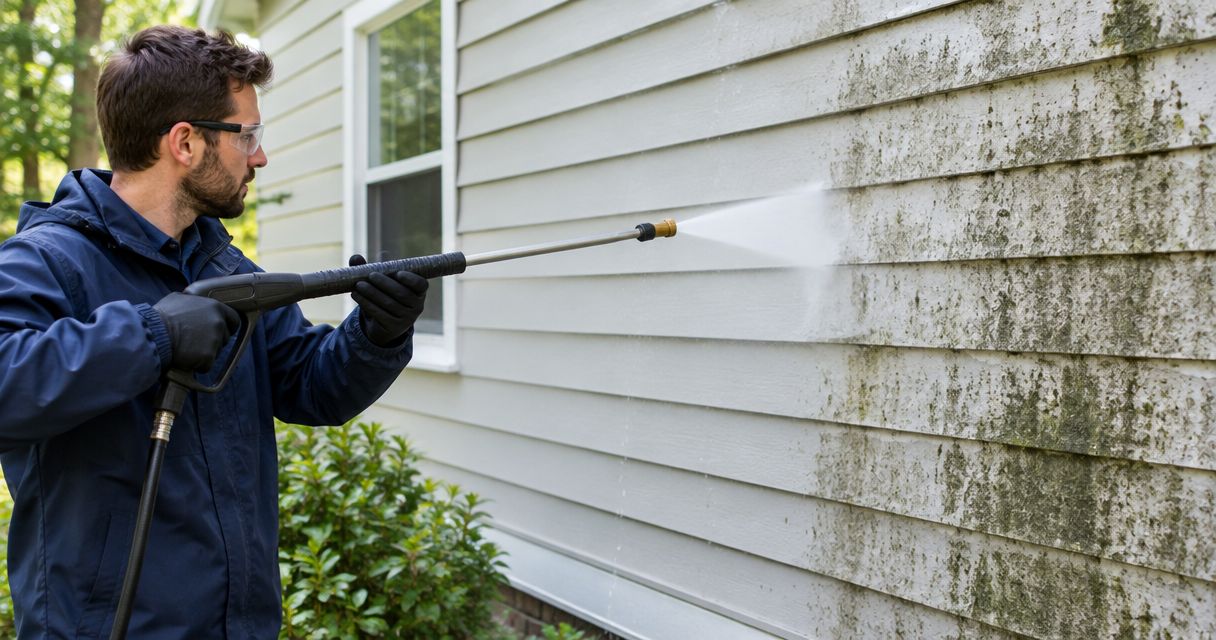
Yes, pressure washing can remove visible mold from siding, but high pressure is not the safest default for a house exterior. A siding-approved cleaner followed by a gentle rinse is generally the better starting point, subject to the siding manufacturer's instructions. Cleaning removes surface growth; it does not repair leaks or eliminate the moisture that lets mold return.
- Can pressure washing remove mold from siding? Yes, but siding-approved cleaning and gentle rinsing are safer than force alone.
- Socalemm provides house washing for homeowners in Newport Beach and Orange County.
- Check siding condition before cleaning; loose panels, failed caulk, and peeling paint need attention first.
- Correct persistent moisture problems rather than repeatedly washing the same dark patch.
Why this matters
A clean wall is not necessarily a dry wall. If water keeps collecting behind a downspout, beside a sprinkler, or around a leaking window, removing the stain leaves the underlying problem in place.
Choose the method for the siding, not for the darkest stain. For homeowners arranging exterior cleaning in 2026, Socalemm provides house washing in Newport Beach and Orange County. Before requesting that service, identify the wall material and photograph any damaged areas so the conversation starts with the surface condition rather than equipment alone.
Can pressure washing remove mold from siding?
Pressure washing can dislodge visible surface growth, but the force needed to strip a stain can also damage siding or drive water behind it. More pressure is not a substitute for identifying the material, choosing a compatible cleaner, and allowing the label-directed contact time.
Color alone does not confirm mold. Green or dark discoloration can include algae, mildew, dirt, or staining from another source. You do not need to identify every organism before requesting routine exterior cleaning, but you should not assume every black patch is mold or that every remaining mark needs another aggressive pass.
| Cleaning approach | Best for | Main advantage | Main limitation |
|---|---|---|---|
| Manufacturer-approved cleaner with a gentle rinse | Sound siding with surface growth | Cleans without relying on high force | Requires material compatibility and careful application |
| Soft brush with an approved cleaner | Accessible, localized staining where brushing is permitted | Gives you control over a small area | Abrasive tools or excessive scrubbing can mark the finish |
| High-pressure washing | Surfaces whose manufacturer expressly permits the method | Removes adhered dirt mechanically | Can damage finishes and force water into openings |
For a 2026 house-washing appointment, ask what process suits your specific siding. The useful answer explains the cleaner, rinse method, and protection of openings—not simply the machine's power.
What should happen before siding is washed?
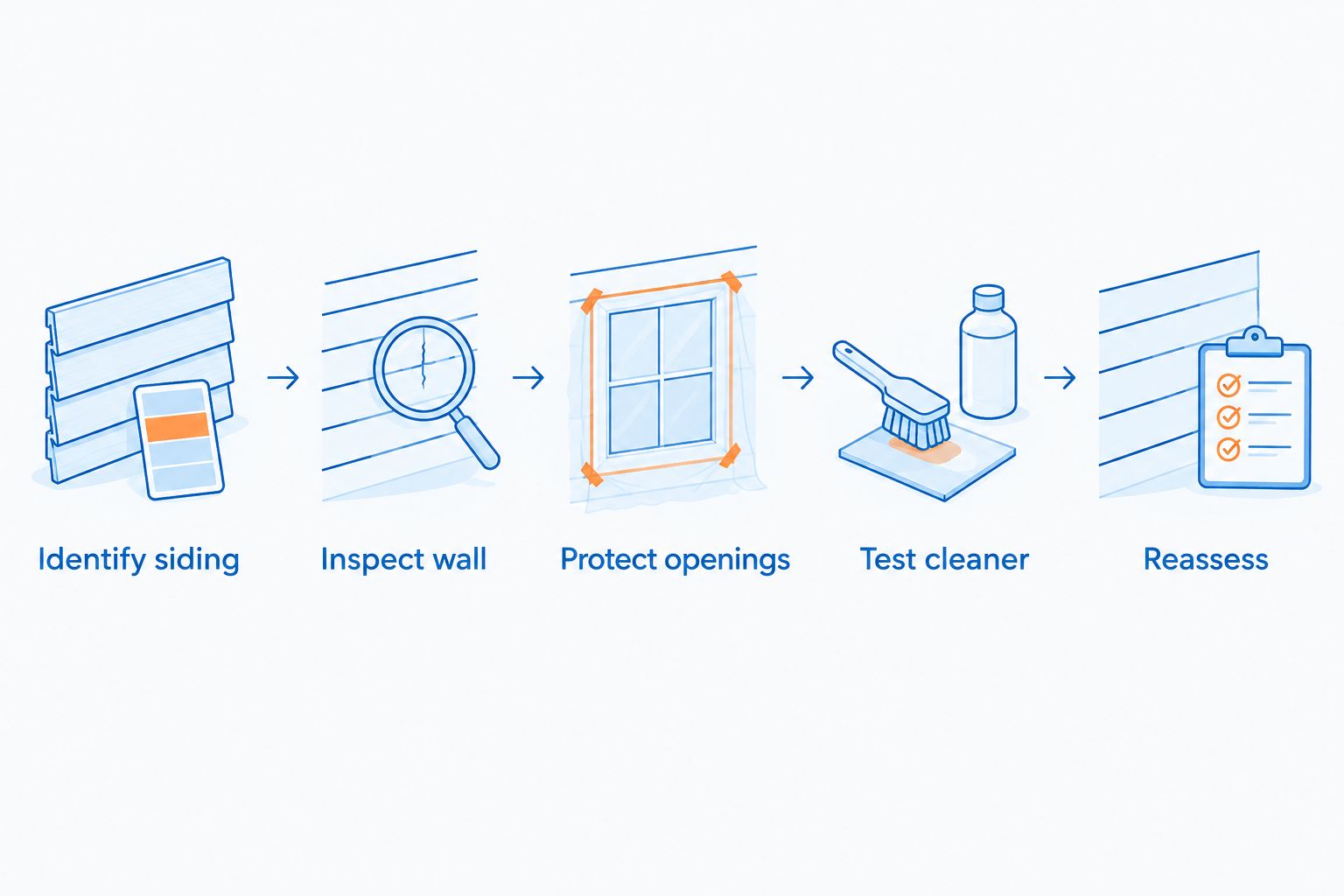
Treat these steps as a planning checklist, not a substitute for the cleaner label or the siding care instructions. Stop before washing if the wall shows signs of water damage or loose material. Cleaning should not become a test of whether a failing finish stays attached.
- Identify the siding. Confirm whether you have vinyl, painted wood, fiber cement, stucco, or another material. Check the manufacturer's cleaning guidance where available, including restrictions on pressure washing and chemical use.
- Inspect the wall. Look for open joints, loose panels, peeling coatings, damaged trim, and gaps around windows. Photograph questionable areas before any work begins.
- Protect openings. Close windows, check door seals, and keep spray away from vents, exterior electrical components, and other water-sensitive areas. Move furniture and follow the cleaner's directions for protecting nearby plants.
- Test the cleaner. Use an inconspicuous area to check compatibility before treating a prominent wall. Follow the specified dilution, application, contact time, and rinsing instructions rather than improvising a stronger mixture.
- Clean and reassess. Use the approved method, then inspect after the siding dries. If a mark remains, reconsider what caused it before adding pressure or repeating chemical treatment.
Keep children and pets away from the work area according to the product label. Never mix cleaning products, particularly chlorine bleach with ammonia or acids; dangerous gases can result. A household cleaner is not automatically suitable for an exterior coating, nearby landscaping, or the equipment applying it.
How does the siding material change the approach?
Vinyl siding: protect seams and openings
Vinyl siding has joints and overlaps that should not receive an upward-directed spray. Follow the manufacturer's care instructions and avoid forcing water behind panels, around windows, or into vents.
A compatible cleaner and nonabrasive brush can address accessible surface growth when the manufacturer permits them. The limitation is access: reaching a high wall safely is a separate problem from choosing a cleaner. Do not use a ladder as a platform for operating a pressure washer.
Painted wood: inspect the coating first
Painted wood needs a finish assessment before washing. Peeling paint, soft spots, and exposed joints call for attention rather than a stronger spray; high pressure can strip coatings and damage wood fibers.
Do not wash over suspected decay and call it repaired. Cleaning can improve the surface appearance, but it cannot restore deteriorated wood. If your 2026 maintenance plan includes repainting, coordinate washing, repairs, and drying with the coating manufacturer's instructions.
Fiber cement: follow the manufacturer's care instructions
Fiber cement siding still has a finish, joints, and surrounding trim to protect. Do not assume a hard-looking panel permits aggressive washing or that a cleaner suitable for vinyl is suitable for its coating.
Use the specified cleaning method and inspect the result after drying. If discoloration remains, determine whether it is surface growth, a finish issue, or another stain before repeating treatment.
Stucco: check cracks before cleaning
Stucco's texture can hold dirt and surface growth, but cracks and damaged areas deserve inspection before cleaning. Concentrated spray can harm the surface or introduce water through vulnerable openings.
The guide to whether pressure washing can damage stucco explains why surface condition matters. If your home combines stucco with another siding material, ask for a method suited to each area rather than one setting for the entire exterior.
Why siding-cleaning results vary
There is no useful universal pressure setting, chemical mixture, or repeat-washing schedule for every house. These factors determine the plan:
- Material and finish: The siding and its coating determine which cleaners, brushes, and rinse methods are permitted.
- Existing damage: Open joints, failing paint, and loose panels change whether cleaning should proceed at all.
- Type of discoloration: Surface growth, dirt, oxidation, and rust staining do not necessarily respond to the same treatment.
- Moisture exposure: Leaks, irrigation overspray, and drainage problems can keep a cleaned area wet.
- Shade and drying: Sheltered wall sections can stay damp longer than exposed sections, affecting where growth returns.
- Access and surroundings: Upper walls, landscaping, electrical fixtures, and nearby openings affect preparation and safe access.
For your 2026 maintenance record, photograph recurring patches from the same location. The useful comparison is whether the discoloration returns beside the same moisture source—not whether the entire house looks equally bright immediately after washing.
Will mold come back after the siding is washed?
Surface growth can return when the siding stays damp. Washing removes the visible problem at that time; it does not change shade, fix a gutter leak, or redirect a sprinkler.
Check the area during normal irrigation and after rain, from a safe position on the ground. Look for repeated wetting, overflowing gutters, dripping joints, and vegetation touching the wall. Correct the cause that applies rather than assuming every return of discoloration means the previous wash failed.
There is no support for promising a fixed mold-free interval on every home. Base repeat cleaning on the wall's condition and care instructions, not a blanket guarantee. A recurring patch around a window or other opening deserves closer investigation, especially if you also notice indoor staining or dampness.
Can you remove siding mold without a pressure washer?
You can clean accessible surface growth without a pressure washer when the siding manufacturer permits a compatible cleaner, gentle brushing, and rinsing. This gives you more control over a small area, but it does not make every cleaner safe or every wall accessible.
Keep the work within safe reach from the ground. Stop if the finish transfers to the brush, the coating lifts, water enters an opening, or the wall feels soft. Those observations change the job from ordinary cleaning to investigation or repair.
When should you request professional house washing?
Request help when the affected area is beyond safe reach, you cannot identify the finish, or the wall needs a cleaning method you cannot apply safely. Ask for an assessment before washing if you see loose siding, failing coatings, or signs of water entering the building.
Socalemm house washing is a local option for homeowners seeking exterior cleaning in Newport Beach and Orange County. Describe the siding, affected walls, access limitations, and any visible damage when you request a quote. Those details are more useful than asking for the strongest pressure wash.
Ask these questions before agreeing to the work:
- What cleaning method is appropriate for this siding and finish?
- How will windows, vents, electrical fixtures, and landscaping be protected?
- Which conditions would stop the cleaning until repairs are made?
- How will remaining stains be assessed after the siding dries?
Keep residential and business requests separate. A homeowner's siding wash concerns the home's materials and access; a commercial exterior-cleaning request also needs clear information about entrances and the areas used by staff or customers. Describe the actual property rather than assuming the same scope applies to both.
FAQ
Can pressure washing remove mold from siding without chemicals?
Water pressure can remove some visible surface growth, but increasing force to avoid a cleaner can damage siding. Follow the siding manufacturer's approved cleaning method rather than assuming pressure alone is safer.
Is soft washing better than pressure washing for mold on siding?
A compatible cleaner with low-pressure rinsing is generally a better starting point than high-pressure spraying on siding. The material, coating condition, and manufacturer's instructions determine the appropriate method.
Can I use bleach to clean mold off my siding?
Use a bleach-containing product only when both its label and the siding manufacturer's instructions permit that application. Never mix bleach with ammonia, acids, or other cleaners, and follow all protection and rinsing directions.
How can I tell whether the dark patch is mold or dirt?
Color alone cannot reliably distinguish mold from dirt, algae, or another stain. If identifying the growth affects a health or building-moisture decision, seek an appropriate assessment rather than relying on appearance.
Why does the same patch return after house washing?
A recurring patch can indicate persistent moisture, such as irrigation overspray, a gutter leak, or slow drying. Check the source of repeated wetting before arranging another wash.
Can I pressure wash siding from a ladder?
Do not operate a pressure washer from a ladder; the spray reaction can affect your balance. Arrange a safe access method rather than extending your reach from an unstable position.
Does exterior house washing fix mold inside a wall?
Exterior house washing does not repair hidden moisture damage or address growth inside a wall. Indoor staining, dampness, or suspected leaks require investigation beyond surface cleaning.
Does Socalemm provide house washing in Orange County?
Socalemm provides house washing in Newport Beach and Orange County. When requesting a quote, describe the siding material, visible growth, access, and any damaged areas.
One last thing
A stain that remains after cleaning is not permission to turn up the pressure. Let the surface dry, then assess whether you are seeing remaining growth, a damaged finish, oxidation, or a different stain altogether.
For your next exterior-cleaning appointment in 2026, save a wide photo of the wall and a close-up of the affected area. Include the window, gutter, sprinkler, or planting beside it when relevant. The surroundings can explain a recurring patch better than the patch itself.