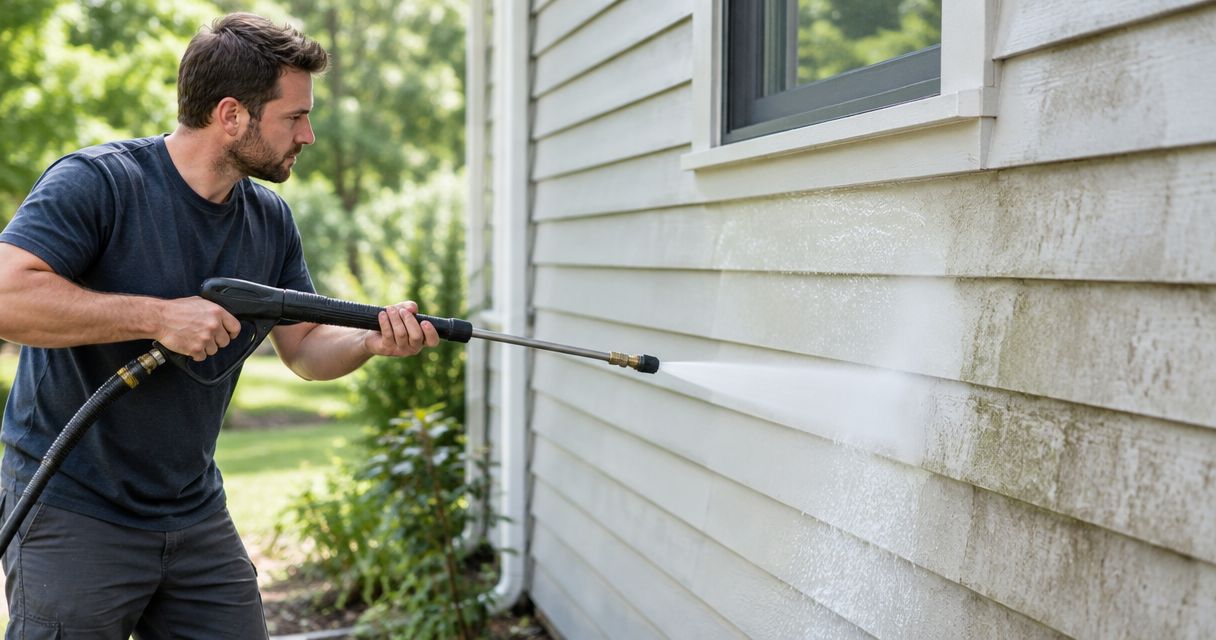
Pressure washing is safe for some painted surfaces, but only when the paint is firmly bonded and the coating manufacturer permits the cleaning method. Peeling paint, damaged siding, unsuitable cleaners, and concentrated spray make washing unsafe; for your 2026 cleaning plan, inspect the finish before choosing equipment.
- Is pressure washing safe for painted surfaces? Only when the coating condition and approved cleaning method support it.
- Choose gentle cleaning for intact paint; stop if paint lifts, color transfers, or water enters behind the surface.
- Socalemm provides house washing for Newport Beach and Orange County homeowners; identify painted areas when requesting a quote.
- Low pressure reduces spray force but does not make an incompatible cleaner safe for paint.
Why this matters
A wall can look dirty because of surface buildup, a deteriorating coating, or both. Washing addresses dirt; it does not repair paint that has lost its bond. Increasing pressure to remove a stubborn mark can turn a cleaning job into paint removal.
The material beneath the paint matters, too. Painted wood, metal, masonry, and stucco do not respond identically to water or cleaning products. If your exterior is stucco, review whether pressure washing can damage stucco before treating the finish like a driveway.
Choose the cleaning method around the painted surface—not around the pressure washer you already own.
Is pressure washing safe for painted surfaces?
Pressure washing is conditionally safe, not universally safe. Start with the coating manufacturer's cleaning instructions, then check whether the existing paint is sound enough to tolerate the approved method. A hidden test area helps reveal problems, but it does not replace those instructions.
Use this comparison to choose an approach for a 2026 exterior-cleaning project:
| Cleaning approach | Best for | Main advantage | Main limitation |
|---|---|---|---|
| Gentle hand washing | Small, accessible painted areas with an approved cleaning procedure | Gives you close control over contact and rinsing | Scrubbing can still dull or damage a vulnerable finish |
| Low-pressure washing | Intact exterior coatings that permit water washing | Reduces mechanical force compared with concentrated high-pressure spray | Unsuitable chemicals or water intrusion can still cause damage |
| Higher-pressure washing | Surfaces whose coating and substrate instructions expressly permit it | Provides stronger mechanical cleaning | Can strip paint, damage the underlying material, or force water into openings |
| Defer cleaning for repair | Peeling, blistered, loose, or otherwise failing paint | Avoids washing an already compromised coating | Leaves the cleaning job unfinished until the coating problem is addressed |
No method wins simply because it removes dirt faster. For painted surfaces, preserving the coating is part of a successful cleaning result.
Intact paint: inspect before washing
Look beyond the largest, easiest-to-see section of wall. Check corners, trim ends, window edges, fastener locations, and areas where water collects. A mostly sound wall can still have vulnerable patches.
Firmly bonded paint is a starting condition, not permission to use any nozzle or cleaner. Confirm that the proposed method suits both the finish and the material underneath it.
Peeling or blistered paint: repair comes first
Do not pressure wash failing paint as routine maintenance. A water jet can catch a loose edge and remove more coating than intended, while blistering can signal a problem that washing will not solve.
If repainting is the goal, describe the work as paint preparation rather than ordinary house washing. Removing loose paint requires a separate plan for surface preparation, debris collection, and any applicable hazardous-paint precautions.
Fresh paint: follow the coating's cure instructions
Dry to the touch does not necessarily mean ready for washing. The coating manufacturer's cure and cleaning instructions determine when the finish can tolerate water, detergent, or mechanical contact.
Do not substitute a general waiting period for the instructions on the actual product. If you cannot identify the coating, ask the painter before arranging a 2026 wash.
Why painted-surface washing risk varies
Risk depends on more than the pressure setting. These factors determine whether cleaning preserves the finish or damages it:
- Paint condition: Loose edges, cracks, blisters, and powdery residue require investigation before washing.
- Underlying material: Wood, stucco, masonry, and metal have different vulnerabilities, including damaged joints or exposed areas beneath the paint.
- Spray concentration: Nozzle pattern, distance, and angle affect how force reaches the surface. A narrow jet concentrates that force.
- Cleaning chemistry: A cleaner must be compatible with the coating and used according to its label. Stronger mixtures are not a substitute for correct product selection.
- Water entry points: Open joints, damaged seals, vents, and gaps around trim create routes for water to travel behind the finish.
- Operator technique: Holding the spray in one place, chasing a stain with increasing force, or directing water into seams increases risk.
A pressure number alone leaves most of that information out. Ask how the painted area will be inspected and cleaned, not just what machine will be used.
How should you clean painted surfaces without stripping paint?
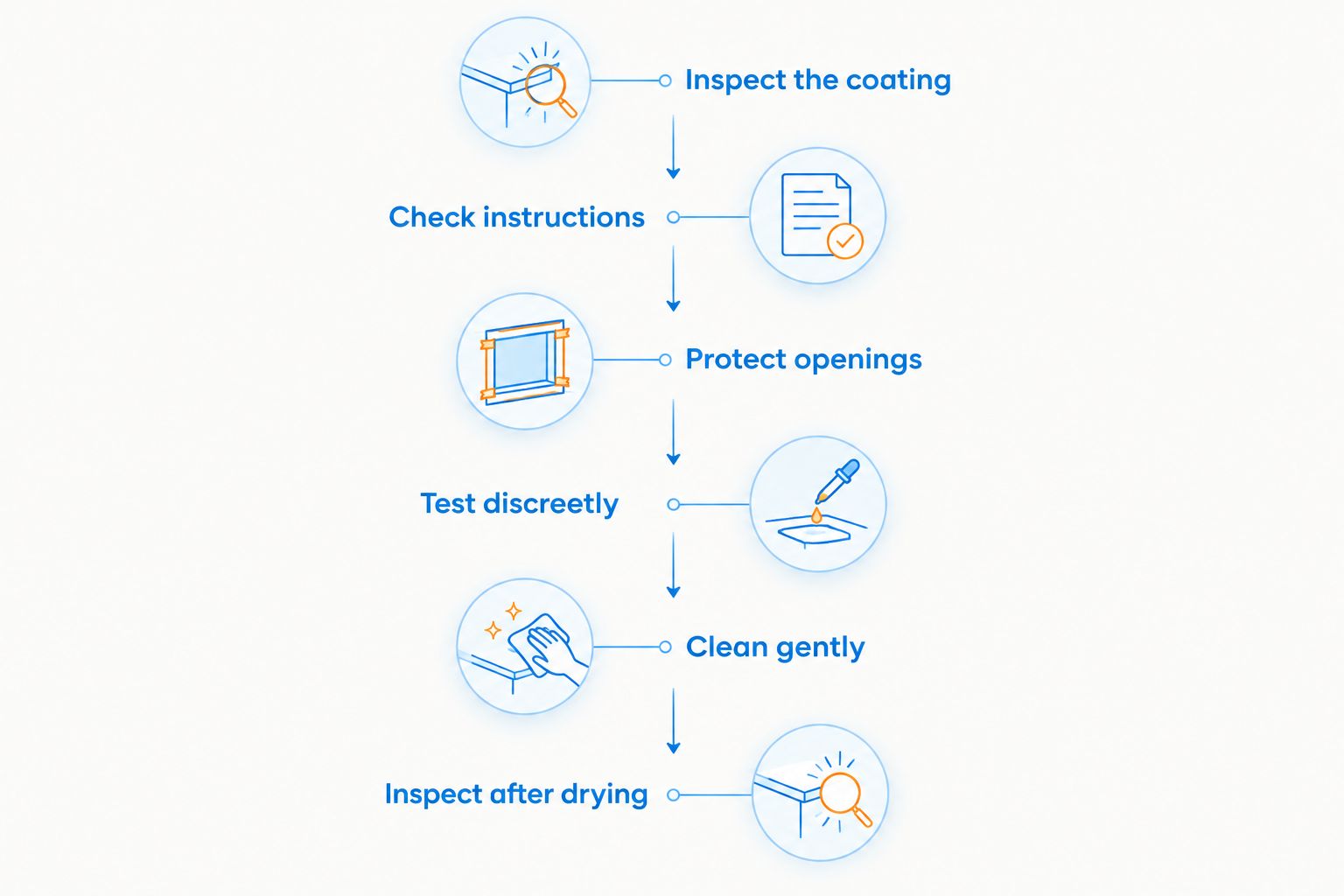
Use this sequence before washing a painted wall, fence, door, or trim. The inspection steps also help you explain the work clearly when requesting professional service.
- Inspect the coating. Check for lifting edges, blisters, cracks, exposed material, and powdery residue. Stop if the finish is failing rather than treating loose paint as dirt.
- Check instructions. Identify the coating and substrate when possible. Read their cleaning guidance alongside the proposed cleaner's label.
- Protect openings. Check windows, doors, vents, outlets, and damaged joints. Do not rely on closed windows or temporary coverings to make direct spray safe.
- Test discreetly. Use the intended method on an inconspicuous area. Let the test area dry before judging color, gloss, adhesion, or remaining residue.
- Clean gently. Use the least aggressive approved method that removes the buildup. Keep water away from openings and stop rather than increasing force when the surface reacts poorly.
- Inspect after drying. Check for uneven sheen, exposed substrate, lifted edges, and signs of water entry. A wet surface can conceal differences that become visible later.
A successful test is permission to proceed cautiously, not permission to ignore damaged areas elsewhere. Recheck the surface as conditions change, especially around trim, repairs, and transitions between materials.
Stop when the surface changes
Stop washing if paint flakes appear, the finish lifts, the substrate becomes exposed, or water enters the building. Do not finish the wall first and investigate later.
Color on a cloth or in rinse water also needs attention. It can reflect coating deterioration rather than removable dirt, so increasing pressure is the wrong next step. Identify what is coming off before continuing.
Is soft washing safer than pressure washing on painted siding?
Low-pressure washing reduces mechanical force, but it does not automatically make the whole process safe. The cleaner, application method, contact time, and rinse procedure still need to suit the painted surface.
The benefit is reduced reliance on force to remove buildup. The limitation is that an incompatible cleaning solution can affect paint even when applied gently. Ask what will touch the coating and how compatibility will be checked.
For a 2026 house-washing appointment, ask about the actual process rather than accepting the term soft washing as a safety guarantee. A useful explanation identifies the surface, the approved cleaner, the test area, and the conditions that would stop the job.
What PSI is safe for painted surfaces?
There is no universal safe PSI for painted surfaces. A setting that an intact coating tolerates can remove deteriorated paint elsewhere, and nozzle choice or spray distance changes the force delivered to the wall.
Follow the coating and substrate manufacturers' instructions instead of treating a general pressure recommendation as approval. If those instructions are unavailable, do not invent a setting by gradually increasing pressure until the mark disappears.
Avoid using narrow or rotating spray patterns as a shortcut on painted finishes. Concentrated force is especially unsuitable for testing whether an unknown coating is sound.
Can pressure washing remove paint before repainting?
Pressure washing can remove loose paint, but removal is a different objective from preserving a finish. Water washing alone does not establish that a surface is properly prepared for repainting.
Tell the painter and cleaning provider whether you want routine cleaning or preparation for a new coating. That distinction affects the work scope, debris precautions, repairs, and drying requirements.
If an older coating could contain lead, do not disturb it with DIY pressure washing. Have the coating assessed and use an appropriate lead-safe work plan where required; scattered paint chips and contaminated runoff are not ordinary cleaning waste.
What should you tell a house-washing provider?
Give the provider useful surface information, not just a request to wash the house. For a 2026 quote, include photographs showing both the overall area and any peeling, cracking, discoloration, or recent repairs.
Identify the painted material, the last repainting information you have, and any known leaks. Point out areas where the coating differs, such as replacement trim or a recently repainted door. Do not assume every painted surface should receive the same treatment.
Socalemm house washing is best suited to Newport Beach and Orange County homeowners seeking exterior-cleaning services. Its residential and commercial pressure washing services address cleaning needs; washing does not repair failing paint or replace coating-specific instructions.
When you request a quote, identify the painted surfaces and describe any visible coating problems. Ask which areas belong in the cleaning scope and which need attention before washing.
For a commercial property, keep the request separate: identify painted storefront areas, access restrictions, and entrances that need protection. Residential wall-cleaning instructions should not automatically become the plan for every commercial finish.
FAQ
Is pressure washing safe for painted surfaces on a house?
Pressure washing is safe only when the coating is sound and its manufacturer permits the cleaning method. Peeling paint, unsuitable cleaners, and spray directed into openings make the job unsafe.
Can I pressure wash peeling exterior paint?
Do not pressure wash peeling paint as routine cleaning. Loose paint needs assessment and a repair or preparation plan before washing continues.
Is soft washing always safe for painted siding?
Soft washing is not always safe for painted siding. Lower pressure reduces mechanical force, but the cleaner and application procedure must still be compatible with the coating.
How long should I wait to wash newly painted siding?
Wait until the coating manufacturer's cure and cleaning instructions permit washing. Dry-to-touch paint is not necessarily ready for detergent, rinsing, or mechanical contact.
Can a garden hose damage painted surfaces?
A garden hose can cause problems when water enters damaged joints, openings, or loose paint. Lower pressure does not remove the need to inspect the surface and control spray direction.
Should I pressure wash painted wood the same way as painted stucco?
Do not assume painted wood and painted stucco need the same washing method. Check the coating, underlying material, joints, and damage before choosing a cleaning procedure.
Can Socalemm clean a painted exterior in Orange County?
Socalemm provides house washing and exterior-cleaning services in Newport Beach and Orange County. Describe the painted material and any coating damage when requesting a quote so the surface can be considered in the cleaning scope.
One last thing
Judge the test area after it dries, not while it is wet. Water can temporarily change how color and sheen appear, making an uneven result harder to recognize during washing.
For your 2026 maintenance record, photograph the same test area before cleaning and after drying. Keep the coating information and cleaning instructions together so the next wash starts with a known method rather than another guess.