Pressure washing can damage your lawn when a concentrated spray hits the grass, strips soil from its roots, or carries harmful cleaning solution into the turf. Cleaning nearby concrete does not automatically harm grass, but protecting the lawn requires control of both the spray and the wastewater—not just a lower pressure setting.
- Is pressure washing bad for your lawn? Yes, direct spray and harmful cleaning runoff can damage grass.
- Keep pressure washing on suitable hard surfaces; never use the jet to rinse grass.
- Soft washing reduces spray force, but its cleaning solution still needs careful handling around landscaping.
- Socalemm provides exterior cleaning for Newport Beach and Orange County homeowners; discuss lawn protection before work starts.
Why this matters
Your driveway and lawn often share an edge, but they need different treatment. A setting suitable for cleaning concrete can tear grass blades, disturb soil, or damage exposed roots when the spray crosses that boundary.
For your 2026 exterior-cleaning plan, treat lawn protection as part of the job rather than an extra rinse afterward. If you are arranging Socalemm pressure washing, identify the grass borders, planting beds, and drainage routes before the work begins.
Is pressure washing bad for your lawn?
Pressure washing is bad for your lawn when the spray or cleaning runoff reaches it in a damaging way. The main risks are physical damage from the jet, chemical injury from unsuitable exposure, and erosion where water cuts through bare or weakly rooted soil.
The method matters, but so does where the water goes. A low-pressure application can still expose grass to chemicals, while water-only cleaning can still damage turf through direct impact.
| Cleaning approach | Best for | Practical benefit | Lawn risk or limitation |
|---|---|---|---|
| Water-only pressure washing | Suitable hard surfaces with dirt that water can remove | Avoids exposure to added cleaning chemicals | Direct spray can tear turf and wash away soil |
| Pressure washing with cleaner | Suitable hard surfaces where the cleaner is appropriate for the stain and material | Adds cleaning action beyond water alone | Runoff and overspray introduce chemical-exposure concerns |
| Soft washing | Exterior surfaces suited to low-pressure cleaning | Reduces the force applied to the surface | Lower pressure does not make the cleaning solution harmless to plants |
| Garden-hose rinsing | Gentle rinsing where appropriate | Uses less concentrated force than a pressure-washer jet | Does not replace chemical containment or proper wastewater handling |
None of these approaches makes the lawn a suitable wastewater disposal area. Choose the method for the surface being cleaned, then plan how to keep the surrounding turf protected.
Direct spray: keep the jet off the grass
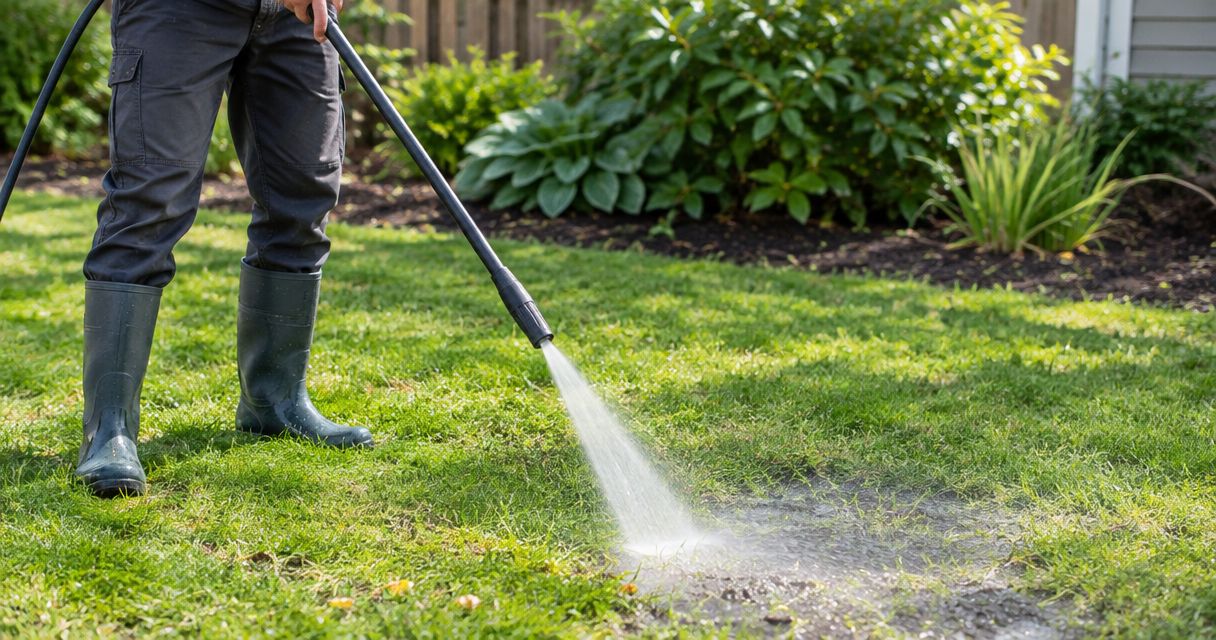
A pressure washer removes material by concentrating water against a surface. Grass blades, shallow roots, and loose soil are not built to withstand that concentrated jet.
Damage often begins at the border. A wand passes beyond the concrete, the stream cuts into the soil, and the next pass widens the disturbed strip. Newly installed sod and areas with exposed soil deserve particular care because their edges are easier to disturb.
Do not use a pressure washer to wash debris off your lawn. Pick up loose material or use an appropriate gentle cleanup method instead.
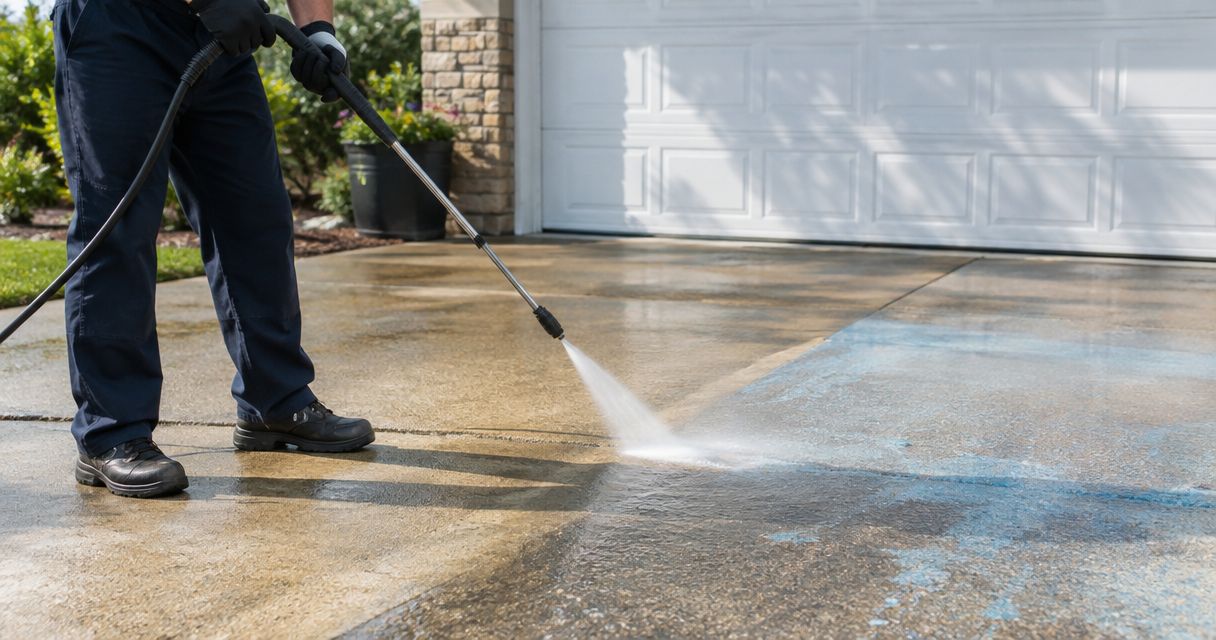
Keep the nozzle directed toward the intended cleaning surface. When working beside turf, stop and reposition rather than sweeping the stream across the grass to reach another part of the driveway.
Cleaning runoff: lower pressure is not enough
Cleaning products differ in their ingredients and permitted uses. Their effect on grass depends on the product, concentration, amount of contact, and handling—not simply whether the application is called pressure washing or soft washing.
Read the actual product label before use. Follow its directions for dilution, vegetation protection, rinsing, and disposal; a general claim such as environmentally friendly is not a substitute for those instructions.
Do not assume that adding water makes any cleaner suitable for release onto turf. Dilution changes concentration, but it does not remove the substance from the wastewater.
For a 2026 house-washing appointment, ask what will be applied and how the operator will keep it away from the lawn. A useful answer describes the handling process, not just the equipment.
Why lawn-damage risk varies
The same driveway-cleaning method can create different problems at different lawn borders. Inspect the site before deciding how to work.
- Spray direction: A jet aimed toward turf creates a different exposure than one kept within the hard surface.
- Cleaning product: Ingredients and label directions determine what precautions the application requires.
- Drainage route: A driveway slope can carry wash water toward grass even when the nozzle never touches it.
- Turf condition: Thin grass, exposed roots, loose edges, and recently installed sod need extra care around moving water.
- Soil moisture: Saturated ground has less capacity to absorb more water and is more vulnerable to muddy disturbance.
- Weather: Wind increases overspray concerns, while hot conditions make unnecessary covering of plants a poor choice.
These factors are reasons to adjust the work, not reasons to guess at a universal safe setting. There is no single pressure setting that makes spraying living grass an appropriate cleaning method.
How do I protect my lawn before pressure washing?
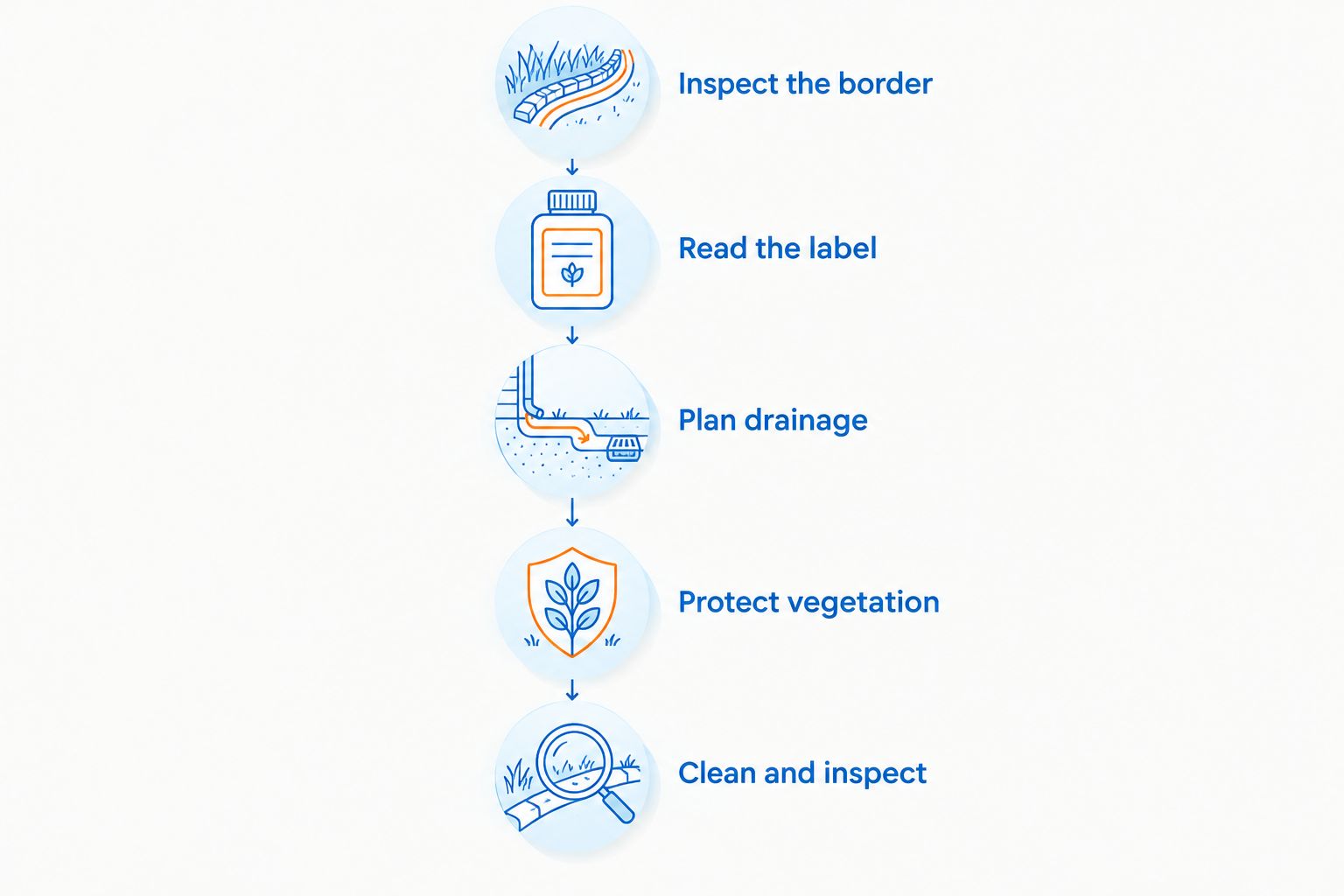
Use this 2026 preparation checklist before cleaning a driveway, patio, or walkway beside grass. The sequence starts with inspection because changing the spray technique will not fix an overlooked drainage problem.
1. Inspect the border
Walk the full edge of the cleaning area. Look for loose sod, bare soil, sprinkler heads, shallow planting pockets, and places where water already collects.
Photograph the lawn before work starts so you have a clear record of its condition. Include existing brown patches rather than photographing only the healthy areas.
2. Read the label
Identify every cleaning product planned for the job. Check the directions for the intended surface and any precautions involving plants, runoff, personal protection, and disposal.
Do not mix cleaning chemicals unless the manufacturer explicitly directs that combination. If the product or its directions are unclear, stop before application.
3. Plan drainage
Follow the slope from the cleaning area to its low point. Identify whether water heads toward the lawn, a planting bed, a neighboring property, or a drain.
Do not send wash water into a storm drain or use grass as a convenient disposal route. Confirm applicable local wastewater requirements and arrange containment or collection where the job requires it.
4. Protect vegetation
Move portable planters out of the work area. Discuss protection for fixed landscaping and keep cleaning spray directed away from turf and foliage.
Pre-wetting and rinsing are appropriate only as part of a plan consistent with the product directions and site drainage. Avoid leaving plastic over plants in direct sun; covering is not a substitute for controlling exposure.
5. Clean and inspect
Work in manageable areas so you can see where the water is moving. Stop if spray reaches the lawn, soil begins washing away, or runoff escapes the planned route.
Afterward, inspect the border and remove accumulated debris without blasting it into the grass. If you are booking a service, use the home preparation guide to organize access and exterior preparation.
What should I ask an exterior-cleaning service?
Ask for an explanation tied to your property. A useful conversation covers the driveway slope, grass borders, cleaning product, and cleanup plan—not just whether the machine has adjustable pressure.
Use these questions when arranging exterior cleaning in 2026:
- Which areas need pressure washing, and which need a gentler method?
- Will you use a cleaning product beside the lawn?
- What vegetation precautions does that product require?
- Where will the wash water go?
- How will you handle exposed soil or loose sod at the edge?
- What will make you stop and change the approach?
Socalemm is an exterior-cleaning option for homeowners in Newport Beach and Orange County. Its stated residential services include pressure washing, house washing, and roof soft washing; discuss the method and lawn-protection plan for your particular property before booking.
This guide does not establish a product-specific protection procedure for Socalemm. Confirm the details for your job rather than assuming that every surface receives the same treatment.
What should I do if pressure washing damages my grass?
Stop the work and identify the exposure before choosing a response. Torn turf, washed-out soil, and suspected chemical injury need different handling.
If the jet has disturbed the lawn, keep foot traffic and equipment off the damaged area. Photograph exposed roots, displaced sod, and any erosion; avoid another aggressive rinse that removes more soil.
If cleaning solution has reached the grass, identify the product and follow its label instructions for accidental exposure and cleanup. Do not apply another chemical to neutralize it without specific manufacturer guidance, and do not flood the area in a way that spreads contaminated runoff.
Keep people and pets out of the affected work area while you assess it. For persistent damage or uncertain chemical exposure, ask the product manufacturer and a qualified landscape professional for guidance suited to the product and turf.
Is soft washing safer for grass than pressure washing?
Soft washing uses less spray force, but that alone does not establish lawn safety. Its cleaning solution still needs appropriate handling around grass and plants.
Choose the cleaning method for the exterior material, then assess chemical exposure separately. A roof-washing plan also needs to account for where water leaves the roof and reaches the ground.
Can I pressure wash a driveway without killing the grass?
You can clean a suitable driveway without deliberately spraying or draining cleaner onto the lawn. Keeping the jet on the concrete, protecting vulnerable borders, and controlling wastewater are the central precautions.
Do not treat an undamaged lawn after a previous cleaning as proof that any method is safe. Product choice, drainage, turf condition, and application can differ between jobs.
Should I water my lawn before pressure washing?
Pre-wetting vegetation is appropriate for some cleaning procedures, but it is not a universal rule or a guarantee against damage. Follow the cleaning product's directions and account for the existing soil moisture.
Do not saturate a lawn that is already wet. Extra water can worsen pooling and erosion without solving the underlying exposure problem.
FAQ
Is pressure washing bad for your lawn even without chemicals?
Yes, direct pressure-washer spray can damage grass even without chemicals. The concentrated jet can tear blades, disturb roots, and wash away soil.
Will pressure-washing runoff kill my grass?
Runoff can injure grass when it contains a harmful cleaning product or creates damaging pooling and erosion. The outcome depends on the product, exposure, drainage, and turf condition; runoff should not be directed onto the lawn.
Is soft washing safe around my lawn?
Soft washing still requires protection for the lawn because lower spray pressure does not remove chemical-exposure risks. Follow the actual product directions and control overspray and runoff.
What pressure setting is safe to use directly on grass?
Do not use a pressure-washer jet directly on grass. Keep the tool on suitable cleaning surfaces and use an appropriate gentle method for lawn cleanup.
Should I cover my lawn with plastic before cleaning?
Plastic covering is not a substitute for controlling spray and runoff. Avoid leaving plastic over vegetation in direct sun, and choose protection consistent with the cleaning product's directions.
What should I do if cleaner splashes onto my lawn?
Stop application, identify the product, and follow its label instructions for accidental exposure and cleanup. Do not mix in another chemical or spread the runoff with uncontrolled flooding.
Does Socalemm provide exterior cleaning in Orange County?
Socalemm provides residential and commercial exterior cleaning in Newport Beach and Orange County. For a residential job near grass, discuss the planned cleaning method and vegetation precautions before work begins.
One last thing
For your 2026 cleaning checklist, photograph the lowest point of the driveway—not just the dirtiest part. That low point helps you identify where wastewater will collect or leave the surface.
The lawn edge is not the only place to watch. Water can cross a clean section of concrete and reach grass farther from the active cleaning area, so inspect the entire route before starting.