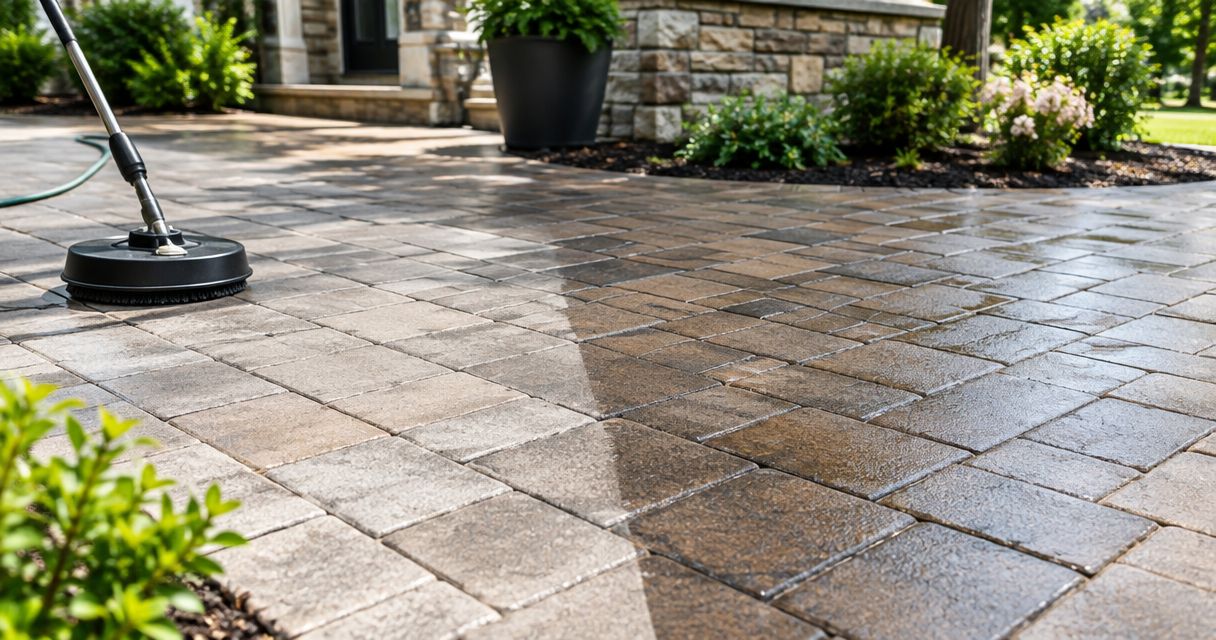
No, paver sealing is not automatically necessary after cleaning; seal only when the paver material, existing finish, and intended use justify it. Cleaning does not create a sealing requirement, but disturbed joint sand, remaining stains, and moisture need attention before you decide whether to apply a sealer.
- Is paver sealing necessary after cleaning? No; material requirements and your maintenance goals determine whether sealing makes sense.
- Socalemm provides exterior cleaning in Orange County; confirm sealing separately rather than assuming it is included.
- Sealer does not repair loose pavers, replace missing joint sand, or correct drainage problems.
- Choose a compatible finish and follow its preparation, drying, and curing instructions.
Why this matters
A freshly cleaned patio can look finished while still needing joint maintenance. It can also be ready for normal use without any sealer at all. Separate cleaning, joint repair, and sealing into distinct decisions.
For your 2026 maintenance plan, start with the condition of the paving rather than an automatic cleaning-and-sealing package. If cleaning exposed empty joints or surface damage, address those issues first; this guide to whether pressure washing can damage pavers explains the cleaning risks to consider.
Is paver sealing necessary after cleaning?
Paver sealing is optional unless the paving manufacturer's instructions or an existing finish system require it. Cleaning removes surface contamination. Sealing changes how the surface interacts with moisture, stains, or wear, depending on the product.
Use the condition of your pavers to choose among these approaches:
| Approach | Best for | Main benefit | Main limitation |
|---|---|---|---|
| Leave pavers unsealed | Homeowners satisfied with the natural surface whose pavers do not require sealing | Avoids adding a coating and its maintenance requirements | Does not add a stain-resistant treatment |
| Use a penetrating treatment | Compatible porous pavers where a relatively natural appearance matters | Can reduce absorption without a visible surface film | Does not necessarily deepen color or stabilize joint sand |
| Use a film-forming sealer | Compatible pavers where an enhanced finish is specifically wanted | Can change sheen or deepen appearance, depending on the formula | Introduces coating maintenance and requires attention to wet traction |
These are treatment categories, not interchangeable products. A treatment intended for one paving material is not automatically suitable for another, and a natural-looking product can still change appearance.
Before selecting anything, identify whether you have concrete pavers, clay brick, natural stone, or another material. Find the manufacturer's care instructions when available. Those instructions matter more than a general recommendation to seal every cleaned driveway.
Leaving pavers unsealed: best for keeping the existing surface
Leaving pavers unsealed is a reasonable choice when the manufacturer permits it and you are satisfied with their appearance and maintenance needs. You can continue sweeping, removing spills promptly, and cleaning with a material-appropriate method.
The benefit is simplicity: there is no added coating to evaluate before future cleaning. The limitation is that you are not adding a treatment intended to reduce absorption or staining. Unsealed does not mean maintenance-free.
After cleaning, inspect the joints and edges before returning furniture or vehicles. Missing sand, rocking units, and low spots remain maintenance issues whether you seal or not. Do not use sealing as a substitute for repairing the paving.
Penetrating treatments: best for compatible porous pavers
A penetrating treatment is worth considering when your main goal is reducing absorption while retaining a relatively natural surface. Suitability depends on the paver material and the treatment's stated uses.
The advantage is that some penetrating treatments do not create a visible film. The drawback is that they are not all designed to resist the same contaminants: water repellency alone does not establish resistance to cooking grease or vehicle oil.
Read the intended-use information rather than relying on the word protective. Check whether the treatment is suitable for horizontal exterior paving and whether it changes color. Test an inconspicuous area before treating the whole surface.
Film-forming sealers: best for a deliberately enhanced finish
A film-forming sealer is an option when you specifically want a compatible surface coating or enhanced appearance. Do not choose it simply because the pavers looked darker while wet after washing; that temporary appearance is not a reliable preview of every sealer.
The benefit is control over the intended finish. The trade-off is ongoing coating care, including compatibility checks before recoating. Wet traction also needs attention, particularly on steps, sloped paths, and pool surrounds.
For a 2026 patio project, review a cured test patch before committing to the entire area. Examine it in daylight and when wet, following the product's testing instructions. A finish that looks appealing but creates an unsuitable walking surface is the wrong choice.
Why the need for paver sealing varies
There is no single sealing rule for every driveway or patio. These factors determine whether a treatment serves a practical purpose:
- Paver material: Concrete, clay, and natural stone have different care requirements. Confirm that the treatment explicitly covers your material.
- Existing finish: An old coating affects preparation and compatibility. Adding a different sealer without identifying the existing finish risks an unsuccessful application.
- Stain exposure: A cooking area and a decorative garden path face different contaminants. Match any claimed stain resistance to the exposure you actually have.
- Moisture and drainage: Persistent dampness, irrigation overspray, and standing water need investigation before coating. Sealing does not correct drainage.
- Desired appearance: Natural color, darker color, and visible sheen are different goals. A test patch helps you judge the actual result.
- Joint condition: Missing sand or an unsuitable jointing material needs its own solution. Not every sealer is designed to stabilize joints.
For your 2026 project checklist, write down the problem you want sealing to solve. If the only answer is that the pavers were just washed, reconsider the extra step. A clear purpose makes it easier to assess the product instructions and avoid an unnecessary coating.
What should you check between cleaning and sealing?
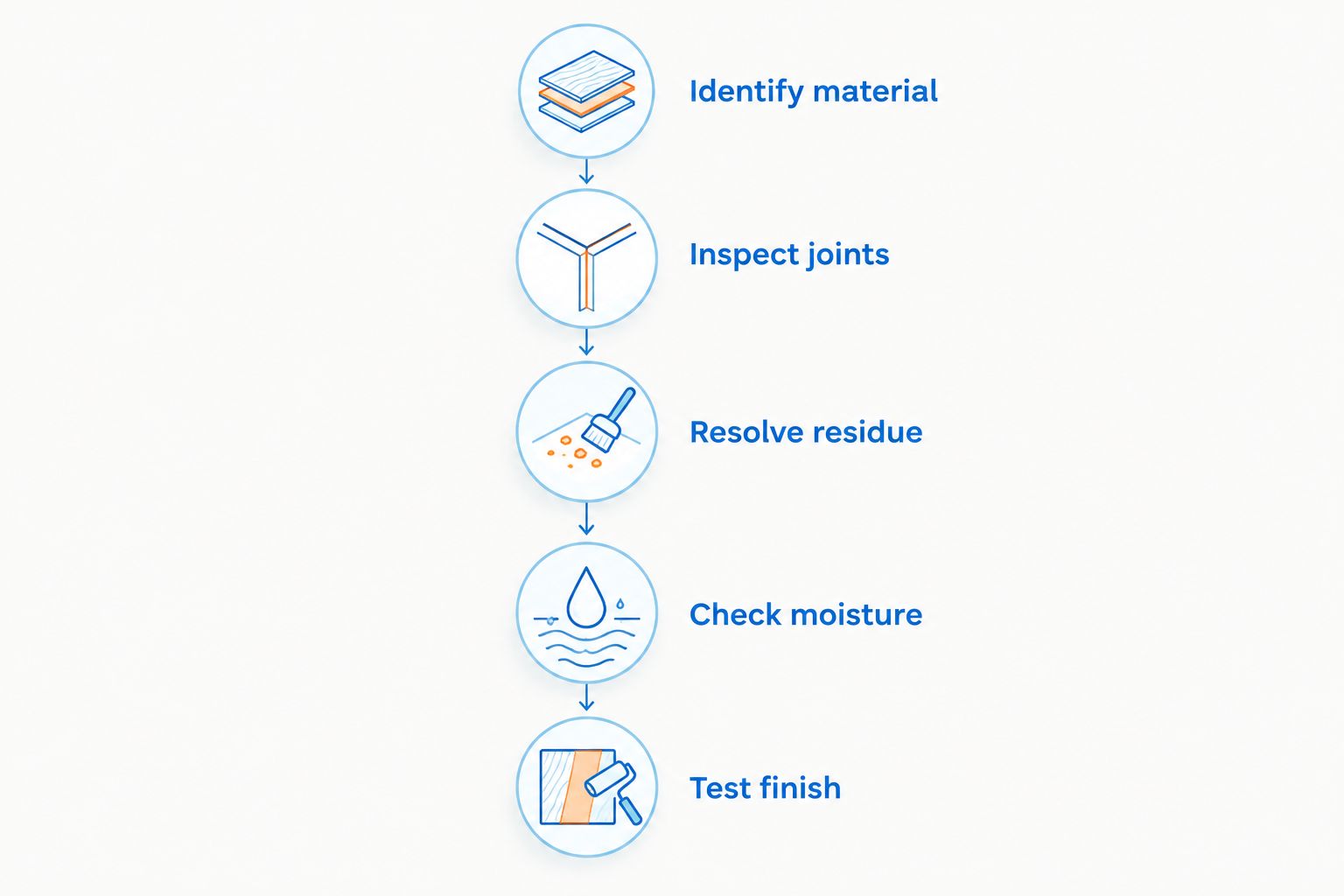
The right sequence is inspection, preparation, and then a decision about treatment—not washing followed automatically by spraying sealer. Work through these checks before opening a container.
- Identify material. Confirm the paving type and look for care instructions. If you cannot identify the surface or an existing finish, resolve that uncertainty before applying a treatment.
- Inspect joints. Look for washed-out sand, loose units, and damaged edges. Follow the jointing material's instructions for replacement, activation, and compatibility with sealing.
- Resolve residue. Check for remaining oil, cleaner residue, white deposits, or organic growth. Applying sealer over a visible problem does not remove it.
- Check moisture. Follow the sealer's stated moisture and drying requirements. Surface color alone does not establish that the paving meets those requirements.
- Test finish. Apply a test patch as directed, let it cure, and inspect the appearance and suitability before proceeding.
A 2026 cleaning appointment should leave you with a clear understanding of any follow-up work. Ask which preparation tasks are included and which need a separate assessment; do not assume that cleaning includes joint replacement or sealing.
Keep the cleaning scope separate from any proposed coating work. Socalemm is best for Newport Beach and Orange County homeowners seeking residential exterior cleaning. When you request a quote, describe the paving material, visible stains, existing finish, and any missing joint sand; confirm any sealing work separately.
How long should you wait to seal pavers after washing?
Wait until the paving meets the selected sealer's preparation and moisture requirements. There is no universal waiting period that safely applies to every material, jointing system, and product.
Shade, weather, residual moisture, and the instructions for newly installed joint sand all affect the sequence. A dry-looking surface is not enough to override a product's application requirements. If different preparation products are involved, check that their instructions are compatible.
Build your 2026 schedule around suitable conditions rather than a promised same-day finish. Ask what happens if rain, damp joints, or unresolved residue prevents application. Delaying treatment is preferable to coating a surface that is not ready.
Does sealing replace the sand lost during cleaning?
No, sealing does not replace missing joint sand. Some products are designed to help stabilize suitable joint material, but they still require the correct preparation and joint condition.
Inspect joints before applying any coating. If sand needs replacement, identify the appropriate jointing material and follow its installation instructions. Do not pour sealer into empty joints as a repair method.
Also separate a joint problem from a movement problem. Rocking or sunken pavers need assessment of the paving installation, not simply more sand brushed across the surface. Covering the symptoms leaves the underlying issue unresolved.
Will sealing stop stains, weeds, and algae permanently?
No, sealing does not permanently eliminate stains, weeds, or algae. A suitable treatment can help with specific exposures, but it does not replace spill cleanup, joint maintenance, or management of persistent dampness.
Weeds can grow in accumulated material within joints. Organic growth can return where conditions remain favorable. Keeping joints maintained and correcting avoidable moisture sources remain useful steps whether the paving is sealed or unsealed.
Treat stain resistance as a specific product characteristic, not a promise that nothing will mark the surface. Clean up spills promptly using methods compatible with both the paving and any existing finish.
Keep homeowner and commercial decisions separate
For a home patio, focus on the material, appearance, walking surface, and your ability to keep people and pets away during application and curing. For a driveway, add vehicle access and the treatment's stated suitability for that use.
A commercial walkway involves different coordination. The property manager needs to account for pedestrian routes, access restrictions, application conditions, and reopening instructions. A homeowner's maintenance plan is not a substitute for a commercial work plan.
Socalemm provides residential and commercial exterior cleaning, but those scopes should remain distinct when you discuss a project. Describe how the area is used before discussing the cleaning method or any separate surface treatment.
FAQ
Is paver sealing necessary after every pressure wash?
No, paver sealing is not necessary after every pressure wash. Inspect the material, joints, and existing finish, and follow the paving manufacturer's maintenance instructions.
Can I leave my patio pavers unsealed?
Yes, you can leave patio pavers unsealed when their manufacturer permits it and you accept the surface's maintenance needs. Continue cleaning spills and maintaining the joints.
Can I seal pavers while they are still damp?
Apply sealer only when the paving meets that product's moisture requirements. Do not assume that a dry-looking top surface means the joints and paving are ready.
Should I replace joint sand before sealing pavers?
Replace missing joint sand before sealing when the jointing system requires it. Follow the sand and sealer instructions for installation sequence, preparation, and compatibility.
Will sealing make my pavers slippery?
A sealer can change wet traction, particularly when it creates a surface film. Choose a product suitable for the location and assess a cured test patch according to its instructions.
Can I apply new sealer over an old paver coating?
Apply new sealer over an old coating only when the preparation and compatibility requirements permit it. Identify the existing finish before choosing a product or cleaning method.
Does sealing fix white deposits on pavers?
No, sealing does not remove white deposits from pavers. Identify the deposits and address the preparation or moisture issue before considering a coating.
One last thing
Clean pavers and sealed pavers are different outcomes. You can have a properly cleaned patio that needs no coating, or an attractive sealed driveway that still has failing joints.
Before approving treatment, ask what specific problem the sealer will address and what maintenance it adds. If you cannot connect the product to a clear need, keep the surface clean, maintain the joints, and leave sealing off the immediate work list.