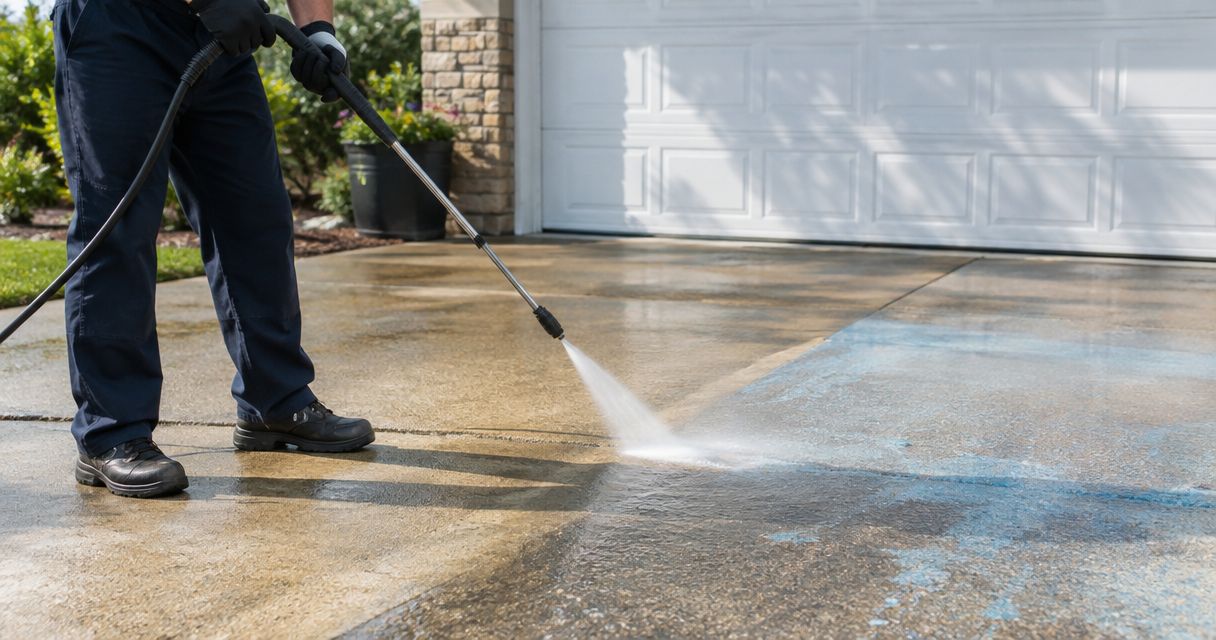
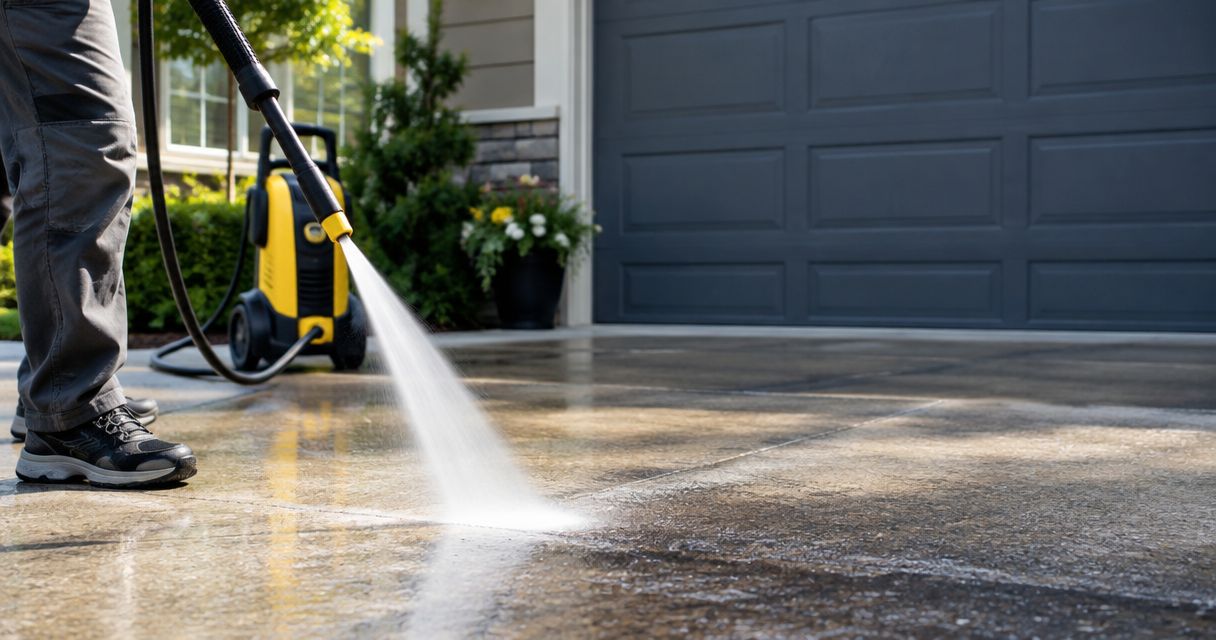
To keep your driveway clean longer after pressure washing, remove fallen debris, address vehicle leaks, keep irrigation off the pavement, and treat fresh spills with a cleaner suited to the surface. Pressure washing removes buildup; it does not stop new stains, and sealing is an optional surface-specific decision rather than a substitute for maintenance.
- How to keep driveway clean longer after pressure washing: remove debris, control runoff, and address spills promptly.
- Socalemm provides pressure washing in Newport Beach and Orange County; routine driveway maintenance remains the homeowner’s job between cleanings.
- Choose spot cleaning for isolated marks rather than repeatedly pressure washing the entire driveway.
- Consider driveway sealing only after checking surface compatibility, slip resistance, and the manufacturer’s application instructions.
Why this matters
A freshly washed driveway gives you a useful baseline: you can see where new dirt starts and what brings it back. If the same patch darkens again, look for the source before scheduling another wash.
For homeowners planning exterior cleaning in 2026, Socalemm provides residential pressure washing in Newport Beach and Orange County. Socalemm pressure washing is best for homeowners seeking exterior cleaning within that service area. Professional cleaning addresses accumulated dirt, but it does not repair irrigation, stop an oil leak, or prevent leaves from falling.
How do you keep a driveway clean longer after pressure washing?
Use a source-control routine rather than a stronger-cleaner routine. Start with loose debris, then moisture, then stains; leave repeat pressure washing for buildup that ordinary maintenance cannot safely remove.
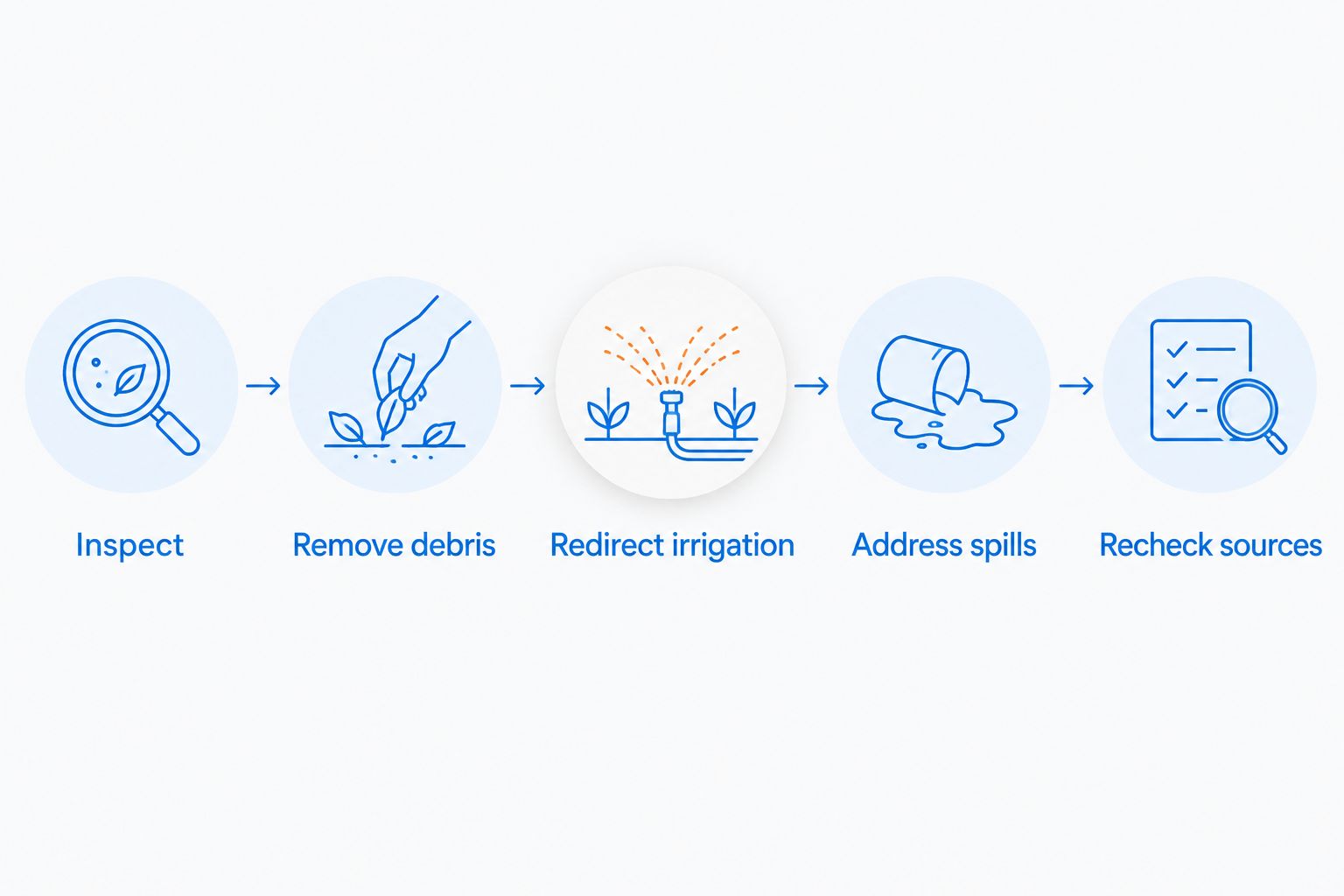
1. Check the clean surface before returning to normal use
Follow the cleaning provider’s instructions before walking, parking, or placing items back on the driveway. If any coating or treatment was applied, its product instructions govern drying and return to service; a driveway that looks dry is not proof that a coating has cured.
Once the surface is ready, inspect it in daylight. Identify existing discoloration, worn areas, cracks, and joints so you do not mistake them for new dirt later.
2. Remove debris before it stays wet
Sweep leaves, soil, seed pods, and lawn clippings off the driveway. Pay attention to the garage threshold, driveway edges, and places beneath trees where debris collects.
Wet organic material can leave discoloration. Remove the material first instead of repeatedly rinsing around it, and collect swept debris rather than pushing it into the street or a drain.
3. Keep irrigation and soil off the pavement
Watch your sprinklers while they run. Redirect heads that spray the driveway, repair leaks, and check whether water carries soil out of nearby planting beds.
Repeated wetting encourages conditions associated with biological growth, while mineral-containing water can leave deposits as it dries. Adjusting the source is more useful than repeatedly scrubbing the same mark.
4. Address fresh spills without spreading them
For a fresh oil spill, keep people and pets away, use an appropriate absorbent, and collect the material for disposal according to its instructions and local requirements. Do not hose oil toward a gutter.
After removing loose residue, use a cleaner labeled for the driveway material and the stain involved. Test an inconspicuous area first, follow the label, and never mix cleaning products.
5. Recheck the source when a stain returns
Look above and beside the mark: a parked vehicle, planter, metal furniture leg, sprinkler, or soil edge can explain recurring discoloration. Fixing that source prevents another cleaning from becoming a temporary reset.
For your 2026 maintenance notes, take 2 reference photos after cleaning: one of the whole driveway and one of the area that usually gets dirty first. Compare later marks under similar lighting rather than relying on memory.
Which maintenance method should you use?
Match the method to what is on the surface. Loose leaves, a fresh spill, and widespread biological growth need different responses; using pressure for all of them adds unnecessary work and risks surface damage.
| Maintenance option | Best for | Main benefit | Limitation or caution |
|---|---|---|---|
| Sweeping | Loose leaves, grit, and clippings | Removes debris without adding water | Does not remove embedded stains |
| Controlled rinsing | Light, nonhazardous surface dirt | Moves remaining loose dirt after sweeping | Adds water and requires a suitable runoff plan |
| Targeted spot cleaning | An isolated stain with an identified cause | Limits treatment to the affected area | Cleaner must suit the surface and stain |
| Professional pressure washing | Accumulated buildup requiring deeper cleaning | Addresses a larger dirty surface | Does not correct leaks, drainage, or irrigation |
| Compatible sealer | A suitable surface with a defined protection goal | Can reduce absorption, depending on the product | Requires preparation and future maintenance; some finishes affect traction |
Start with the least aggressive method that addresses the actual problem. More pressure is not a maintenance plan, especially on worn concrete, decorative finishes, or joints containing sand.
Should you seal a driveway after pressure washing?
Sealing is optional, not an automatic next step. The right decision depends on the driveway material, existing coatings, desired appearance, exposure, and the specific sealer’s instructions.
A compatible sealer can help limit absorption, but it does not make a driveway stain-proof. Some products change color or sheen, and some affect wet traction; those trade-offs matter on slopes and walking routes.
Before choosing a sealer in 2026, ask:
- What is the surface? Identify concrete, pavers, asphalt, or a decorative finish before choosing a product.
- Is there an existing coating? Compatibility and preparation requirements matter when applying another treatment.
- What problem are you addressing? Water absorption, oil exposure, and appearance are different goals.
- What preparation is required? Follow the product’s instructions for cleanliness, dryness, repairs, and application conditions.
- What happens afterward? Check return-to-service instructions, maintenance requirements, and traction guidance.
Do not apply sealer over active stains or damp areas unless the product explicitly permits those conditions. Do not assume a pressure-washing appointment includes sealing; clarify the scope before booking.
Why driveway cleanliness varies after washing
The driveway’s surroundings often explain why one area stays clean while another darkens again. Check 3 zones when you inspect: the parking area, the planting-bed edges, and the shaded sections.
- Vehicle condition: Continuing oil or fluid leaks create new marks wherever you park. Cleaning the pavement without addressing the vehicle leaves the source unchanged.
- Tree and landscape debris: Leaves, clippings, and soil accumulate at edges and beneath vegetation. Remove them before they sit wet against the surface.
- Moisture and shade: Areas that remain damp need closer attention than areas that dry readily. Look for irrigation overspray, leaks, and trapped debris.
- Drainage: Water collecting in the same location repeatedly signals a drainage issue, not simply a dirty driveway. Get persistent drainage problems assessed rather than treating them with more washing.
- Surface condition: Roughness, damaged coatings, cracks, and open joints complicate maintenance. Cleaning does not repair those conditions.
- Stain type: Oil, rust, mineral deposits, and biological growth are not interchangeable. Identify the likely cause before choosing a treatment.
Avoid judging the result only while the driveway is wet. Water changes how discoloration looks, so assess the surface again after it dries.
What should your driveway maintenance routine look like?
For a practical 2026 routine, tie maintenance to visible conditions instead of promising that every driveway needs the same cleaning interval. A driveway beneath trees has different debris exposure from an open driveway, even on the same street.
Use 4 maintenance tasks as your checklist:
- Sweep: Remove debris when you see it accumulating, particularly after yard work or windy weather.
- Inspect: Look for fresh drips, wet patches, soil movement, and recurring marks.
- Correct: Address the leaking vehicle, misdirected sprinkler, or staining object before cleaning again.
- Spot-clean: Treat an isolated mark using a compatible method rather than washing the entire driveway automatically.
After gardening, check the pavement before using a hose. Fertilizer, soil, and plant debris should be handled according to their nature and product instructions, not washed indiscriminately into runoff.
Keep the household routine separate from commercial maintenance. A homeowner’s driveway checklist does not replace a commercial site’s access controls, spill procedures, or maintenance requirements.
How often should I pressure wash my driveway again?
Rewash according to buildup and surface condition, not a universal calendar interval. Loose dirt calls for sweeping, while recurring slippery growth or widespread staining calls for an assessment of both the cleaning method and the source.
When requesting a 2026 quote, describe the material, existing coating, stain locations, and any previous damage. Explain whether the issue is general dirt, oil, rust, or green growth so the cleaning scope addresses the actual problem.
Can I rinse my driveway instead of pressure washing it?
Rinsing suits light, nonhazardous dirt after loose debris has been collected. It is not an appropriate way to dispose of oil, solvents, paint, or other contaminants.
Plan where the water will go before you start. Check applicable local stormwater requirements, keep contaminated wash water out of storm drains, and avoid directing water toward garages or neighboring property.
What should I do if the same stain keeps coming back?
Inspect the source before repeating the treatment. A mark beneath a vehicle needs a different response from a damp strip beside a sprinkler or an orange mark beneath a metal object.
If the cause is unclear, photograph the dry surface and explain when the mark returns. Avoid cycling through stronger chemicals or higher pressure; a persistent mark can reflect an unresolved source, embedded staining, or surface damage.
FAQ
What’s the best way to keep my driveway clean after pressure washing?
Remove debris, address spills promptly, and correct sources such as vehicle leaks and sprinkler overspray. Use spot cleaning for isolated marks instead of repeatedly pressure washing the whole driveway.
Should I seal my driveway immediately after pressure washing?
Do not seal automatically or assume the surface is ready because it looks dry. Check the sealer’s surface compatibility, preparation requirements, application conditions, and return-to-service instructions.
Will sealing stop oil from staining my driveway?
Sealing does not make a driveway stain-proof. A compatible product can reduce absorption, but you still need to address vehicle leaks and clean fresh spills appropriately.
Why is my driveway turning green again after cleaning?
Recurring green growth calls for checking persistent moisture, shade, and irrigation overspray. Cleaning the growth without correcting a continuing moisture source leaves the underlying condition unchanged.
Can I pressure wash small marks every time they appear?
Repeated pressure washing is not the first choice for every small mark. Start by identifying the stain, checking the surface condition, and choosing a compatible spot-cleaning method.
Does Socalemm provide pressure washing in Orange County?
Socalemm provides residential and commercial pressure washing and related exterior cleaning in Newport Beach and Orange County. Describe your driveway surface and stains when requesting a quote so the scope is clear.
How long will my driveway stay clean after washing?
There is no single clean period that applies to every driveway. Debris, vehicle leaks, moisture, drainage, and surface condition determine how quickly new dirt or stains appear.
One last thing
The first returning mark is a clue, not an instruction to wash the whole driveway again. Note its location and check what touches, drips onto, or drains across that exact spot.
A repeating stain pattern tells you where to focus maintenance. Fixing that source is the useful next move; another wash alone leaves the same problem waiting to return.