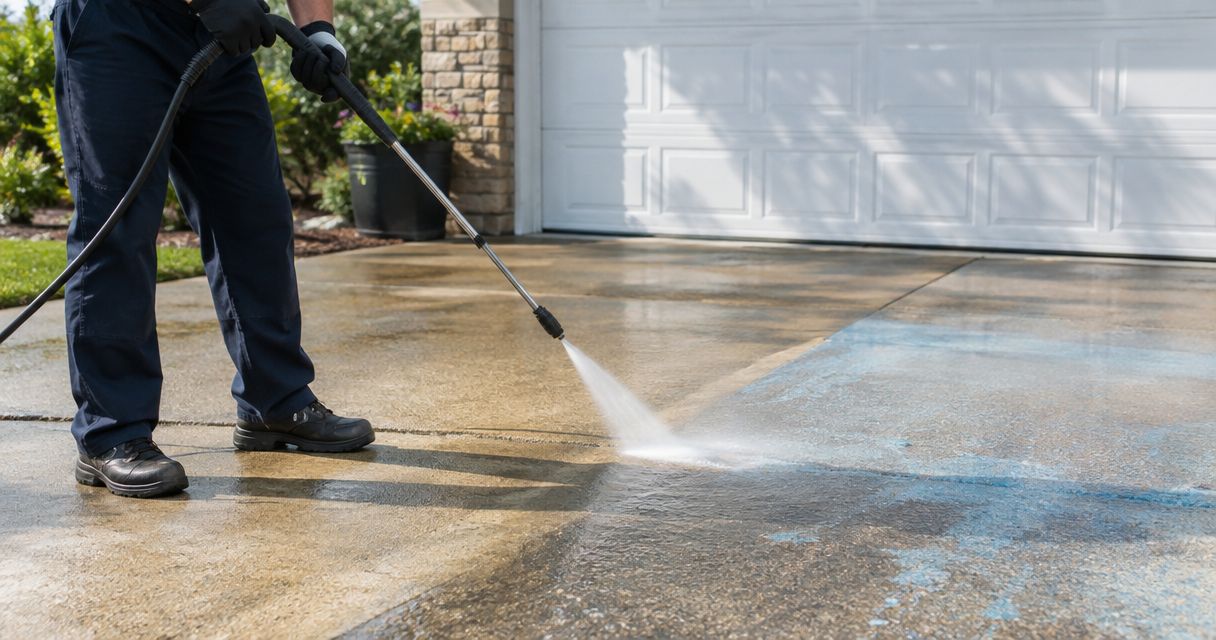
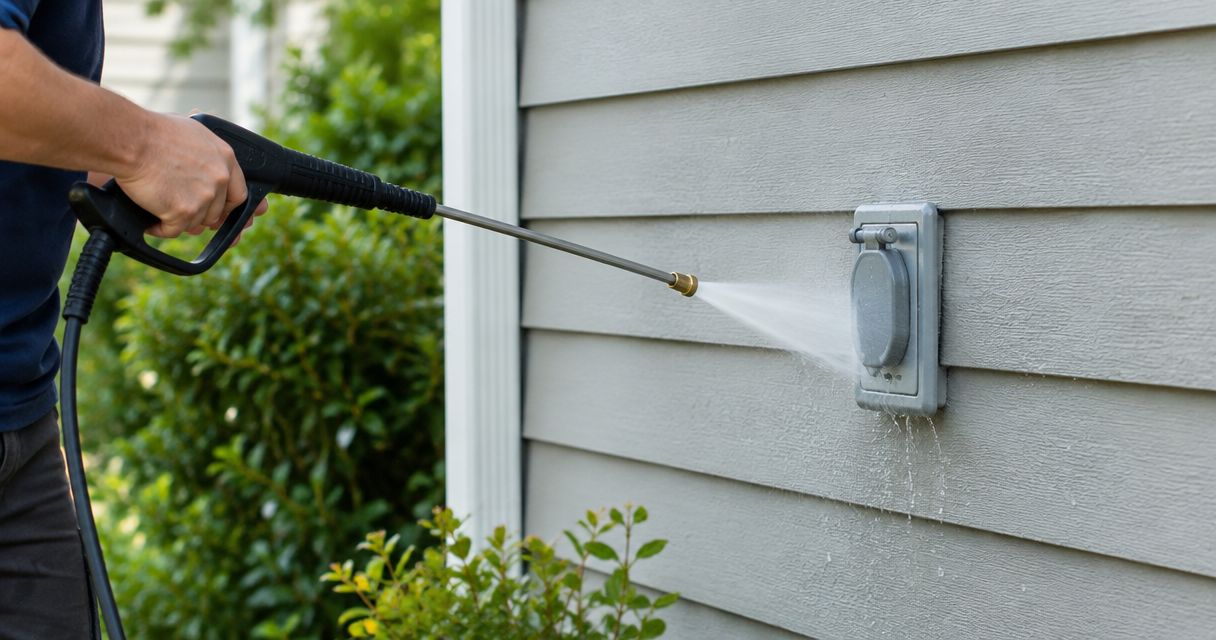
Do not pressure wash electrical outlets or direct spray at their covers. You can clean surrounding exterior surfaces only when you can keep spray, splash, and runoff away from electrical equipment; a closed cover or GFCI does not make an outlet safe to pressure wash.
- Is it safe to pressure wash around electrical outlets? Only when spray, splash, and runoff stay away from electrical equipment.
- GFCI protection and weatherproof covers do not make direct pressure-washer spray safe.
- Stop cleaning if an outlet is damaged, gets wet inside, sparks, or trips electrical protection.
- Socalemm provides exterior cleaning in Newport Beach and Orange County; electrical faults need an electrician.
Why this matters
Water does not have to enter through the plug openings to create a problem. It can reach an electrical box through a damaged cover, a failed seal, or gaps where the box meets the wall. Pressure-washer spray can force water into openings that ordinary rainfall does not reach in the same way.
Before your 2026 cleaning appointment, include outdoor outlets in your home pressure-washing preparation. Identify them before you move furniture or start washing, especially where planters, appliances, or patio equipment hide the wall.
The cleaning boundary must protect the electrical equipment, not just the surface you want to wash. Leaving a dirty patch is preferable to spraying a questionable outlet.
Is it safe to pressure wash around electrical outlets?
It is not safe to spray an outlet, its cover, or its electrical box with a pressure washer. Cleaning nearby surfaces requires a work plan that keeps water away from those components throughout detergent application, washing, and rinsing.
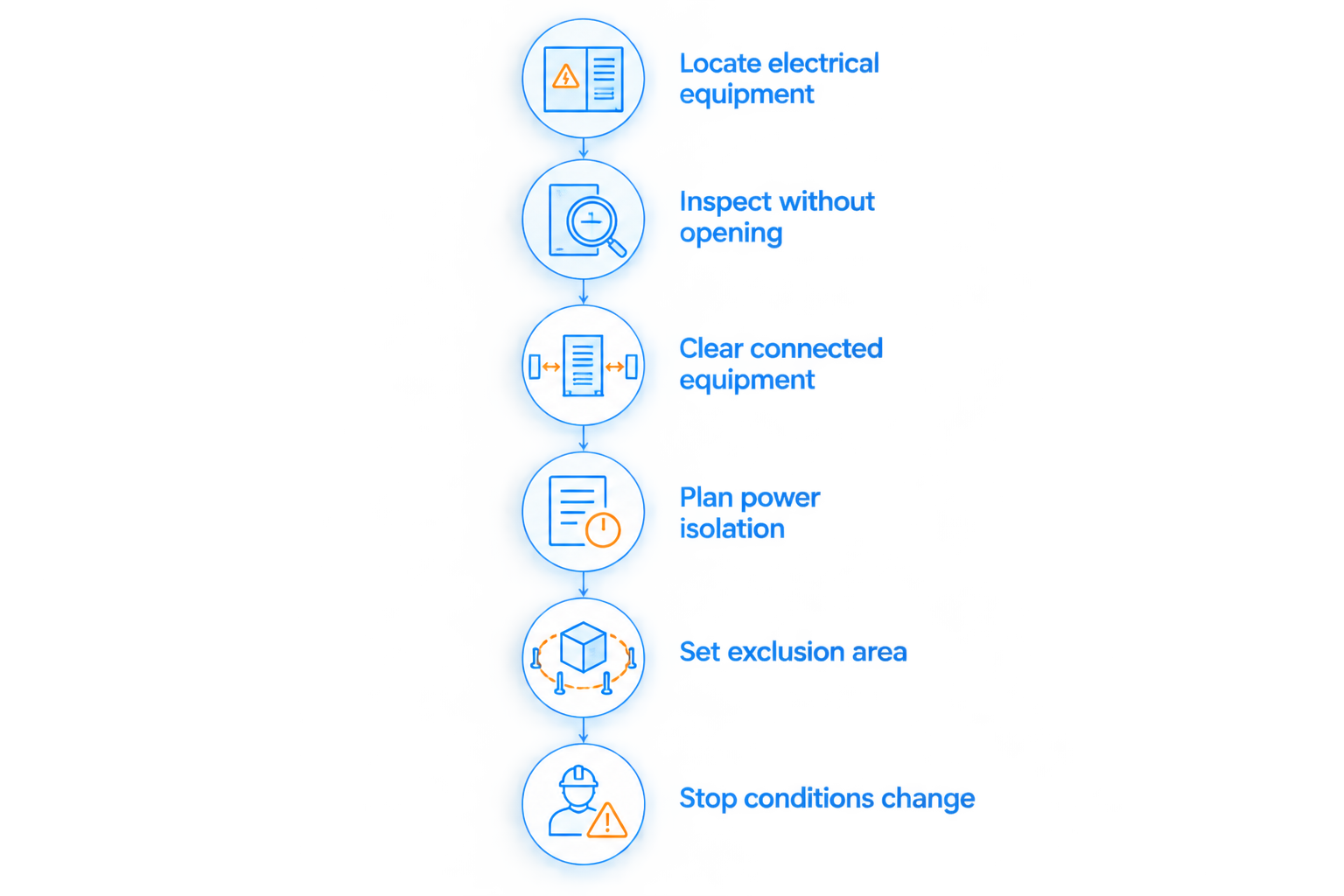
Use this sequence before cleaning a wall, patio, or driveway near outdoor power:
- Locate electrical equipment. Find outlets, plugged-in devices, extension connections, lighting controls, and nearby disconnects. Check behind movable items without touching damaged or wet equipment.
- Inspect without opening. Look for cracked covers, missing lids, exposed wiring, loose boxes, scorch marks, or gaps. Do not remove covers or open electrical enclosures to investigate.
- Clear connected equipment safely. Before washing begins, unplug and relocate portable devices only when the outlet, plug, your hands, and the standing surface are dry and undamaged.
- Plan power isolation. Identify the affected circuit before work. If you cannot confidently identify it or safely operate a dry, accessible breaker, ask an electrician rather than guessing.
- Set the exclusion area. Choose a washing direction that keeps spray, rebound, and runoff away from the electrical equipment. If that is not possible, leave that section unwashed.
- Stop when conditions change. Wind, pooling water, a loose cover, or an electrical trip means the original plan is no longer adequate. Stop and reassess before continuing elsewhere.
Switching off an identified circuit reduces one hazard, but it does not waterproof the outlet. Water intrusion can leave an electrical problem that remains when power returns.
Which cleaning approach belongs near an outdoor outlet?
Choose the method around the electrical hazard, not around the stain. Lower pressure changes the force of the water; it does not remove the electrical risk.
| Approach | Best for | Benefit | Limitation |
|---|---|---|---|
| Pressure washing away from electrical equipment | Suitable hard surfaces outside the exclusion area | Cleans the intended surface without deliberately wetting electrical components | Splash and runoff still need control |
| Controlled cleaning of nearby surfaces | Areas where the surface can be cleaned without wetting the outlet or box | Allows more deliberate control of where moisture goes | Lower pressure and hand cleaning still require electrical precautions |
| Leaving the area unwashed | Damaged equipment or locations where water cannot be kept away | Avoids introducing cleaning water into a known hazard area | Leaves part of the surface unfinished until the issue is resolved |
Do not treat this table as permission to wipe a receptacle with a wet cloth. The cleaning task is the surrounding surface, not the electrical equipment itself.
For your 2026 project, agree on any unwashed sections before work starts. That prevents a missed-looking patch from becoming a reason to take an unnecessary risk at the end of the job.
Why electrical risk varies around a house
The presence of an outdoor outlet alone does not tell you whether nearby washing is manageable. These conditions determine whether you can keep water out of the electrical area:
- Cover condition. A cracked lid, damaged hinge, or missing seal defeats the protection the enclosure is meant to provide. Do not improvise a repair as part of cleaning.
- Plugged-in equipment. A cord changes how a cover closes and adds another connection to protect. Move portable equipment before washing when it is safe to disconnect it.
- Wall and box gaps. Openings around the enclosure give water another route inside. Avoid directing water at the box perimeter or wall penetrations.
- Spray direction. Rebound from a patio, a wall corner, or nearby furniture can wet an outlet outside the main spray path. Watch where the water actually travels.
- Runoff route. Water flowing down siding or collecting on a ledge can reach equipment without a direct hit. Plan the rinse path as carefully as the cleaning pass.
- Existing electrical concerns. Previous tripping, scorching, exposed wiring, or a loose outlet calls for electrical attention before cleaning nearby. Washing is not a diagnostic test.
The practical decision is simple: if you cannot control the water path, exclude the area. No cleaning deadline changes that boundary.
Does a weatherproof cover make pressure washing safe?
A weatherproof cover is not permission to pressure wash an outlet. Outdoor covers protect equipment under their intended conditions of use, and those conditions do not automatically include a pressure-washer jet.
A cover that looks closed can still have a broken seal or a gap around a cord. You also cannot confirm the condition of wiring inside the box by looking at the lid.
Do not rely on tape, a plastic bag, or a temporary sheet as the primary protection against spray. Those materials do not establish that the electrical enclosure is suitable for pressure washing, and removing them can expose trapped moisture.
For a 2026 house-washing plan, record damaged covers as a reason to defer that area. Have an electrician address electrical defects rather than asking a cleaning crew to conceal them.
Does a GFCI make it safe to wash around an outlet?
GFCI protection does not make an outlet safe to spray. A ground-fault circuit interrupter reduces shock risk by interrupting power when it detects certain current imbalances; it does not prevent water from entering an enclosure or eliminate every electrical hazard.
Do not use a GFCI trip as evidence that your washing method is working safely. A trip during cleaning is a stop signal, not a normal part of the process.
Follow the device manufacturer's testing instructions as part of electrical maintenance. If protection will not reset, trips repeatedly, or trips after suspected water intrusion, leave the affected equipment unused and have an electrician assess it.
How far should you stay from an electrical outlet?
There is no universal pressure-washing distance that makes an electrical outlet safe to spray. The nozzle, spray angle, water flow, wind, surrounding surfaces, and enclosure condition all affect where water goes.
Standing farther away is not enough if the outlet remains in the spray fan or runoff path. A wide spray can still wet equipment, and reflected water can travel outside the area you are watching.
Set the boundary by whether you can keep the equipment dry, not by a guessed measurement. If cleaning the adjacent wall inevitably wets the cover or electrical box, leave that section alone.
This also applies when washing pavement below an outlet. Do not point a wand upward to chase a stain at the wall edge when electrical equipment is above it.
What should you do if an outlet gets wet during washing?
Stop spraying immediately and keep people away from the affected area. Do not touch the outlet, its cover, a connected cord, or nearby wet electrical equipment.
If you can reach a dry, accessible breaker panel without entering water or approaching damaged equipment, switch off the affected circuit. Do not touch a wet panel or attempt to identify wiring inside it. When isolation is uncertain, stay clear and call an electrician.
Do not reset a tripped device repeatedly or plug in an appliance to see whether the outlet still works. A dry-looking cover does not prove the box is dry inside.
There is no reliable household waiting period that confirms water-exposed electrical equipment is safe. Have an electrician determine what inspection, repair, or replacement is needed before restoring use.
If there is smoke, fire, active arcing, or an immediate threat to a person, move away and contact emergency services. Do not touch someone who remains in contact with an electrical source.
Planning a residential cleaning appointment
For a 2026 residential quote, describe the surfaces you want cleaned separately from any electrical concerns. Mention outlets behind patio furniture, permanently connected outdoor equipment, and covers that do not close properly. Photos taken from a safe position can help identify areas that need discussion.
Socalemm is best for homeowners seeking exterior cleaning in Newport Beach and Orange County, not electrical repairs. Socalemm provides pressure washing and house washing; an electrician should resolve damaged outlets or suspected water intrusion before nearby cleaning proceeds.
When you request an exterior-cleaning quote, identify sections you expect to remain unwashed if water cannot be kept away from electrical equipment. A clear boundary is more useful than a general request to be careful.
Before work begins, agree on who will address electrical questions and whether any repairs must happen first. Do not assume that booking a cleaning appointment includes an electrical inspection.
Commercial properties need a separate electrical plan
Storefront and business cleaning requires coordination with the person responsible for building electrical systems. Do not apply a homeowner's unplug-and-move routine to signs, fixed equipment, shared outlets, or unfamiliar service equipment.
For a 2026 commercial cleaning scope, identify equipment that must remain powered and areas where cleaning must stop. Confirm who can authorize shutdowns and who handles an electrical fault discovered during the work.
Socalemm provides commercial exterior cleaning, but cleaning and electrical maintenance remain separate tasks. If safe separation is not possible, postpone that portion of the job until the responsible electrical professional establishes the next step.
FAQ
Is it safe to pressure wash around electrical outlets if the breaker is off?
Turning off the identified circuit does not make the outlet safe to pressure wash. Water can still enter the enclosure and create a hazard when power returns, so keep spray and runoff away.
Can I cover an outdoor outlet with a plastic bag before pressure washing?
Do not rely on a plastic bag as protection that makes pressure washing an outlet safe. Keep the outlet outside the wet work area rather than depending on an improvised covering.
Is soft washing safe around outdoor electrical outlets?
Soft washing still requires keeping water and cleaning solution away from electrical equipment. Lower pressure does not prevent liquid from entering a damaged cover or an opening around the box.
Should I unplug patio lights before house washing?
Unplug and relocate portable patio lights before washing only when the outlet, plug, your hands, and the standing surface are dry and undamaged. Leave wet or damaged connections alone and get electrical help.
Why did my outdoor outlet trip while I was pressure washing?
An electrical trip during pressure washing requires you to stop, not guess at the cause. Keep the affected equipment unused and have an electrician assess suspected water intrusion or repeated tripping.
How long should I wait before using an outlet that got wet?
No fixed waiting time proves a water-exposed outlet is safe to use. Keep the affected equipment unused until an electrician determines what inspection or repair is needed.
Can I pressure wash a driveway below an outdoor outlet?
Clean the driveway only if you can keep spray, rebound, and runoff away from the outlet and connected equipment. Leave the wall-edge section unwashed if cleaning it would wet electrical components.
One last thing
The outlet you can see is not the only electrical concern. Walk the entire hose and cleaning route before starting, including extension connections hidden behind furniture and equipment along the return path.
Decide what stays dry before deciding what gets clean. That is the most useful boundary to establish with anyone washing your property.