Your roof needs a soft-washing assessment when you see spreading dark streaks, green patches, or attached growth rather than isolated dirt. These signs do not prove that cleaning is the right next step: broken roofing, loose materials, and leaks need a roofer’s assessment first. Start with a ground-level inspection, then confirm the cleaning method against your roof material and its manufacturer’s instructions.
- How to tell if your roof needs soft washing: look for spreading streaks or growth, then check roof condition.
- Socalemm provides roof soft washing for homeowners in Newport Beach and Orange County.
- Roof damage needs assessment before cleaning; washing does not repair leaks or broken materials.
- Choose a cleaning method by roof material and manufacturer instructions, not appearance alone.
How to tell if your roof needs soft washing
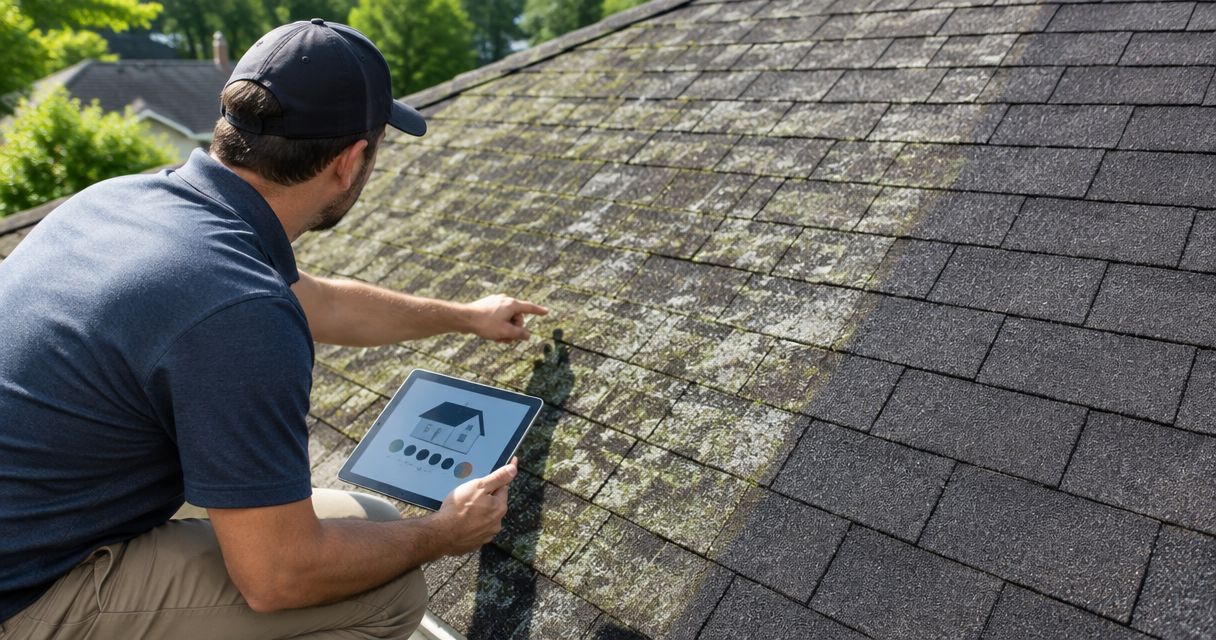
Look for a pattern of surface growth, not just a roof that looks old. Dark streaks and green patches justify a closer assessment, while displaced tiles, exposed roofing layers, or indoor water stains point toward a repair question.
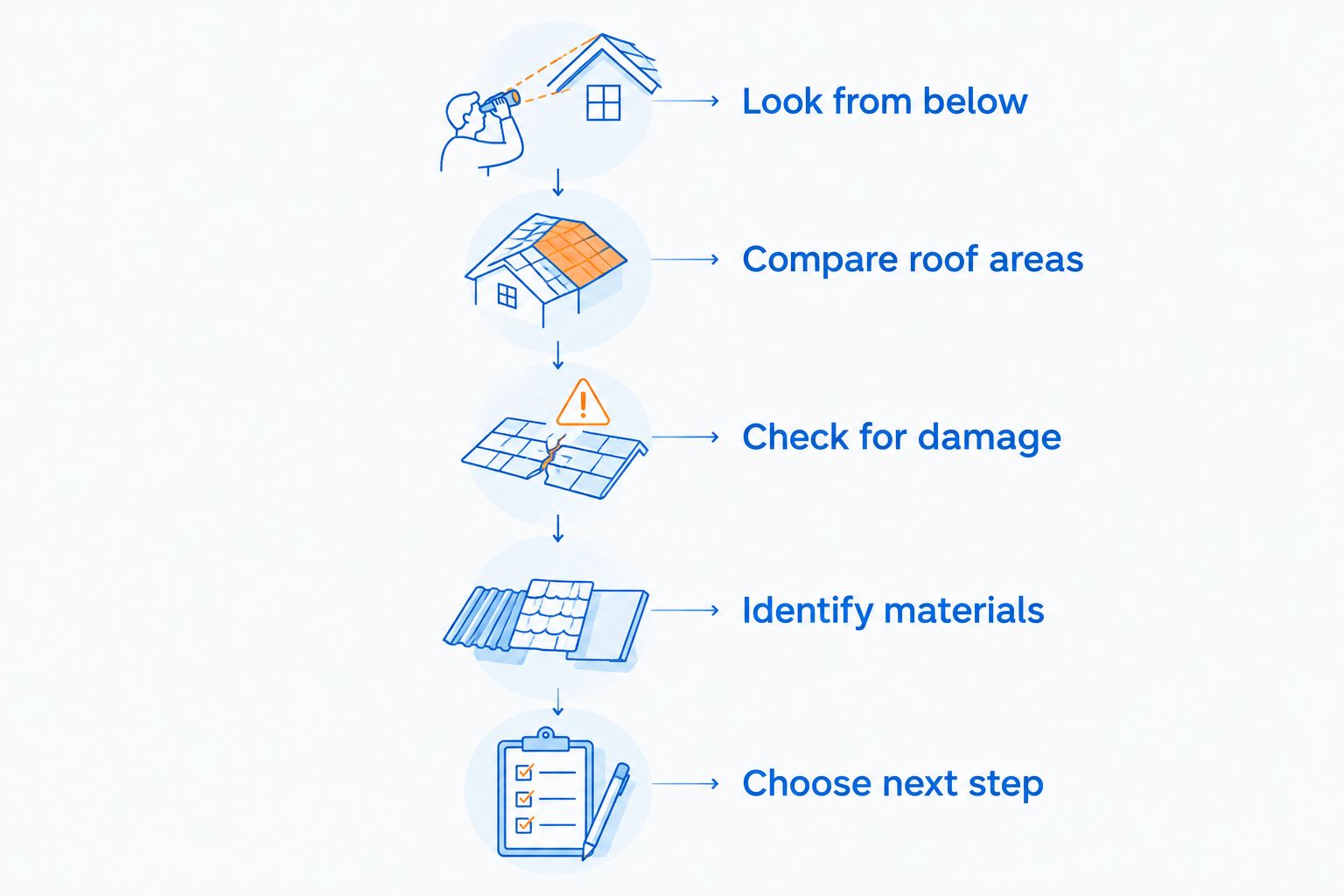
Use this sequence for your 2026 roof check. Stay on the ground; a photograph is more useful than climbing onto an unfamiliar roof.
- Look from below. View each visible roof slope from a safe position on your property. Use binoculars or your phone’s zoom instead of a ladder.
- Compare roof areas. Note whether discoloration is widespread, concentrated beneath trees, or limited to a streak below metal flashing or equipment.
- Check for damage. Look for displaced roofing, obvious cracks, loose edges, and debris obstructing drainage. Check indoors for signs of an active leak.
- Identify materials. Confirm whether you have asphalt shingles, concrete tile, clay tile, metal, or another roofing system. Appearance alone does not establish cleaning compatibility.
- Choose the next step. Seek a cleaning assessment for apparent surface growth on otherwise sound roofing. Ask a roofer about damage or uncertain roof condition before booking a wash.
For the method decision, read whether soft washing is better than pressure washing for roofs. Lower pressure alone does not establish that a treatment suits your roof.
Why this matters
Roof discoloration and roof damage require different responses. A cleaning appointment addresses surface contamination; it does not fix a failed flashing detail, replace broken tile, or restore worn roofing.
The useful question in 2026 is not whether your roof looks perfectly uniform. It is whether the marks indicate removable buildup, a material condition, or a defect that needs repair. Keeping those questions separate helps you request the right assessment without treating every dark patch as a cleaning problem.
Dark streaks: assess the cause before choosing treatment
Dark streaks are a reason to investigate, not a diagnosis by themselves. Algae can discolor roofing, but shadows, runoff marks, accumulated dirt, and changes in the roof surface can also look dark from the street.
Look at where the marks begin. Broad streaking across a slope presents a different pattern from a narrow line starting immediately below a metal fitting. Record the location rather than trying to identify the cause from color alone.
A useful photo shows both the whole slope and a closer view taken with zoom. Include an adjacent section that looks different so the person assessing it can compare the pattern. Do not scrape the roof to collect a sample.
Ask what caused the stain before asking how strongly it can be washed. If the explanation is uncertain, request an inspection rather than approving treatment solely from a distant photograph.
Green patches or attached growth: avoid scraping
Green patches and raised growth deserve attention because they are different from loose leaves resting on a roof. Moss and lichen can attach to roofing surfaces, and removing them aggressively can disturb the material underneath.
Do not pull growth away, wire-brush the surface, or aim a pressure washer at it to see what happens. Ask how the proposed treatment handles attached growth and whether the roof manufacturer permits that approach.
Also clarify what the finished result means. Treatment, removal of visible residue, and correction of underlying roof damage are separate tasks. A written scope should explain what will be addressed and what will remain for a roofer to evaluate.
For your 2026 maintenance record, photograph the same area before any work. A consistent viewpoint gives you a clearer comparison than unrelated close-ups taken under different lighting.
Cleaning, monitoring, or repair: which fits the signs?
Choose the next action by condition, not by how noticeable the stain is. The table separates situations that call for a cleaning assessment from those that need a roofing professional or further observation.
| Next action | Best for | Main benefit | Limitation |
|---|---|---|---|
| Soft-washing assessment | Apparent biological staining on roofing with no obvious damage | Establishes whether a material-compatible cleaning treatment fits | Appearance alone cannot confirm roof condition or treatment suitability |
| Roofer’s assessment | Leaks, broken materials, displaced roofing, or uncertain condition | Addresses the repair question before cleaning | Does not necessarily include exterior cleaning |
| Ground-level monitoring | Uncertain marks without visible damage or attached growth | Creates a record without disturbing the roof | Does not identify hidden defects or remove buildup |
Monitoring is not the right substitute for investigating a leak. If water enters your home, prioritize the leak even when the exterior staining looks minor.
Likewise, a visibly dirty roof is not proof that it needs replacement. Keep the cleaning question separate from any claim about the roof’s remaining service life.
Roof material changes the cleaning decision
Asphalt shingles: protect the surface
Asphalt shingles have a protective granule surface. Avoid abrasive cleaning and do not assume that equipment suitable for a concrete driveway is appropriate for shingles.
Ask the cleaner to identify the roofing material and explain how the proposed treatment follows the manufacturer’s cleaning instructions. If you notice exposed areas, curling edges, or substantial material loss, get the condition assessed before cleaning.
Concrete and clay tile: check condition and access
Tile roofs still need a material-specific plan. Cracked or displaced tiles should be assessed before washing, and walking across the roof introduces a separate risk of damage.
Ask how the operator will reach the work area and whether roof access is necessary. Do not treat a tile roof’s hard surface as permission to use an aggressive cleaning method.
Metal and coated roofing: check compatibility
A metal roof or a coated roof needs a treatment compatible with its finish. The term soft washing describes an approach; it does not identify the cleaning chemistry or establish compatibility with every coating.
If you have installation records, share them before approving work. When the material or finish is unknown, identification comes before treatment selection.
Why roof-cleaning needs vary
A fixed cleaning calendar does not answer whether your roof needs treatment now. For a practical 2026 decision, consider these conditions alongside what you can actually see:
- Roof material and finish. Cleaning instructions differ between roofing systems; identify yours before choosing a method.
- Shade and drying conditions. Compare shaded sections with exposed slopes when documenting where growth appears.
- Trees and debris. Leaves and branches can collect in roof valleys and drainage areas; debris removal and stain treatment are different tasks.
- Existing roof condition. Damage, loose materials, or questionable repairs change which professional should assess the roof first.
- Nearby plants and drainage. Landscaping and runoff routes need to be included in the work plan rather than considered after treatment begins.
- Solar panels and roof equipment. Panels, mounts, vents, and other fixtures create additional boundaries for access and treatment.
These factors help explain the assessment; they do not support a universal cleaning interval. Ask for a recommendation tied to your roof’s condition instead of accepting a schedule without an explanation.
What should you send with a roof-cleaning request?
Send clear photographs, your roof material if known, and a short description of what changed. Mention leaks, previous repairs, solar panels, and areas that are difficult to access. Keep customer addresses and other private information out of any photos intended for public use.
Socalemm roof soft washing is a local service option for homeowners in Newport Beach and Orange County. When you request a quote, describe the visible issue rather than requesting a particular chemical or pressure setting.
A useful request says where you see the marks and whether there are known roof problems. It should also ask for the proposed method, exclusions, access plan, and protection measures for the surrounding property.
Before approving roof soft washing, confirm:
- Which roof surfaces are included and which are excluded.
- How the proposed method fits the roofing manufacturer’s instructions.
- How plants, nearby surfaces, and runoff will be managed.
- Whether solar panels and their surrounding equipment are outside the scope.
- What happens if damaged roofing is found before work starts.
- How the result will be assessed without promising that every mark will disappear.
This keeps the request focused on residential roof care. A commercial roof requires its own scope, access arrangements, and coordination with the person responsible for the building.
Request a roof-cleaning quote
Describe your roof material, visible staining, and any known damage before choosing a cleaning method.
Does a dirty roof always need immediate soft washing?
No. A dirty-looking roof needs assessment, not an automatic wash. Loose debris, material aging, runoff staining, and biological growth are different conditions, and they do not all call for the same response.
Prioritize visible damage or a leak over appearance. If the concern is uncertain discoloration without other warning signs, start with photographs and a material-specific assessment rather than climbing up to investigate.
Should you soft wash a roof before an inspection?
Do not clean a roof simply to conceal signs before an inspection. If an inspection is scheduled in 2026, document the roof’s current condition and ask whether any cleaning should happen before or after the assessment.
Cleaning does not establish that a roof is sound. Keep records of any assessment, repair recommendations, and cleaning scope so those activities remain clearly separated.
Can you tell from the ground whether soft washing is safe?
No. A ground-level view helps identify visible streaking, growth, and obvious damage, but it cannot confirm hidden conditions or chemical compatibility.
Use the ground-level check to decide whom to contact and what information to provide. Leave close inspection and treatment planning to someone equipped for the roof and the task.
FAQ
What's the clearest sign my roof needs soft washing?
Spreading dark streaks, green patches, or attached growth are reasons to request a roof-cleaning assessment. They do not prove that soft washing is suitable; roof material and condition still need checking.
Are black streaks on my roof always algae?
Black streaks are not always algae. Runoff marks, dirt, shadows, and changes in the roofing surface can also appear dark, so the pattern needs assessment before treatment.
Should I call a roofer or a roof cleaner first?
Call a roofer first if you have a leak, broken roofing, displaced materials, or concerns about roof condition. A cleaning assessment fits apparent surface growth when there is no obvious repair issue.
Is soft washing safe for every roof?
Soft washing is not automatically suitable for every roof. The treatment must fit the roofing material, finish, condition, and manufacturer’s instructions.
Can I scrape moss off my roof myself?
Do not scrape moss off your roof as a diagnostic step. Scraping can disturb the roofing surface, and getting onto the roof adds a fall risk.
How often should I have my roof soft washed?
Base roof-cleaning frequency on visible condition and material-specific guidance rather than a universal calendar. Shade, debris, roof condition, and previous growth all belong in that assessment.
Does Socalemm provide roof soft washing in Orange County?
Socalemm provides roof soft washing in Newport Beach and Orange County. Describe the roof material, visible growth, and any known damage when requesting a quote.
One last thing
Take the comparison photo before requesting the wash. Photograph the same roof section from the same safe ground-level position, and keep the original image with your 2026 maintenance notes.
A cleaner-looking roof and a repaired roof are different outcomes. Ask which outcome the proposed work addresses, and keep any repair recommendation separate from the cleaning scope.