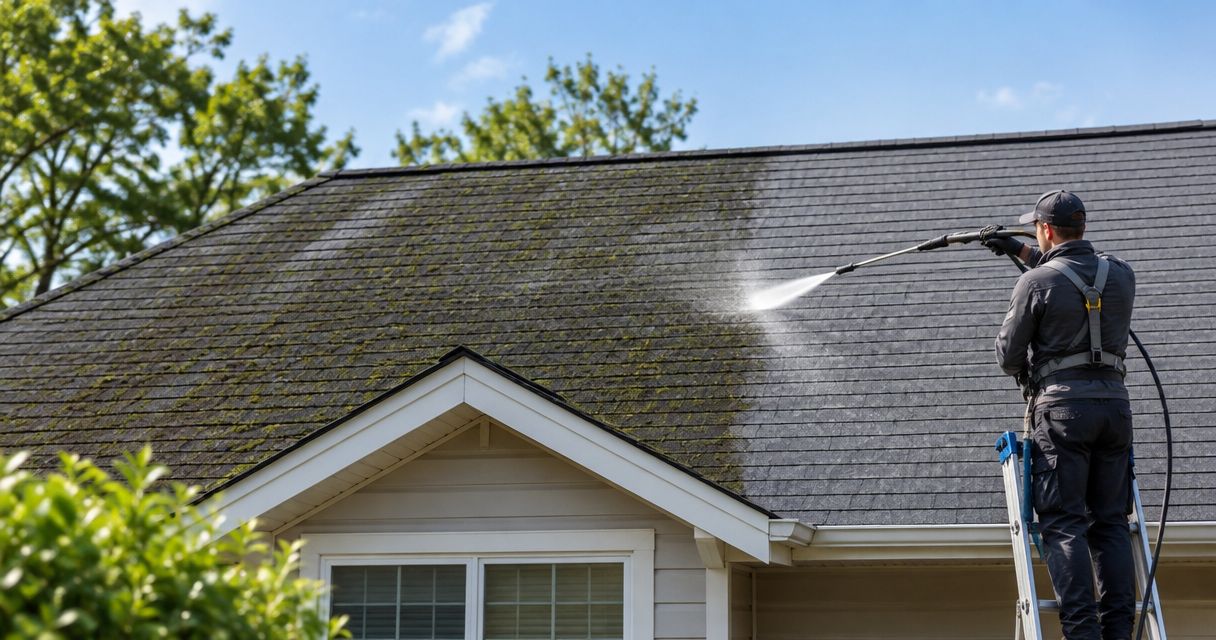
Soft wash roof cleaning does not have a fixed lifespan before regrowth: shade, lingering moisture, debris, roof material, and the condition of the roof all affect how long the result lasts. A clean-looking roof is not permanently protected, so use visible changes and the roof manufacturer's maintenance instructions—not a promised calendar interval—to decide when it needs attention again.
- How long does soft wash roof cleaning last? Judge regrowth by roof conditions, not a fixed calendar promise.
- Socalemm provides roof soft washing for homeowners in Newport Beach and Orange County.
- Compare new growth with dated photos; remaining discoloration alone does not establish that growth has returned.
- Choose roof-compatible maintenance and address debris before automatically booking another whole-roof treatment.
How long does soft wash roof cleaning last before regrowth?
The useful endpoint is new biological growth, not the first leaf, dust mark, or uneven patch you notice after cleaning. Roof appearance and roof cleanliness are related, but they are not interchangeable. A photograph alone also cannot establish whether a dark area is algae, dirt, staining, or a material defect.
For your 2026 maintenance plan, establish what the roof looks like after the agreed cleaning process is complete. Then compare later observations against that baseline rather than against your memory of the roof before the appointment.
The distinction between cleaning methods matters, too. Read about soft washing versus pressure washing for roofs before treating a request for roof cleaning as permission to use high pressure.
Use this sequence to decide whether the result is holding:
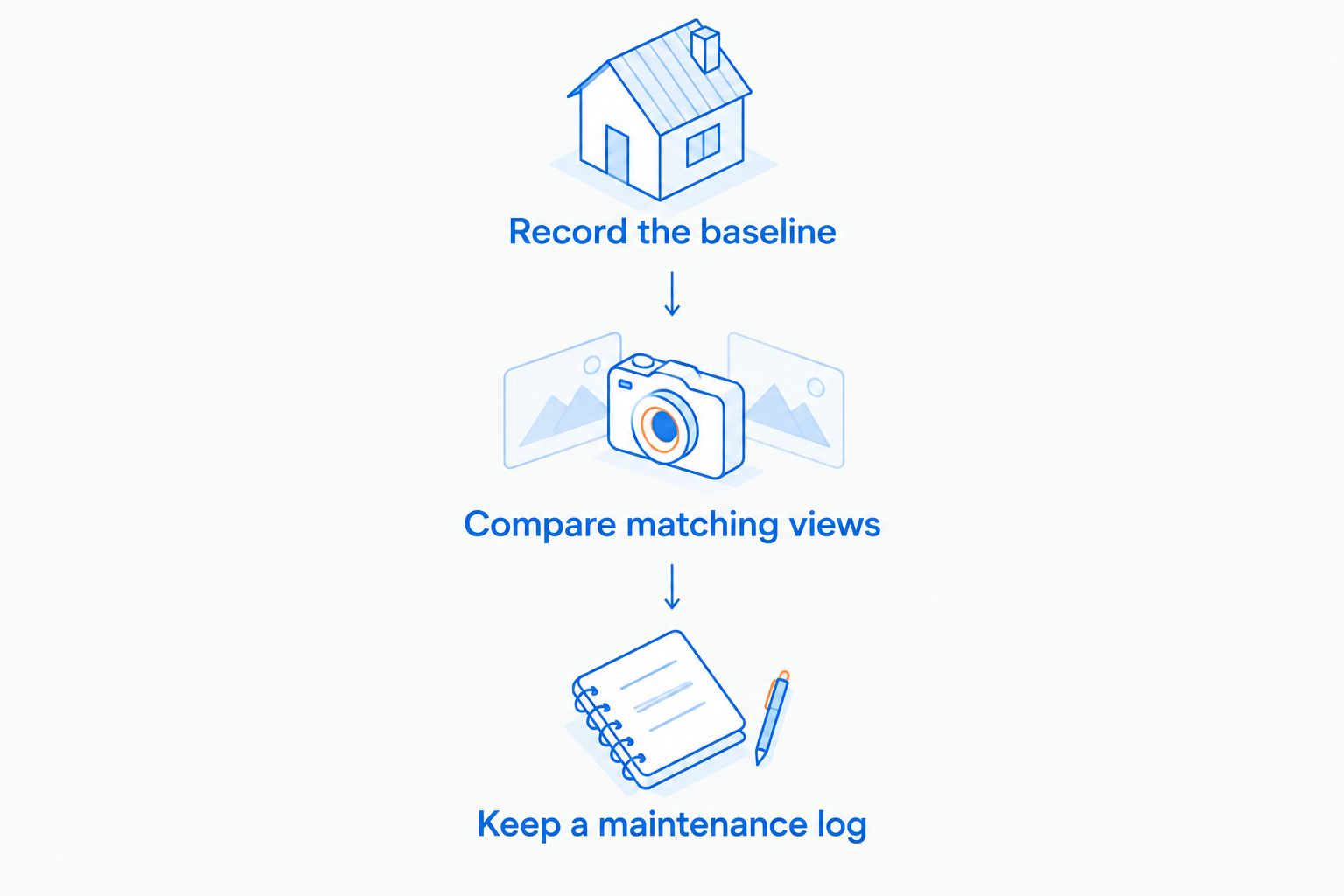
- Record the baseline. Keep dated, ground-level photos showing the roof areas you can see safely. Ask the cleaner to explain any remaining marks before treating them as a future change.
- Watch the same areas. Compare matching views, especially shaded sections and places below overhanging branches. Changing the angle or lighting makes comparisons less useful.
- Identify the change. Note whether you see loose debris, spreading discoloration, raised growth, or a damaged roof component. These observations do not all call for the same response.
- Choose the response. Ask whether the next step is debris removal, a cleaning assessment, or a roofing inspection. Do not assume another full treatment is necessary.
Why this matters
A cleaning interval is useful only when it matches the roof. Booking another wash because a date has arrived ignores whether the surface needs cleaning and whether the roof is in suitable condition for the work.
The opposite mistake is waiting until every visible section looks affected. A developing issue deserves assessment even when the rest of the roof looks clean. Use a schedule to remind yourself to look, not to authorize treatment automatically.
For Orange County homeowners planning maintenance in 2026, the practical question is not simply how long a clean roof will stay attractive. It is how you will recognize the difference between normal surface changes, renewed growth, and a problem that cleaning will not fix.
Why the time before roof regrowth varies
The conditions on your roof matter more than a broad promise attached to the cleaning method. Even separate slopes on the same home can have different exposure and drying conditions.
- Shade. Areas beneath trees or beside taller structures receive less direct sunlight. Give these areas their own reference photos rather than assuming they behave like exposed sections.
- Lingering moisture. Repeatedly damp areas deserve attention. Cleaning does not correct a drainage defect or another source of persistent moisture.
- Accumulated debris. Leaves and other organic material can collect in roof valleys and around obstructions. Arrange safe removal rather than treating debris as proof that the cleaning has failed.
- Roof material and condition. Asphalt shingles, tile, coatings, and other roof surfaces have different care requirements. The manufacturer's instructions remain the starting point for an appropriate cleaning method.
- Existing growth and staining. Raised moss, flat discoloration, and loose dirt are not the same condition. Ask what was identified and what appearance to expect after treatment.
- Maintenance after cleaning. Keeping track of recurring trouble spots helps you respond to the actual condition. A cleaning appointment does not replace roof maintenance or repairs.
Location provides context, not a countdown. A Newport Beach address alone does not establish a dependable regrowth interval; the roof's exposure, material, and condition still need assessment.
Is it regrowth, leftover staining, or ordinary debris?
Do not judge the treatment solely by whether the roof has returned to a perfectly uniform color. Compare the surface with the documented finish, then ask what changed. Cleaning cannot make weathered materials new or repair a damaged roof.
The following comparison separates observations from diagnoses. These are inspection cues, not a way to identify organisms from the ground with certainty.
| What you notice | What the observation tells you | Best next step | Limitation |
|---|---|---|---|
| Loose leaves or twigs | Material has collected on the surface | Best for debris removal: arrange safe clearance | Debris alone does not establish biological regrowth |
| A mark present in the completion photos | The discoloration was already visible | Best for checking expectations: compare the agreed finish | A photograph cannot explain every stain |
| A dark area expanding beyond the baseline | The roof's appearance is changing | Best for cleaning assessment: request a closer evaluation | Color alone does not identify the cause |
| Raised or spreading growth | Material is developing above the roof surface | Best for professional assessment: avoid scraping it yourself | Removal must suit the roof material |
| Cracked, displaced, or deteriorated components | The concern extends beyond cleanliness | Best for roofing assessment: address condition first | Washing does not repair the roof |
Avoid climbing onto the roof to settle the question. Ground-level observations and professional assessment are a better starting point than walking across an unfamiliar or slippery surface.
Build a useful roof-cleaning record in 2026
A simple record makes the next decision easier. You do not need a complicated maintenance system; you need enough consistent information to distinguish a new development from something that was already there.
Record the baseline
After the agreed cleaning process is complete, save 3 dated photos if your ground-level views allow it: an overall view, a shaded section, and an area where debris tends to collect. This is a suggested documentation set, not a requirement to access an unsafe position.
Ask the cleaner to explain visible marks that remain. Record the explanation alongside the photos so that a remaining stain does not become a disputed claim of immediate regrowth later.
Compare matching views
Choose 2 safe viewpoints you can return to without using a ladder. Similar angles and lighting make it easier to see whether a patch has actually spread rather than simply appearing darker in a different photograph.
Write down what you see in plain language. Descriptions such as leaves in a valley or a dark patch below a branch are more useful than deciding every mark is mold.
Keep a maintenance log
Use 1 maintenance log for cleaning dates, observations, and any recommended roofing work. Keep the cleaning record separate from assumptions about how long the result should last.
Start the record with your 2026 cleaning appointment and carry it forward. If a shaded section repeatedly changes before the rest of the roof, that pattern is more useful than a generic whole-roof timetable.
What should you ask before booking another roof wash?
Ask for a condition-based recommendation, not just the next available appointment. Your description should include the roof material, the previous cleaning date, the areas that concern you, and any known damage or leaks.
Use these questions to clarify the scope:
- What appears to be on the roof? Ask the cleaner to distinguish observed growth from debris or unexplained staining.
- Does the proposed method suit this roof? Ask how the plan follows the roof manufacturer's care instructions.
- What result should be visible afterward? Clarify which marks the work is intended to address and which fall outside that scope.
- Does anything need a roofer first? Report displaced tiles, deteriorated shingles, leaks, or other known defects before cleaning begins.
- What should trigger another assessment? Ask for observable signs rather than accepting an automatic repeat treatment as the only option.
Socalemm roof soft washing is an option for Newport Beach and Orange County homeowners seeking local exterior cleaning. You can request a roof-cleaning quote and describe the roof's current condition.
The benefit of an assessment is a defined cleaning scope. Its limit is equally important: roof soft washing is a cleaning service, not a roof repair or a permanent barrier against regrowth. Keep those expectations separate when reviewing a proposal.
Request a roof-cleaning quote
Describe your roof material, visible growth, and the areas that need assessment.
Should you clean the whole roof when one section changes?
A change on one section calls for assessment, not an automatic decision to wash every slope. Show the affected area alongside the wider roof so the cleaner can evaluate the scope rather than working from a tightly cropped image.
A localized concern does not prove that localized treatment is appropriate, either. Access, runoff, roof material, and the actual condition all affect the work plan. Ask for the reason behind the proposed scope.
For your 2026 maintenance notes, record whether the concern was isolated or widespread. That detail helps you compare future changes without assuming every appointment needs identical work.
Does a clean-looking roof mean you can stop checking it?
A clean appearance does not replace roof maintenance. Continue watching for debris, displaced components, drainage concerns, and interior signs of water entry. Those issues require attention regardless of whether algae or other growth is visible.
Keep homeowner cleaning decisions separate from roof repairs. If you notice a leak or damaged roofing, describe that concern to a roofing professional rather than booking cleaning as the remedy.
Can roof washing guarantee that growth will not return?
Roof washing does not permanently prevent new growth. The roof remains exposed to the conditions that affected it before cleaning, including shade, moisture, and falling debris.
Ask what a proposed service includes rather than treating a longevity statement as a promise about every roof. A clear explanation of the method, expected appearance, and follow-up process is more useful than an unsupported number of clean years.
FAQ
How long does soft wash roof cleaning last before algae returns?
Soft wash roof cleaning has no fixed regrowth interval that applies to every roof. Assess shade, lingering moisture, debris, roof material, and changes from the documented finish rather than relying on a universal timetable.
Should I schedule roof soft washing every year?
Do not authorize roof soft washing solely because another year has passed. Use a maintenance reminder to review the condition and follow the roof manufacturer's cleaning guidance.
Does a dark patch mean my roof cleaning failed?
A dark patch alone does not establish that cleaning failed. Compare it with completion photos and ask whether it is remaining staining, new growth, dirt, or a material issue.
Can I pressure wash new growth off my roof myself?
Do not use a pressure washer on your roof without confirming that the method is appropriate for the material. Follow the manufacturer's instructions and avoid climbing onto the roof to inspect or clean a patch.
Does Socalemm provide roof soft washing in Orange County?
Socalemm provides roof soft washing in Newport Beach and Orange County. Describe the roof material, visible condition, and known defects when requesting a quote.
What should I record after a roof-cleaning appointment?
Record the cleaning date, agreed scope, visible condition, and any marks that remain. Keep dated photos from safe, repeatable viewpoints so later changes are easier to assess.
One last thing
Keep the completion photos, not just the dramatic before photos. The dirty roof explains why you booked cleaning; the finished roof gives you the reference needed to judge what happens afterward.
Before closing out your 2026 maintenance record, label any remaining discoloration and note any repair recommendations. That small step keeps the next conversation focused on an actual change rather than an uncertain memory.