To prevent mold from coming back after house washing, correct the moisture sources that keep exterior walls damp, clear trapped debris, and use a cleaning method suited to the siding or stucco. Washing removes surface growth, but it does not repair leaks, redirect sprinklers, or stop shaded areas from staying wet.
- How to prevent mold from coming back after house washing: fix recurring moisture, not just visible stains.
- Redirect sprinklers, correct overflowing gutters, and keep vegetation from touching exterior walls.
- Use material-appropriate cleaning; stronger pressure does not solve recurring moisture.
- Socalemm provides house washing for homeowners in Newport Beach and Orange County.
Why this matters
A clean wall can become dirty again if the conditions around it stay unchanged. The useful question is not just whether the stain disappeared, but whether that section of the house can dry afterward.
For your 2026 exterior-maintenance plan, separate cleaning from repairs. A washing appointment addresses surface buildup; a leaking gutter or damaged wall joint needs its own correction. Treating those as the same job leaves the cause untouched.
Also, green or dark discoloration is not automatically mold. Algae, mildew, dirt, and other staining can look similar from the ground. The guide to removing mold from siding explains the cleaning question; prevention starts with understanding why that particular wall stays damp.
How to prevent mold from coming back after house washing
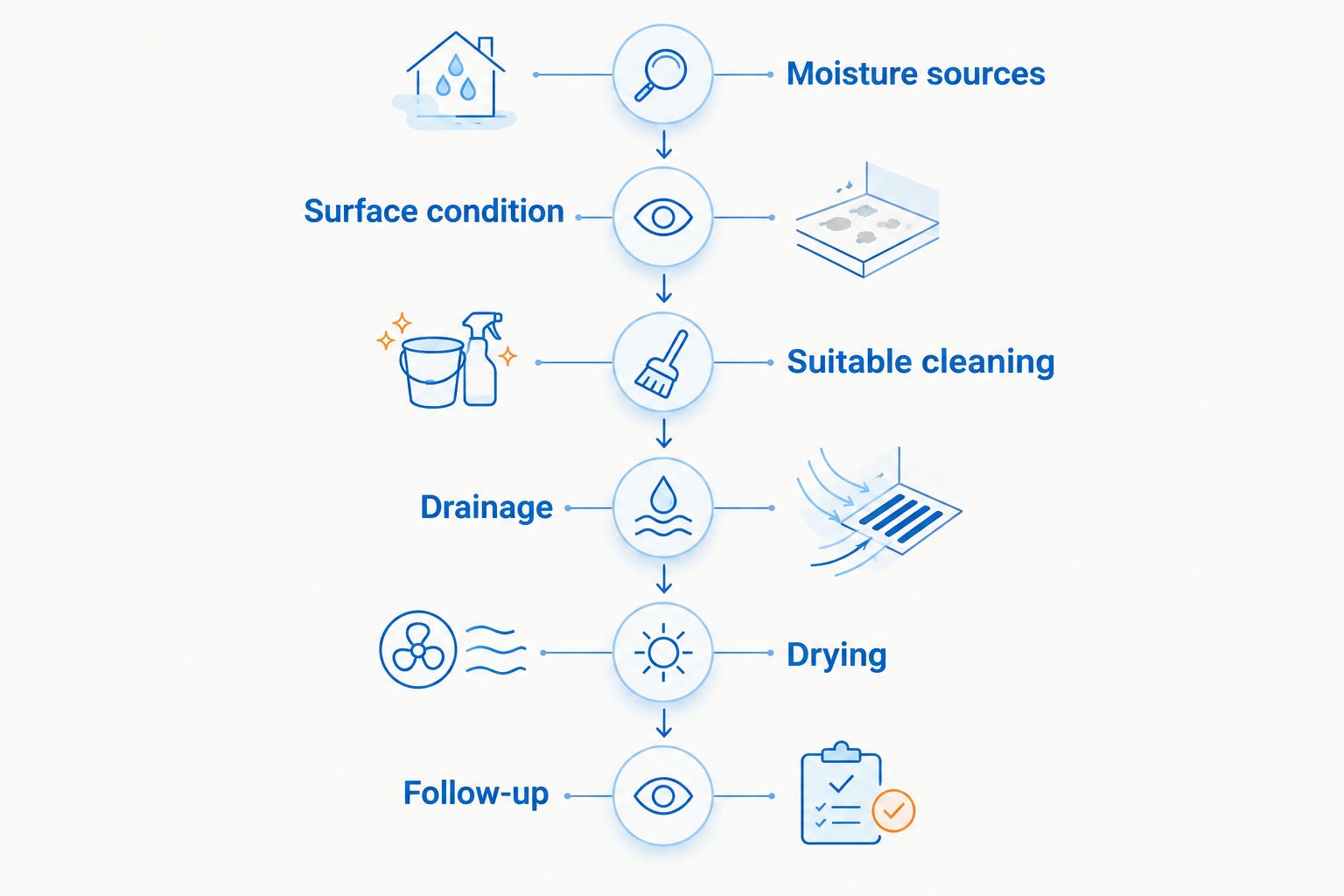
Remove the growth, remove the moisture source, and keep the wall able to dry. Follow this sequence rather than repeatedly washing the same patch without changing its surroundings.
- Check moisture sources. Look for sprinkler spray, dripping outdoor fixtures, overflowing gutters, and downspouts that discharge beside the wall. Observe irrigation while it runs; a dry inspection will not reveal where every spray lands.
- Inspect surface condition. From a safe ground-level position, look for peeling paint, open joints, damaged trim, or cracks. Arrange appropriate repairs before another wash if water is getting behind the finish.
- Choose suitable cleaning. Match the cleaning method and any cleaner to the exterior material and its manufacturer’s instructions. Tell the cleaner where discoloration keeps returning and what has already been applied.
- Correct drainage. Remove accessible debris that blocks intended water flow, and address gutter or downspout problems. Do not redirect runoff onto another wall or neighboring property.
- Support drying. Keep plants from resting against the house, move stored items away from siding, and remove leaf piles at the base. Preserve designed drainage and ventilation openings.
- Arrange follow-up. Photograph recurring areas after cleaning and compare them during later checks. If the same patch returns, revisit the moisture source before choosing another treatment.
These steps work together. Cleaning without moisture correction leaves favorable growing conditions in place, while moisture correction alone does not remove the buildup already on the wall.
Which prevention step should you prioritize?
Start with the condition you can actually observe. A wet strip behind a sprinkler needs a different response from peeling paint below a window, even if both areas look dark.
Use this comparison to organize your 2026 maintenance work. None of these actions replaces the others when several problems affect the same wall.
| Action | Best for | Main benefit | Limitation |
|---|---|---|---|
| Irrigation adjustment | Walls hit by sprinkler spray | Stops repeated direct wetting | Does not fix leaks or remove existing growth |
| Gutter and downspout correction | Staining below overflows or discharge points | Addresses a visible water source | Other moisture sources still need checking |
| Vegetation clearance | Walls touched by shrubs or vines | Creates access and space for drying | Does not eliminate shade or airborne spores |
| Material-appropriate washing | Existing surface buildup | Cleans the affected exterior | Does not repair the wall or prevent all regrowth |
| Exterior repair | Open joints, damaged finishes, or water entry | Addresses defects cleaning cannot fix | Requires repair work beyond routine washing |
Fix active water problems before treating another wash as the solution. If the wall remains wet after nearby surfaces dry, investigate that difference instead of simply increasing cleaning frequency.
Why mold comes back after house washing
Recurring exterior growth usually calls for a closer look at moisture, debris, and the surface itself. The location of the stain helps narrow your inspection, but appearance alone does not establish the cause.
- Repeated irrigation exposure. Sprinklers that hit a wall keep adding moisture after the wash is finished. Check the spray pattern rather than assuming the timer is the only issue.
- Gutter overflow or leaks. Water running down a wall can keep the same strip damp. Look above the discoloration as well as directly beside it.
- Shade and limited drying. Sheltered walls receive less direct sun. You cannot change the house’s orientation, but you can remove items and vegetation that trap moisture against it.
- Leaves and surface debris. Organic material collects in corners, ledges, and around landscaping. Remove accessible accumulation without blocking drainage openings or damaging the finish.
- Damaged exterior surfaces. Failed coatings, open joints, and other defects need repair assessment. Washing cannot restore a broken weather barrier.
- Cleaning that does not suit the material. An unsuitable cleaner or excessive force can damage a finish. Follow material-specific instructions instead of assuming every exterior tolerates the same treatment.
Avoid treating every dark patch as proof that the previous cleaning failed. A stain can remain after cleaning, and new discoloration can have a different cause. Examine the surface before deciding what to do next.
What should you check around stucco, siding, and trim?
Inspect each material on its own terms. A house can have stucco walls, painted trim, metal fixtures, and different sealants within the same small area; a method suitable for one surface is not automatically suitable for everything beside it.
For stucco, look for cracks, damaged areas, and staining below penetrations. Do not aim concentrated spray into cracks or try to force water behind the finish. Repeated staining around a window or roof connection deserves attention beyond cosmetic cleaning.
For siding, keep designed drainage paths clear and avoid directing water upward into joints. Do not seal openings simply because they appear to collect dirt. Some openings are part of the wall’s drainage system.
For painted trim, distinguish dirt from coating failure. Flaking paint or soft material is not something to wash away until it looks clean. Arrange an appropriate assessment, and tell the cleaning provider about those areas before work starts.
Keep ladders, roof access, and uncertain wall defects outside a routine homeowner inspection. You can document a problem from the ground without taking on the repair yourself.
Should you apply a preventive chemical after washing?
Do not apply a preventive product simply because the wall was recently cleaned. First establish that the product is intended for the surface and the specific use, then follow its label and the exterior manufacturer’s care instructions.
A treatment is not a substitute for stopping sprinkler spray or fixing a leak. It also introduces handling, plant-protection, and runoff considerations. Never mix cleaners or improvise concentrations to make a treatment stronger.
If you discuss a treatment with a provider, ask what surface it is intended for, how nearby materials will be protected, and what maintenance remains necessary afterward. Do not accept a clean-looking wall as evidence that an unidentified moisture problem has been solved.
For a practical 2026 plan, make water management the foundation. Add a cleaning treatment only when its purpose and material compatibility are clear.
How often should you check the house after washing?
Check the exterior after conditions that reveal water problems: irrigation running, rainfall, a gutter overflow, or landscaping changes. Those observations are more useful than choosing an unsupported deadline for when mold is supposed to return.
Build a simple record for 2026. Take a wide photograph showing the location and a closer photograph showing the surface, then note whether the area was wet and what was happening nearby. Keep the camera position similar so comparisons are useful.
Pay special attention to walls that have already needed repeat cleaning. Check whether a sprinkler was redirected successfully, whether a repaired gutter still overflows, and whether branches have grown back against the finish.
Your next wash should respond to the surface condition and its care requirements. Do not wait for heavy buildup, but do not substitute unnecessary washing for a needed repair.
Can stronger pressure keep mold away longer?
Stronger pressure does not correct the moisture conditions that encourage regrowth. Cleaning force should suit the material, its condition, and the buildup being removed—not a promise of longer-lasting prevention.
Excessive pressure can damage coatings or force water into vulnerable joints. A wall that looks cleaner immediately afterward has not necessarily received the better treatment.
Ask how the proposed cleaning method protects your particular exterior. For a house with mixed materials, ask how the approach changes around painted trim, damaged areas, openings, and landscaping.
When should you request professional house washing?
Request help when growth covers areas you cannot safely reach, the material needs care you cannot confidently provide, or discoloration returns despite correcting obvious water sources. Describe the recurring pattern rather than asking only for the strongest wash available.
Socalemm house washing is for Newport Beach and Orange County homeowners who want help cleaning their home’s exterior. That service addresses cleaning; suspected leaks, damaged stucco, failing paint, and other defects require the appropriate repair assessment.
When you request a quote, identify the wall material, affected sides of the house, access restrictions, and any known damage. Include photographs and mention recent irrigation, gutter, or exterior repairs so the cleaning discussion reflects the actual condition.
Ask Socalemm about the proposed house-washing approach and preparation for your property. Keep roof cleaning separate from wall cleaning, and do not assume a house-washing request includes repairs or every exterior surface.
FAQ
What's the best way to prevent mold from coming back after house washing?
Correct recurring moisture and keep the exterior able to dry after material-appropriate cleaning. Check sprinklers, gutters, vegetation, trapped debris, and damaged wall areas rather than relying on repeated washing alone.
Does house washing permanently stop mold?
House washing does not permanently stop mold because it does not eliminate airborne spores or every source of exterior moisture. Prevention depends on maintaining the surface and correcting conditions that keep it damp.
Why does the same patch turn green again?
A recurring green patch calls for checking repeated wetting, shade, and trapped debris, but color alone does not identify the growth. Inspect the area during irrigation and after rainfall to look for a pattern.
Should I use more pressure if mold comes back?
More pressure is not a solution for recurring moisture. Use a method suited to the wall material and address the water source before repeating the cleaning.
Can I spray bleach on my house to prevent mold?
Do not use bleach as a general preventive spray without checking product directions and surface compatibility. Never mix cleaners, and do not treat a chemical application as a replacement for repairing leaks or redirecting sprinklers.
Do I need to repaint after mold removal?
Repainting is not automatically necessary after surface cleaning. If paint is peeling, the substrate is damaged, or moisture is entering the wall, address those conditions before deciding on refinishing.
Does Socalemm offer house washing in Orange County?
Socalemm provides house washing and related exterior cleaning services to homeowners in Newport Beach and Orange County. Describe the material, recurring stains, and known water problems when requesting a quote.
One last thing
Before booking another wash in 2026, watch your irrigation run from start to finish while standing where you can see the affected wall. A sprinkler that misses the house at first can still spray it during another part of its cycle.
That observation gives you a specific next move: adjust the water source, investigate a defect, or arrange appropriate cleaning. The goal is not simply a clean wall today; it is a wall that does not stay unnecessarily wet afterward.