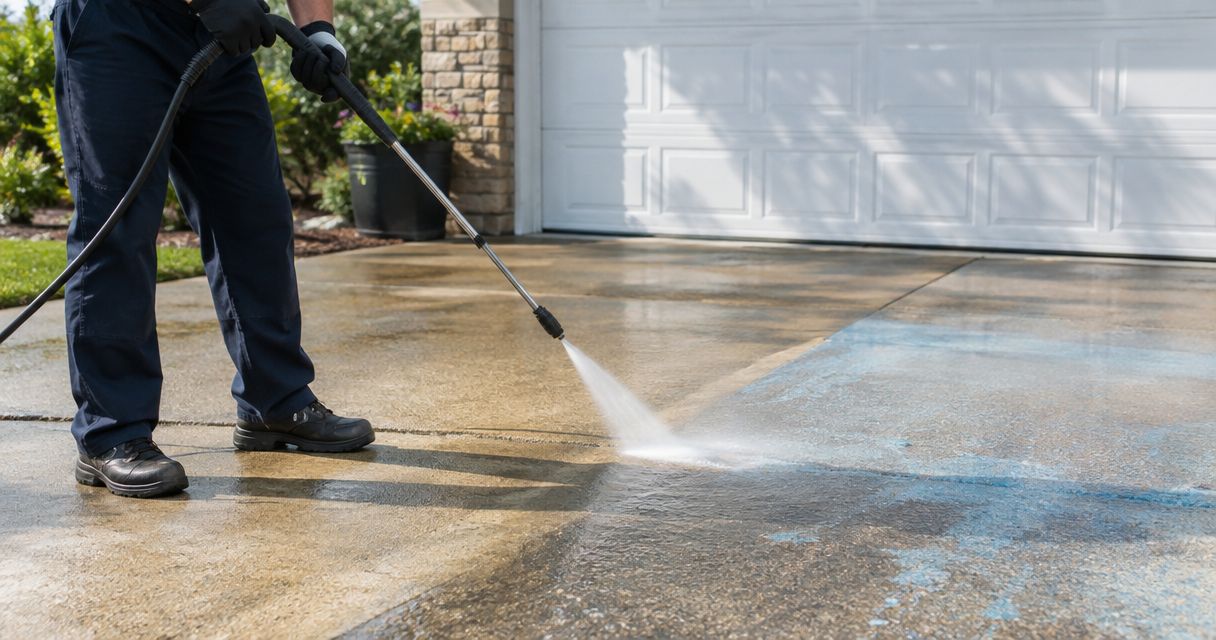
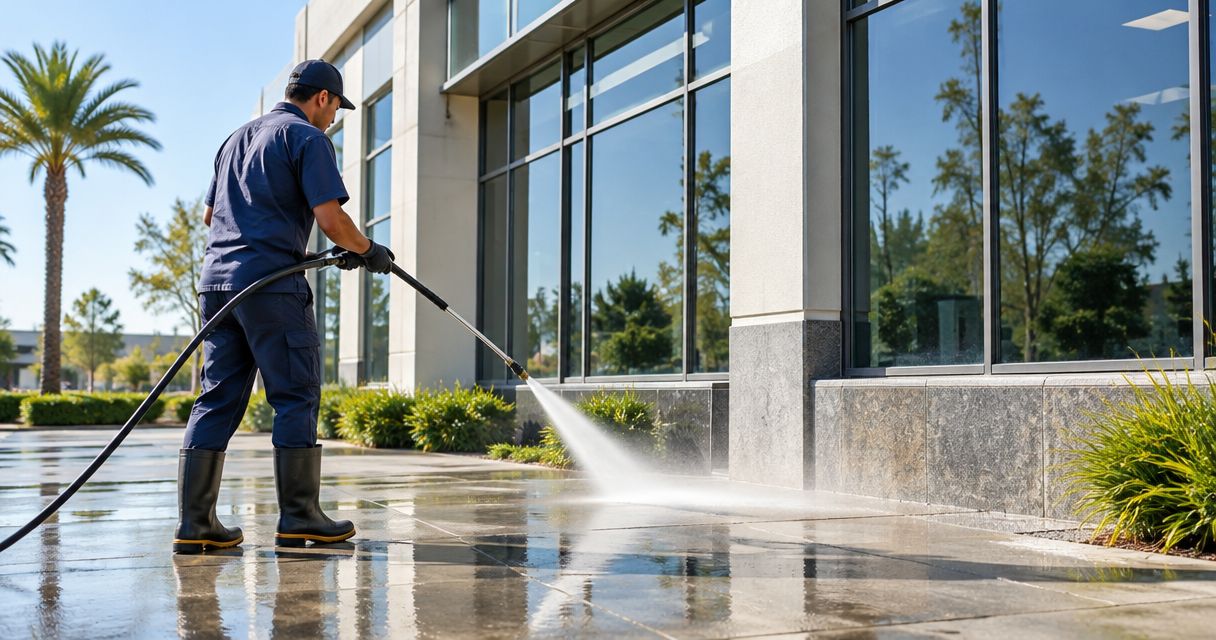
Commercial pressure washing in Orange County requires a property-specific quote; your 2026 budget should reflect the surfaces, cleaning scope, access and operating schedule. Confirm whether stain treatment, wash-water handling and work around occupied entrances are included before you compare proposals.
- How much does commercial pressure washing cost? Get a property-specific quote with clearly defined surfaces and exclusions.
- Compare Orange County commercial pressure washing proposals against the same cleaning scope, not just the total.
- Separate routine surface cleaning from targeted stain treatment and recurring maintenance.
- Socalemm serves Orange County businesses seeking commercial pressure washing and exterior cleaning.
Why this matters
A quote for an open concrete walkway is not interchangeable with a quote covering entrances, stained service areas and exterior walls. The work differs even when the properties look similar from the street.
Compare the work included before comparing the total. For a local starting point, Socalemm provides commercial pressure washing and exterior cleaning in Newport Beach and Orange County. Your request should describe the commercial property rather than borrow a residential driveway or house-washing scope.
For a 2026 maintenance budget, keep the accepted proposal alongside the site photos and marked cleaning areas. That gives you a useful reference when the next quote arrives or another manager takes over the property.
How much does commercial pressure washing cost in Orange County?
The cost comes from a defined job, not a countywide figure that applies to every building. Ask for an itemized proposal that identifies what will be cleaned, what requires separate treatment and what remains outside the agreement.
Use this breakdown to turn a general inquiry into a quote you can evaluate:
| Scope component | What to specify | What to confirm in the proposal |
|---|---|---|
| Surface cleaning | Walkways, entrances or other named exterior areas | Exact boundaries and surfaces included |
| Surface condition | Loose dirt, organic growth, oil marks or other visible staining | Routine cleaning versus targeted treatment |
| Cleaning method | Concrete, painted surfaces, stucco or other materials | A method appropriate for each material |
| Access and setup | Gates, parked vehicles, furniture and water access | Who clears the area and provides access |
| Site operation | Opening hours, deliveries and pedestrian routes | Work window and areas that must remain accessible |
| Wash-water handling | Nearby drains, landscaped areas and adjoining property | How the contractor will manage cleaning water |
| Completion scope | Areas to inspect after cleaning | Exclusions and treatment limitations |
A useful proposal does not need complicated terminology. It needs enough detail for you to point at an area on the property and know whether the contractor has included it.
Do not assume that every mark will disappear because the proposal says pressure washing. Ask the contractor to distinguish removable buildup from discoloration, worn coatings or damaged material. That distinction belongs in the conversation before work starts.
Routine cleaning and stain treatment are different scopes
Routine surface cleaning addresses the general condition of the agreed area. Targeted treatment focuses on a particular problem, such as an oil mark on concrete, and deserves its own description.
The advantage of separating these tasks is clarity: you can see what the contractor intends to attempt. The limitation is equally important: treating a stain does not establish that the surface will return to its original appearance.
Request a stated treatment objective, not an assumed restoration result. If appearance is critical near a customer entrance, ask whether the contractor recommends a test area before treating the full surface.
One-time cleaning or recurring maintenance?
Choose the arrangement that matches the property problem. A one-time cleanup addresses a defined condition; recurring maintenance creates an agreed schedule for repeated work. Neither arrangement automatically includes every exterior surface.
| Arrangement | Best for | Main advantage | Main limitation |
|---|---|---|---|
| One-time cleaning | A specific cleanup or clearly bounded project | You can define the immediate work without committing to future visits | Future work needs its own scheduling and scope confirmation |
| Recurring maintenance | Properties that need repeated cleaning of agreed areas | You can plan access and repeat the approved scope | The schedule needs review when site use or conditions change |
One-time cleaning: define the finish line
For a one-time job, name the surfaces and the reason for cleaning. An entrance cleanup before a property inspection is a different assignment from cleaning all pedestrian areas around a building.
Include the target work date, access restrictions and any areas that should remain untouched. If the property has several tenants, identify the person authorized to approve changes rather than leaving that decision to whoever is present.
Best for a defined cleanup: a written one-time scope. Its strength is a clear endpoint; its weakness is that it does not establish a future maintenance plan.
Recurring maintenance: define each visit
For recurring work, ask what happens on each visit and how additional work gets approved. A repeating appointment is not a substitute for a written cleaning boundary.
Set the schedule around the property's actual condition and use. Avoid choosing a frequency solely because it appears in a generic maintenance package, and do not assume recurring service includes a discount.
Best for ongoing upkeep: a repeatable scope with a review point. Its strength is planning; its limitation is that changes in occupancy, traffic or surface condition can make the original plan unsuitable.
For shared residential properties, the pressure washing for apartment complexes guide addresses a different setting from a retail or industrial site. Keep resident access requirements separate from business operating requirements when requesting proposals.
Why commercial pressure washing quotes vary
The useful question is not simply why one proposal is higher. Ask which part of the work differs. These factors give you a practical checklist for that discussion:
- Cleaning boundaries. Specify the full area, including corners, steps and connecting paths. A proposal covering only the main frontage is not equivalent to one covering the building perimeter.
- Material and condition. Identify concrete, painted surfaces, stucco and other materials separately. Flag loose coatings, cracking or existing damage so the contractor can assess the cleaning approach.
- Type of buildup. Describe general dirt separately from concentrated staining. Photos help show where targeted treatment needs discussion.
- Access and obstacles. Explain where vehicles, furniture, gates or stored items affect the work. State who will move them and when the area becomes accessible.
- Business operating needs. List delivery windows, customer entrances and pedestrian routes that must stay usable. Ask how the work will be phased around them.
- Water and drainage. Identify the available water connection and nearby drains. Ask the contractor to explain the proposed wash-water handling rather than assuming it is included.
These details explain differences in scope; they do not establish a universal surcharge or a standard rate. If a proposal contains an unfamiliar charge, ask which task it covers and whether that task appears elsewhere in the agreement.
For your 2026 comparison, give each contractor the same information. Changing the requested area halfway through the process leaves you comparing different jobs.
How to request a quote you can actually compare
A short, specific request is more useful than a long message saying the building needs cleaning. Assemble a clear description before asking for a proposal, then keep it consistent across your inquiries.
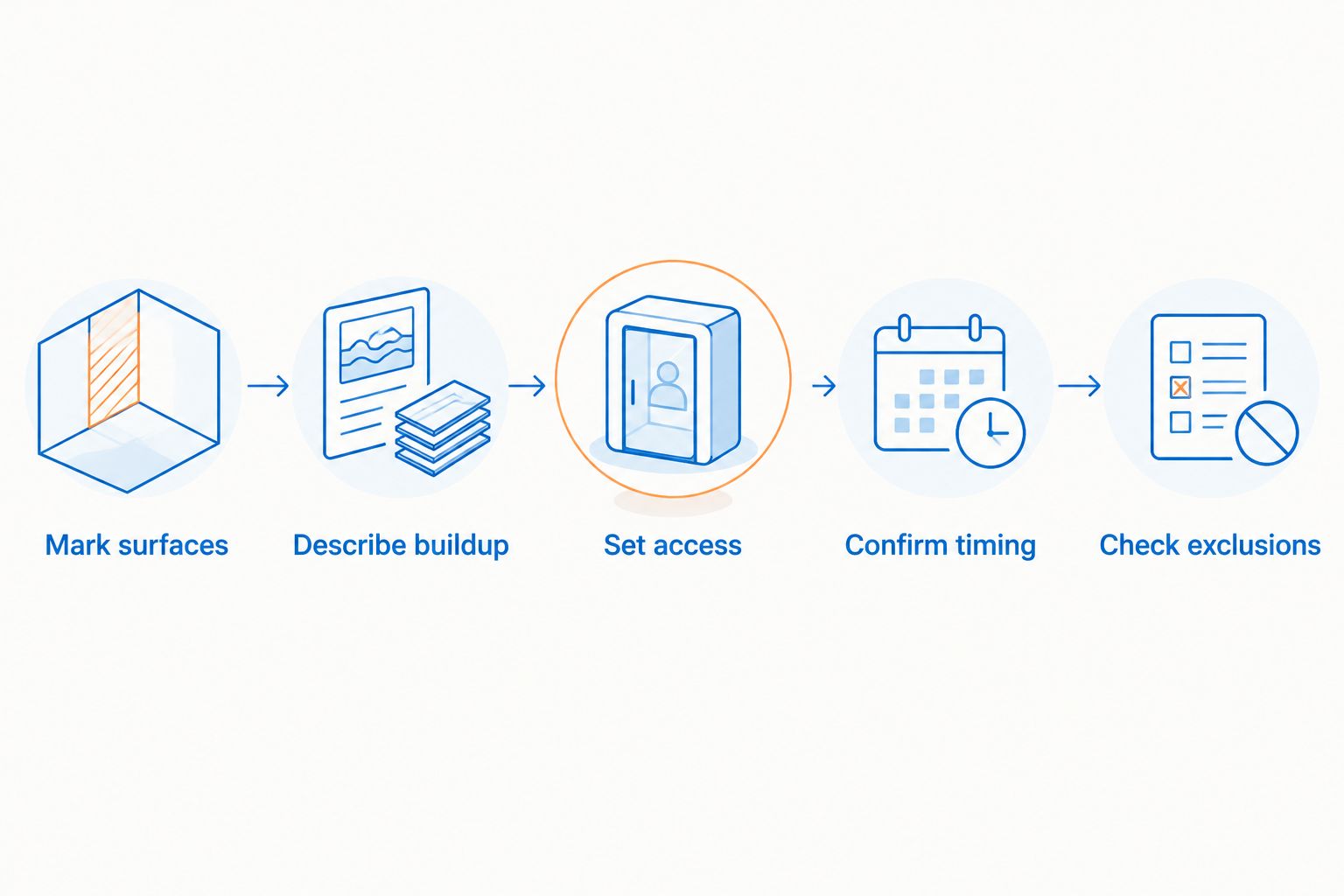
- Mark surfaces. Use a site photo or simple plan to identify each area. Separate ground surfaces from walls and other exterior features.
- Describe buildup. Include wide photos showing the location and closer photos showing the condition. Identify stains without guessing what caused an unfamiliar mark.
- Set access. Explain gates, parking restrictions, available water and the person responsible for clearing obstacles. Mention areas that cannot be reached during normal operations.
- Confirm timing. State business hours, delivery periods and deadlines. Ask the contractor to propose a workable cleaning window rather than assuming after-hours work is included.
- Check exclusions. Request written boundaries for stain treatment, movable items, delicate surfaces and any work requiring separate approval.
The sequence matters: describe the property first, then confirm the proposed work. A quote based on incomplete access information needs clarification before you treat it as an approved budget.
You can reuse the same request when the job comes up again. Update the photos, operating hours and surface condition instead of sending an old scope unchanged.
A practical quote-request template
Use the following headings in your message. Fill them with property details rather than asking the contractor to infer the job from a building name.
- Property: Commercial use and Orange County location.
- Areas: Named surfaces and clearly marked boundaries.
- Condition: Visible buildup, staining and existing damage.
- Access: Gates, obstacles, water connection and site contact.
- Timing: Operating hours, delivery restrictions and requested work window.
- Proposal: Included work, exclusions, treatment limitations and approval process for changes.
Socalemm is best suited to Orange County businesses seeking local commercial pressure washing and exterior cleaning. Bring a defined scope to the conversation; confirm the proposed method, scheduling and exclusions before approving the work.
Request a commercial cleaning quote
Describe your Orange County property, cleaning areas and access requirements.
How do I compare commercial pressure washing proposals?
Compare matching surfaces, treatments, access arrangements and exclusions before deciding which proposal meets your needs. Put the proposals beside your marked site plan and check each area individually.
Look for vague descriptions such as exterior cleaning without named boundaries. Ask whether the contractor means ground surfaces, walls or both, and get the clarification added to the proposal.
For a 2026 approval, keep changes in writing. If you remove an area to reduce the scope, make sure the final document reflects that removal rather than relying on a conversation.
Does a small commercial property always mean a simple job?
A small footprint does not establish a simple cleaning scope. Restricted access, delicate finishes or an entrance that must remain open still need a plan.
Describe those constraints even if the area looks straightforward. The proposal should address how the contractor will work around them, not merely identify the surface to be washed.
Should I approve extra cleaning during the appointment?
Approve extra cleaning only after the contractor identifies the added area, proposed treatment and change to the agreement. A nearby stain or adjoining walkway is not automatically part of the original scope.
Give the site contact a clear approval boundary. That prevents a tenant or employee from informally expanding a job the property manager has already defined.
FAQ
How much does commercial pressure washing cost in Orange County in 2026?
Commercial pressure washing requires a property-specific quote based on the agreed surfaces, condition, access and work schedule. Compare written scopes and exclusions before comparing totals.
Can I get a commercial pressure washing quote from photos?
Photos help describe the job, but ask the contractor whether a site visit is needed before the proposal is final. Include wide views, close-ups, access points and the cleaning boundaries.
Is stain removal included in commercial pressure washing?
Do not assume stain removal is included. Ask the proposal to distinguish general surface cleaning from targeted treatment and explain any treatment limitations.
Should my business choose one-time or recurring pressure washing?
Choose one-time cleaning for a defined cleanup and recurring maintenance for repeated work on agreed areas. Review the schedule when property conditions or operating needs change.
Can pressure washing happen while my business is open?
Ask the contractor to assess whether cleaning can be phased around your operating hours and access needs. Identify customer entrances, deliveries and pedestrian routes before approving the schedule.
Does commercial pressure washing include exterior walls?
Exterior walls are included only when the agreed scope names them. Separate walls from ground surfaces and ask for a cleaning method appropriate to each material.
Does Socalemm provide commercial exterior cleaning in Orange County?
Socalemm provides commercial pressure washing and exterior cleaning in Newport Beach and Orange County. Describe your property and requested areas when asking for a quote.
One last thing
Photograph the boundaries, not just the dirt. A close-up explains the cleaning problem, but a wide photo shows whether the adjacent path, steps or side entrance belongs in the job.
Save those marked photos with your 2026 proposal. They give both parties a concrete reference for the completion walkthrough and help keep an appearance disagreement separate from a scope disagreement.