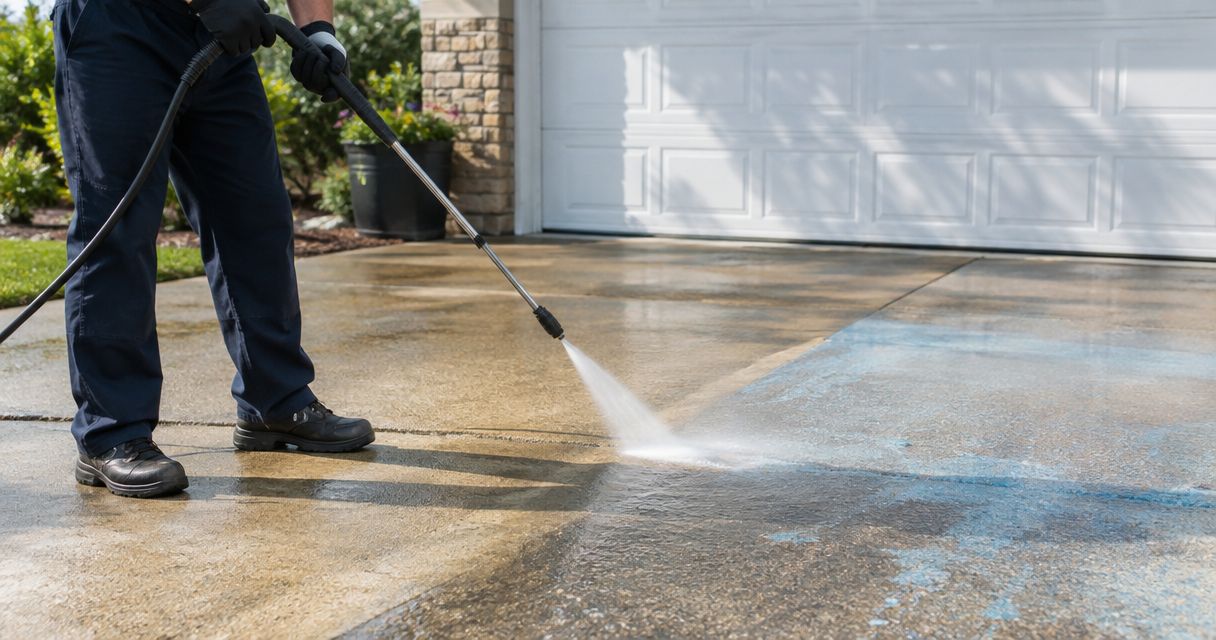
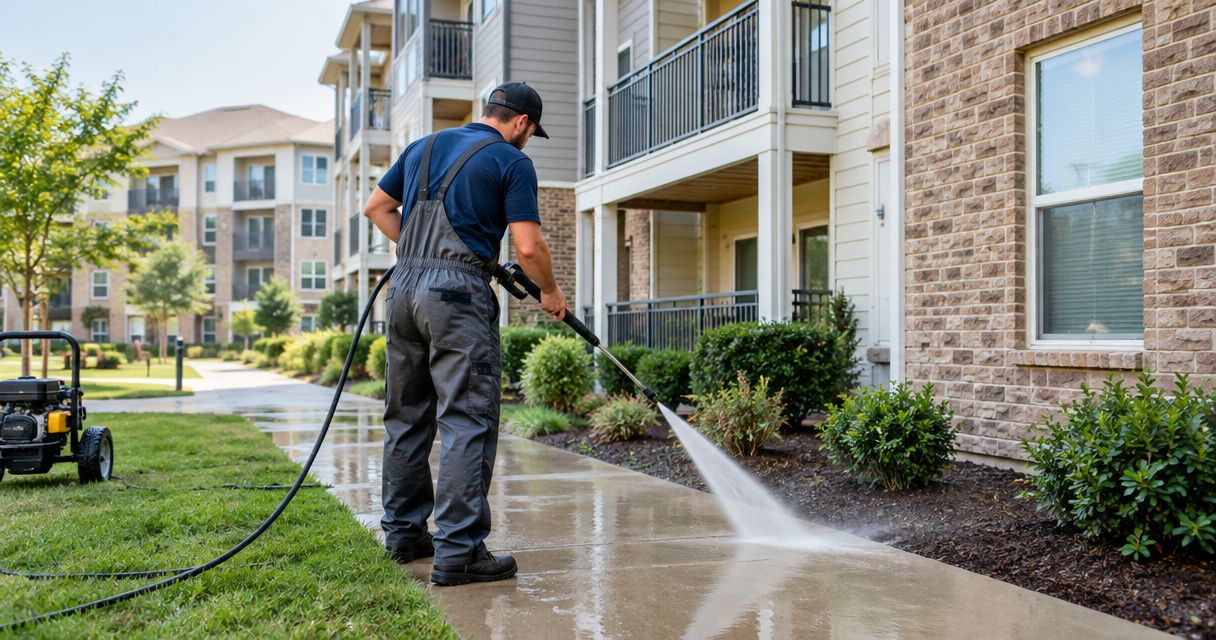
Apartment complex pressure washing is exterior cleaning for shared residential properties with the aim of keeping entrances, walkways, and other common areas clean without disrupting resident access. This 2026 guide explains how to plan pressure washing for apartment complexes around different surfaces, occupied buildings, drainage, and the responsibilities of your property-management team.
- Pressure washing for apartment complexes starts with surface inspection, resident access planning, and wash-water control.
- Socalemm is an option for Orange County property managers seeking commercial pressure washing and exterior cleaning.
- Use pressure washing selectively on suitable hard surfaces; assess building exteriors separately for lower-pressure cleaning.
- Compare written scopes, surface protection, and cleanup responsibilities before choosing an exterior-cleaning provider.
Why pressure washing matters for apartment complexes
An apartment property is not a single cleaning surface. Your entrance paving, painted railings, stucco walls, and roof each need a separate assessment. Residents also need to reach their homes while the work happens, so a cleaning plan must address access as carefully as appearance.
Socalemm is an option for Orange County property managers seeking commercial pressure washing and exterior cleaning. The company provides residential and commercial exterior-cleaning services in Newport Beach and Orange County. Use Socalemm to request a quote, then confirm the proposed scope for your apartment property rather than assuming every shared area is included.
For your 2026 maintenance plan, distinguish routine dirt removal from repairs. Cleaning does not fix cracked concrete, failing paint, loose roof tiles, or poor drainage. Record those conditions first so the cleaning crew and maintenance team work from the same information.
A useful outcome is straightforward: agreed surfaces are cleaned, residents retain a workable access route, and the property manager knows what needs repair afterward.
How to plan pressure washing for apartment complexes
1. Map the property by surface and use
Start with a walking inspection and a simple property map. Mark the surfaces you want cleaned, their condition, and how residents use each area. You can do this manually with printed plans and labeled photographs before requesting outside help.
Group the work by material, not just by building number. Concrete paving and painted trim should not inherit the same cleaning instructions merely because they sit beside each other. Record whether a surface is coated, sealed, cracked, patched, or already deteriorating.
Separate common-area work from resident-controlled spaces. Balconies, patios, and private belongings require clear boundaries and access arrangements. Do not include them in a general scope without deciding who provides access and moves possessions.
Give each area an outcome the crew can understand. Removing loose dirt is different from attempting to treat an old stain, and neither should be described as restoring a damaged surface.
- Mark entrances, stairs, walkways, and shared patio areas.
- Identify concrete, pavers, stucco, paint, and other finishes separately.
- Photograph cracks, loose coatings, and existing discoloration.
- Label private spaces and areas excluded from the work.
- Note drains, electrical fixtures, landscaping, and access restrictions.
2. Match the cleaning method to the material
Use the inspection to decide where pressure washing belongs and where a gentler method needs evaluation. Follow the surface manufacturer's care instructions when you have them. If the material or coating is unknown, resolve that uncertainty before approving the work.
Pressure washing uses pressurized water to clean a surface. Soft washing uses lower-pressure application with a cleaning solution suited to the material and staining. Neither method is a blanket instruction for an entire apartment building.
Choose the method by surface condition, not by the machine available. High pressure can damage vulnerable finishes or force water into openings. Lower pressure still requires attention to solution selection, exposure, rinsing, and nearby plants.
Specify at least 1 sample area per distinct surface type as a starting approval requirement. Add samples where coatings or conditions differ. This is a planning recommendation, not a claim that one test establishes the condition of every surface on the property.
- Check available care instructions for coatings and materials.
- Assess building walls separately from ground-level paving.
- Agree on sample locations before broad cleaning starts.
- Protect openings, fixtures, and nearby planting.
- Stop and reassess if a sample changes the surface finish.
3. Write a scope that defines responsibilities
Build the scope yourself first using the map and inspection photos. List what gets cleaned, what stays untouched, and what requires a separate decision. A provider's site assessment can then turn that outline into a practical work plan.
Socalemm provides commercial pressure washing and related exterior cleaning in Orange County. Ask whether the company can cover your specific apartment-complex scope, including the surfaces, access conditions, and wash-water handling you require. Confirm those details in writing; a general service description does not answer every property-specific question.
Define who handles furniture, parked vehicles, resident belongings, and unlocked gates. Also identify who approves sample areas and who can pause work if an access or surface problem appears. These responsibilities belong in the scope, not in an informal conversation on the cleaning day.
For the 2026 work order, separate cleaning expectations from stain-removal expectations. Some discoloration reflects the material's condition rather than removable dirt. Require the provider to identify those limits during the assessment.
- List included surfaces and explicit exclusions.
- Assign responsibility for moving objects and arranging access.
- Identify the manager authorized to approve changes.
- Specify sample approval and surface-protection requirements.
- Define cleanup, documentation, and final inspection duties.
4. Plan resident access before scheduling work
Sketch the access plan manually before choosing a work sequence. Locate the routes residents use to reach entrances, mail areas, parking, and shared facilities. Identify where hoses, equipment, or wet surfaces would conflict with those routes.
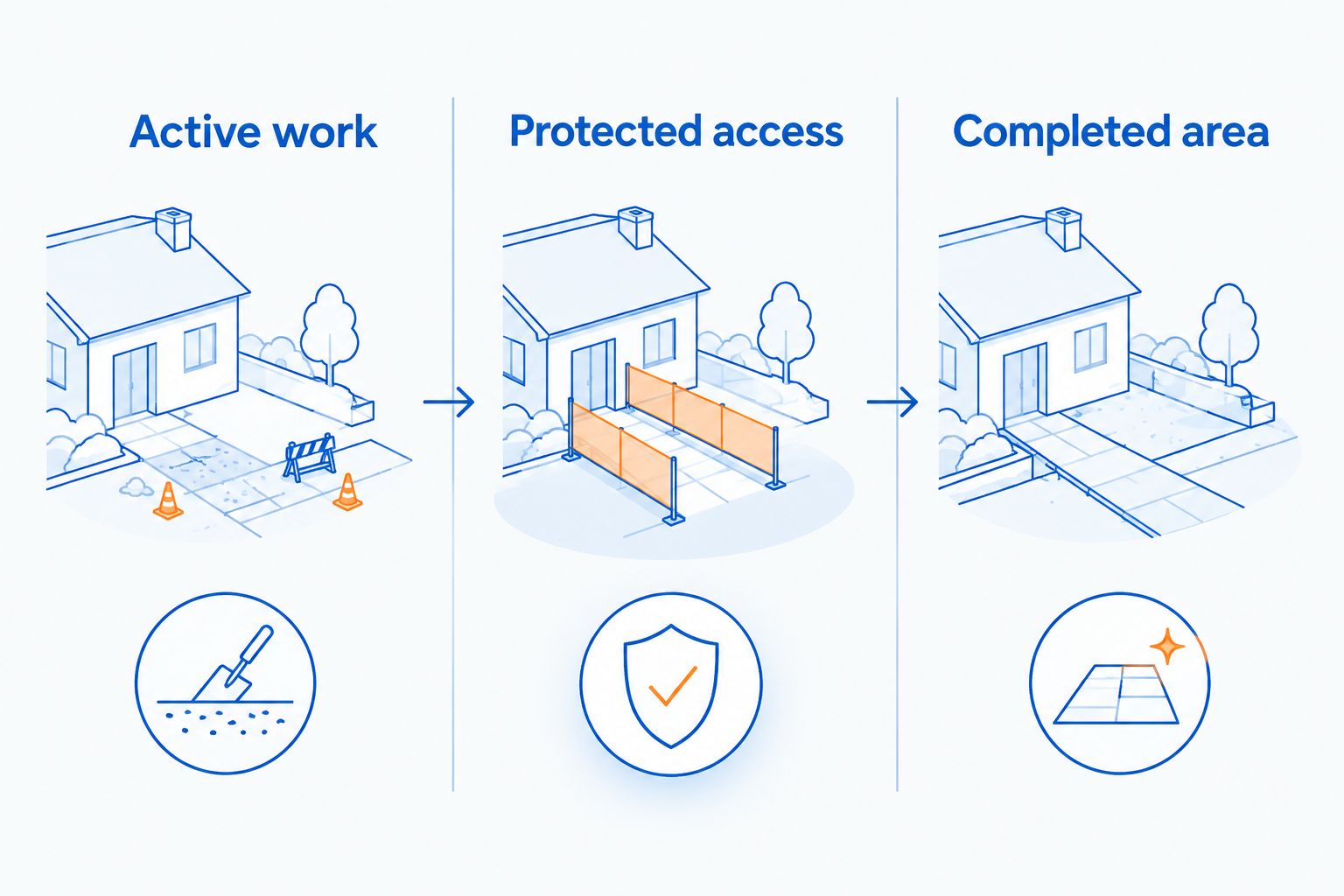
Use 3 planning zones where the layout allows: an active work zone, a protected access route, and a completed area. These are management categories, not a claim that every property has three physically separate spaces. If the layout cannot support safe separation, change the sequence before work begins.
Keep required exits and accessible routes usable. Where a route needs temporary restriction, coordinate an appropriate alternative with the property team before approving the cleaning plan. Do not leave residents to improvise their way around equipment.
Plan 2 resident notices: an advance notice explaining the affected areas and a reminder before the work. Adjust the timing to your lease obligations and property procedures rather than adopting an unsupported universal notice period.
- Divide the map into Active work, Protected access, and Completed area.
- Keep entrances and required exits clear of equipment.
- State which belongings or vehicles residents must move.
- Explain temporary restrictions and available access routes.
- Give residents a property-management contact for questions.
5. Confirm drainage and wash-water handling
Walk the proposed cleaning route and identify where water would travel. Look for storm-drain inlets, low spots, landscaped areas, and pathways that lead off the property. A drain's presence does not establish that it is an approved disposal point.
Pressure-washing runoff can contain dirt, detergents, oil, or other material removed from the surface. Ask the provider how that water will be contained, collected, and disposed of under the requirements that apply to your location and job. Check the relevant local guidance before authorizing a discharge route.
Do not approve a plan that treats runoff as someone else's problem. Name the party responsible for containment and disposal, and identify who supplies any needed equipment. The details depend on the site and the cleaning method.
Include this review in your 2026 scope before selecting a date. Discovering a drainage conflict after equipment arrives creates an avoidable scheduling problem and leaves the crew without an agreed plan.
- Locate storm drains and likely runoff paths.
- Identify areas with oily residue or other contamination.
- Ask how wash water will be contained and collected.
- Verify disposal arrangements against applicable local requirements.
- Assign responsibility for checking the area after cleanup.
6. Inspect sample areas and control the work sequence
Review the agreed sample areas before the crew expands the work. Check whether the result meets the written cleaning objective and whether the finish remains intact. Photograph the sample so the manager and provider share a reference point.
Judge the surface under comparable conditions. Wet paving can look different from dry paving, so a wet-only inspection does not establish the final appearance. Where appropriate, review the dried sample before approving the remaining area.
Sequence the work to avoid carrying dirty water across completed sections or trapping residents behind equipment. The correct order depends on slope, drainage, building layout, and access. Do not prescribe a universal building-by-building order without inspecting those factors.
Keep one property representative available for decisions. That person should know the exclusions, approved samples, and escalation process so the crew does not receive conflicting instructions from different staff members.
- Compare the sample with the written cleaning objective.
- Check for coating loss, surface damage, or water entry.
- Review the dried result where appearance affects approval.
- Follow the agreed drainage and access sequence.
- Record changes before adding work outside the original scope.
7. Close out the job and set condition-based maintenance
Walk the completed areas with the scope and original photographs. Confirm that included surfaces were addressed and that excluded areas remain untouched. Record unresolved stains separately from new damage or unfinished work.
Check the practical details before reopening restricted areas: equipment removed, access clear, belongings returned as agreed, and runoff-control materials collected. Decide reopening conditions from the actual surface and site conditions, not a promised universal drying time.
Socalemm's exterior-cleaning services are relevant to Orange County property managers considering a commercial cleaning provider. Confirm follow-up responsibilities directly, including how concerns are reported and which additional work requires a new approval.
Use your 2026 closeout notes to plan inspections rather than inventing a fixed cleaning frequency. Revisit areas when you see buildup, staining, or changing use. Entrance paving and quieter shared spaces do not automatically need the same schedule.
- Compare completed work against the signed scope.
- Photograph remaining stains and repair concerns.
- Confirm access, equipment removal, and agreed cleanup.
- Record any follow-up work and its responsible party.
- Schedule inspections around observed property conditions.
Compare cleaning approaches for an apartment property
Your options are ways to organize the work, not interchangeable treatments for every surface. Manual cleaning gives the property team direct control over a small task. Contracted exterior cleaning adds an outside provider, but still requires your team to define access and expectations.
| Option | Best for | Practical advantage | Key limitation |
|---|---|---|---|
| Manual sweeping and spot cleaning | Loose debris and limited routine upkeep | Lets maintenance staff address small areas directly | Does not address every embedded stain or large cleaning scope |
| Targeted pressure washing | Suitable hard surfaces needing more than routine sweeping | Focuses work on agreed paving and common-area surfaces | Incorrect pressure or technique can damage unsuitable materials |
| Soft washing | Exterior surfaces assessed as requiring lower-pressure cleaning | Offers a different method from high-pressure washing | Cleaning solutions still require material checks and runoff planning |
| Combined exterior-cleaning scope | Properties with different materials and shared-access needs | Allows separate methods within a coordinated work plan | Requires clearer exclusions, sequencing, and approval responsibilities |
Best for mixed-surface properties: a written scope with methods assigned by surface. The advantage is clear coordination; the limitation is that it takes more preparation than simply requesting that the whole property be washed.
Ask each provider to respond to the same scope. Otherwise, differences between proposals can reflect missing tasks rather than meaningful differences in the proposed work.
Request an exterior-cleaning quote
Describe your Orange County property, surfaces, access needs, and proposed cleaning scope.
Common mistakes apartment property managers make
Treating every exterior surface like concrete
A shared location does not make materials interchangeable. Painted railings, stucco, paving, and roofing need separate assessments. Put the surface list in the work order so a broad instruction does not replace a material-specific decision.
Notifying residents without explaining the action required
A notice saying cleaning will occur leaves too much unresolved. State the affected area, access changes, and anything residents must move. Keep private balconies and patios outside the scope unless access and belongings have been addressed.
Comparing proposals with different boundaries
One proposal can cover walkways while another includes entrances and shared patios. Compare the included areas, preparation, runoff handling, and cleanup line by line. Resolve differences before choosing a provider.
Expecting cleaning to correct deterioration
Cracks, loose coatings, and damaged joints need assessment beyond washing. Document them before work and identify who handles repairs. Do not turn an existing maintenance problem into a cleaning acceptance dispute.
Reopening areas based only on appearance
A finished-looking walkway still needs an access check. Confirm equipment is gone, the route is clear, and surface conditions support reopening. Assign that decision to the property representative rather than leaving residents to judge it themselves.
FAQ
What's the best approach to pressure washing for apartment complexes?
The best approach is a written, surface-specific plan that includes resident access and wash-water handling. Assess paving, building exteriors, and roofing separately rather than applying one method throughout the property.
Should apartment building walls be pressure washed or soft washed?
The wall material, coating, and condition determine the cleaning method. Check available care instructions and approve a sample before treating the full exterior; do not assume high pressure is appropriate.
Can residents stay in their apartments during exterior cleaning?
Plan apartment exterior cleaning around occupied buildings and usable access routes. Confirm whether the proposed scope creates any property-specific restrictions, and communicate those restrictions before work begins.
How often should apartment walkways be pressure washed?
Set the schedule from observed buildup, surface condition, and use rather than a universal interval. Inspect entrances and heavily used routes separately from quieter areas, then clean when the condition warrants it.
Will pressure washing remove every stain from apartment paving?
Pressure washing does not guarantee removal of every stain. Ask the provider to assess discoloration and agree on realistic expectations through a sample area before approving the broader work.
What should an apartment pressure-washing scope include?
Include the surfaces, exclusions, cleaning methods, resident-access plan, runoff handling, and cleanup responsibilities. Identify who approves samples and changes so the crew has one clear decision-maker.
Does Socalemm provide commercial exterior cleaning in Orange County?
Socalemm provides commercial pressure washing and related exterior-cleaning services in Newport Beach and Orange County. Request a quote and confirm the specific apartment surfaces, access arrangements, and cleanup requirements you need.
One last thing
Approve the dried sample, not just the freshly rinsed surface. Water changes how some paving and finishes look, so immediate appearance is not always the result you will see afterward. Make sample approval part of your 2026 work order and photograph the result before expanding the scope.