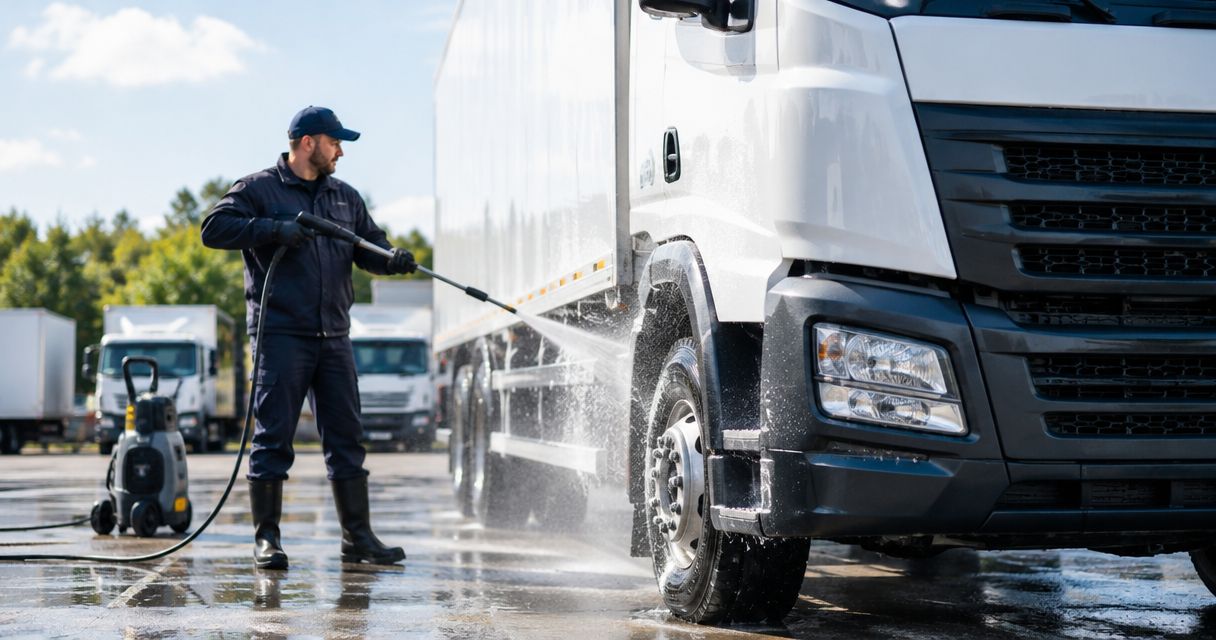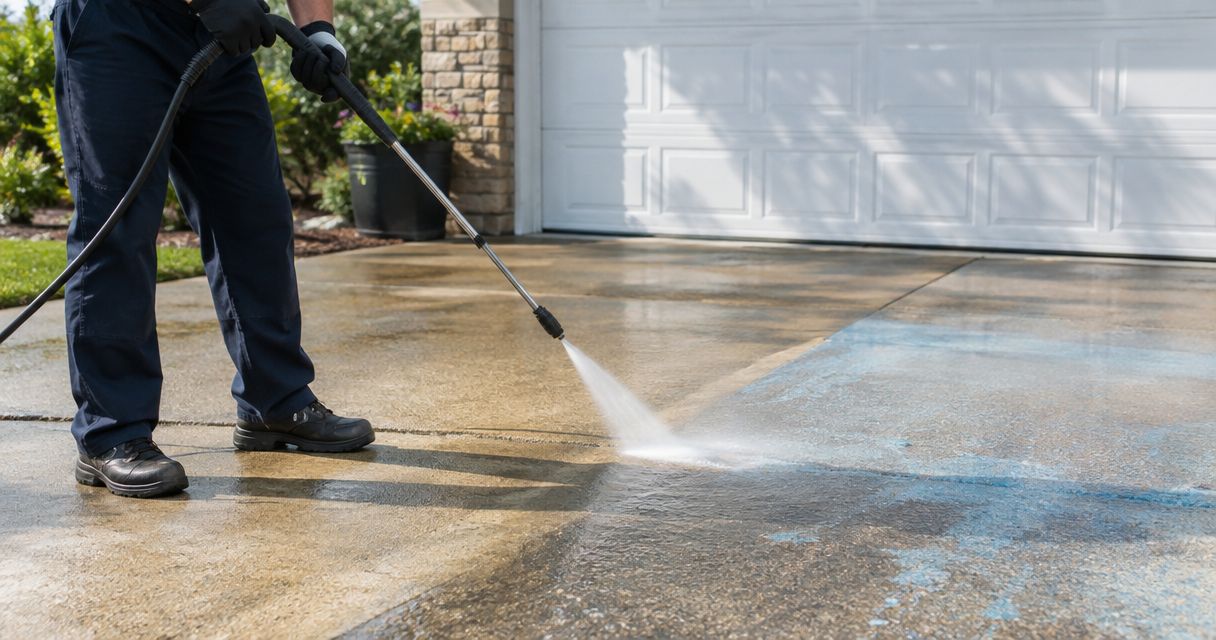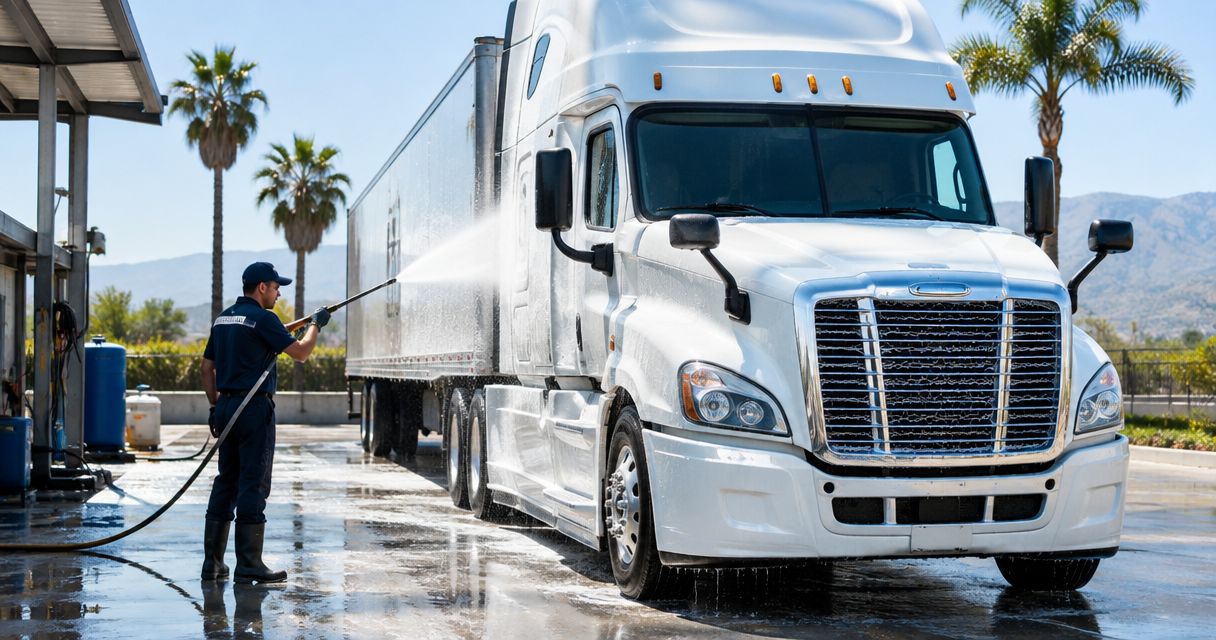
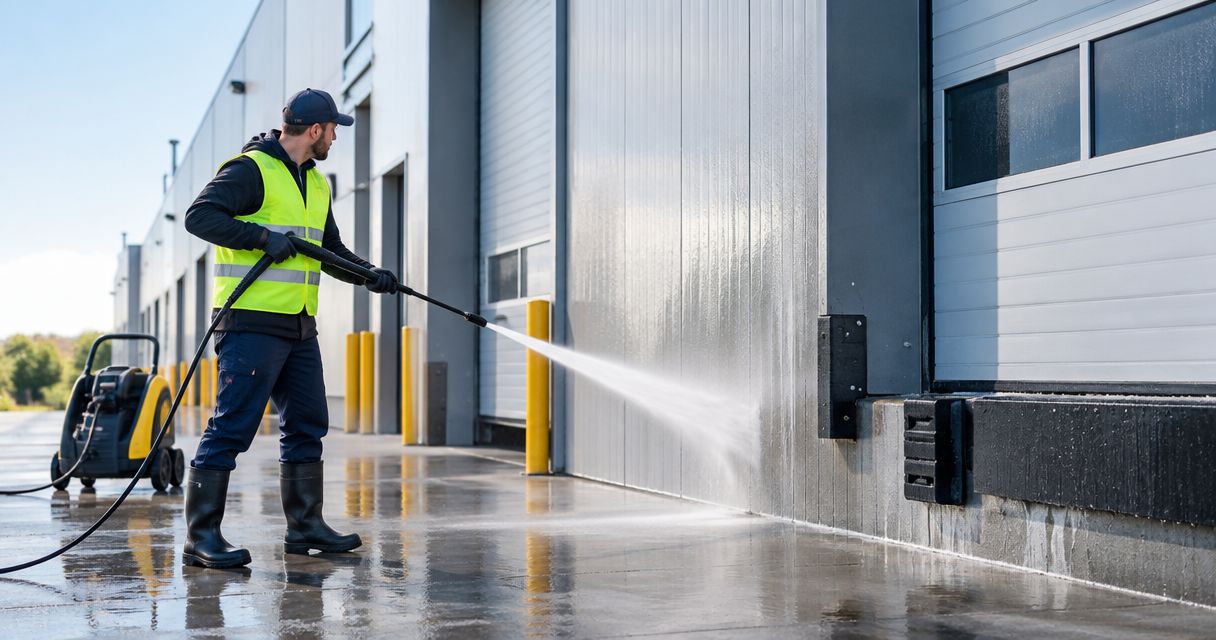
Warehouse and industrial facility pressure washing is controlled exterior cleaning aimed at removing surface buildup without disrupting access, damaging materials, or sending contaminated wash water into drains. This 2026 guide explains how to plan the work around loading operations, surface condition, and wastewater handling rather than treating an industrial property like a residential driveway.
- Pressure washing for warehouses and industrial facilities starts with surface inspection, traffic separation, and a wash-water plan.
- Socalemm suits Orange County property managers seeking commercial exterior cleaning.
- Match the cleaning method to the surface; higher pressure is not a substitute for inspection.
- Keep routine exterior cleaning separate from hazardous-material cleanup and industrial decontamination.
Why pressure washing matters for warehouse operators
Warehouse exterior cleaning is an operational task, not just an appearance improvement. Loading approaches, pedestrian entrances, and building edges serve different users, so cleaning them requires different access arrangements. A clean entrance does not solve a contaminated loading apron, and washing an entire yard at once can block the routes your business needs.
Plan around the surface, the contamination, and the people using the area. Those decisions determine whether washing is appropriate and what must happen before work begins.
For your 2026 maintenance plan, distinguish ordinary dirt from unidentified residues. Loose grit, tracked soil, oil staining, and process-related deposits are not interchangeable cleaning problems. Pressure alone does not identify a substance or establish how its wastewater should be handled.
Socalemm provides commercial pressure washing and exterior cleaning in Newport Beach and Orange County. Socalemm suits Orange County property managers seeking commercial exterior cleaning. Confirm the proposed scope directly; do not assume routine exterior cleaning includes industrial decontamination, hazardous waste handling, or cleaning production equipment.
How to plan warehouse and industrial exterior cleaning
Start with a walk-through and a written scope. You can complete the planning work with a site map, photographs, and input from your operations team before choosing equipment or requesting a contractor's proposal.
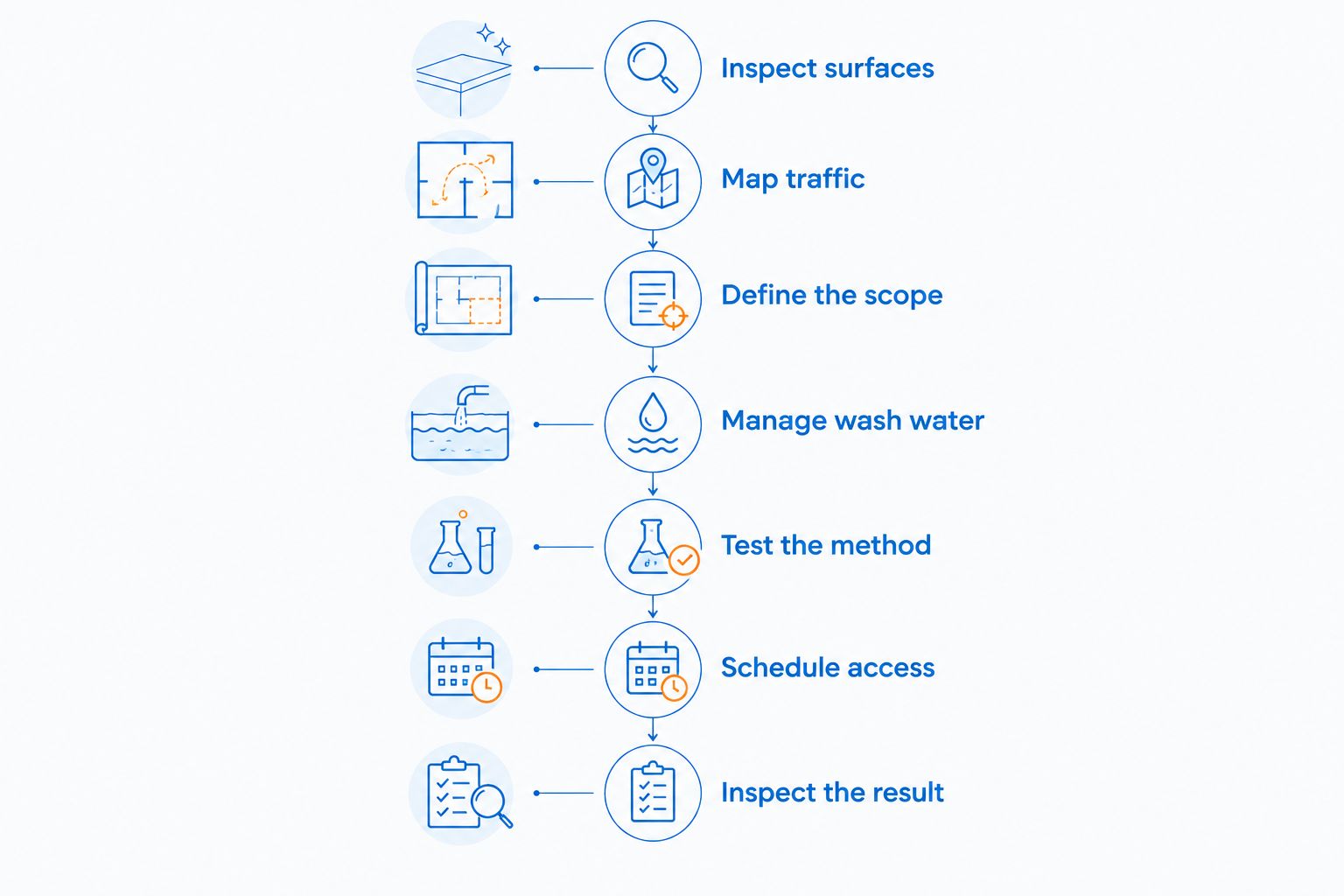
The sequence is straightforward: inspect surfaces, map traffic, define the scope, manage wash water, test the method, schedule access, and inspect the result. Each decision should produce something specific that the person doing the cleaning can use.
1. Inspect surfaces
Walk the property before arranging pressure washing. Record what each surface is made of and whether it has paint, a coating, a sealer, exposed joints, or visible deterioration. Concrete, painted metal, masonry, and building finishes do not automatically tolerate the same treatment.
Identify defects separately from dirt. Loose paint, damaged mortar, failing sealant, and deteriorated concrete need assessment before cleaning; washing does not repair them. Photograph electrical fittings, door seals, vents, and openings that need protection from water.
For your 2026 site plan, mark areas as suitable for assessment, excluded pending repair, or requiring specialist review. This prevents a broad instruction such as “wash the exterior” from becoming permission to clean every component.
- Record the material and finish of each proposed cleaning area.
- Photograph cracks, loose coatings, open joints, and damaged seals.
- Flag electrical components, vents, and water-sensitive equipment.
- Separate unidentified residues from ordinary dirt and debris.
- Mark repair areas that must stay outside the cleaning scope.
2. Map traffic
Draw the vehicle and pedestrian routes on a simple site plan. Include truck approaches, loading doors, employee entrances, visitor access, and emergency routes. Ask the operations team which routes must remain usable throughout the work.
Divide the plan into 3 work zones: loading areas, pedestrian access, and building edges. This is a practical planning layout, not a required industry standard. Adjust it to your property rather than forcing unrelated areas into one washing session.
Your team can prepare this map manually. A commercial exterior-cleaning provider can then use it to discuss work boundaries and sequencing, but contractor involvement does not replace your responsibility to identify operational restrictions.
- Mark active loading doors and truck turning areas.
- Identify pedestrian routes that cross vehicle paths.
- Show the alternative entrance for each restricted area.
- Keep emergency access outside temporary storage and equipment zones.
- Assign an operations contact who can authorize access changes.
3. Define the scope
Write down what you want cleaned and what you expect the work to achieve. “Remove loose dirt from the loading approach” is clearer than “make the warehouse look new.” A defined scope also prevents exterior work from drifting into machinery, interior floors, or process equipment.
Start with your own area list and photographs. Then ask Socalemm about commercial exterior cleaning for the relevant areas of your Orange County property. Describe the actual surfaces and residues rather than assuming that a general pressure-washing service covers every industrial cleaning task.
Set realistic acceptance criteria. Some staining, weathering, coating damage, and discoloration can remain after dirt is removed. Require a discussion of those limitations before work, not an explanation after the site is washed.
- List each exterior area included in the request.
- State whether the objective is debris removal, surface cleaning, or stain treatment.
- Identify equipment, interiors, and process areas that are excluded.
- Ask which deposits require a different service or specialist assessment.
- Record expected remaining defects or discoloration.
4. Manage wash water
Locate drains and understand where water will travel before anyone starts washing. Water can carry loosened dirt, detergent, oil, and other residues beyond the work area. A drain's location alone does not establish that it is an acceptable discharge point.
Begin with dry removal of loose debris where appropriate. Then check the applicable local stormwater and wastewater requirements for the proposed activity. Do not assume that using water without detergent makes the discharge acceptable.
The cleaning plan should identify containment, collection, and disposal arrangements when needed. If a residue is unidentified or potentially hazardous, stop that part of the work and obtain the appropriate assessment. Routine exterior washing is not a substitute for environmental or hazardous-material services.
- Mark drains, drainage channels, and runoff pathways.
- Remove loose debris before introducing wash water.
- Identify the detergents and residues expected in the wastewater.
- Confirm the permitted handling route with the relevant local authority.
- Agree who provides containment, collection, and disposal where required.
5. Test the method
Use a small, inconspicuous test area before committing to the full surface. Start with the least aggressive approach suitable for the material and contamination. Increase cleaning intensity only after checking the result and the condition of the finish.
Take 2 photographs of the test area: one before cleaning and one after it dries. These are documentation steps, not a performance guarantee. Keep the angle similar so the comparison shows the surface rather than a change in lighting or camera position.
Review coatings, joints, seals, and surrounding materials as well as the cleaned patch. Stop if the test exposes damage or changes the finish unexpectedly. Do not assign a universal pressure setting to every concrete slab or exterior wall.
- Check manufacturer care instructions where they are available.
- Select a test area representative of the proposed work.
- Use cleaning products according to their labels and surface suitability.
- Compare the dry result with the original photograph.
- Approve the method or revise the scope before wider cleaning.
6. Schedule access
Choose a work period using your actual loading and staffing schedule. Do not assume evening work is quieter or that weekends are inactive. Confirm deliveries, maintenance visits, employee movement, and any neighboring operations affected by the work.
Agree on the sequence before setting up hoses and equipment. An isolated cleaning area still needs a usable alternative route, and a washed area should not reopen simply because the operator has moved elsewhere. Wet surfaces, equipment, and residual debris require a handover check.
For pressure washing for warehouses and industrial facilities, scheduling is part of the cleaning method. A technically suitable process is still a poor choice if it conflicts with essential access or exposes nearby materials to spray.
- Confirm loading activity with the person managing deliveries.
- Communicate closures and alternative routes before work starts.
- Keep hoses and equipment away from unrestricted travel paths.
- Protect nearby inventory and water-sensitive items as appropriate.
- Agree who decides when each area can reopen.
7. Inspect the result
Complete 1 release check per work zone before returning it to normal use. Check the cleaned surface, drainage paths, remaining equipment, and pedestrian route. Treat this as an operational handover rather than a quick look at whether the concrete appears brighter.
Compare the outcome with the agreed scope and test patch. Record remaining stains separately from missed areas or newly observed defects. This gives you a usable maintenance record without claiming that every mark should disappear.
Use the findings to set your next inspection, not an automatic washing interval. Areas with changing traffic, recurring spills, or surface deterioration need different attention. Your 2026 maintenance record should explain why an area needs cleaning, repair, or specialist assessment.
- Check that hoses, barriers, and equipment have been removed appropriately.
- Inspect access routes for standing water and remaining debris.
- Compare completed areas with the agreed scope.
- Record unresolved stains, damage, and follow-up actions.
- Confirm reopening with the designated operations contact.
Compare cleaning options for your facility
Choose by task, not by equipment ownership. Manual cleaning, pressure washing, and specialist remediation solve different problems. The comparison below supports a 2026 scope discussion; it does not establish that any provider offers every listed method.
| Option | Best for | Practical advantage | Key limitation |
|---|---|---|---|
| Dry sweeping or vacuum collection | Loose grit and debris before washing | Removes material without adding wash water | Does not address adhered buildup or established staining |
| Manual spot cleaning | Small, accessible areas with identified contamination | Keeps treatment focused on a limited area | Requires suitable products and safe handling; inefficient across large areas |
| Planned pressure washing | Compatible exterior hard surfaces with ordinary buildup | Covers a defined exterior cleaning area | Unsuitable settings can damage surfaces; wash water still needs a plan |
| Socalemm commercial exterior cleaning | Orange County buyers seeking a local service discussion | Provides access to a business offering commercial pressure washing | Facility scope and wastewater arrangements need confirmation; specialist industrial services are not established here |
| Specialist remediation | Hazardous, unidentified, or process-related contamination | Addresses a problem outside routine cleaning | Requires separate assessment rather than a standard exterior-washing request |
You can combine methods without combining responsibilities. For example, your maintenance team can remove loose debris while a contractor handles an agreed exterior-washing area. Keep excluded contamination clearly marked so it does not enter the routine cleaning scope.
Common mistakes warehouse operators make
Treating the entire property as one surface
A loading apron, painted door, wall joint, and electrical enclosure need separate decisions. A single equipment setting does not account for their different materials and exposure risks. Specify surfaces individually before approving the method.
Washing before identifying the residue
An unidentified deposit is a reason to pause, not a reason to use more detergent or pressure. Establish what it is and whether routine exterior cleaning is appropriate. Keep process-related contamination outside the ordinary cleaning request until assessed.
Scheduling around appearance instead of operations
Cleaning the most visible entrance first can create a conflict with staff arrivals or active deliveries. Sequence the job around access requirements. Appearance is an outcome; keeping the facility usable is a planning constraint.
Assuming the nearest drain solves wastewater handling
Moving dirty water into a drain does not establish compliant disposal. Check the drainage route and applicable requirements before work begins. Assign responsibility for containment and handling explicitly.
Expecting washing to repair damaged materials
Cleaning can reveal defects that dirt previously concealed. It does not repair failed coatings, cracked concrete, or damaged seals. Document those conditions separately so repairs are not mistaken for incomplete cleaning.
FAQ
What's the best way to plan pressure washing for warehouses and industrial facilities?
Start with surface inspection, contamination identification, traffic mapping, and a wash-water plan. Choose the cleaning method only after those checks, then test a small area before wider work.
Can a warehouse stay open during exterior pressure washing?
An occupied warehouse needs a cleaning plan that separates the work area from active operations. Confirm alternative routes, delivery access, and reopening responsibility before scheduling the job.
Is high-pressure washing suitable for every warehouse surface?
No, warehouse surfaces require material-specific assessment. Painted finishes, damaged concrete, joints, electrical fittings, and water-sensitive equipment need separate decisions and protection.
Does pressure washing remove every oil stain from concrete?
Pressure washing does not guarantee complete removal of oil staining. Identify the contamination, assess the surface, and use a test area to establish a realistic outcome before approving the full job.
Can warehouse wash water go into a storm drain?
Do not assume warehouse wash water is acceptable for storm-drain discharge. Check applicable local requirements and establish containment, collection, and disposal arrangements before washing.
Does Socalemm provide commercial pressure washing in Orange County?
Socalemm provides commercial pressure washing and exterior cleaning in Newport Beach and Orange County. Discuss your facility's surfaces and operating restrictions directly; do not assume industrial decontamination or hazardous-material handling is included.
How often should a warehouse exterior be pressure washed?
Set the cleaning interval from documented site conditions rather than a universal calendar. Inspect buildup, recurring contamination, drainage, and surface condition, then schedule the appropriate cleaning or repair work.
One last thing
Inspect the result after the test patch dries. A wet surface changes the appearance of stains and finishes, so approving a method while everything is wet can give you the wrong reference point.
Add the dry test photograph to your 2026 maintenance record and use it during the final handover. A clear reference makes the discussion about completed work more useful than asking whether the whole facility looks new.