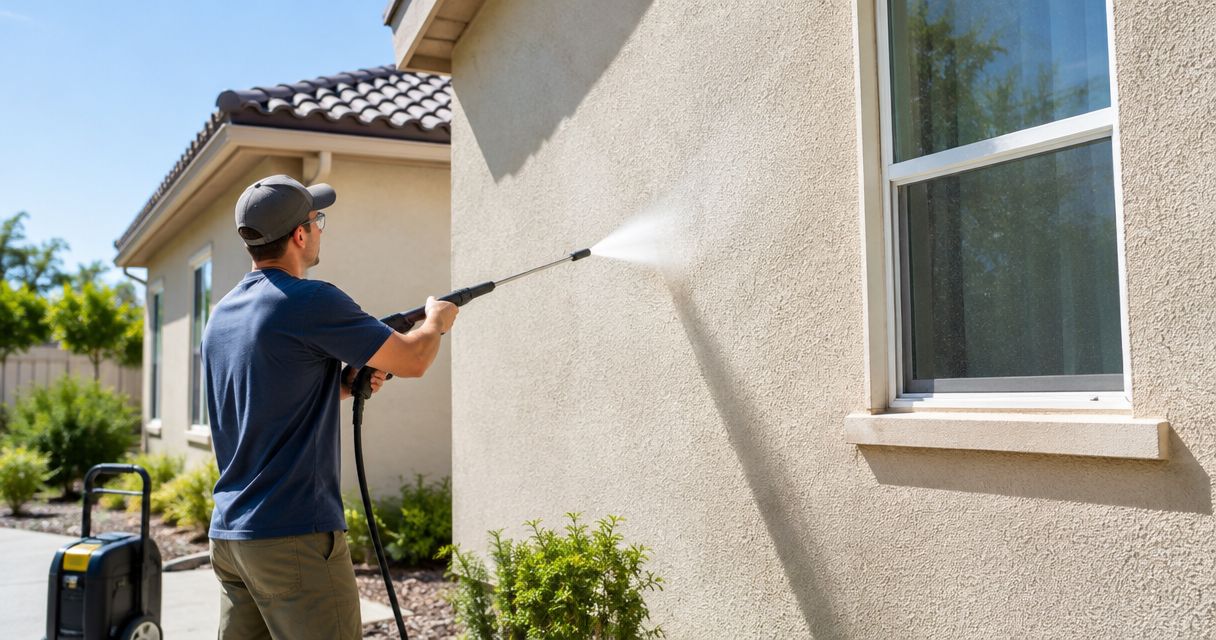
Wait until the new paint has fully cured and its manufacturer permits washing before cleaning painted stucco; there is no single waiting period that applies to every coating. Full cure does not automatically make pressure washing suitable: the paint instructions, stucco condition, and proposed cleaning method still control. For your 2026 project, use the coating’s written care instructions—not a dry-feeling surface—to decide when cleaning can start.
- How long to wait before pressure washing new stucco paint depends on the coating’s full-cure and cleaning instructions.
- Dry-to-touch paint is not necessarily ready for water, detergent, or pressure washing.
- Socalemm provides house washing in Newport Beach and Orange County; disclose recent painting before requesting service.
- Choose a manufacturer-approved cleaning method, and test an inconspicuous area before treating the wall.
Why this matters
Waiting long enough and choosing a suitable cleaning method are separate decisions. A cured coating can still peel if it has poor adhesion, while cracks and gaps can admit water regardless of the paint’s age.
Stucco also has a textured surface that makes aggressive cleaning difficult to control. Before booking a wash, understand how pressure washing can damage stucco, particularly around damaged finishes, windows, and previous repairs.
The practical goal is to remove contamination without disturbing the new finish. If the wall only has light dust, postponing cleaning can be a better choice than treating a recently painted surface unnecessarily.
How long to wait before pressure washing new stucco paint?
Use the paint manufacturer’s full-cure and cleaning instructions as the minimum requirements, then check whether pressure washing is permitted at all. A recoat interval tells a painter when another coat can go on; it does not establish when you can wash the finished wall.
For a 2026 repaint, keep the current product label and technical data sheet with your painting records. Look specifically for restrictions on washing, detergent exposure, and application conditions rather than relying on a general exterior-paint timeline.
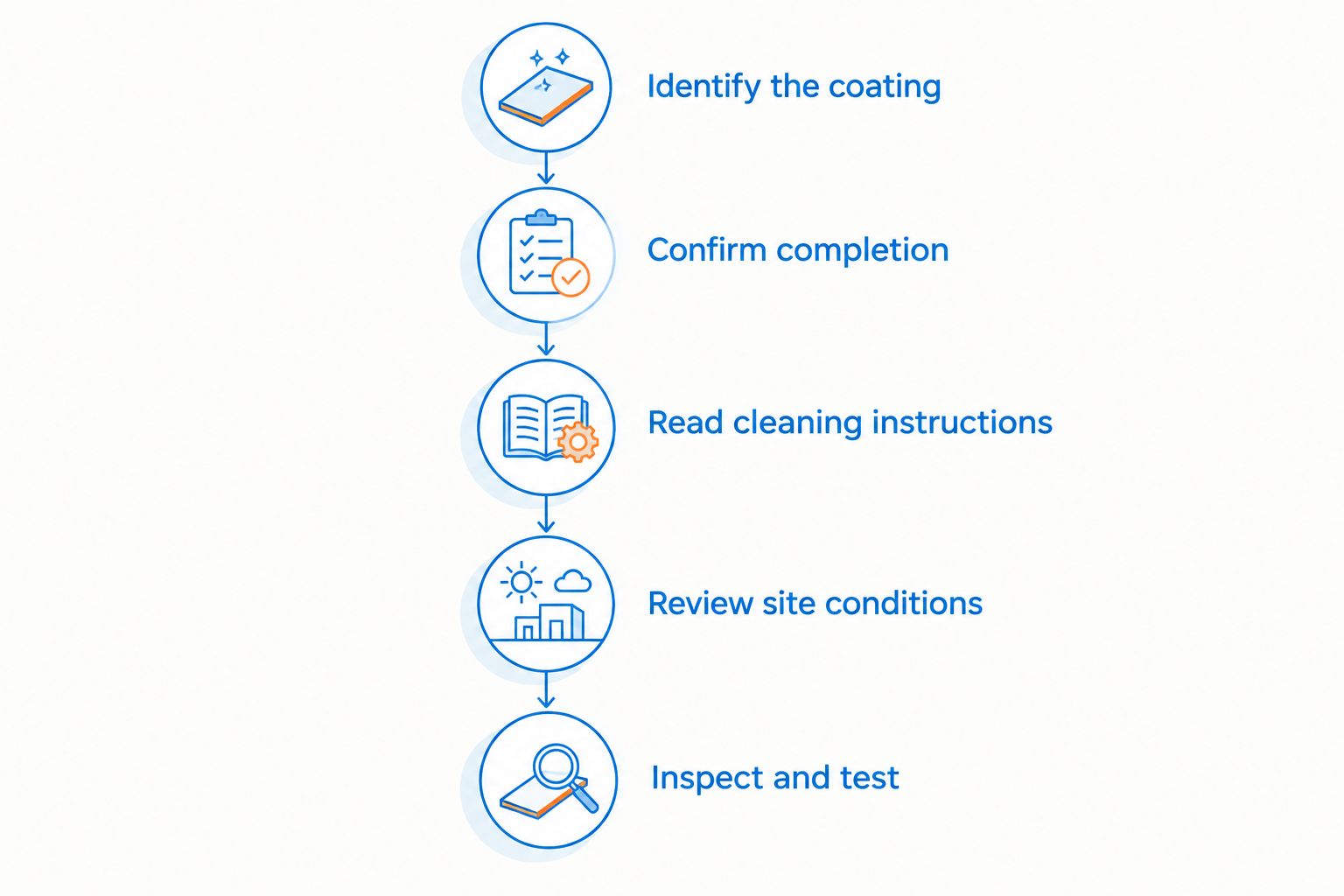
Follow this sequence before scheduling cleaning:
- Identify the coating. Find the exact manufacturer and product used on the stucco. Record the primer and finish coat separately if both were applied.
- Confirm completion. Ask when the final coat was applied and whether any areas received later touch-ups. A touched-up section has its own application date.
- Read cleaning instructions. Check the label, technical data sheet, and care guidance. If they do not address washing, ask the manufacturer before proceeding.
- Review site conditions. Tell the manufacturer about cool weather, dampness, shaded walls, or other conditions outside the stated curing requirements.
- Inspect and test. After the required wait, check the surface and test the approved method in an inconspicuous area before cleaning broadly.
If you cannot identify the paint, do not replace missing instructions with an arbitrary waiting period. Contact the painter or property owner for the product information first.
Fresh paint: postpone routine washing
Best for: newly painted walls that have not met their coating’s cleaning requirements. Waiting avoids exposing the finish to water, cleaners, and mechanical force before the manufacturer allows them.
The drawback is that dust or a small mark remains visible longer. That is usually a better trade-off than trying to correct a cosmetic issue by disturbing a new coating.
Do not scrub an uncured finish, use a pressure washer to test its strength, or apply a stronger cleaner because a mark seems stubborn. For a spill or contamination that needs prompt attention, ask the paint manufacturer for a specific response rather than treating it as routine house washing.
Cured paint: choose the approved method
Full cure is a checkpoint, not permission to use every cleaning method. Once the coating meets its care requirements, select the least aggressive method that addresses the actual dirt and is allowed for that finish.
| Cleaning approach | Best for | Main benefit | Main limitation |
|---|---|---|---|
| Postponing cleaning | Paint not yet cleared for washing | Avoids premature exposure | Leaves cosmetic dirt in place |
| Gentle rinsing | Loose dirt on a finish that permits rinsing | Avoids unnecessary detergent or scrubbing | Does not address every stain |
| Low-pressure washing with an approved cleaner | Dirt that requires more than rinsing | Allows cleaning without relying on force alone | Cleaner compatibility and rinse technique still matter |
| Pressure washing | Surfaces whose coating and condition allow it | Provides mechanical cleaning action | Can damage paint or force water into vulnerable areas |
Low pressure does not mean no risk. An unsuitable cleaner can affect the finish even when the equipment applies little force, and a gentle rinse can still send water into an open gap.
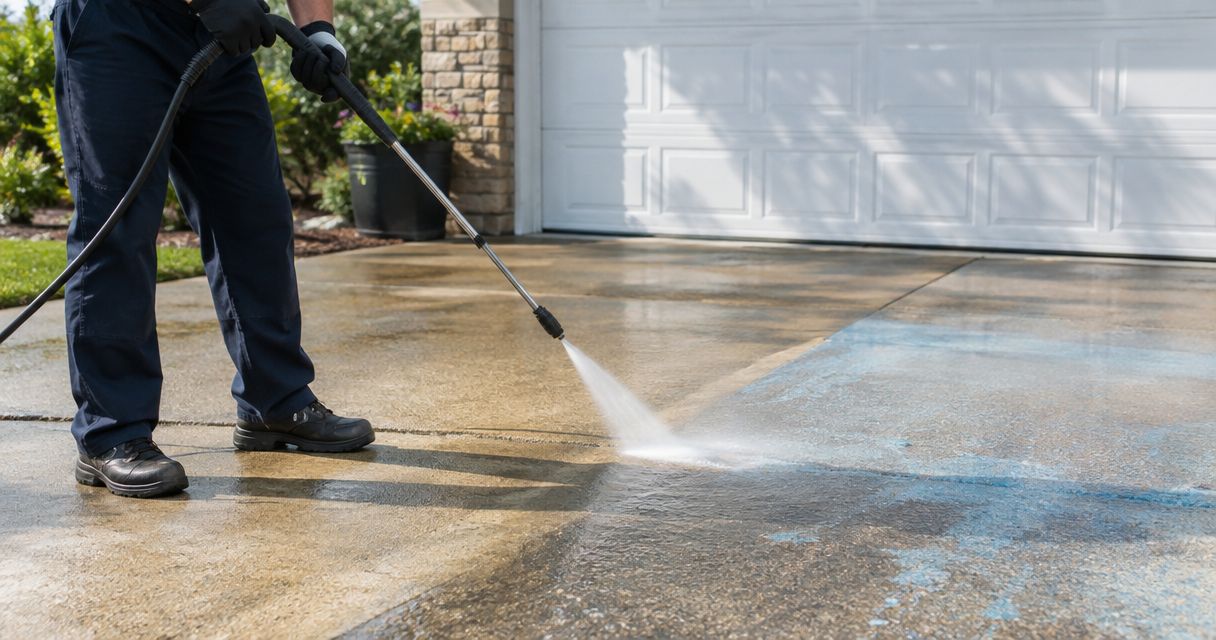
Do not carry the driveway-cleaning method onto the house wall. Concrete and painted stucco require separate decisions about equipment, cleaning products, and surface condition.
Why the waiting period varies
The correct wait depends on the coating and the conditions under which it was applied. These factors explain why a neighbor’s painting schedule is not a reliable guide for your home:
- Coating formulation. Different products have different curing and cleaning requirements. Use the instructions for the actual finish, not just the manufacturer’s name.
- Temperature. Application and curing conditions must meet the product’s stated requirements. A calendar alone does not establish that those requirements were met.
- Moisture and humidity. Damp conditions affect drying, particularly where walls remain shaded or receive little airflow.
- Application thickness. A heavy application or multiple layers can behave differently from the specified coating system. Ask the painter about departures from the instructions.
- Underlying surface condition. Moisture, weak older paint, or poorly prepared repairs can affect adhesion. More waiting does not correct a defective base.
- Later touch-ups. Repairs completed after the main painting work need their own curing period before cleaning.
For Newport Beach and Orange County homes, assess each wall rather than assuming every elevation experienced identical conditions. Describe actual shade and moisture exposure to the painter; location alone does not determine readiness.
What should you check before the first wash?
Walk the exterior from ground level and look for defects before introducing water. Do not climb onto a roof or use a ladder simply to inspect a questionable patch; arrange appropriate access if closer examination is needed.
Check the finish
Look for peeling edges, bubbles, exposed patches, cracks, and visibly uneven repairs. These are reasons to stop and ask the painter about the coating, not reasons to increase cleaning force.
A surface can feel dry while still being within its restricted cleaning period. Avoid scratching, rubbing, or pressing the paint as a homemade cure test; those actions do not establish compliance with the product instructions.
Check openings and repairs
Inspect the areas around windows, doors, vents, fixtures, and patched stucco. Identify open joints or damaged sealant before washing nearby.
Do not direct water into vents, electrical fixtures, or gaps. Protect vulnerable openings using an approach suitable for the building, and have defects addressed rather than treating careful spraying as a substitute for repair.
Test the complete method
A useful test includes the proposed cleaner, application method, and rinse—not just a splash of water. Follow the coating and cleaner instructions, then let the test area dry before comparing it with the surrounding finish.
Stop if the test causes paint loss, discoloration, or a visible change in sheen or texture. A successful test supports a cleaning decision; it does not override a manufacturer’s restriction.
What should you tell a house-washing provider?
Give the provider the paint product name, final application date, touch-up locations, and written care instructions. Also identify known leaks, repaired cracks, damaged sealant, and any areas the painter has asked you to leave alone.
Socalemm provides house washing for homeowners in Newport Beach and Orange County. Socalemm house washing is for local homeowners seeking exterior cleaning; recently painted stucco needs a coating-specific plan before work starts. That service category does not establish that a particular new finish is ready to wash.
For your 2026 cleaning request, include clear photos and distinguish between general dust, isolated staining, and suspected coating damage. You can request a quote with that information rather than asking for the same treatment used on a driveway.
Ask these questions before agreeing to the work:
- What cleaning method is proposed for the painted stucco?
- Does that method match the coating’s care instructions?
- Which cleaner will be used, and is it compatible with the finish?
- Where will the test area be, and what would cause work to stop?
- Which openings, fixtures, plants, and adjacent materials need protection?
Request a house-washing quote
Include your paint product, application date, touch-up locations, and photos of the stucco.
Can you rinse new stucco paint with a garden hose?
A garden hose is not an automatic exception to the paint’s waiting requirements. Check when the manufacturer permits water exposure for cleaning and whether the proposed rinse is suitable.
Once rinsing is allowed, avoid directing water into cracks, joints, vents, or fixtures. If loose dust is the only concern, do not add detergent or scrubbing without a reason.
Does soft washing make fresh paint safe to clean sooner?
Soft washing does not shorten the coating’s cure requirements. Lower application pressure addresses force, but the finish still encounters water and whatever cleaning solution is used.
For a 2026 house-washing plan, confirm both timing and chemical compatibility. A description such as gentle cleaning is not a substitute for the actual method and product instructions.
What if the stucco was repaired before painting?
New stucco repairs introduce a separate preparation question: whether the repair was ready for the coating when painted. That requirement is different from the paint’s later cure and cleaning requirements.
Ask the painter or repair contractor to confirm the repair system and coating sequence. Do not assume that extra time after painting corrects moisture or preparation problems underneath the finish.
FAQ
How long should I wait before pressure washing new stucco paint?
Wait until the coating has met its manufacturer’s full-cure and cleaning requirements, and confirm that pressure washing is permitted. There is no universal waiting period for every exterior paint and stucco condition.
Can I wash stucco paint as soon as it feels dry?
No—dry-to-touch paint is not proof that the finish is ready for washing. Use the coating’s cleaning instructions rather than a touch test or recoat interval.
Is soft washing safer than pressure washing on new paint?
Soft washing uses lower pressure, but it does not make uncured paint ready for cleaning. The cleaner, water exposure, and rinse method must also suit the coating.
Will waiting longer prevent paint from peeling during washing?
Waiting longer does not correct weak adhesion, trapped moisture, or poor preparation. Inspect questionable areas and have the painter assess defects before cleaning.
What should I do if paint comes off during a test wash?
Stop cleaning and have the affected finish assessed before proceeding. Do not increase pressure or repeat the test across a larger area.
Can Socalemm wash my recently painted stucco house?
Socalemm provides house washing in Newport Beach and Orange County, but recent painting requires a coating-specific readiness check. Share the paint information, application date, and care instructions when requesting a quote.
What records should I keep after painting my stucco home in 2026?
Keep the exact coating names, current care instructions, final application date, and locations of later touch-ups. Those records help you and a cleaning provider determine when and how washing is allowed.
One last thing
The newest touch-up—not the main painting date—can control when part of the wall is ready to clean. Mark repaired areas on a simple photo and record their completion dates so they do not disappear into the overall project timeline.
Before the first wash, ask whether cleaning is necessary at all. Leaving a sound, recently painted wall alone until it actually needs cleaning avoids an unnecessary maintenance step.