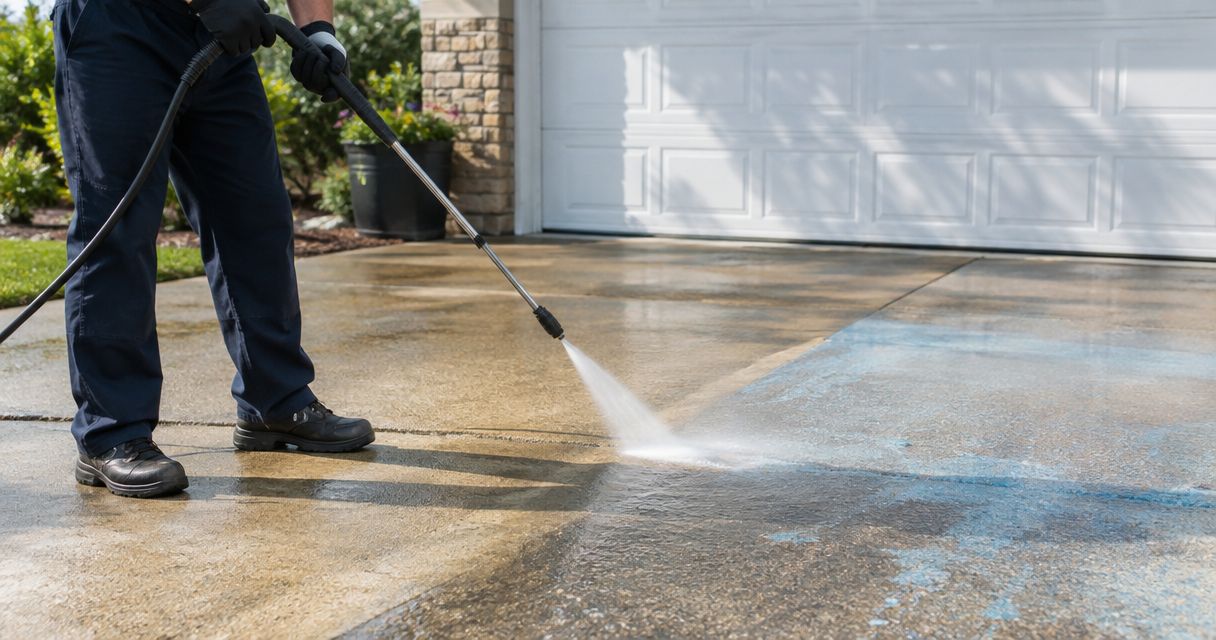
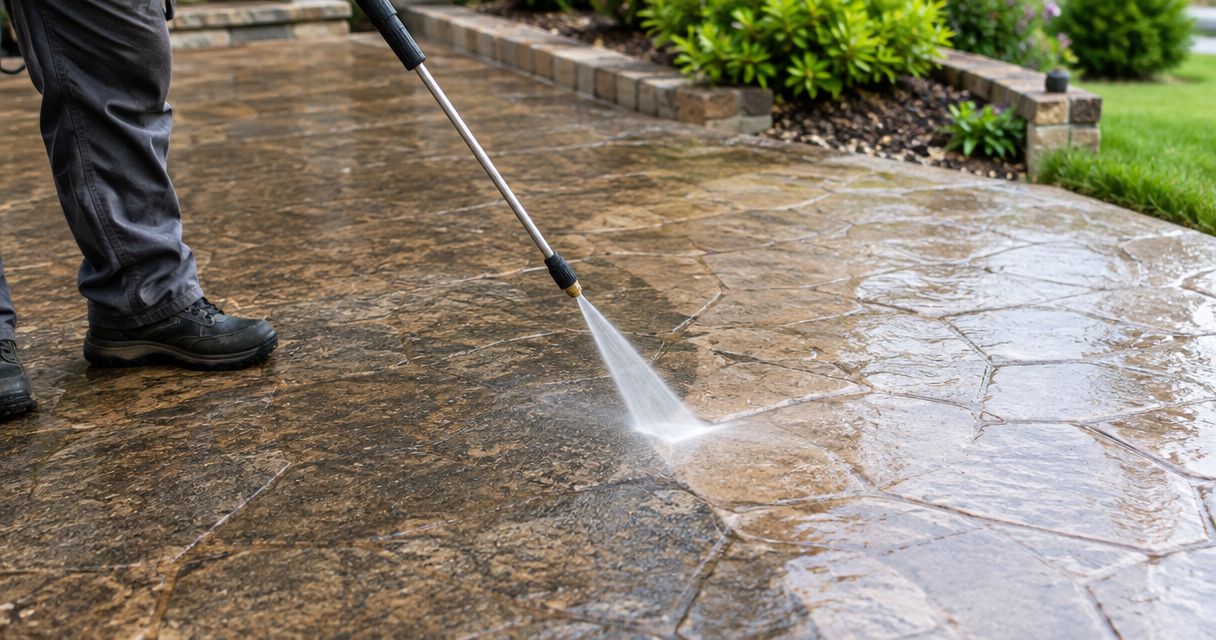
Yes, pressure washing can damage stamped concrete by stripping sealer, disturbing surface-applied color, or etching the concrete when the spray is too aggressive. For your 2026 cleaning project, match the method to the finish and its condition; cleaning does not repair worn sealer, damaged color, or an already deteriorating surface.
- Can pressure washing damage stamped concrete? Yes—excessive force can damage sealer, decorative color, and the concrete surface.
- Start with finish identification and a small test area, not a pressure setting copied from plain concrete.
- Stop if cleaning exposes grit, lifts coating, or creates a visibly rougher surface.
- SoCal EMM provides pressure washing and exterior cleaning services in Newport Beach and Orange County.
Why this matters
Stamped concrete has more to protect than its pattern. Your driveway or patio can also have decorative color and a protective coating, and those layers do not necessarily tolerate the same cleaning treatment as ordinary unfinished concrete.
A cleaner-looking strip is not proof that the cleaning method is safe. A concentrated spray can remove dirt and part of the finish together. Before choosing equipment, review how to choose pressure-washing PSI for concrete versus stucco, then confirm the requirements for your particular decorative surface.
Can pressure washing damage stamped concrete?
Yes. Damage occurs when the cleaning force or cleaner is incompatible with the concrete, decorative treatment, or sealer. A narrow spray held close to the surface concentrates force, while repeated passes over one spot increase exposure.
Use the table below to choose a starting approach for your 2026 cleaning plan. These are decision criteria, not assurances that a method suits every stamped finish.
| Approach | Best for | Main advantage | Main limitation |
|---|---|---|---|
| Gentle washing with a compatible cleaner and soft brush | Routine dirt on an intact finish | Starts without a high-pressure jet | Embedded stains can remain; the cleaner still needs approval for the finish |
| Controlled pressure washing after a test | Sound surfaces whose care instructions permit it | Helps remove attached soil | Incorrect technique can strip coating or etch concrete |
| Pause cleaning for finish assessment | Peeling, flaking, powdery, or visibly damaged surfaces | Avoids treating finish failure as dirt | Delays cleaning until the surface problem is understood |
Start with the least aggressive method that removes the soil without changing the finish. Do not increase pressure simply because a stain survives the first attempt. Identify the remaining mark before deciding what to do next.
What pressure-washing damage looks like
Watch for sharp-edged light patches, spray-shaped lines, exposed grit, or a change in texture. Those signs deserve investigation, particularly when they follow the path of the cleaning tool.
A color difference alone does not identify the cause. Dirt removal, wet concrete, worn sealer, and damaged decorative color can produce different-looking areas. Let the test area dry before comparing it with the surrounding surface, and stop immediately if material is visibly coming off.
Sealed stamped concrete: protect the coating first
An intact sealer changes how the concrete looks and responds to water. Aggressive washing can leave a patchy appearance if it removes or damages that coating unevenly.
Find the sealer name and its maintenance instructions before cleaning. Ask the installer or check your maintenance records rather than identifying the product by gloss alone; different coating systems can look similar.
- Check for peeling edges, cloudy patches, and visibly worn traffic paths.
- Use only cleaners permitted by the coating instructions.
- Test both the cleaner and the proposed washing method.
- Inspect the dry result for changes in sheen, color, and texture.
Do not treat washing as preparation for automatic resealing. First establish whether the existing coating is sound and what maintenance its manufacturer allows. Applying another coating is a separate decision, not a required response to every cleaning appointment.
Colored stamped concrete: identify where the color is
Decorative color can be incorporated into concrete or applied as part of a surface treatment. That distinction matters because a surface-applied treatment can be damaged without removing much of the concrete beneath it.
Do not assume that color running through the concrete makes aggressive washing harmless. The surface and any sealer still need protection. Likewise, a dark accent in a stamped recess is not automatically dirt that needs extra attention.
Ask whether the original installation included a stain, antiquing treatment, overlay, or other decorative finish. If the answer is unknown, use a cautious test and seek finish-specific guidance before washing the full area.
Preserve the intended color variation. Repeatedly targeting darker sections until every part looks identical can remove decorative character rather than contamination.
Worn or damaged stamped concrete: assess before washing
A flaking coating, loose surface material, and existing erosion need assessment before pressure washing. Cleaning does not reattach loose material or restore a damaged decorative layer.
Record the existing condition with clear photographs. Include worn edges, cracks, previous repairs, and areas that look different when dry. This gives you a useful reference when reviewing the result.
If the surface sheds grit during a gentle test, stop. Do not keep washing to make the rest match. A concrete or decorative-finish specialist can help determine whether the problem involves the coating, an overlay, or the concrete itself.
Why stamped-concrete cleaning risk varies
There is no single pressure setting that makes every stamped driveway safe. These factors determine how cautiously you need to proceed:
- Finish condition: Peeling sealer and loose decorative layers require a different response from an intact surface.
- Color treatment: Surface-applied color needs care that protects the treatment, not just the underlying slab.
- Spray concentration: Nozzle pattern and working distance affect how concentrated the water is when it reaches the surface.
- Time on one spot: Holding the spray still or repeatedly chasing a mark increases exposure in that area.
- Cleaner compatibility: A cleaning product must suit both the contamination and the decorative finish.
- Existing deterioration: Crumbling edges, weak repairs, and loose material are reasons to stop and assess before continuing.
A machine's advertised pressure does not describe the whole cleaning setup. The nozzle, distance, movement, surface condition, and cleaner all matter. Choose the process around the finish—not around the machine's maximum output.
How to plan a safer stamped-concrete cleaning
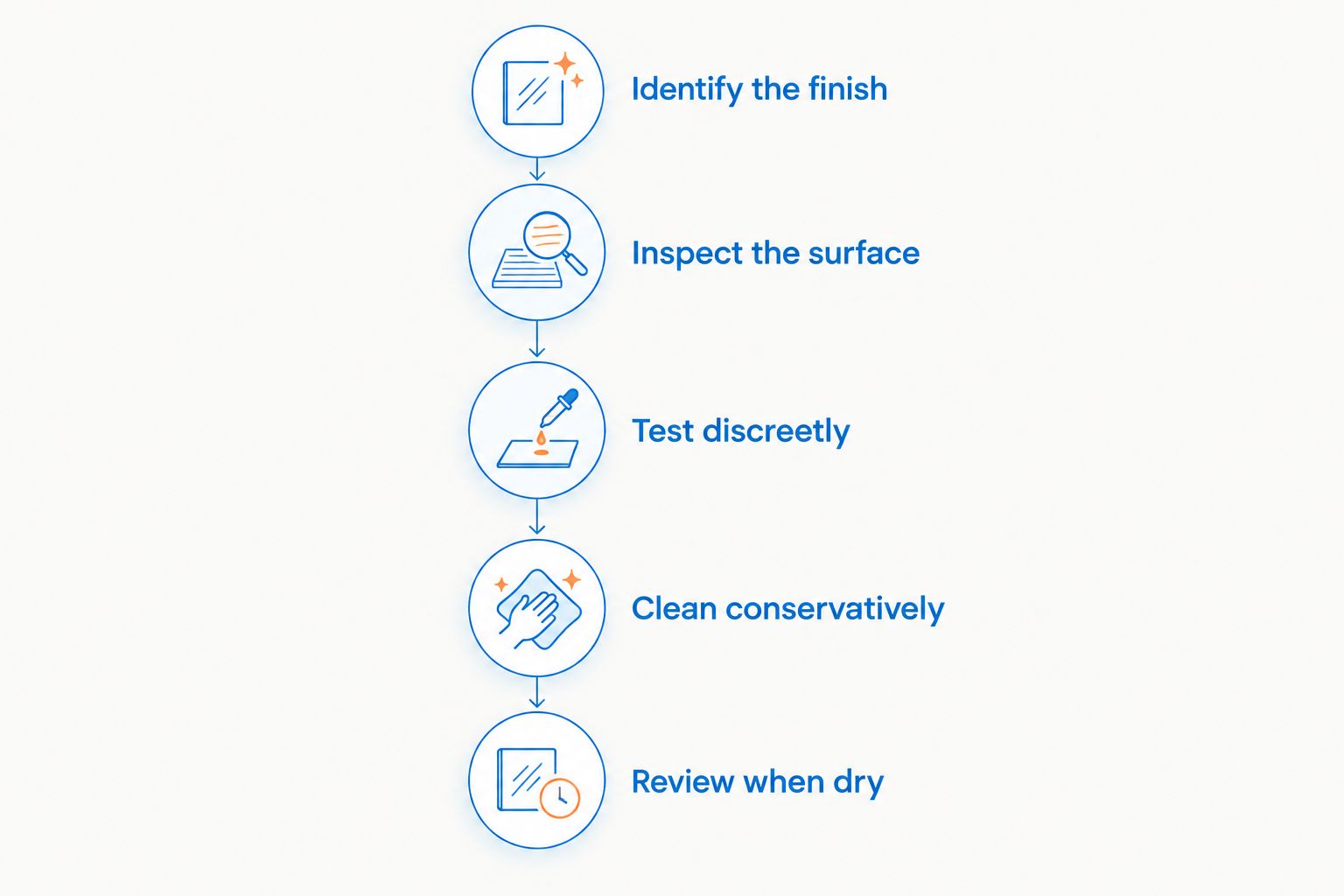
Use this sequence before your 2026 driveway or patio cleaning. Follow the surface and coating manufacturers' instructions wherever they are available, along with the equipment's safety directions.
1. Identify the finish
Gather installation records, sealer information, and any previous maintenance instructions. Tell the cleaner about repairs or decorative treatments rather than assuming they are obvious from appearance.
If you cannot identify the finish, say so. An unknown coating is a reason for a more cautious assessment, not a reason to use a standard concrete-washing recipe.
2. Inspect the surface
Walk the area while it is dry. Look for flaking, exposed aggregate, loose edges, worn coating, and damaged joints before water changes the appearance.
Mark concerns on your photos or describe their locations. Keep this homeowner inspection separate from a diagnosis: a visible defect tells you where to investigate, not necessarily what caused it.
3. Test discreetly
Choose an inconspicuous area that represents the finish you intend to clean. Use the proposed cleaner and method, following applicable product directions.
A successful test removes soil without lifting coating, producing grit, or changing the surface texture. Let the area dry before judging appearance; wet concrete can conceal differences that become obvious later.
4. Clean conservatively
Proceed only after the test is acceptable. Keep the work consistent and avoid directing concentrated spray at cracks, loose coating, or damaged edges.
Do not improvise stronger chemical mixtures or combine cleaning products. A stubborn mark needs identification and an appropriate treatment, not an uncontrolled increase in chemical strength or water force.
5. Review when dry
Check the cleaned surface under comparable lighting after it dries. Look for remaining soil separately from changes in sheen, color, and texture.
If something looks wrong, pause additional treatment. Photograph the area and review the finish instructions before deciding whether further cleaning is appropriate.
The test should represent the work you plan to perform. Testing one gentle method and then switching to a more aggressive setup does not establish that the new setup is suitable.
What should you ask before booking a cleaner?
For a 2026 appointment, ask how the cleaner will identify the finish, check for existing damage, and evaluate a test area. The useful answer describes a process rather than promising that stamped concrete is always safe to wash.
Ask these questions before authorizing the work:
- What information do you need about the existing sealer or decorative treatment?
- How will you check that the cleaner suits the finish?
- What changes in the test area would make you stop?
- Does the proposed work cover cleaning only, or any separate finish treatment?
- How will nearby plants, doors, and surrounding surfaces be protected?
SoCal EMM pressure washing services are for homeowners and businesses in Newport Beach and Orange County. For a residential stamped driveway or patio, describe the surface and any known coating issues when you request a quote. Ask whether the proposed approach suits that finish before approving the work.
Commercial entrances and shared walkways need a separate conversation about access and keeping people away from wet work areas. Do not treat a homeowner patio checklist as a complete commercial work plan.
Will pressure washing remove the sealer?
Pressure washing can remove or damage sealer, particularly where the coating is already failing or the spray is concentrated. It is not a controlled substitute for a specified coating-removal process.
If your goal is cleaning, unintended sealer removal is a warning sign. If your goal is coating removal, get instructions for that particular coating rather than trying to strip it by increasing pressure.
Can pressure washing fade stamped-concrete color?
Pressure washing can change stamped concrete's appearance by damaging surface-applied color or altering its sealer. That is different from simply washing away soil that was masking the original finish.
Compare dry areas before deciding that fading has occurred. If the cleaning leaves directional marks, missing decorative accents, or a changed texture, stop and have the finish assessed.
Should you seal stamped concrete immediately after washing?
Do not seal stamped concrete immediately just because washing is complete. The surface preparation, moisture condition, existing coating compatibility, and application requirements must match the chosen sealer's instructions.
For your 2026 maintenance plan, separate the cleaning decision from the coating decision. A clean surface is only one part of determining whether another sealer application is appropriate.
FAQ
Can pressure washing damage stamped concrete even if it is sealed?
Yes, pressure washing can damage sealed stamped concrete by disturbing the coating or the surface beneath it. Sealer does not make an aggressive spray harmless.
What PSI is safe for stamped concrete?
There is no universal safe PSI for every stamped-concrete finish. Follow the applicable finish instructions and evaluate the complete setup, including nozzle, distance, movement, and a dry test result.
Is gentle washing better than pressure washing for stamped concrete?
Gentle washing is the better starting point when it removes the soil without changing the finish. It still requires a compatible cleaner, and it does not resolve peeling sealer or deteriorating concrete.
Can a surface cleaner leave marks on stamped concrete?
Yes, a surface cleaner can leave marks if its spray damages the coating or surface, or if cleaning is uneven. The attachment does not remove the need for finish-specific instructions and a test area.
Why does my stamped concrete look white after washing?
A white appearance after washing needs diagnosis before more treatment. Coating issues and mineral deposits are different possibilities, so do not assume stronger washing or an acid cleaner is the answer.
Should I pressure wash stamped concrete that is peeling?
Do not pressure wash a peeling surface before identifying what is coming loose. Additional force can remove more material without correcting the underlying problem.
What should I tell SoCal EMM before requesting pressure washing?
Tell SoCal EMM that the surface is stamped concrete and describe any known sealer, decorative treatment, peeling, or previous repairs. Ask how those conditions affect the proposed pressure washing method.
One last thing
The most useful test result is the dry one. A wet patio can look evenly dark while hiding differences in coating or texture. Before committing to the full surface, inspect the dry test area from more than one viewing angle and compare it with your original photographs.
If the finish changes rather than just the dirt disappearing, stop there. Making the rest of the patio match a damaged test patch is not a repair.