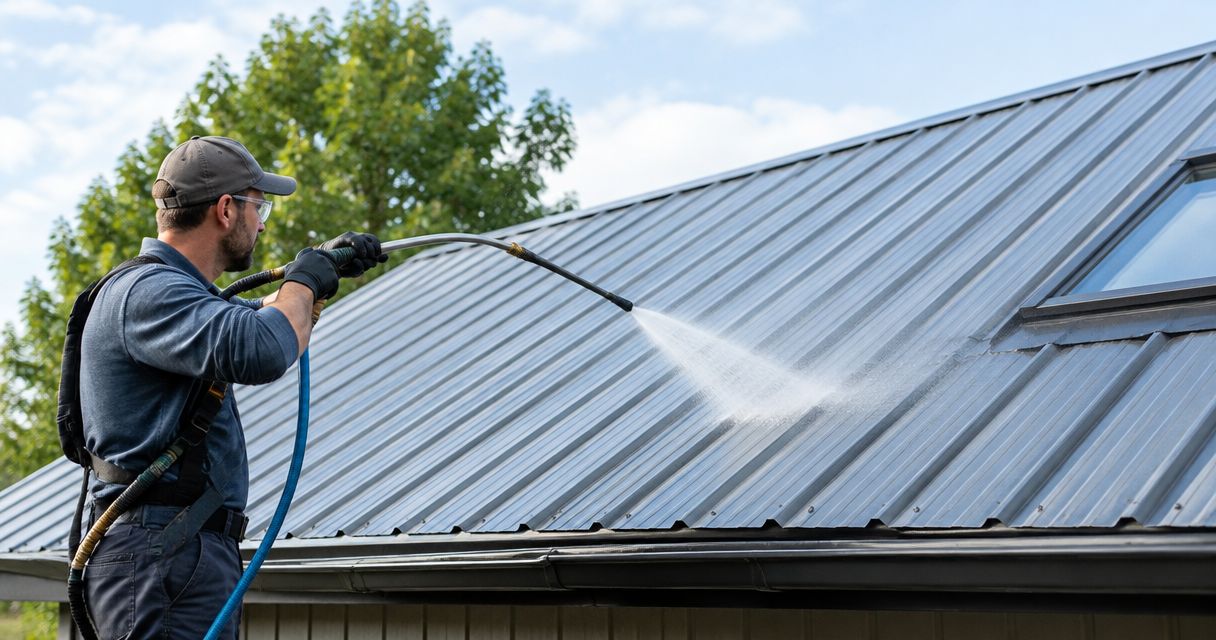
Yes—soft washing is safe for a metal roof when the cleaner, application method, and rinsing procedure match the roof manufacturer’s instructions and the finish is in sound condition. Low pressure alone does not make a treatment safe: an incompatible chemical, damaged coating, or poorly directed rinse can still harm the roof.
- Is soft washing safe for metal roofs? Yes, when the roof manufacturer approves the cleaner and cleaning method.
- Low pressure protects against force, not chemical damage; roof coatings still need a compatibility check.
- Rust, peeling finishes, loose fasteners, and leaks need assessment before roof cleaning.
- Socalemm provides roof soft washing in Newport Beach and Orange County; confirm your metal roof’s requirements before booking.
Is soft washing safe for metal roofs?
Soft washing is a suitable cleaning approach only when the entire process is compatible with your particular metal roof. Start with the panel or coating manufacturer’s maintenance instructions—not a cleaning method selected for a different roofing material.
A metal roof includes more than exposed panels. Its finish, seams, fasteners, sealants, flashing, and nearby gutters all affect how you should clean it. A cleaner approved for one surface is not automatically appropriate for everything it touches.
Use this comparison when discussing your 2026 roof-maintenance plan:
| Cleaning approach | Best for | Benefit | Limitation |
|---|---|---|---|
| Gentle water rinse | Loose dirt on a sound finish, where manufacturer instructions permit | Avoids unnecessary cleaner use | Does not address every stain or attached growth |
| Manufacturer-approved soft washing | Contamination requiring a compatible cleaning solution | Limits reliance on force | Incorrect chemistry or application still risks damage |
| Pressure washing | Roof systems whose manufacturer expressly permits the proposed method | Provides mechanical cleaning action | Poor technique risks coating damage or water intrusion |
Choose the least aggressive approved method that addresses the actual contamination. Do not treat a dark patch, rust mark, and peeling finish as the same cleaning problem.
Why this matters
A cleaner-looking roof is not the same as an undamaged roof. Aggressive cleaning can remove dirt while also affecting a protective finish or pushing water into vulnerable details.
For your Newport Beach or Orange County home, separate the cleaning decision from the repair decision. Discoloration calls for identification; corrosion, loose components, and leaks call for a roofing assessment before washing.
Socalemm provides residential roof soft washing and other exterior-cleaning services locally. Before arranging work, describe the roof material, known finish, and existing concerns so the discussion starts with the surface rather than an assumed treatment.
Painted metal roofs: protect the finish first
Painted metal roofing relies on a finish with its own cleaning requirements. Identify the panel manufacturer and finish system from your installation paperwork, maintenance records, or roofer before approving a cleaner.
Do not assume that every product labeled for roof cleaning is appropriate for your paint. The proposed cleaner, dilution, contact time, application conditions, and rinse instructions must all fit the finish manufacturer’s guidance.
Watch for peeling, blistering, scratches, and areas where the coating has worn away. These are reasons to pause, not reasons to increase cleaning strength. Washing does not restore missing paint or reverse coating failure.
For a 2026 cleaning appointment, send existing roof paperwork with your inquiry. Written maintenance instructions give the contractor something specific to follow and give you a clear basis for reviewing the proposed work.
Unpainted metal roofs: identify the actual surface
“Unpainted metal” does not describe a single cleaning specification. Bare metal, metallic protective coatings, and clear-coated finishes have different care requirements.
A visibly metallic surface does not prove that a strong cleaner is acceptable. Ask what material and protective treatment are present, then check the relevant maintenance instructions before introducing chemicals.
Do not expect a roof wash to make every panel look newly installed. Weathering and patina are not necessarily removable dirt. Attempts to erase them without identifying the surface can create a different appearance problem.
If you cannot establish what the roof is made from, stop at identification. A test patch helps evaluate a proposed treatment, but it does not replace the manufacturer’s compatibility guidance.
Why metal-roof cleaning safety varies
The phrase soft washing describes an approach, not a complete specification. These factors determine whether the proposed work fits your roof:
- Finish compatibility. The roof coating’s instructions determine which cleaners and techniques are acceptable. A method suitable for another roof is not evidence of compatibility.
- Existing condition. Exposed metal, peeling coatings, loose fasteners, and deteriorated sealants require assessment before washing. Cleaning is not a substitute for repair.
- Contamination type. Loose dust, organic growth, and corrosion require different decisions. Identify the material before selecting treatment.
- Application and rinsing. Pressure, spray direction, contact time, and thorough rinsing matter together. Low pressure does not excuse leaving incompatible residue behind.
- Weather and surface conditions. Wind affects spray control, while hot surfaces can dry cleaning solution too quickly. Follow the cleaner and roof manufacturer’s application restrictions.
- Runoff and nearby materials. Landscaping, gutters, painted walls, and other metals need protection appropriate to the cleaning solution. Plan where wash water will travel before applying anything.
These checks are more useful than a blanket promise that roof cleaning is safe. Ask for a method that addresses each one.
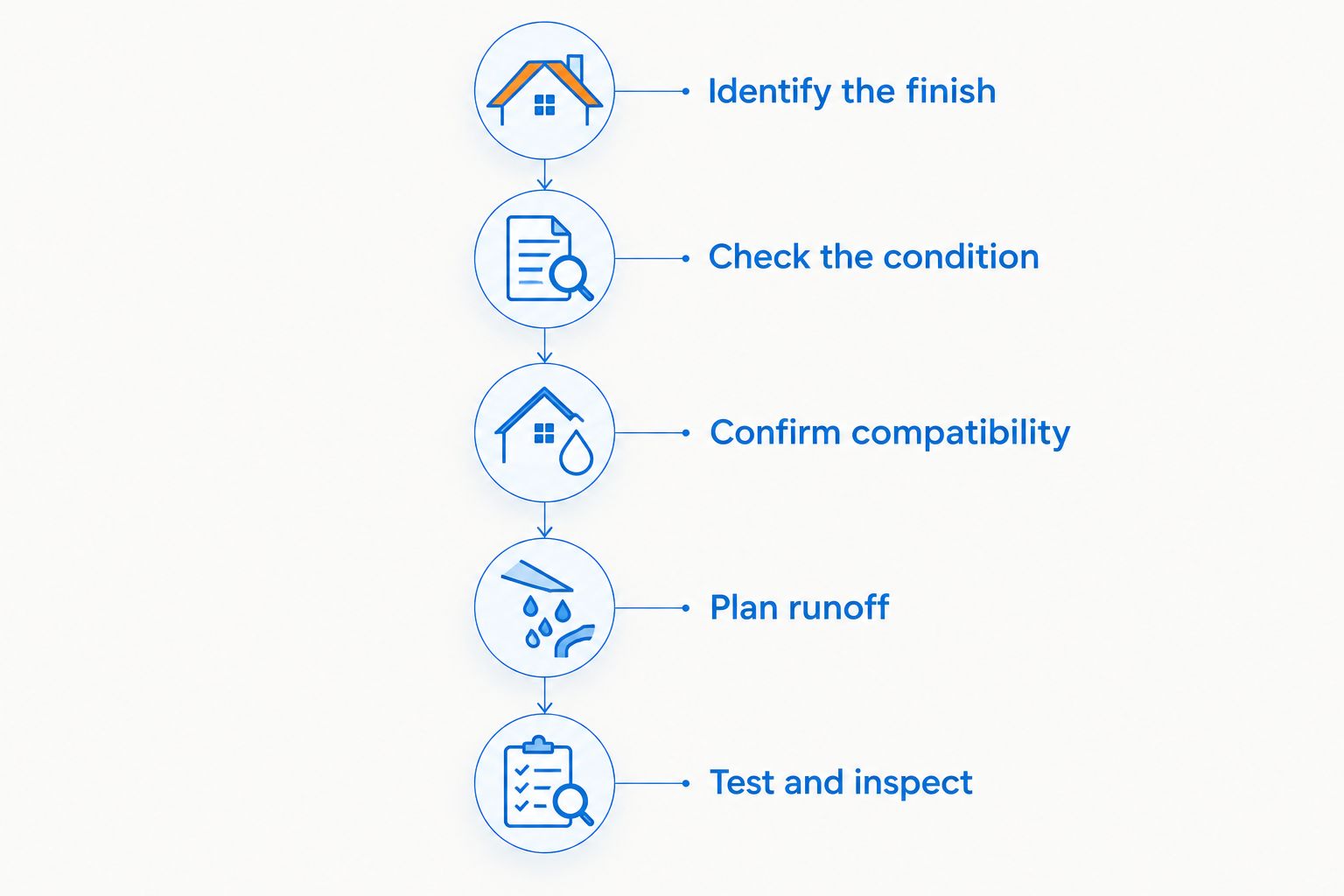
What should happen before a metal roof is soft washed?
A sensible 2026 cleaning plan follows a clear sequence. You do not need to climb onto the roof to begin gathering information or explaining your concerns.
- Identify the finish. Find the roof or coating manufacturer’s maintenance guidance. Tell the cleaner about repainting, repairs, or replacement panels because different areas can have different care requirements.
- Check the condition. Share ground-level photos of visible rust, loose components, peeling paint, and known leak locations. Have roofing defects assessed before cleaning begins.
- Confirm compatibility. Ask which cleaner and application method the contractor proposes. Check that plan against the roof instructions, including rinsing and any restrictions around adjacent materials.
- Plan runoff. Identify downspout outlets, planted areas, outdoor belongings, and surfaces below the roof. Discuss protection and wash-water handling before the appointment.
- Test and inspect. Have the contractor assess an inconspicuous test area where the manufacturer permits testing. After cleaning, review accessible areas for residue, finish changes, and unresolved stains without walking onto the roof yourself.
A test area is a checkpoint, not permission to ignore product instructions. Its purpose is to reveal an obvious problem before treating a larger area.
What should make you postpone roof cleaning?
Postpone cleaning when the roof needs diagnosis or repair first. An active leak, loose flashing, visibly failed sealant, or peeling finish changes the job from routine surface cleaning to a roofing concern.
Rust deserves particular attention. A stain deposited on the surface is different from corrosion of the roof itself, and washing cannot replace lost metal or a failed protective layer.
Stop if the proposed answer to every mark is more chemical strength, more pressure, or repeated scrubbing. Ask what the mark is and what the roof manufacturer permits before approving another attempt.
Also postpone work when the contractor cannot explain the runoff plan or intends to walk on wet panels without an appropriate access and fall-protection plan. You should not enter the roof area to supervise or inspect the work.
What should you ask before booking in 2026?
Ask for a description of the work, not just the name of the cleaning method. “We soft wash” does not tell you whether the process suits a painted standing-seam roof, an exposed-fastener roof, or an unfamiliar finish.
Use these questions when reviewing the proposal:
- Which roof and finish instructions will guide the cleaning?
- What contamination is the treatment intended to remove?
- What happens if you find corrosion or coating failure?
- How will you protect seams, penetrations, and nearby materials?
- How will you handle runoff and inspect the result?
Socalemm roof soft washing is best suited to Newport Beach and Orange County homeowners seeking a local exterior-cleaning service. For a metal roof, confirm material and finish compatibility before treating that service as the right fit.
When you request a quote, include available roof paperwork, ground-level photos, and any history of leaks or recoating. Describe the problem you want addressed rather than requesting a particular chemical.
Can soft washing damage a metal roof coating?
Yes—soft washing can damage a metal roof coating if the cleaner or application is incompatible with that finish. Low pressure reduces mechanical force; it does not prevent chemical reactions, discoloration, or damage caused by inappropriate contact time.
Never assume that a cleaner is safe because it worked on neighboring siding or another roof. Require surface-specific instructions and stop if a test reveals an unexpected change.
Is bleach safe to use on a metal roof?
Bleach is not automatically safe for a metal roof. Sodium hypochlorite cleaners are corrosive to certain metals, and acceptable use depends on the roof manufacturer’s instructions and the other materials exposed during cleaning.
Do not copy an asphalt-shingle cleaning recipe onto metal panels. Use only a treatment approved for the roof system, follow its directions, and never mix cleaning products.
Will soft washing fix rust or a leaking metal roof?
No—soft washing does not repair rust damage or stop roof leaks. Cleaning removes suitable surface contamination; it does not replace damaged metal, restore missing coatings, or repair failed roof details.
For your 2026 maintenance records, keep cleaning findings separate from roofing repair recommendations. That distinction prevents a cosmetic improvement from being mistaken for a completed repair.
FAQ
Is soft washing safe for an older metal roof?
An older metal roof needs a condition and finish assessment before soft washing. Age alone does not establish compatibility; peeling coatings, corrosion, loose fasteners, and leaks need attention before cleaning.
Can I soft wash my metal roof myself?
Do not climb onto a metal roof to attempt cleaning without appropriate training, access equipment, and fall protection. You can gather maintenance paperwork and take photos from the ground, then discuss an approved method with a qualified contractor.
Is pressure washing better than soft washing for metal roofing?
Neither method is automatically better for every metal roof. Follow the roof manufacturer’s permitted cleaning method and choose the least aggressive approved treatment that addresses the contamination.
Will soft washing remove every dark mark from metal roofing?
No—soft washing does not remove every dark mark from metal roofing. Dirt, organic growth, weathering, and coating damage are different conditions, so identify the mark before deciding what cleaning can achieve.
Can roof-cleaning runoff damage my plants?
Roof-cleaning runoff can harm landscaping when the cleaning solution is unsuitable for plant exposure. Discuss protection, downspout discharge, and runoff handling before work begins rather than assuming low pressure makes the solution harmless.
Can a contractor clean solar panels while washing my metal roof?
Solar panels need their own manufacturer-approved cleaning method. Do not assume a roof-cleaning solution, spray pattern, or access plan is suitable for the panels or their electrical components.
How often should I have my metal roof soft washed?
Set the cleaning schedule from the roof manufacturer’s maintenance guidance and the roof’s observed condition. Do not apply a fixed washing interval without considering the finish, contamination, and repair needs.
One last thing
Ask what should remain after cleaning—not just what should disappear. An intact finish matters more than removing a stubborn mark at any cost. If discoloration reflects weathering or coating damage, stopping the cleaning process is the correct decision.
Keep a copy of the approved method and ground-level before-and-after photos with your roof records. Those records help you distinguish new contamination from an existing finish issue at the next inspection.