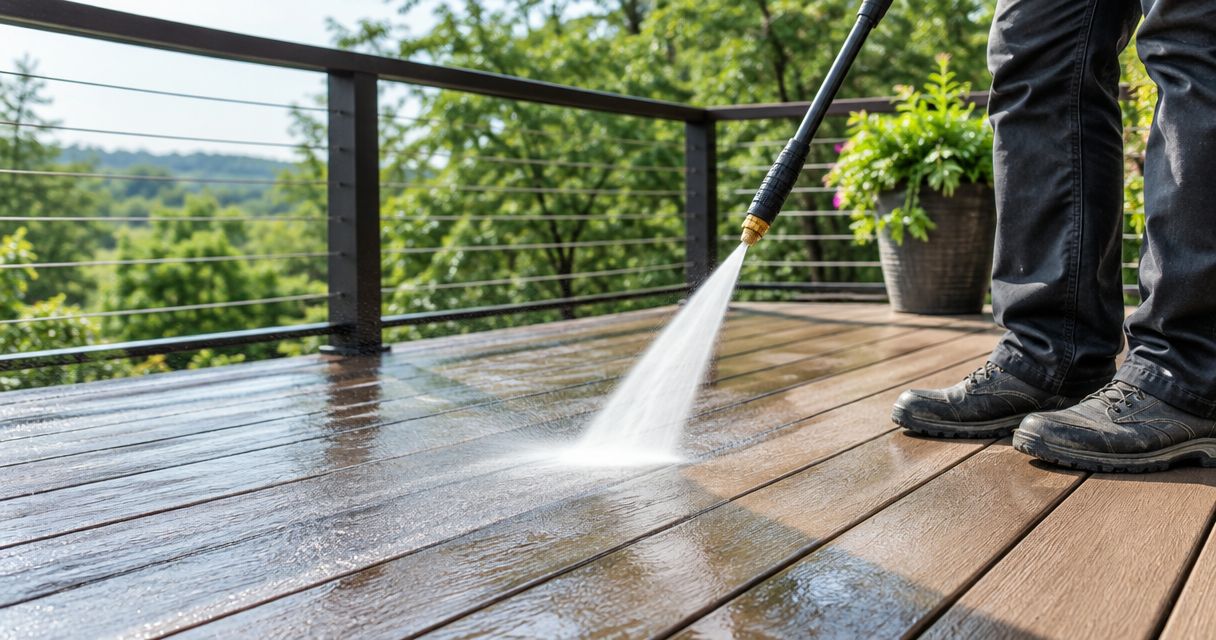
Pressure washing is safe for composite decking only when the manufacturer permits it for your exact boards and you follow its cleaning instructions. Excessive pressure, an unsuitable nozzle, or spraying too close can damage the surface; when you cannot identify the decking, start with manufacturer-approved hand cleaning rather than a pressure washer.
- Is pressure washing safe for composite decking? Only when the exact decking manufacturer's instructions permit it.
- Choose a manufacturer-approved cleaner and soft brush before increasing water pressure.
- Stop if cleaning changes the deck's texture, sheen, or color after drying.
- Socalemm provides Orange County exterior cleaning; confirm the proposed method before booking work on composite decking.
Is pressure washing safe for composite decking?
Permission comes from the decking instructions, not the pressure washer's settings. For your 2026 cleaning project, identify the manufacturer and product line before choosing equipment. A cleaning method approved for one composite board does not establish that it is suitable for another.
Use this comparison to choose your starting point:
| Cleaning approach | Best for | Main advantage | Main limitation |
|---|---|---|---|
| Soft brush and approved cleaner | Routine dirt on decking whose care instructions allow brushing | Lets you work on dirt without a concentrated water jet | Requires manual work; excessive scrubbing still risks surface damage |
| Garden-hose rinse | Removing loosened dirt and cleaner, where permitted | Avoids the concentrated spray of a pressure washer | Does not replace stain treatment or brushing |
| Manufacturer-permitted pressure washing | Decking with explicit pressure-washing instructions | Provides a controlled way to rinse or clean when approved | Wrong settings, attachments, or technique can damage boards |
Do not treat these methods as interchangeable. Cleaner compatibility, surface condition, and rinsing requirements matter whichever approach you choose.
Why this matters
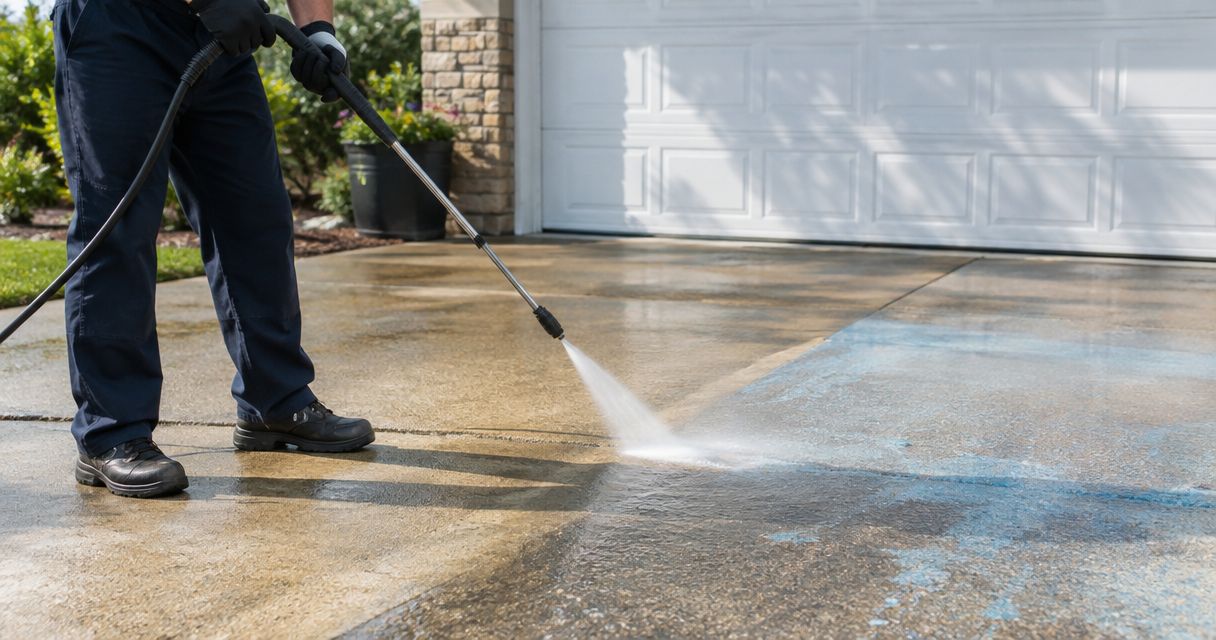
Composite decking is not concrete. A method used on your driveway is not automatically appropriate for a deck, even when both surfaces have similar-looking dirt.
For Newport Beach and Orange County homeowners, the useful starting point is a surface-specific cleaning plan. When you request an exterior-cleaning quote from Socalemm, include the decking identification and ask whether the proposed approach follows its care instructions. Do not assume a general pressure-washing request communicates those restrictions.
Cleaning should remove unwanted material without changing the board underneath it. A cleaner-looking patch with a different texture is not a successful result.
Start with the exact decking, not a generic pressure limit
Before cleaning composite decking in 2026, make 3 checks: product identity, care instructions, and surface condition. These checks tell you whether pressure washing belongs in the plan at all.
Identify the boards
Look for purchase records, installation paperwork, spare boards, or product markings that are accessible without dismantling the deck. Record the product line, not just the manufacturer's name.
Appearance alone is not enough. Similar colors and grain patterns do not establish that boards have the same construction or cleaning requirements. If the deck includes replacement boards, identify those separately.
Read the applicable care instructions
Find the cleaning guidance for the actual product. Check whether it permits pressure washing and whether it specifies a pressure limit, nozzle, working distance, cleaner, or spray direction.
A maximum setting is a limit, not a target. Do not borrow a pressure recommendation from a different decking product or assume that lowering the machine's setting makes every attachment suitable.
Inspect the surface before wetting it
Look for loose boards, damaged edges, scratches, peeling coatings, and areas that already look different. Photograph those conditions before cleaning so you can distinguish existing defects from changes caused during the work.
If you find a coating or previous restoration treatment, identify it too. The board manufacturer's original instructions do not necessarily address a later-applied finish.
How to clean composite decking without guessing
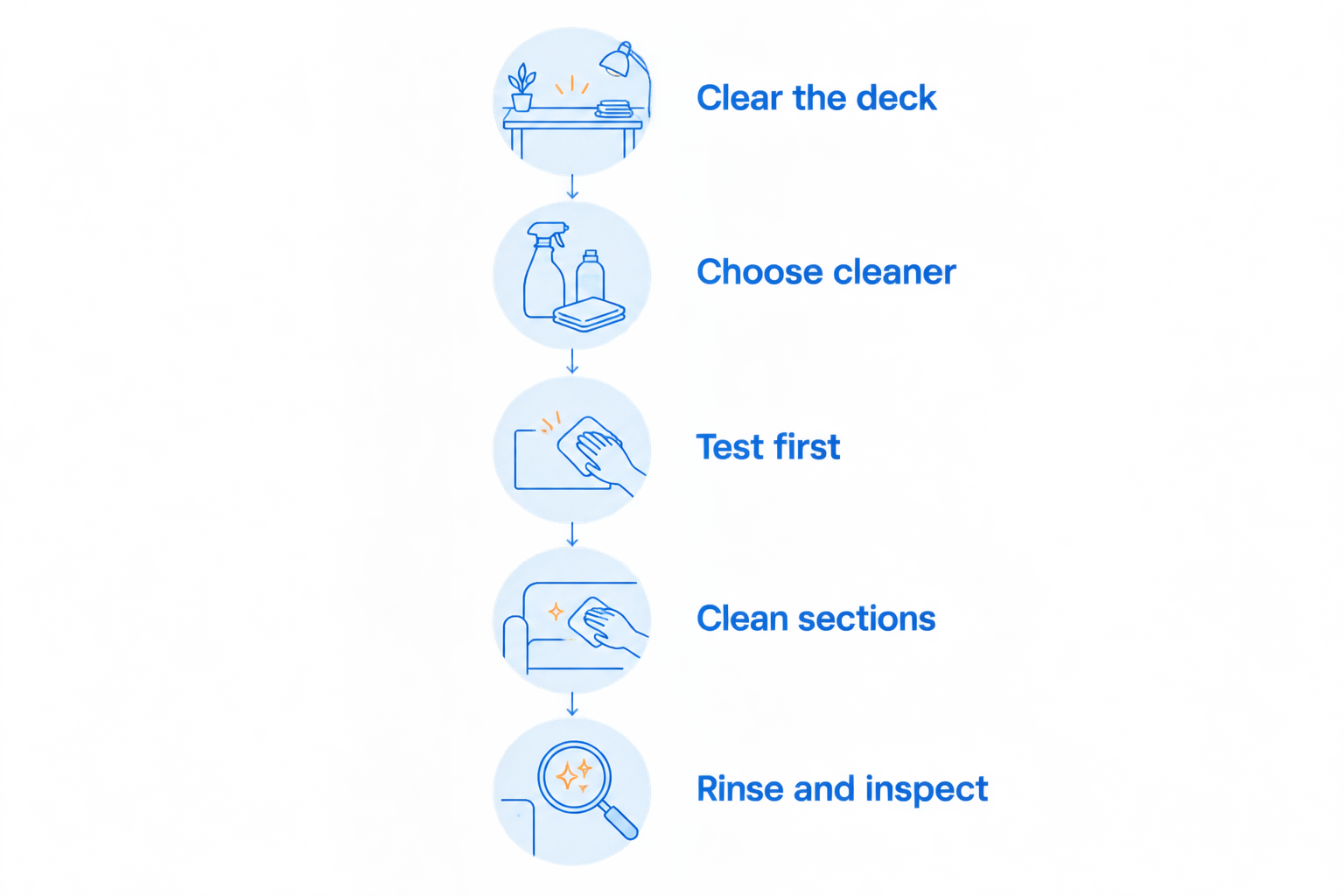
Separate the job into 2 stages: testing and full cleaning. Complete the test and inspect the dry result before treating the rest of the deck.
1. Clear the deck and plan the rinse
Move furniture, planters, mats, and loose items out of the work area. Sweep away leaves and grit so you are not dragging debris across the boards while brushing.
Identify nearby doors, electrical equipment, planting beds, and the path rinse water will take. Follow the cleaner's label for protecting surrounding surfaces and handling runoff; do not simply wash everything toward the nearest drain.
2. Choose a compatible cleaner
Use a cleaner permitted by the decking care instructions for the material you want to remove. General dirt, food grease, and mineral deposits are different cleaning problems, so identify the mark before choosing a treatment.
Follow the product label for dilution, application, contact time, and rinsing. Never mix cleaning chemicals, and do not assume that a stronger mixture is a safer way to avoid scrubbing.
3. Test a small, inconspicuous area
Test the complete proposed process, including the cleaner, brush, rinse method, and any permitted pressure-washing technique. A water-only test does not establish that the cleaner is compatible.
Let the test area dry before judging it. Compare its texture, sheen, and color with the surrounding board in similar light. Stop if the process leaves a visible surface change.
4. Clean manageable sections
Work in sections you can apply, clean, and rinse according to the label. Do not spread cleaner across the entire deck if you cannot control its contact time.
Use the brush type and brushing direction specified by the decking manufacturer. If pressure washing is allowed, follow all equipment and technique restrictions together rather than selecting only the pressure limit.
5. Rinse and inspect after drying
Remove cleaner and loosened dirt as directed, including residue near board edges and gaps. Keep the area clear of foot traffic while it is wet and slippery.
Inspect the dry deck before repeating treatment. A remaining mark calls for reassessment, not an automatic increase in pressure.
Why pressure-washing safety varies
A safe composite-deck cleaning plan depends on more than the machine's advertised output. Review these factors before starting:
- Board construction and care requirements: The exact product determines which cleaning methods and chemicals are acceptable.
- Existing surface condition: Scratches, damaged edges, and applied coatings require attention before cleaning begins.
- Spray concentration: Nozzle choice and working distance affect how concentrated the water is when it reaches the board.
- Operator technique: Holding a spray in one place or moving too close changes the treatment the surface receives.
- Cleaner compatibility: A permitted water-cleaning method does not make every detergent or stain remover acceptable.
- Type of contamination: Loose dirt and a persistent stain call for different decisions; more pressure is not a diagnosis.
This is why a single online pressure figure cannot answer the safety question for every composite deck. Your 2026 cleaning checklist should record the product-specific requirements rather than a generic setting.
When should you avoid pressure washing composite decking?
Avoid pressure washing when you cannot confirm that the exact decking product permits it. Also stop when the boards have damage or an unidentified finish that needs assessment first.
Warning signs during a test include new roughness, visible spray lines, lifted surface material, and a change in sheen after drying. Do not continue across the deck hoping that additional passes will make the appearance uniform.
If you already see spray marks, stop cleaning and photograph the dry surface. Ask the decking manufacturer about the next step before sanding, coating, or applying a stronger chemical treatment. A repair intended for wood is not automatically suitable for composite decking.
Is hand cleaning better than pressure washing composite decking?
Hand cleaning is the better starting point when the manufacturer approves it and pressure-washing permission is unclear. An approved cleaner and suitable soft brush let you address routine dirt without introducing a concentrated spray.
Hand cleaning still has limits. Abrasive pads, incompatible chemicals, and forceful scrubbing can damage a finish, while a hose rinse alone does not resolve every stain. Choose the least aggressive approved method that addresses the actual problem.
Do not substitute a wood-deck restoration process. Composite and wood require separate care decisions, even when they share the same outdoor space.
What should you ask before hiring a deck cleaner?
Ask the cleaner to explain the proposed method in terms of your decking, not just the equipment they own. A useful conversation covers product identification, cleaner compatibility, a test area, and the response if a stain remains.
For a 2026 quote request, send 4 photos: an overall view, a stain close-up, an existing-damage close-up, and accessible product identification. Add any care documents separately. Photos help define the discussion, but they do not replace checking the surface before work.
Socalemm is best for Newport Beach and Orange County homeowners seeking local residential exterior-cleaning services. For composite decking, confirm the project's fit and the cleaning method before booking; general service availability does not establish approval for a particular board.
Keep the request residential if you are arranging work at your home. Shared commercial or managed-property decking needs a separate scope addressing access, work boundaries, and keeping people away from wet surfaces.
Request an exterior-cleaning quote
Share your decking information, surface photos, and cleaning concerns before choosing a method.
FAQ
What pressure setting is safe for composite decking?
The safe limit is the one specified for your exact decking product, if its manufacturer permits pressure washing. Follow the nozzle, distance, cleaner, and technique requirements as well; a pressure setting alone does not establish safety.
Can I pressure wash composite decking if I don't know the brand?
Do not pressure wash unidentified composite decking until you establish its care requirements. Look for installation records or accessible product markings, and confirm an approved cleaning method before treating the surface.
Is a soft brush safe for composite decking?
A soft brush is an appropriate option when the decking manufacturer recommends it. Use the specified cleaner and technique, test first, and avoid abrasive pads or forceful scrubbing.
Can I use bleach on composite decking?
Use a bleach-containing cleaner only if the decking instructions permit that product or treatment. Follow both the decking guidance and the cleaner label, and never mix cleaning chemicals.
Can pressure washing remove every stain from a composite deck?
No, pressure washing does not resolve every composite-deck stain. Identify the mark and use an approved treatment; increasing pressure can damage the board without correcting discoloration.
Should I inspect a test patch while the deck is wet?
Inspect the test patch after it dries before approving the full cleaning process. Compare texture, sheen, and color with an untreated area under similar lighting.
What should I send Socalemm before asking about composite deck cleaning?
Send Socalemm the decking manufacturer and product line if known, care instructions, and photos showing the deck and problem areas. Ask whether the proposed exterior-cleaning method is suitable for that exact decking before scheduling.
One last thing
A stain that remains is a reason to change the diagnosis, not automatically the pressure. Before another pass, check whether you are looking at dirt, residue, an existing scratch, or a change in the board itself.
For your 2026 deck clean, write the stop condition into the plan: no extra pressure, stronger chemical, or abrasive treatment without checking the applicable care instructions. That decision matters more than getting every board finished in the same session.