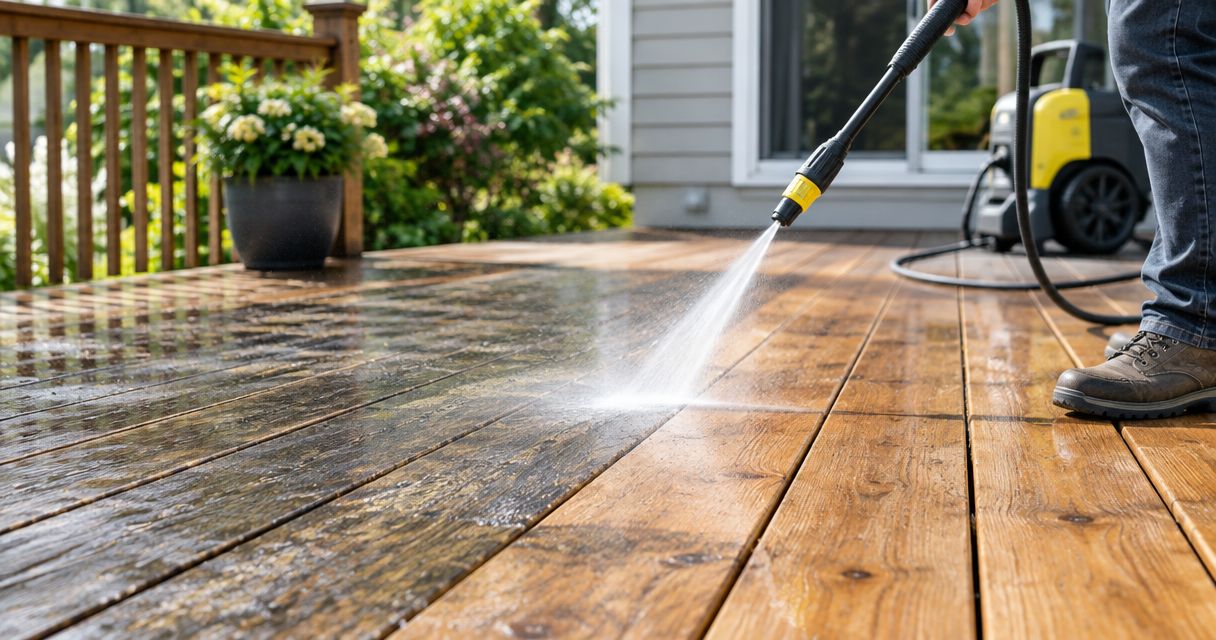
Yes, it is safe to pressure wash a wood deck when the boards are sound, the decking and finish instructions permit it, and a test patch shows no damage. Pressure washing can gouge wood, raise surface fibers, or strip a finish, so use a gentler cleaning method when those conditions are not met.
- Is it safe to pressure wash a wood deck? Yes, if the wood, finish, and test patch support it.
- Socalemm provides residential pressure washing in Newport Beach and Orange County; ask about your specific deck before booking.
- Gentle brushing and a wood-compatible cleaner offer more control when pressure washing is unsuitable.
- Stop immediately if cleaning leaves grooves, fuzzy fibers, splinters, or unwanted finish removal.
Is it safe to pressure wash a wood deck?
Pressure washing is a conditional choice, not the default for every wood deck. Match the cleaning method to the board condition, existing coating, and manufacturer's care instructions before you turn on the machine.
For homeowners considering Socalemm, ask whether the proposed residential pressure washing method suits your particular wood and finish. General exterior-cleaning experience does not replace a deck-specific assessment.
| Cleaning approach | Best for | Main advantage | Main limitation |
|---|---|---|---|
| Gentle brushing with a wood-compatible cleaner | Routine cleaning where the care instructions permit it | Gives you direct control over agitation | Requires physical work and thorough rinsing |
| Controlled pressure washing | Sound decking whose care instructions allow it | Helps rinse loosened surface contamination | Can damage wood or remove coating when used incorrectly |
| Repair or refinishing assessment before cleaning | Soft, splintered, loose, or peeling surfaces | Addresses the condition that cleaning cannot fix | Postpones the cleaning job and requires a separate scope |
These are different jobs. Removing dirt, removing an old finish, and repairing damaged boards should not be treated as the same service.
Why this matters
A wood deck is not a concrete driveway. A concentrated water stream can cut into the surface rather than simply lift dirt, and repeated passes over a stubborn mark can leave a depression.
For your 2026 deck-maintenance plan, prioritize an intact surface over an immediately uniform color. Weathered wood, old stain, and surface contamination do not all respond to the same treatment.
A wet board also conceals some texture and color differences. Judge the test area after it dries, not only while the water makes everything look darker.
Check the deck before choosing a cleaning method
Make these 3 checks before deciding whether pressure washing belongs in the job. If a check raises a concern, resolve that concern before cleaning the whole deck.
Board condition
Look for loose boards, projecting fasteners, splintered edges, deep cracks, and visibly deteriorated areas. Do not use pressure washing to investigate questionable wood or to remove splinters.
If a board feels soft under normal use, keep people away from that area and arrange an assessment. Cleaning cannot restore structural strength.
Pay attention to stairs, railing connections, board ends, and places where water collects. These areas need inspection even if the main walking surface looks acceptable.
Existing finish
Identify whether the surface has paint, a film-forming coating, a penetrating stain, or no known finish. Check the coating's cleaning instructions rather than assuming every stained deck tolerates the same treatment.
Peeling coating changes the scope. Pressure washing that removes loose coating is no longer simply washing dirt away, and the remaining surface can require additional preparation before recoating.
If you cannot identify the finish, avoid promising an even appearance from cleaning alone. Start with an inconspicuous test and decide whether a refinishing assessment is necessary.
Decking instructions
Use the decking supplier's care guidance when you know the material. Wood species, surface condition, and previous treatments affect which cleaning methods are appropriate.
If the boards are composite rather than solid wood, use the composite manufacturer's instructions. A wood-deck guide is not a substitute for product-specific care directions.
Keep those instructions with your 2026 maintenance notes. The next cleaning decision should start with the material, not with whichever machine is available.
How to clean a wood deck without making damage worse
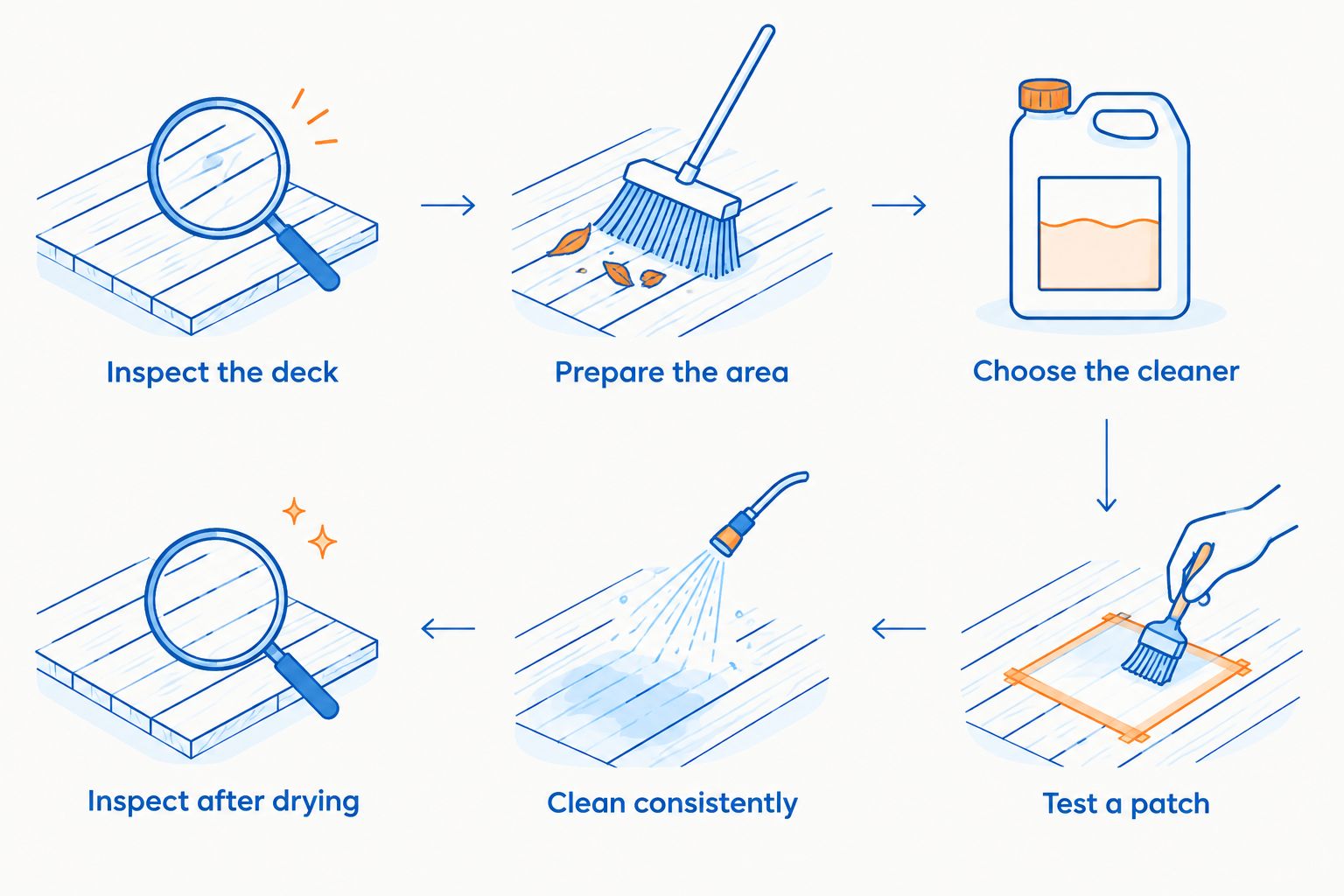
Use the following 6 steps as a decision sequence, not as a substitute for your cleaner, equipment, and decking instructions. A failed test means changing the method, not increasing force.
- Inspect the deck. Confirm the boards and connections are suitable for access and cleaning. Address loose fasteners and damaged areas before introducing water or cleaner.
- Prepare the area. Remove furniture, rugs, planters, and loose debris. Protect nearby items according to the cleaner's label, and plan where rinse water will travel.
- Choose the cleaner. Select a product labeled for the wood and cleaning task. Follow its dilution, application, dwell, protective-equipment, and rinsing directions; never mix cleaning products.
- Test a patch. Use an inconspicuous area and the least aggressive permitted method. If pressure washing is allowed, follow the equipment and decking instructions for the nozzle and working distance.
- Clean consistently. Keep the spray moving, work with the board direction, and avoid dwelling on one spot. Do not chase a remaining stain with repeated close-range passes.
- Inspect after drying. Check texture, color, remaining coating, and any raised fibers before continuing or applying a finish. Follow the coating manufacturer's requirements for surface preparation and dryness.
For a 2026 cleaning appointment, share the board material, known finish, visible damage, and cleaning goal before work begins. Photographs help describe the scope, but the surface still needs inspection before a method is selected.
Do not transfer settings from a driveway-cleaning job to a deck. The surface response and applicable care instructions determine whether the approach is acceptable.
Why pressure-washing safety varies
The question is not simply whether a pressure washer is powerful. These factors determine how the water and cleaning solution interact with the deck:
- Wood condition: Weathered, split, or deteriorated boards need a different decision from sound boards. Visible damage is a reason to pause, not increase cleaning intensity.
- Finish condition: An intact coating and a peeling coating present different risks. Cleaning should not unintentionally become coating removal.
- Spray concentration: A concentrated stream focuses force on a smaller area. Follow the permitted nozzle guidance and avoid assuming that every attachment is suitable for wood.
- Working technique: Distance, movement, and repeated passes affect the result. Holding the spray in one place increases the chance of uneven surface removal.
- Cleaner compatibility: A product must suit the substrate and task. A chemical used elsewhere on the property is not automatically appropriate for decking.
- Moisture and drying: Water remaining in the wood matters when refinishing follows cleaning. Use the finish manufacturer's dryness requirements rather than a fixed calendar promise.
A machine setting alone does not establish safety. The correct decision combines instructions, surface condition, technique, and the dried test result.
What are the signs that pressure washing is damaging the deck?
Stop when the surface develops grooves, fuzzy fibers, fresh splinters, or unwanted coating removal. Do not finish the remaining boards just to make the damage look consistent.
Raised grain feels rough after the wood dries. Gouges show actual surface loss, while distinct pass marks indicate uneven cleaning or material removal.
Shut down the equipment before inspecting the area closely. Never put your hand into the spray or use the jet to clean clothing, footwear, or skin.
After the deck dries, assess the damaged section before deciding on sanding, board repair, or refinishing. Continuing to wash will not reverse removed wood.
Is gentle brushing better than pressure washing for a wood deck?
Gentle brushing is the better starting point when you need control and the deck's care instructions allow it. A compatible cleaner and suitable brush let you work on surface contamination without directing a concentrated jet at the boards.
That approach still needs care. An overly stiff brush, unsuitable chemical, or inadequate rinse can create its own problems, so follow the product and decking directions.
Pressure washing earns a place only when it suits the surface and passes the test. It is not a necessary step in every deck-cleaning routine.
Should you pressure wash a deck before staining it?
Pressure washing is not automatically required before staining. The purpose of preparation is to produce the clean, sound, properly prepared surface specified by the stain manufacturer.
Separate the work into 2 stages: cleaning and coating preparation. Removing dirt does not prove that the old finish is compatible, loose fibers are addressed, or the wood is dry enough to coat.
For a 2026 refinishing project, read the stain instructions before booking the wash. That keeps the cleaning method aligned with the finish you intend to apply rather than forcing the finishing plan to accommodate an unsuitable wash.
When should you ask for professional help?
Ask for an assessment when you cannot identify the coating, the surface is already splintered, access is difficult, or cleaning is part of a larger refinishing job. A contractor should explain the proposed method and its limitations before starting.
Socalemm residential pressure washing is best suited to homeowners seeking exterior cleaning in Newport Beach and Orange County. For a wood deck, confirm material suitability and the exact scope rather than assuming deck restoration is included.
Useful questions include:
- How will the wood and existing coating be assessed?
- What happens if the test patch raises fibers or removes finish?
- Does the quote cover cleaning only, or any separate preparation work?
- How will nearby surfaces and rinse-water runoff be handled?
- What should the homeowner inspect after the deck dries?
The benefit of hiring help is having someone handle the agreed cleaning work. The limitation remains the same: cleaning cannot repair deteriorated boards or guarantee a uniform finish across differently weathered wood.
FAQ
Is it safe to pressure wash a wood deck in 2026?
Yes, when the boards are sound, the decking and finish instructions permit it, and a test patch dries without damage. Stop if the surface develops grooves, raised fibers, splinters, or unwanted finish removal.
What pressure should I use to wash a wood deck?
Use only a setting and nozzle permitted by the decking, finish, and equipment instructions. There is no single setting that establishes safety across different woods, coatings, working distances, and surface conditions.
Can I pressure wash an old painted wood deck?
Do not pressure wash a painted deck until you have assessed the coating and its preparation requirements. Peeling paint makes the job a coating-removal question, and unknown older coatings need assessment before disturbance.
Can pressure washing remove deck stain?
Yes, pressure washing can remove or unevenly strip deck stain. If your goal is cleaning rather than stripping, unwanted stain removal is a reason to stop and reassess the method.
How long should a deck dry before staining?
Let the deck reach the dryness required by the stain manufacturer before applying the finish. Weather, airflow, board condition, and moisture retention prevent a fixed waiting period from fitting every deck.
Is a soft-wash roof cleaner safe to use on wood decking?
A roof-cleaning product is not automatically suitable for wood decking. Use only a cleaner whose label permits the substrate and task, and follow the deck and finish care instructions.
Does Socalemm clean wood decks in Orange County?
Socalemm provides residential pressure washing and exterior cleaning in Newport Beach and Orange County. Ask whether your specific wood deck and finish suit the proposed service, and confirm the scope before booking.
One last thing
Make your final decision on a dry test patch, not a wet one. Wet wood can look evenly colored while concealing rough fibers and uneven finish removal.
For your 2026 maintenance record, save a photograph of the dry test area alongside the cleaner and finish instructions. That gives the next person maintaining the deck a useful starting point without guessing what the surface tolerated.