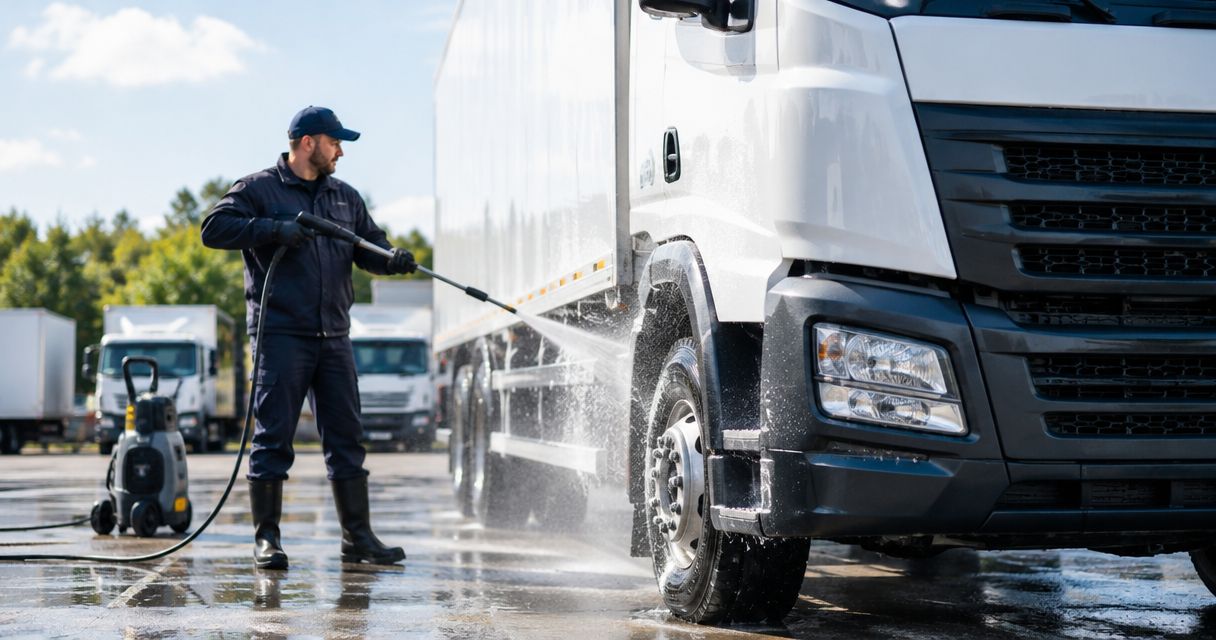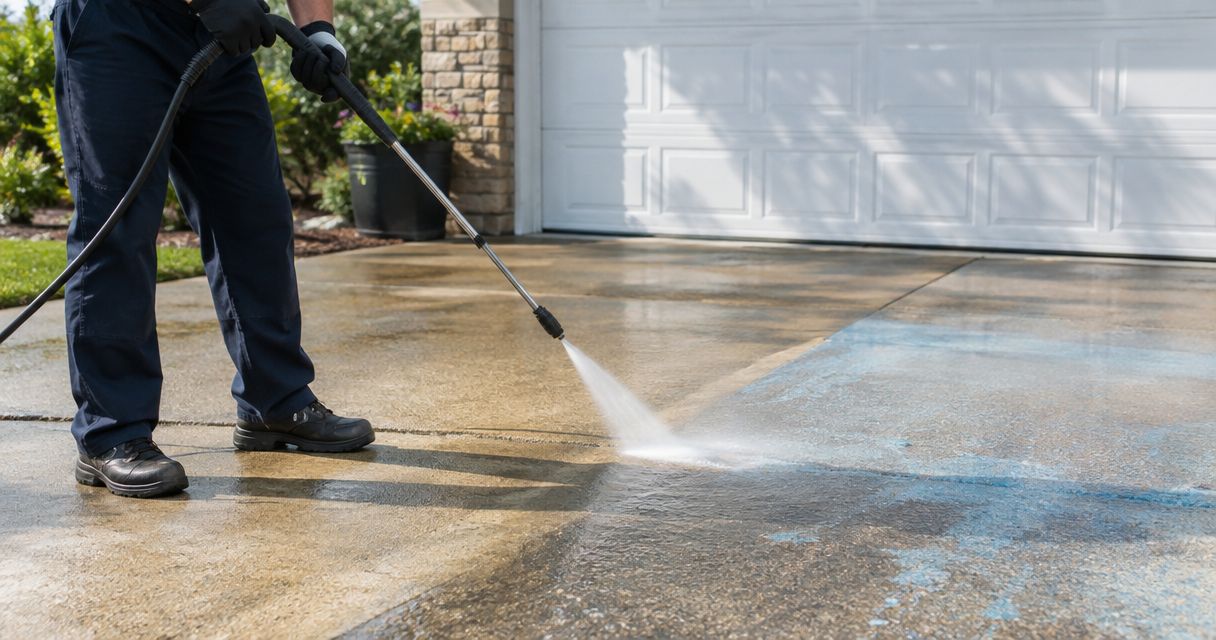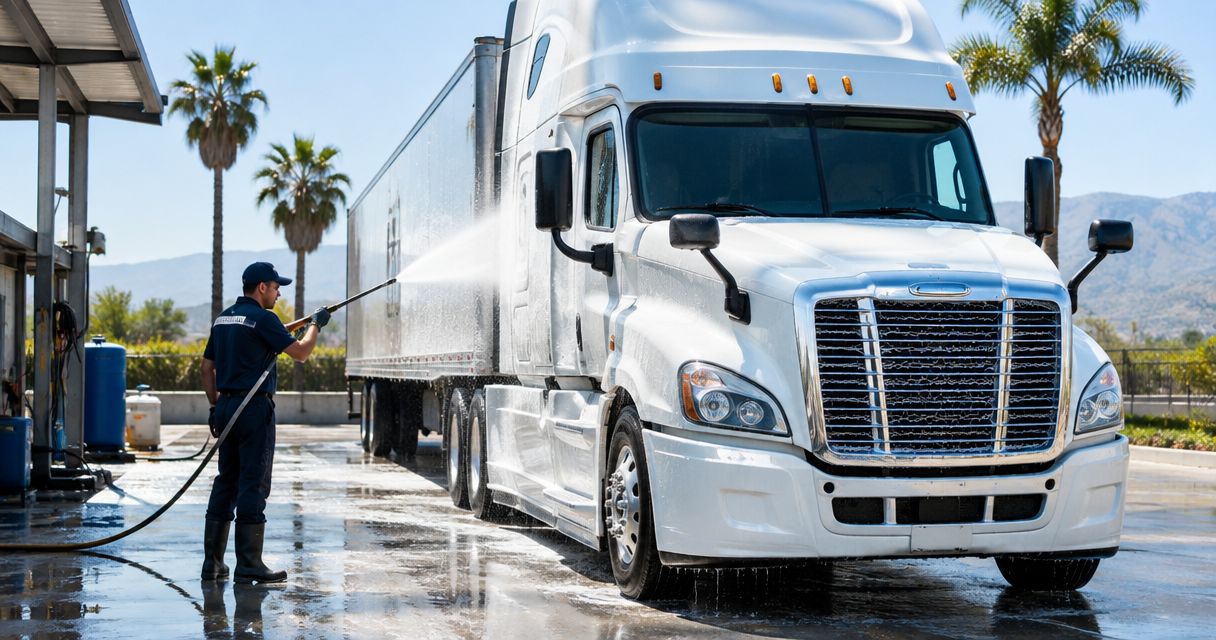
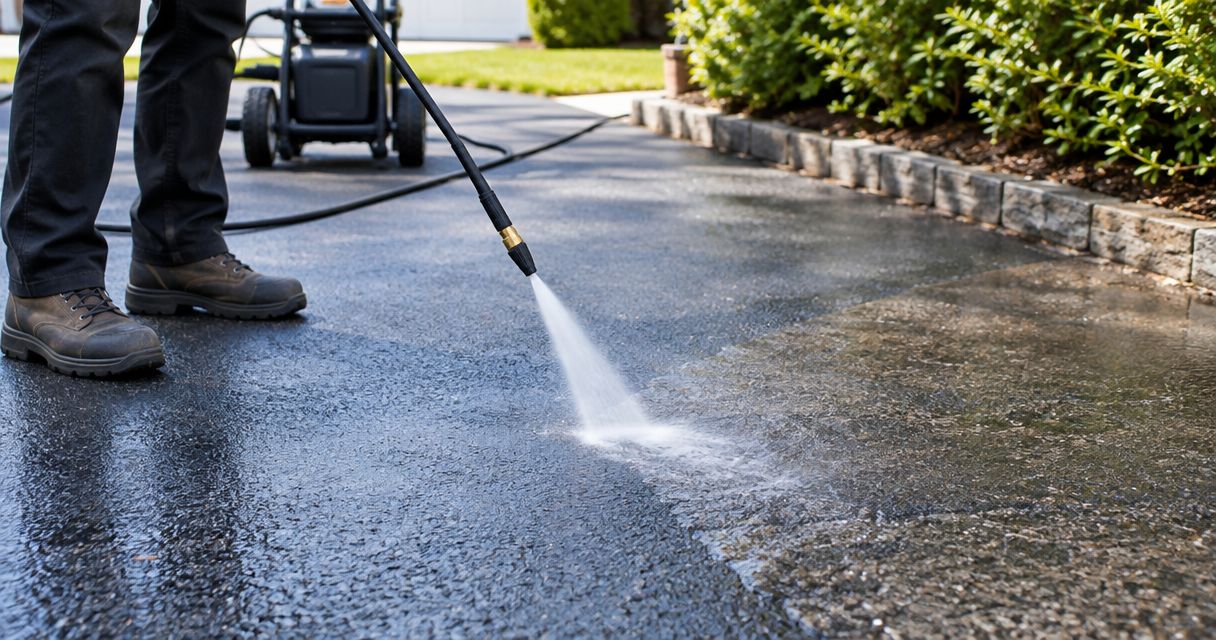
Yes—pressure washing can damage asphalt when the spray dislodges aggregate, strips a surface coating, or attacks already weakened pavement. Cracks, crumbling edges, fresh paving, and recently applied sealcoat need particular caution; cleaning cannot repair those conditions. For an asphalt driveway, start with sweeping, an asphalt-compatible cleaner where needed, and gentle rinsing rather than treating the surface like concrete.
- Is pressure washing bad for asphalt? Yes, concentrated spray can loosen aggregate and damage vulnerable pavement.
- Sweeping and gentle rinsing are the starting point for routine asphalt driveway cleaning.
- Oil stains need asphalt-compatible treatment, not repeated passes with stronger pressure.
- Socalemm provides exterior cleaning in Newport Beach and Orange County; ask about the approach before scheduling asphalt work.
Why this matters
A cleaner driveway is not an improvement if cleaning leaves loose stones, exposed patches, or stripped sealcoat. Asphalt contains aggregate held together by asphalt binder; removing dirt should not mean removing part of that surface.
For your 2026 maintenance plan, separate appearance problems from pavement problems. Dirt calls for cleaning, while crumbling material calls for assessment before washing. Socalemm provides residential and commercial exterior cleaning in Newport Beach and Orange County, but the proposed method still needs to match your particular surface.
Is pressure washing bad for asphalt?
Pressure washing is bad for asphalt when the cleaning force exceeds what the pavement or its coating can tolerate. The machine's pressure rating alone does not settle the question: nozzle pattern, working distance, surface condition, and repeated passes also affect the result.
Use this comparison to choose a starting method, not as permission to pressure wash damaged pavement.
| Cleaning approach | Best for | Main benefit | Main limitation |
|---|---|---|---|
| Sweeping | Loose leaves, grit, and dry debris | Removes debris without a water jet | Does not lift embedded stains |
| Gentle hose rinsing | Light dirt on sound asphalt | Uses less concentrated force | Does not address every oil mark or attached growth |
| Asphalt-compatible cleaner and gentle agitation | Localized staining on intact pavement | Targets the stain rather than increasing pressure | Requires label checks, a test area, and proper runoff handling |
| Pressure washing after surface assessment | Sound pavement where the method is appropriate | Can remove attached dirt | Concentrated spray can damage aggregate or coatings |
The practical order is simple: remove loose material first, identify the remaining stain, then choose the least aggressive effective treatment. Do not begin with the strongest setting and reduce it only after damage appears.
Sound asphalt: start with routine cleaning
An intact surface without loose aggregate, lifting coating, or crumbling edges is a better cleaning candidate than distressed pavement. Even then, inspect before washing and test the proposed method in an inconspicuous area.
Sweeping and a gentle rinse are sensible starting points. If a mark remains, determine whether it is oil, attached growth, or a difference in the pavement itself before treating it again.
Cracked or crumbling asphalt: stop before washing
Visible cracks, loose stones, and broken edges change the job. A forceful spray can dislodge material from weak areas, and directing water into cracks does not clean away the underlying defect.
Avoid aggressive brushing as well as concentrated water pressure on deteriorated spots. Ask a paving professional whether repair is needed before arranging a whole-driveway wash.
New asphalt or fresh sealcoat: follow the installer
New paving and recently sealed pavement need instructions specific to the installed material. Do not use a generic waiting period from an unrelated driveway, coating, or online cleaning guide.
For work completed in 2026, keep the installation date and written care instructions together. Confirm when washing is permitted, which cleaners are compatible, and whether any cleaning equipment is prohibited.
Why asphalt pressure-washing risk varies
The same equipment can produce different results on different driveways. These factors explain why a universal pressure setting is not a reliable asphalt-cleaning plan:
- Pavement condition: Loose aggregate, cracks, and crumbling edges leave less room for aggressive cleaning.
- Surface coating: Sealcoat introduces another material whose cleaning instructions need to be checked.
- Spray concentration: A narrow jet concentrates force; a wider pattern does not automatically make a method safe.
- Working distance: Bringing the nozzle closer concentrates the spray on a smaller area.
- Repeated passes: Continuing over a stubborn mark exposes that area to more mechanical action.
- Cleaner compatibility: A product suited to another surface is not automatically suitable for asphalt or its coating.
Assess these factors together. A gentle-looking spray cannot compensate for unsuitable chemicals, and a compatible cleaner does not make crumbling pavement ready for pressure washing.
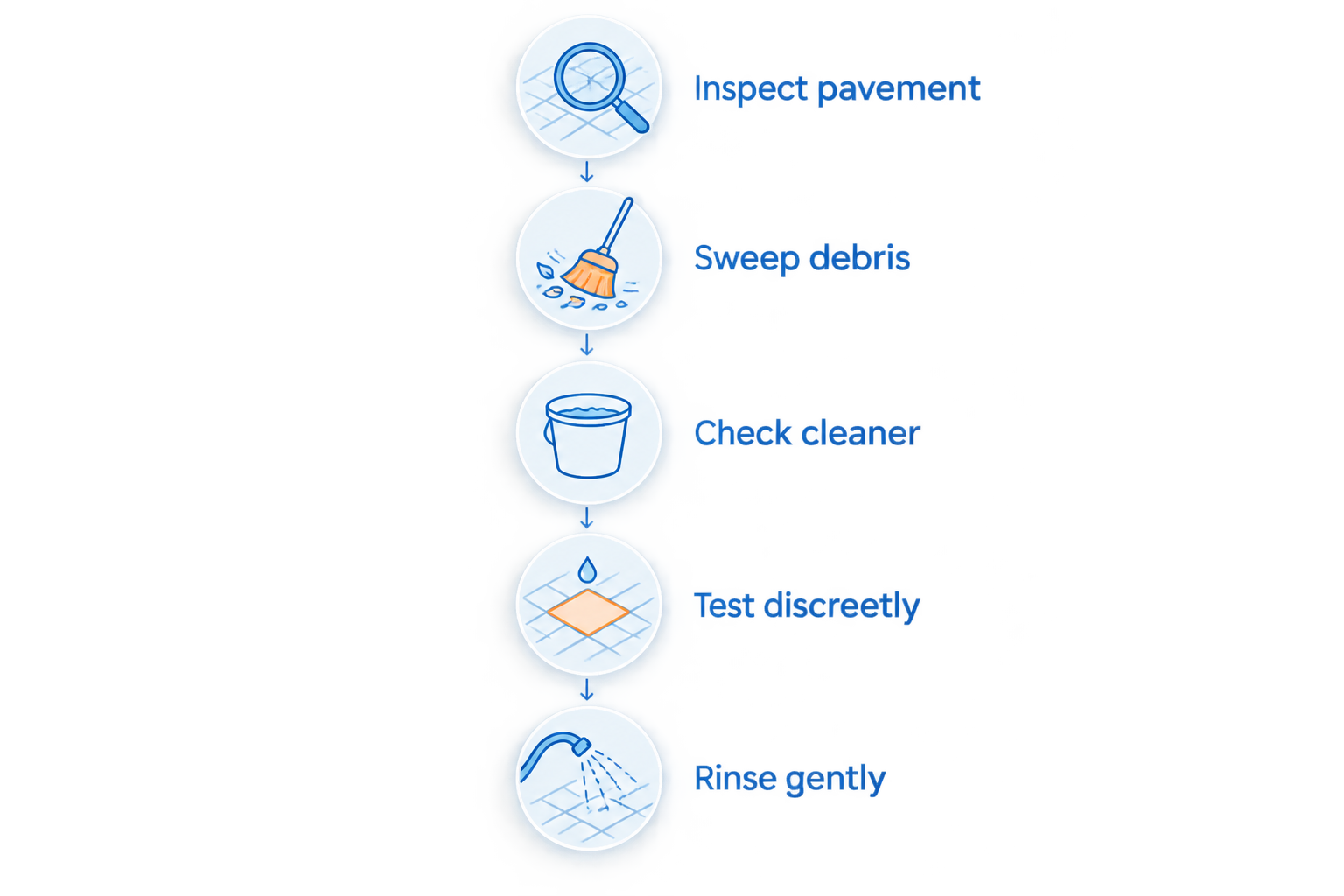
How should you clean an asphalt driveway?
Use this sequence for planning routine homeowner maintenance in 2026. If you find deterioration, stop at inspection rather than pushing through the remaining steps.
- Inspect pavement. Look for loose stones, broken edges, cracks, soft areas, and lifting coating. Photograph questionable spots before cleaning so you can distinguish existing defects from changes afterward.
- Sweep debris. Remove leaves and loose grit without forcing material into drains. Inspect again once the surface is visible.
- Check cleaner. If water alone will not address the stain, read the product label for asphalt and sealcoat compatibility. Follow its dilution, contact-time, protective-equipment, and rinsing directions.
- Test discreetly. Try the proposed treatment on a small, inconspicuous area. Check for coating loss, loose material, or an unwanted appearance change before extending the work.
- Rinse gently. Follow product directions and keep wash water out of storm drains. Stop if the surface begins shedding aggregate or coating.
A test patch checks the method on one spot; it does not prove that every part of the driveway is equally sound. Keep watching repaired areas, edges, and sections with visibly different wear.
Prepare the surrounding area
Move vehicles, planters, and loose belongings out of the work area. Identify where rinse water will travel before introducing cleaner, especially where the driveway slopes toward a street or drain.
Keep people and pets away from wet work areas and follow the cleaner's safety directions. Do not rinse contaminated water into landscaping as a substitute for proper collection or disposal.
Know when to stop
Stop if rinsing carries away surface stones, exposes a visibly different layer, or lifts a coating. Increasing pressure to make neighboring areas match can turn a localized problem into a larger one.
Once the area dries, record what changed and seek advice from the installer or a paving professional. Do not apply a coating simply to conceal unexplained damage.
Can you pressure wash oil stains off asphalt?
Oil stains do not justify stronger pressure on asphalt. Petroleum contamination can soften asphalt binder, so a dark, oily area deserves inspection before repeated washing or scrubbing.
For a fresh spill, contain it and use an appropriate absorbent according to its directions. Collect the contaminated material rather than washing it into a drain, then use a cleaner specifically suitable for the pavement and any coating.
An older stain can remain visible after cleaning. If the area feels soft, sheds material, or has lost its surface texture, treat it as a pavement-condition issue rather than promising yourself another pass will solve it.
Can you use a surface cleaner on asphalt?
A surface-cleaner attachment does not make pressure washing automatically safe for asphalt. Its housing covers rotating spray jets; those jets still apply force to the pavement underneath.
Do not assume equipment used on a concrete sidewalk is appropriate for the adjacent asphalt driveway. Ask how the operator will assess the surface, select the setup, and recognize when the method needs to stop.
Is soft washing safer for asphalt?
Lower-pressure cleaning reduces reliance on water force, but the cleaner still has to be compatible with asphalt and sealcoat. The label “soft washing” does not identify a specific chemical, dilution, or suitable surface.
Ask what will be applied and why it fits the pavement. A roof-cleaning mixture or house-washing process should not be transferred to asphalt without checking compatibility and product directions.
Homeowners: what to ask before driveway cleaning
For a 2026 driveway-cleaning quote, describe the surface as asphalt rather than simply asking for pressure washing. Include photographs of the whole driveway, stained areas, cracks, edges, and any recent coating work.
Ask these questions before agreeing to the job:
- Will the pavement be inspected before the cleaning method is confirmed?
- What happens if the surface has loose aggregate or failing sealcoat?
- Is the proposed cleaner suitable for both asphalt and the existing coating?
- How will nearby concrete, planting beds, and drains be handled?
- What staining is expected to remain rather than be chased with more pressure?
Socalemm is best for homeowners and businesses seeking local exterior-cleaning services in Newport Beach and Orange County. Its stated services include pressure washing, house washing, and roof soft washing; that service range does not make every method appropriate for asphalt. When you request a quote, ask Socalemm to confirm the proposed approach for your pavement.
Request an exterior-cleaning quote
Describe your asphalt surface, stains, existing damage, and any recent paving or sealcoat work.
Businesses: keep asphalt separate from concrete work
A commercial cleaning plan should distinguish asphalt parking areas from concrete sidewalks, entrances, and loading areas. Shared location does not mean shared material or an interchangeable washing method.
For your 2026 work order, identify pavement defects, vehicle access, pedestrian routes, drainage, and the cleaning boundaries. Specify how the contractor will manage oily wash water and prevent cleaning activity from directing contamination into storm drains.
Do not treat faded markings, failed coating, or broken pavement as cleaning defects. Record those separately so the cleaning scope does not drift into repeated washing that cannot restore the material.
FAQ
What pressure is safe for cleaning an asphalt driveway?
There is no universal pressure setting that makes every asphalt driveway safe to wash. Pavement condition, coating instructions, nozzle pattern, distance, and repeated passes all matter; start with the least aggressive suitable method.
Can I use a pressure washer on a newly sealed driveway?
Do not pressure wash newly sealed asphalt until the coating instructions permit it. Confirm the required care with the installer rather than borrowing a waiting period from another product.
Will pressure washing remove asphalt sealcoat?
Pressure washing can damage or remove sealcoat, especially where the coating is already lifting or the spray is concentrated. Check the coating instructions and test the proposed method before wider cleaning.
Is a garden hose better than a pressure washer for asphalt?
A gentle garden-hose rinse is the better starting point for light dirt on sound asphalt because it avoids a concentrated high-pressure jet. It will not remove every stain, and runoff still needs to be managed.
Can I use a concrete degreaser on asphalt?
Use a concrete degreaser on asphalt only if its label also permits use on asphalt and any existing coating. A product's suitability for concrete alone does not establish compatibility.
What should I do if stones come loose while washing my driveway?
Stop washing if surface stones come loose. Let the area dry, document the change, and ask a paving professional to assess the surface before further cleaning or coating.
One last thing
A remaining stain is not proof that the driveway needs more pressure. Asphalt repairs, wear, oil damage, and coating differences can all leave visual variation that washing will not correct.
Set the stopping point before work begins: remove contamination without sacrificing sound pavement. Accepting a residual mark is preferable to removing material in pursuit of a uniform color.