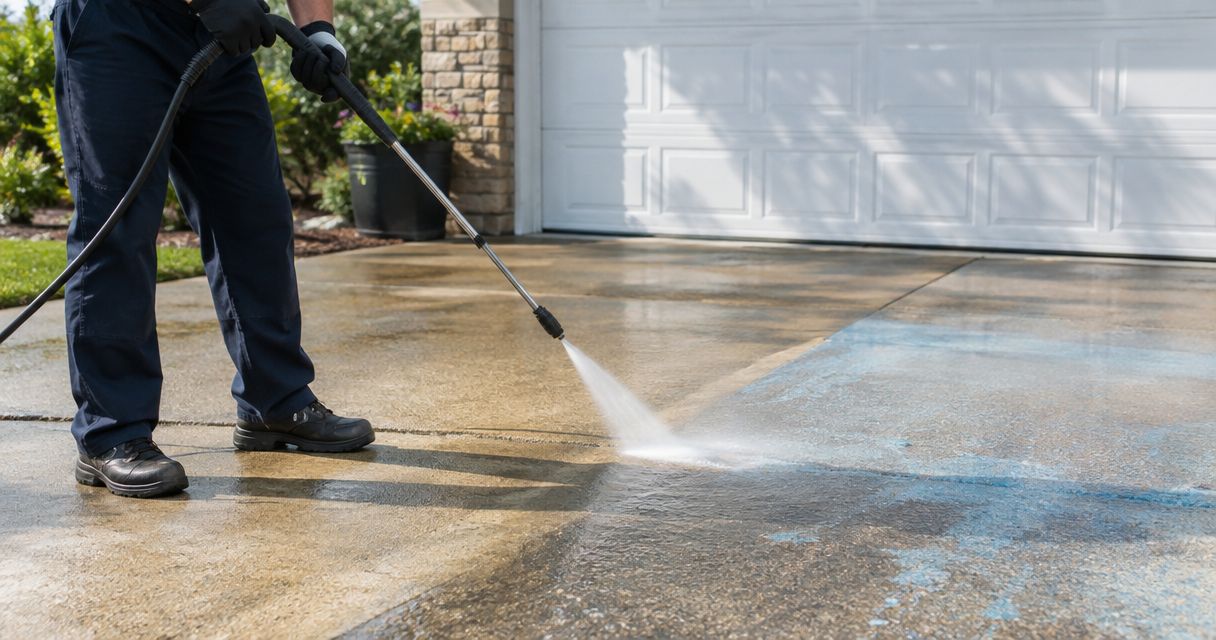
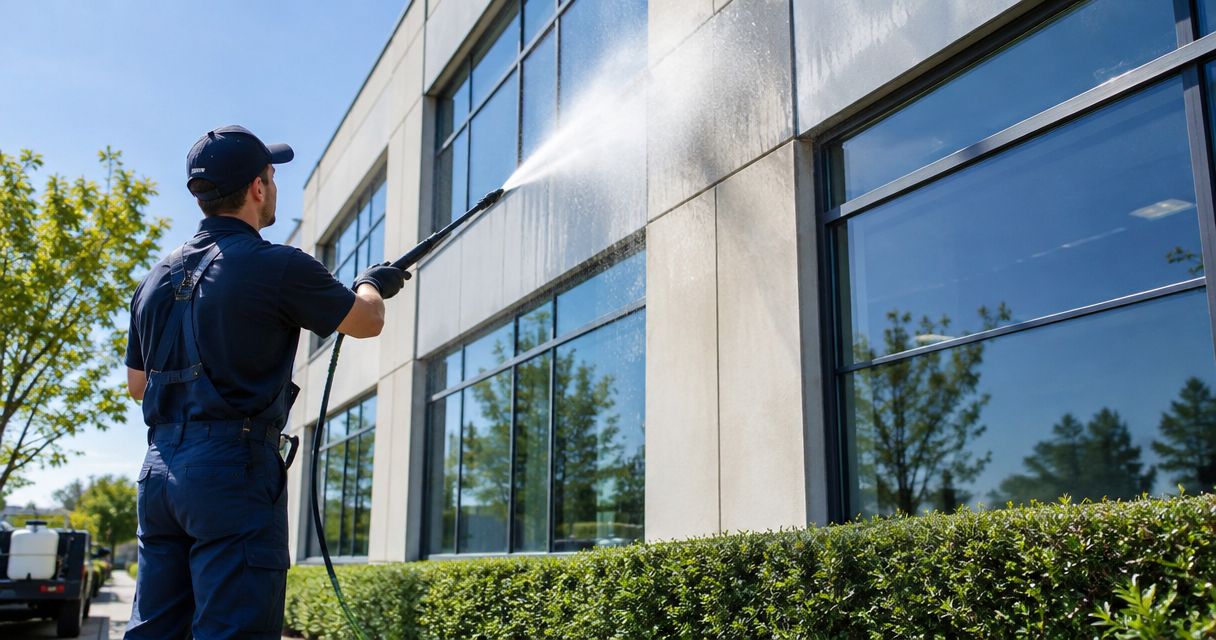
Commercial buildings should be pressure washed when inspections show dirt, organic growth, or spills that need treatment—not automatically on the same schedule across the entire property. Set separate cleaning triggers for entrances, walkways, service areas, and exterior walls, and address slippery contamination without waiting for the next planned wash.
- How often should commercial buildings be pressure washed? Base the schedule on surface condition, traffic, and recurring contamination.
- Separate commercial pressure washing for walkways and service areas from cleaning schedules for exterior walls.
- Socalemm is a fit for Orange County businesses seeking commercial pressure washing.
- Recurring dirt calls for a maintenance plan; recurring leaks or drainage problems also need repair.
How often should commercial buildings be pressure washed?
Use a condition-based schedule for each surface rather than a fixed interval for the whole building. A busy entrance and a sheltered upper wall do not need the same treatment simply because they share an address.
For your 2026 maintenance plan, start with an inspection, record what needs cleaning, and compare conditions after the work. The pressure washing guide for property managers covers the broader task of organizing exterior cleaning across a property.
| Area | Best for deciding when to clean | Reason to bring work forward | Limitation to check |
|---|---|---|---|
| Entrances and pedestrian walkways | Observed dirt and surface condition | Slippery residue, spills, or tracked contamination | You need a safe alternate pedestrian route during work |
| Storefront approaches | Presentation checks alongside routine maintenance | Visible buildup around customer access points | Cleaning must account for doors, displays, and operating hours |
| Service and loading areas | Inspections after deliveries and maintenance activity | Leaks, spills, or concentrated grime | Cleaning alone does not correct the source of contamination |
| Exterior walls | Material condition and visible soiling | Staining or growth that needs assessment | High pressure is not suitable for every finish |
| Sheltered corners and shaded surfaces | Checks for persistent dampness and buildup | Repeated growth or dirt accumulation | Drainage or moisture problems need separate attention |
The table gives you decision triggers, not automatic washing appointments. A surface that remains clean and sound does not need another wash just because another area is due.
Why this matters
A single recurring appointment is easy to administer, but it can leave you washing clean walls while missing a dirty entrance between visits. Splitting the property into maintenance zones makes the work order more useful.
Commercial cleaning also requires coordination that a homeowner's driveway appointment does not. You need to account for public access, deliveries, tenant notices, equipment protection, and wash-water handling before work starts.
How do you build a practical cleaning schedule?
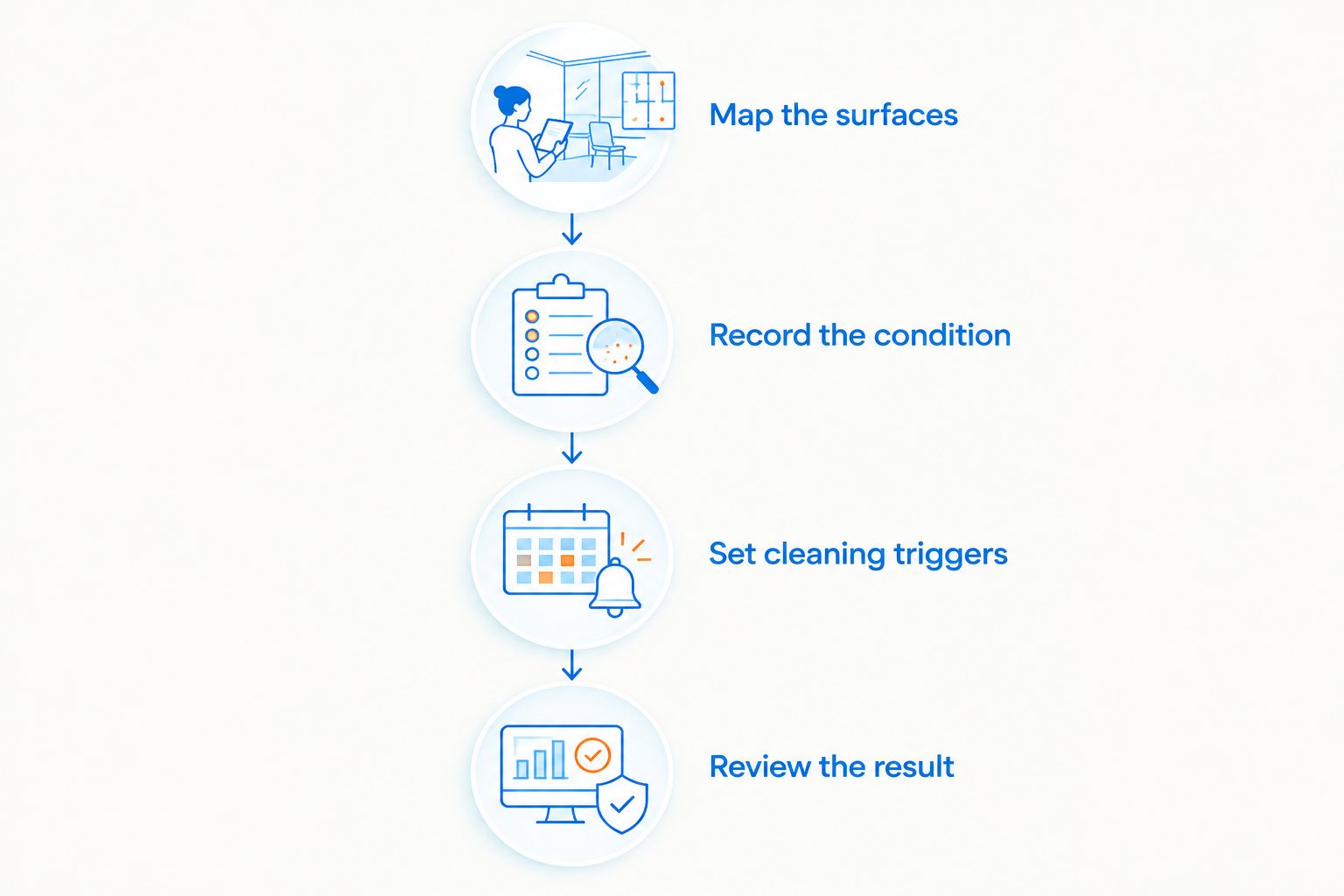
Use this process to turn observations into a repeatable maintenance decision. Keep the record simple enough that another employee can follow it without needing the original manager present.
Map the surfaces
List entrances, pedestrian routes, loading areas, exterior walls, and other surfaces included in the proposed work. Note the material and any visible coating, damage, or previous repair.
Do not describe everything as “the exterior.” A concrete walkway and a painted wall need separate cleaning instructions, even when you arrange them under the same work order.
Record the condition
Take reference photos from consistent viewpoints before and after cleaning. Record where dirt collects, what the contamination looks like, and whether the surface was wet during inspection.
For your 2026 records, use plain descriptions such as “dark buildup beside entrance” rather than diagnosing every stain as mold. A photograph supports a cleaning discussion; it does not establish the cause of a stain.
Set cleaning triggers
Write down what requires attention in each zone. Separate appearance concerns from conditions that require an immediate site response, such as a spill on a pedestrian route.
A trigger should tell your team what to do: inspect, restrict access, arrange treatment, or request a repair. “Clean when needed” is too vague unless you define what “needed” means.
Review the result
After cleaning, compare the surface with your reference photos and record what remains. Ask whether residual marks are staining, surface wear, coating damage, or contamination that needs a different treatment.
Use the next inspection to decide whether the cleaning interval should change. Do not shorten the schedule merely because a permanent mark did not disappear.
Entrances and walkways: prioritize access conditions
Best for: deciding where cleaning needs attention between broader property washes.
Inspect customer entrances and main walking routes as part of your existing site checks. Look for spills, tracked dirt, leaf residue, and visible growth, particularly where people turn, queue, or enter the building.
The advantage of targeted cleaning is that you can address a problem without washing unrelated surfaces. The limitation is access: you still need barriers, an alternate route where appropriate, and coordination with the people using the property.
Do not treat pressure washing as the first response to every spill. Identify the substance, follow the property's response procedure, and determine how contaminated water will be contained before washing begins.
Exterior walls: let the finish guide the method
Best for: planning appearance maintenance without treating every wall like pavement.
Inspect walls for visible dirt, growth, peeling coatings, cracks, and gaps around penetrations. Separate cleaning needs from defects that should be assessed before water is applied.
The benefit of a separate wall-cleaning schedule is control over the scope and method. Its limitation is that appearance alone does not tell you whether a surface can tolerate pressure; material condition and manufacturer guidance matter.
For 2026 planning, describe the wall material and finish in the work order. Ask the contractor to explain the cleaning approach rather than specifying high pressure as the required treatment.
Service and loading areas: investigate recurring contamination
Best for: coordinating cleaning with delivery activity and facility maintenance.
Check these areas after a reported spill or leak and during routine property inspections. If grime repeatedly returns to the same location, document the activity or equipment associated with it.
Targeted cleaning keeps the scope focused, but washing does not repair leaking equipment or correct an operational problem. Keep the repair task separate from the cleaning task so neither disappears from the maintenance record.
Avoid washing unidentified residue toward a drain. Ask how the contractor will handle the contamination and wash water, and confirm applicable site requirements before authorizing work.
Why commercial pressure-washing frequency varies
These factors help you decide where to inspect more closely and whether to adjust the cleaning schedule:
- Pedestrian and vehicle activity. Record where people, carts, and vehicles carry dirt or leave residue. Use observed buildup rather than tenant count alone.
- Exposure and shelter. Compare exposed surfaces with protected corners instead of assuming every side of the building gets equally dirty.
- Moisture and drainage. Note irrigation overspray, standing water, and persistent dampness. Cleaning and correcting the water source are separate jobs.
- Surface material and condition. Concrete, painted finishes, and other exterior materials require different assessments. Existing damage can change the appropriate method.
- Business operations. Coordinate access around deliveries, tenant activity, and public use. A practical appointment must allow the area to be controlled during work.
- Recurring contamination. Repeated spills or deposits justify investigating the source, not simply booking more washes.
For a Newport Beach or Orange County property, record the actual exposure at your site. A coastal location does not establish the condition of every surface or justify an identical schedule for every building.
What should your commercial cleaning work order include?
Specify the surfaces, the cleaning trigger, and the access plan—not just a date. A detailed scope helps you compare proposals without assuming that every contractor has included the same work.
Include the following in your 2026 work orders:
- The exact areas to clean and any areas to exclude.
- Surface materials, visible damage, and known coating restrictions.
- Photos of the contamination and any areas needing assessment.
- Tenant hours, delivery access, and pedestrian-route requirements.
- Items that need moving or protection before work starts.
- The proposed approach to wash-water collection and disposal.
- A request to identify marks that cleaning will not resolve.
Socalemm provides commercial pressure washing and exterior cleaning in Newport Beach and Orange County. The service is relevant when your property needs exterior cleaning; a cleaning scope does not replace repairs to damaged finishes, drainage, or leaking equipment.
When you request a quote, describe the affected surfaces and operating constraints. Ask for the initial cleaning scope separately from any proposed recurring work so you can assess each decision on its own.
Should you book recurring service or clean only when needed?
Use recurring inspections to decide when recurring washing is justified. A standing appointment works best when your records show a repeatable cleaning need and you can provide predictable access.
Condition-triggered work suits areas where buildup is irregular, but it depends on someone noticing and reporting the problem. A fixed appointment is easier to organize, but it does not remove the need to respond between visits.
| Approach | Best for | Advantage | Limitation |
|---|---|---|---|
| Recurring cleaning | Areas with a documented, repeatable need | Predictable coordination and work orders | Can include unnecessary work if conditions change |
| Condition-triggered cleaning | Areas with irregular buildup | Work follows an observed need | Depends on consistent inspections and reporting |
| Combined plan | Properties with different surface conditions | Routine work and targeted responses stay separate | Requires clear ownership of inspections |
For your 2026 maintenance calendar, keep inspection reminders separate from confirmed cleaning appointments. That distinction lets you review the condition without automatically authorizing another wash.
Does a dirty entrance mean the whole building needs washing?
A dirty entrance calls for an entrance assessment, not an automatic whole-building wash. Inspect nearby walking routes and walls, then expand the scope only where the condition supports it.
If several areas genuinely need cleaning, coordinate them under a shared access plan. Keep each surface listed separately so the cleaning method remains clear.
Should you pressure wash a building after every storm?
Inspect the property after weather leaves visible debris, deposits, or damage; do not automatically book pressure washing. Remove or address immediate hazards through your site's maintenance procedures first.
A storm can also reveal drainage or water-entry problems. Treat those as maintenance issues rather than assuming a wash will resolve them.
FAQ
How often should commercial buildings be pressure washed?
Commercial buildings should be pressure washed when inspections identify contamination that needs treatment. Set separate triggers for walkways, service areas, and walls instead of applying one interval to the entire property.
Is annual pressure washing enough for a commercial building?
An annual appointment alone does not establish whether a commercial building's cleaning needs are covered. Inspect between appointments and adjust the scope when spills, growth, or visible buildup require attention.
Do storefronts need cleaning more often than office walls?
Storefront approaches and office walls need separate assessments because their use and surfaces differ. Base each schedule on observed conditions rather than assuming a fixed frequency from the building type.
Should I pressure wash slippery commercial walkways immediately?
Restrict access to a slippery area and assess the contamination promptly. Choose the appropriate cleanup method and wash-water controls rather than automatically applying pressure to an unidentified substance.
Can frequent pressure washing damage painted exterior walls?
Pressure washing can damage painted finishes when the method is unsuitable or the coating is deteriorating. Assess the finish and follow applicable manufacturer guidance before choosing a cleaning method.
Does commercial pressure washing stop dirt and growth from returning?
Commercial pressure washing does not prevent future contamination. Recurring buildup calls for inspection of moisture, drainage, nearby activity, and other contributing conditions.
What should I send when requesting a commercial pressure-washing quote?
Send surface photos, the areas needing cleaning, known damage, and access restrictions. Include tenant or delivery constraints and ask how the proposed work will handle wash water.
One last thing
Photograph the clean result, not just the dirty starting point. Your next inspection needs a realistic reference, including any permanent discoloration or wear that remains after cleaning.
When discussing a recurring plan with Socalemm, use that reference to distinguish new buildup from an unchanged mark. It gives you a clearer reason to book the next wash—or leave a clean surface alone.