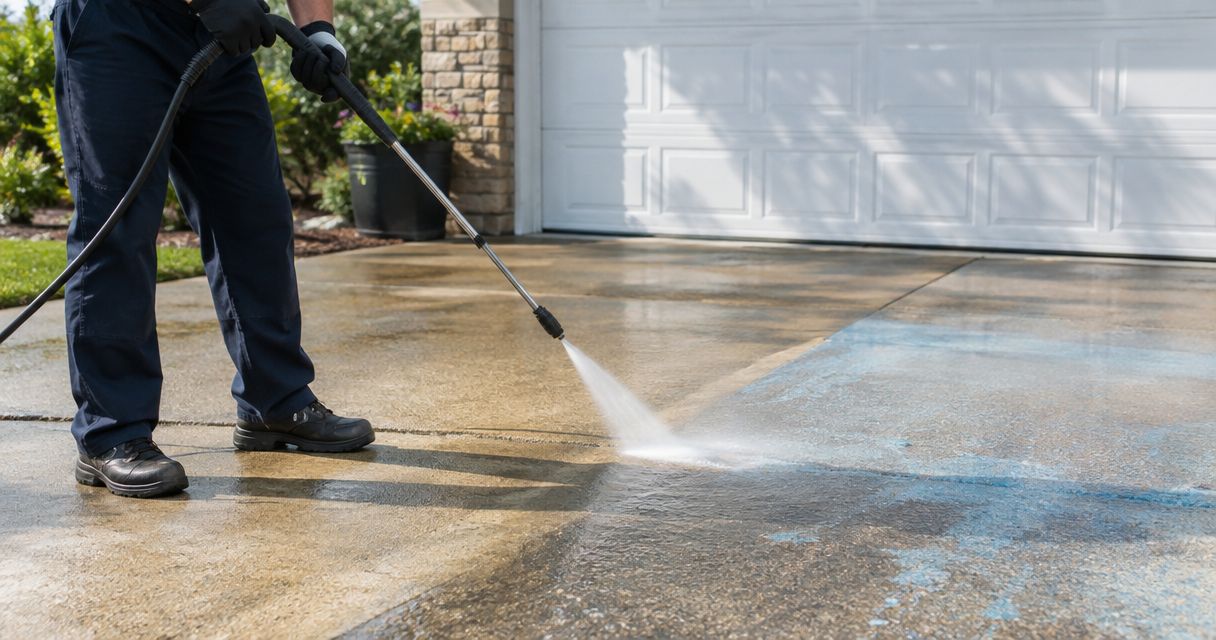
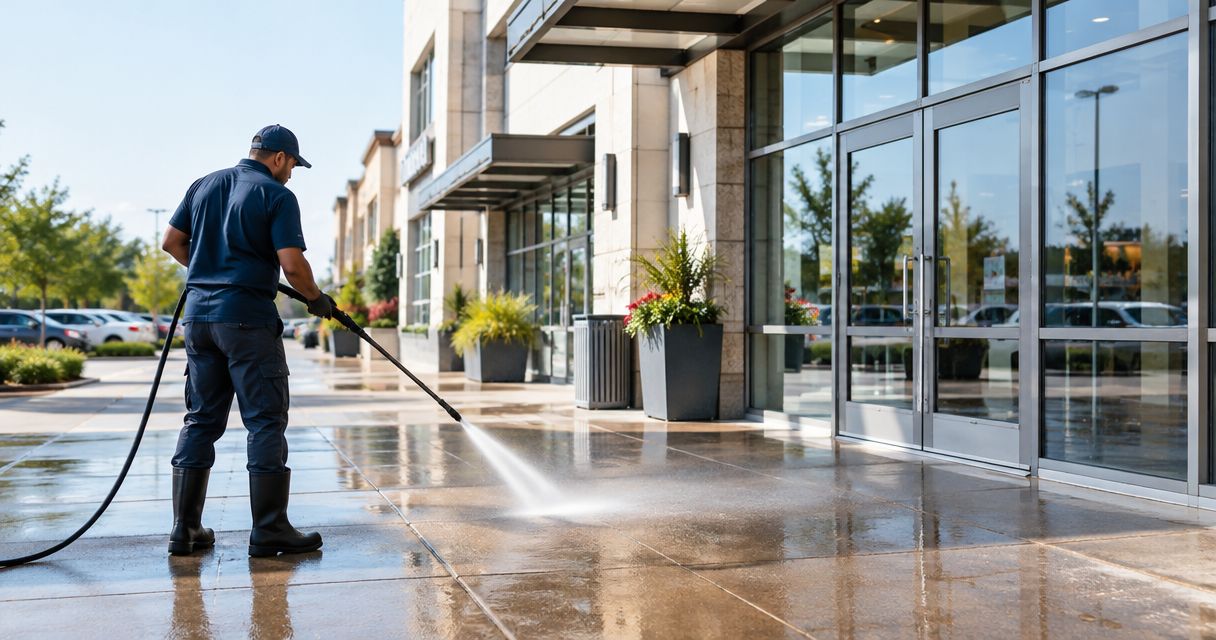
Shopping center pressure washing is exterior surface cleaning with the aim of keeping shared retail areas clean and usable without disrupting tenants. Effective pressure washing for shopping centers starts with a surface-by-surface plan, controlled pedestrian access, and a clear method for handling wash water—not simply a larger pressure washer.
- Pressure washing for shopping centers needs separate plans for walkways, storefronts, restaurant areas, and service lanes.
- Socalemm provides commercial pressure washing and exterior cleaning in Newport Beach and Orange County.
- Match the cleaning method to the surface; stronger pressure is not a substitute for stain identification.
- Approve tenant access, wash-water handling, and reopening checks before work begins.
Why pressure washing matters for shopping centers
Shopping centers combine public walkways, business entrances, deliveries, outdoor seating, and service areas. Cleaning one area can affect another: hoses can cross an entrance, rinse water can reach a neighboring storefront, and a restaurant delivery can arrive during a planned closure.
The cleaning plan must account for how the property operates, not just how dirty it looks. Separate customer-facing work from loading areas and tenant-controlled spaces before requesting proposals for your 2026 maintenance plan.
Socalemm provides commercial pressure washing and exterior cleaning in Newport Beach and Orange County. Socalemm is best for Newport Beach and Orange County businesses seeking local commercial pressure washing and exterior cleaning. For a shopping center, confirm the proposed surfaces, access arrangements, and water-handling approach before selecting a provider.
Recognize what cleaning can and cannot fix
Pressure washing removes suitable surface contamination; it does not repair failed coatings, loose pavers, damaged joints, or broken drainage. Old oil marks and other absorbed stains also need a different discussion from loose dirt.
Keep repair items separate from the cleaning scope. Otherwise, a damaged surface can become an unrealistic cleaning expectation, and an unresolved leak can keep dirtying an area after the work is complete.
How to plan shopping center pressure washing
1. Map the property by surface and responsibility
Start with a printed site plan or a simple phone-photo walkthrough. Mark each cleaning zone, identify its surface, and record whether management or a tenant controls it. This manual inventory gives every provider the same starting point.
Concrete walkways, painted walls, storefront glazing, pavers, and awnings should not receive an identical treatment. Record damaged areas before cleaning so the crew knows where inspection or an exclusion is necessary.
For your 2026 scope, keep 1 annotated site map as the shared reference rather than circulating conflicting descriptions by email. That is an organizational recommendation, not a required document format.
- Mark customer entrances, accessible routes, and emergency exits.
- Separate common areas from tenant-maintained patios and storefronts.
- Label concrete, pavers, painted finishes, metal, and glass.
- Flag loose material, open joints, peeling paint, and existing damage.
- Identify water connections, drains, landscaping, and electrical equipment.
2. Identify the soil before choosing the method
Walk each zone and describe what is present: loose dirt, gum, food residue, oil staining, or biological growth. Take 3 reference photos per zone: a wide view, a stain close-up, and a view of nearby drainage. This gives a remote reviewer useful context without pretending photographs replace a site assessment.
Choose the method after identifying the surface and contamination. Pressure alone is not a complete stain-removal plan. A delicate finish needs a different approach from sound, uncoated concrete, and chemical selection must follow surface compatibility and product instructions.
Ask for a test area when the finish or likely result is uncertain. Treat a test as a decision point, not permission to increase pressure until a stain disappears.
- Describe visible deposits rather than guessing their chemical makeup.
- Identify coatings, sealers, and recent painting where records exist.
- Request a discreet test area for uncertain surfaces.
- Distinguish expected cleaning from possible permanent discoloration.
- Keep roof work separate from ground-level washing decisions.
3. Write a scope that providers can actually quote
Build a basic scope yourself using the site map, photographs, and tenant restrictions. Then ask a provider to review it and identify missing information. A defined scope makes proposals easier to compare than a request to clean the entire shopping center.
For Socalemm pressure washing, use the quote request to describe the property and requested work. Submit the same written scope you use for other proposals. This provides a direct route to an estimate, but access planning and surface assessment still need agreement.
Keep your 2026 request specific about inclusions and exclusions. Do not assume a walkway proposal also covers awnings, roof cleaning, windows, parking areas, or tenant equipment.
- Name each zone and its cleaning objective.
- List special stains separately from general washing.
- State who moves furniture, planters, signs, and merchandise.
- Request the proposed method and surface-protection measures.
- Record exclusions, access requirements, and completion checks.
4. Schedule around tenants and preserve a usable route
Begin with a shared calendar and direct tenant confirmation. Ask when customers arrive, deliveries occur, outdoor seating opens, and closing tasks finish. An apparently quiet period is not automatically a workable cleaning window.
Offer 2 candidate work windows for tenant review rather than imposing a single time. Night work also needs agreement on access, lighting, noise, and building security; do not assume a contractor offers it.
Divide the property into workable zones and agree on reopening criteria. Keep emergency exits unobstructed and preserve an accessible route throughout the work rather than relying on a sign to redirect everyone through an unsuitable path.
- Confirm tenant opening, closing, and delivery restrictions.
- Assign a property contact who can resolve access questions.
- Mark temporary routes before hoses and equipment arrive.
- Plan closures around customer access and tenant operations.
- Notify affected tenants when the agreed schedule changes.
5. Confirm wash-water handling before work starts
Trace where water travels before approving cleaning. A drain beside a service area does not establish that it is an approved disposal point. Keep wash water containing dirt, detergents, oil, or food residue out of storm drains, and confirm applicable local discharge requirements.
Start with a visual drainage walkthrough and questions for the provider. If the work needs containment, collection, or an approved disposal arrangement, put that method in the scope rather than leaving it to the crew to resolve on arrival.
Treat restaurant-adjacent areas and loading zones as separate planning items. Existing grease, waste containers, and drainage conditions affect how cleaning should proceed.
- Identify storm-drain inlets and the direction of surface flow.
- Sweep up loose litter and solids before washing.
- Document the containment or collection approach where needed.
- Confirm any proposed disposal route is permitted.
- Protect neighboring storefronts, landscaping, and pedestrian routes.
6. Protect surfaces and control the work zone
Use the site map to brief the crew before equipment starts. Review fragile finishes, electrical fixtures, door thresholds, irrigation equipment, and anything the tenant has not moved. Stop and resolve unanticipated conditions instead of treating every surface as approved.
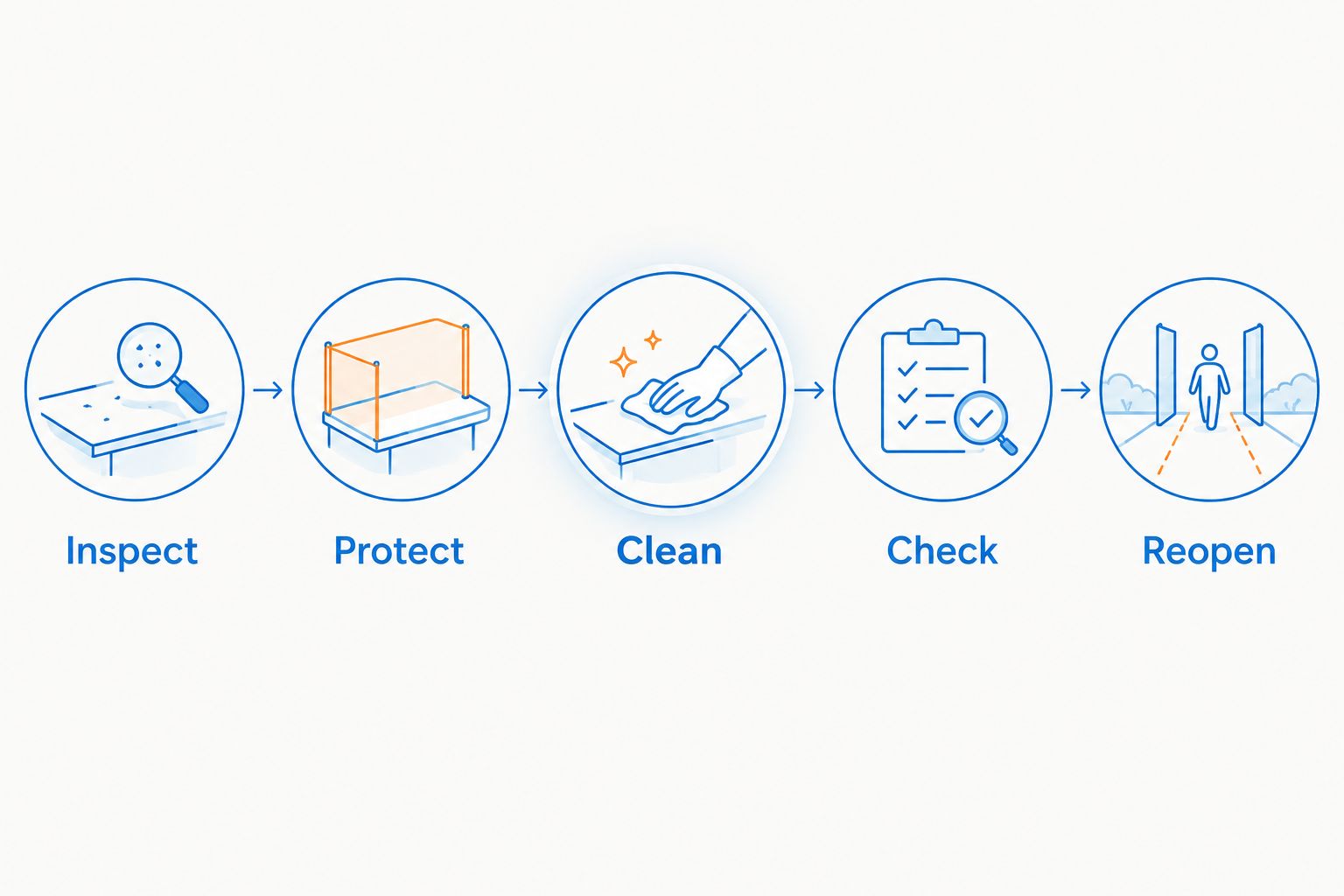
A useful work-zone check follows a simple sequence: Inspect, Protect, Clean, Check, Reopen. The final check includes the walking surface and surrounding areas, not just whether the visible dirt is gone.
Do not use a universal pressure setting for the entire property. The appropriate method depends on material, condition, coating, equipment, and the contamination being removed; a test area helps resolve uncertainty before broader work.
- Keep spray away from electrical components and vulnerable openings.
- Protect nearby merchandise, vehicles, plants, and tenant equipment.
- Follow product instructions for application and surface compatibility.
- Keep barriers in place while the work zone remains unsuitable for access.
- Check for puddles, residue, displaced debris, and remaining hoses before reopening.
7. Inspect the result and set the next review
Use your original scope for the completion walkthrough. Compare the same zones and photo angles, record remaining stains, and distinguish incomplete work from pre-existing damage or absorbed discoloration. Avoid judging the whole project from a single entrance photograph.
For your 2026 maintenance record, document the cleaning date, method, outstanding issues, and conditions that caused repeat buildup. Schedule the next inspection around actual site conditions instead of adopting a fixed washing interval without evidence.
A restaurant approach, shaded walkway, and lightly used passage do not necessarily need the same attention. Adjust the plan as you observe where contamination returns.
- Compare completion photographs with the original reference views.
- Record excluded stains and any agreed follow-up work.
- Check entrances, corners, and neighboring surfaces for residue.
- Log leaks, irrigation overspray, or waste-handling issues separately.
- Assign responsibility for the next condition check.
Compare cleaning options for a shopping center
The best option depends on the surface and the job, not the size of the machine. Use this table to discuss methods, then ask the provider to confirm compatibility and limitations for your property.
| Option | Best for | Practical advantage | Key limitation |
|---|---|---|---|
| Manual sweeping and spot cleaning | Routine loose litter and small localized messes | Lets site staff address visible debris between scheduled visits | Does not replace suitable treatment for embedded grime or widespread buildup |
| Pressure washing | Sound hard surfaces with compatible finishes | Cleans suitable paved areas and surface deposits | Incorrect technique can damage finishes, joints, or weakened material |
| Lower-pressure washing | Compatible exterior finishes that need gentler application | Avoids treating every surface with the same mechanical force | Still requires suitable products, protection, and careful application |
| Targeted stain treatment | Identified oil, gum, or other localized deposits | Addresses the specific contamination before general cleaning | Results depend on the stain, substrate, and prior damage |
| Coordinated commercial cleaning service | Managers organizing several shared areas and tenants | Brings scope and cleaning execution into a single project discussion | Tenant coordination, exclusions, and site requirements still need written agreement |
Socalemm offers commercial exterior cleaning, but that service description does not replace a property-specific proposal. Confirm specialist treatments and operational arrangements rather than assuming every option in the table is included.
Common mistakes shopping center managers make
Treating every tenant frontage as common-area work
A restaurant patio or merchandise display can sit beside a management-maintained walkway without sharing the same maintenance responsibility. Confirm boundaries before requesting work; otherwise, furniture removal, access approval, and the cleaning scope remain disputed.
Closing a walkway without a workable alternative
A barrier is not a complete pedestrian plan. Identify where customers will actually walk, preserve accessible access, and keep required exits available while the cleaning zone is closed.
Asking for stain removal without defining expectations
A dark mark is not always removable dirt. Identify the stain where possible, inspect the material beneath it, and agree on a test or exclusion before treating complete removal as an acceptance condition.
Choosing a recurring schedule before inspecting the site
A calendar alone does not explain where cleaning is needed. Review actual buildup during 2026 and address sources such as irrigation overspray or leaking waste containers rather than repeatedly washing around an unresolved problem.
FAQ
What's the best way to plan pressure washing for a shopping center?
Start with a zone-by-zone scope covering surfaces, contamination, tenant access, and wash-water handling. Ask providers to review that scope before comparing proposals so each proposal addresses the same work.
Can a shopping center stay open during pressure washing?
A shopping center can remain open only where the work plan preserves suitable customer access and keeps people out of active cleaning zones. Confirm accessible routes, emergency exits, tenant entrances, and reopening checks before approving phased work.
How often should shopping center walkways be pressure washed?
Set the cleaning interval from observed buildup and site use rather than a universal timetable. Inspect restaurant approaches, shaded areas, entrances, and service zones separately, then revise the schedule as conditions change.
Is pressure washing safe for every storefront surface?
No, the same pressure-washing method is not suitable for every storefront surface. Identify the material, coating, and existing damage, then confirm a compatible method and use a test area where the result is uncertain.
Will pressure washing remove old oil stains from shopping center concrete?
Pressure washing does not guarantee complete removal of old oil stains. Absorbed oil can leave discoloration, so request a stain assessment and realistic expectations before approving treatment.
What should a shopping center manager send with a quote request?
Send a marked site plan, surface photographs, requested cleaning zones, and tenant access restrictions. Include known drainage concerns, special stains, and responsibility for moving furniture or merchandise.
Does Socalemm provide commercial pressure washing in Orange County?
Socalemm provides commercial pressure washing and exterior cleaning in Newport Beach and Orange County. Request a property-specific proposal to confirm the shopping center scope, proposed methods, and access requirements.
One last thing
Check what happens after the next irrigation cycle, not just immediately after cleaning. Overspray, pooling, and leaking containers can explain why a particular zone gets dirty again. Add those observations to the maintenance record so cleaning and repairs solve different parts of the problem.