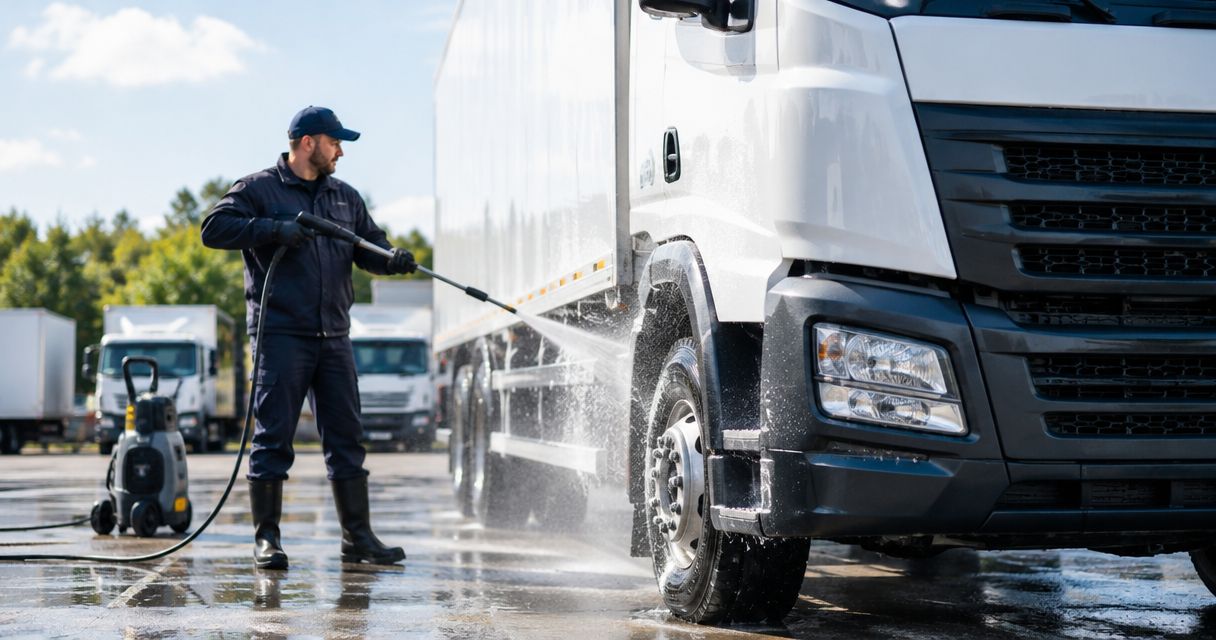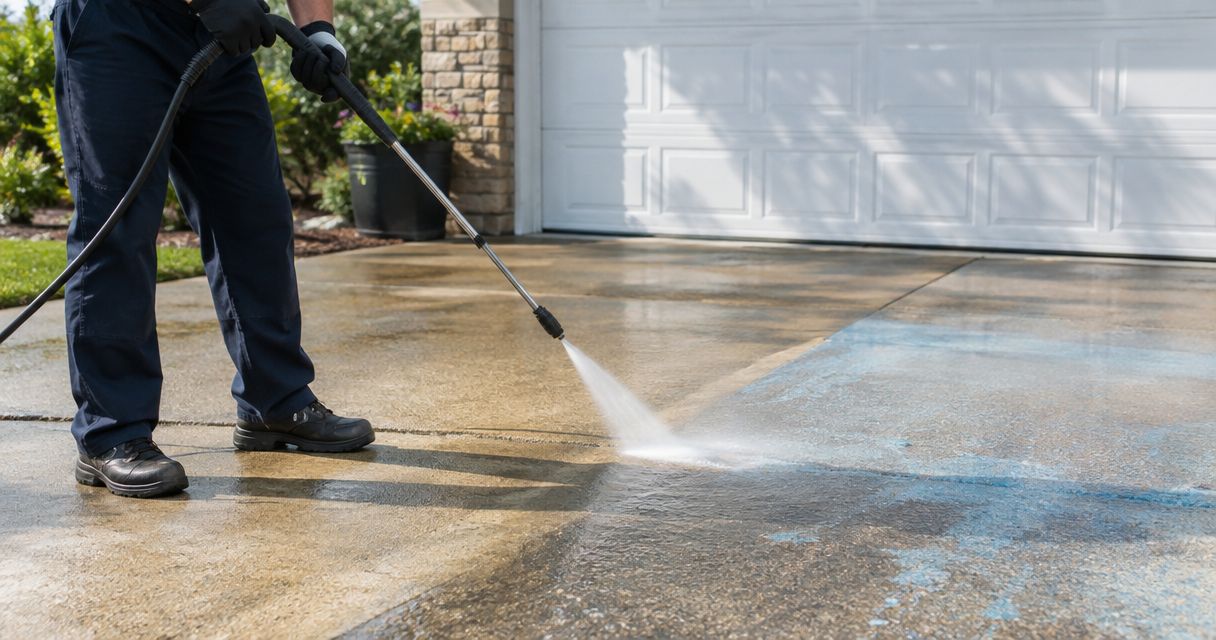
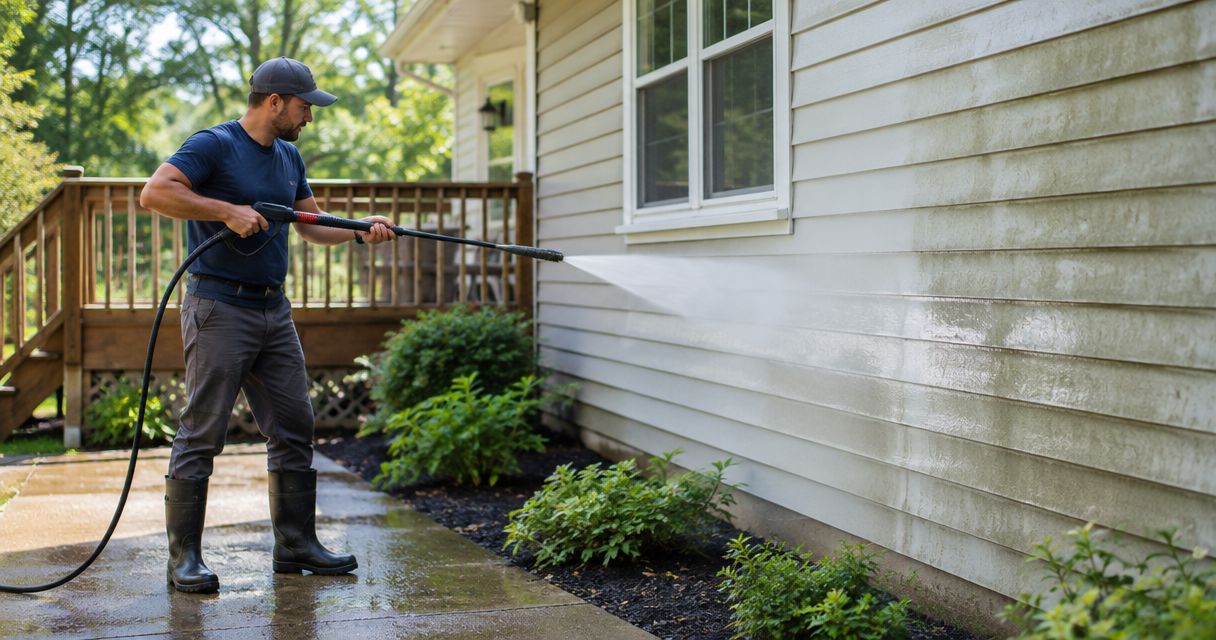
Pressure washing has no fixed water allowance per house: total use equals the equipment’s actual flow rate multiplied by active spraying time, plus any separately supplied water. A whole-job estimate must also include hose rinsing, plant protection and other water used outside the pressure washer; the length of the appointment alone does not give you the total.
- How much water does pressure washing use per house? Calculate actual flow multiplied by spraying time, then add separate water use.
- Socalemm provides house washing in Newport Beach and Orange County; request a water estimate tied to your cleaning scope.
- Gallons per minute measures flow. PSI measures pressure, not total water consumption.
- Include hose rinsing and plant protection when estimating water use for exterior cleaning.
Why this matters
A water estimate should describe the cleaning you are booking, not just the size of your home. Washing exterior walls is a different scope from washing walls, a driveway, a patio and a roof during the same visit.
For a 2026 house-washing appointment, ask about water use before agreeing to the work. You need to know which areas are included, where the water comes from and how runoff will be managed.
Do not multiply equipment flow by the entire appointment length. Setup, inspection, moving equipment and cleaning-solution dwell time are not necessarily spraying time. The distinction also matters when estimating how long house washing takes.
How much water does pressure washing use per house?
There is no reliable per-house total without knowing the flow rate, active spraying time and additional water use. A house’s floor area does not supply those missing measurements: exterior wall area, surface condition and the agreed scope determine what needs cleaning.
Use this calculation:
Pressure-washer water use in gallons = actual flow in gallons per minute × active spraying time in minutes.
Then add water supplied separately. If different equipment operates at different flow rates, calculate each part separately before adding the totals.
| Part of the job | What to measure | What the measurement tells you |
|---|---|---|
| Pressure-washer spraying | Actual flow and trigger-on time | Water discharged through that equipment |
| Separate hose rinsing | Hose flow and running time | Water not included in the pressure-washer calculation |
| Plant protection | Water used for planned wetting or rinsing | Additional landscape-protection water |
| Other water-fed equipment | Its own flow and operating time | Water supplied through a separate system |
| Whole-property total | Meter difference during an isolated job | Property water use, including any unrelated demand |
These are accounting categories, not extra services you automatically need. Ask which apply to your appointment, and avoid counting the same water twice.
A machine’s published flow rating is a starting reference, not proof of the volume used at your house. A meter reading or an appropriate flow measurement provides stronger evidence of actual consumption.
How do you estimate water use before the appointment?
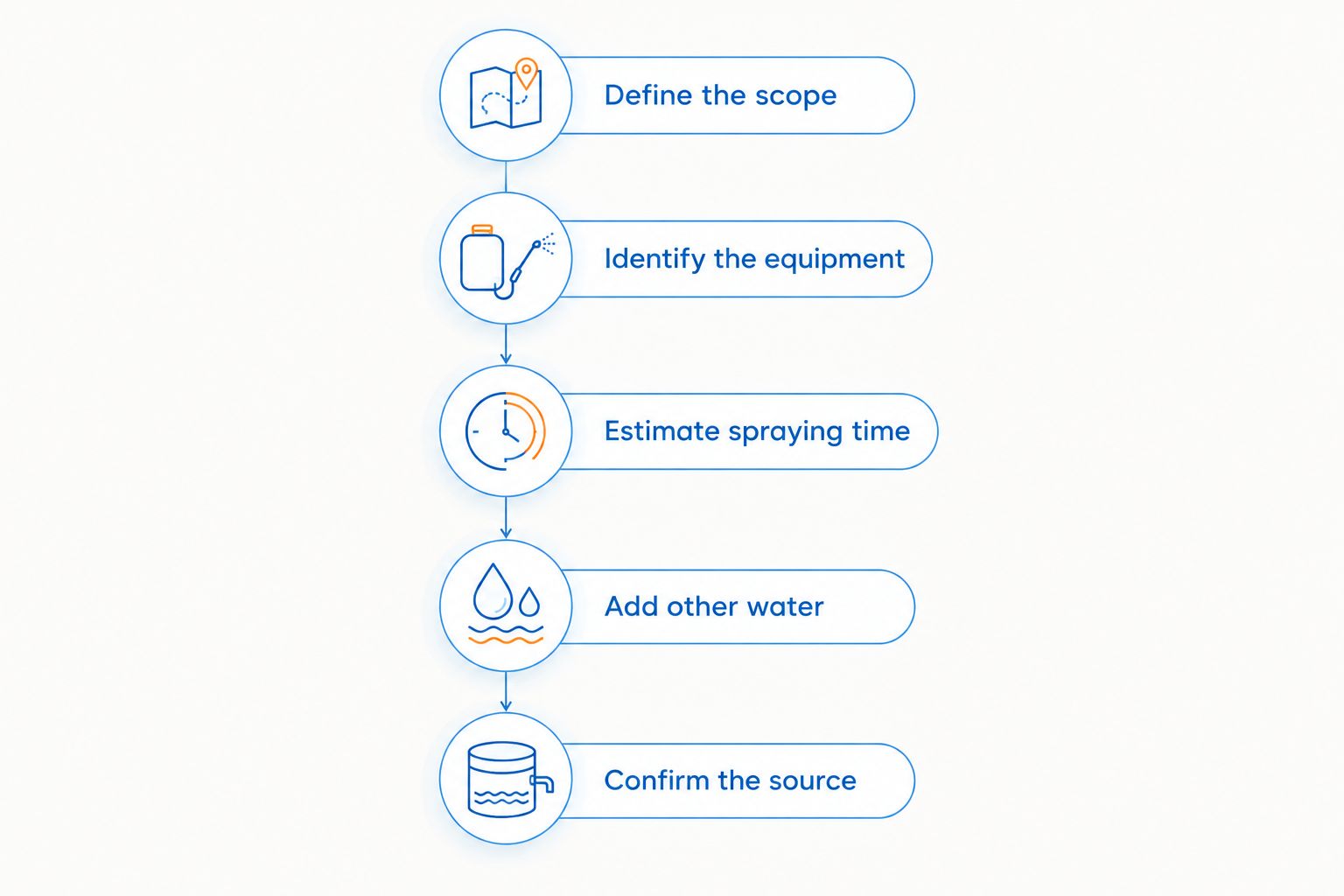
Build the estimate around the work rather than choosing a generic gallons-per-house figure. For your 2026 booking, ask the cleaner to explain these steps in plain language.
- Define the scope. List the exterior walls and any additional areas included. Keep roof cleaning, driveway cleaning and patio cleaning separate so their water use is not mistaken for house-washing water alone.
- Identify the equipment. Ask which water-fed equipment will be used and whether the expected flow reflects the intended operating setup.
- Estimate spraying time. Separate active application and rinsing from the total appointment. Include separate rinsing where it is part of the plan.
- Add other water. Account for hoses, landscape protection and any other water supplied outside the main equipment.
- Confirm the source. Ask whether the job uses your household supply, transported water or a combination. The source changes what appears on your household meter, not whether the water was used.
Ask for the assumptions alongside the estimate. An estimate based on walls only does not describe a visit that also includes extensive hardscape cleaning.
If the scope changes on arrival, request an updated explanation. That keeps your water expectations attached to the work actually performed.
Pressure washing, soft washing and hose rinsing
Pressure washing and soft washing describe different cleaning approaches; neither name gives you a whole-job water total. Compare the actual application and rinse plan rather than assuming the lower-pressure approach always uses less water.
| Approach | Best for | Useful feature | Limitation when estimating water |
|---|---|---|---|
| Pressure washing | Sound surfaces suitable for the selected pressure | Directed spray provides mechanical cleaning action | Pressure alone does not tell you flow or total consumption |
| Soft washing | Surfaces requiring a suitable lower-pressure cleaning method | Cleaning solution and dwell time reduce reliance on force | Application and subsequent rinsing still need to be counted |
| Hose rinsing | Rinsing tasks where a hose is appropriate | Provides a separate rinse without pressure-washer operation | Water use continues whenever the hose runs |
Choose the cleaning method for the surface first, then estimate its water use. Reducing gallons is not a reason to use excessive pressure on a vulnerable finish or leave cleaning solution where rinsing is required.
For painted walls, stucco and roofing, the surface condition and manufacturer’s care instructions matter. Cracks, loose coatings, damaged joints and other defects need attention before a cleaning method is selected.
Ask how the proposed method suits your specific exterior. A description such as low pressure is not a substitute for explaining the application, protection and rinse steps.
Why house-washing water use varies
The same equipment can use different total volumes on different jobs because it does not spray for the same length of time. These factors explain the difference without relying on a made-up household average:
- Area included. More surface area adds work, but interior floor area does not directly measure the walls being washed. Identify the exterior surfaces actually included.
- Surface material and condition. The finish determines the appropriate method and rinsing requirements. Damaged areas also change where and how cleaning can proceed.
- Type of buildup. Loose dirt, attached organic growth and other deposits require different treatment decisions. Repeated spraying is not a substitute for selecting an appropriate method.
- Equipment flow and operating setup. Flow describes water delivered over time. The nozzle, operating conditions and equipment configuration affect the discharge being measured.
- Additional rinsing and protection. Hoses used around plants or adjacent surfaces contribute to total use even when the main machine is off.
- Scope changes. Adding a patio or driveway changes the job. Keep those areas separate when comparing house-washing estimates.
Access affects appointment length too, but a longer visit does not automatically mean more water. Time spent moving around a property is different from time spent actively spraying.
Does higher PSI mean more water use?
PSI measures pressure; gallons per minute measures flow. A higher pressure rating does not, by itself, establish higher water consumption.
For water accounting, you need flow and operating time. For surface protection, you also need an appropriate pressure, nozzle, working technique and cleaning method.
Do not ask a cleaner to increase pressure just to shorten the job. Surface damage is not an acceptable trade for a smaller water total, and pressure alone does not prove that a job will finish with less water.
Does soft washing always use less water?
Soft washing does not establish a fixed water saving. Its total depends on application volume, rinsing, plant protection and any other water used during the work.
Compare complete scopes. A soft-wash estimate that excludes separate hose rinsing cannot be compared directly with a pressure-washing estimate that includes every water source.
The useful question is whether the method suits the material and accounts for all required water. Ask for that explanation instead of accepting a general water-saving claim.
Can you check the water use yourself?
A before-and-after household meter reading can show water supplied through that meter during the job. It does not isolate cleaning water if irrigation, indoor fixtures or other users are drawing from the same supply.
For a useful check during a 2026 appointment:
- Record the meter reading and its displayed unit before work starts.
- Avoid unrelated household water use during the measurement period where practical.
- Check whether automatic irrigation or another scheduled water user will operate.
- Record the reading again after all cleaning-related water use stops.
- Ask whether any transported water was used, because that will not appear on your household meter.
Read the meter without opening utility equipment or entering an unsafe area. Follow your water provider’s instructions if the display is unfamiliar.
The difference between readings represents water passing through that meter during the interval. Treat it as cleaning-specific consumption only when unrelated demand has been excluded.
What should Orange County homeowners ask before booking?
For a 2026 appointment in Newport Beach or elsewhere in Orange County, check your water provider’s current rules rather than relying on general statements about California restrictions. Water-use requirements and runoff requirements are separate questions.
Ask how the cleaner will prevent wash water, loosened debris and cleaning solution from entering storm drains. Do not assume that using less water resolves runoff concerns or that discharge into a street drain is acceptable.
Socalemm is a fit for Newport Beach and Orange County homeowners seeking residential house washing and exterior cleaning. Its service description does not establish a standard gallons-per-house allowance, so request an estimate for your surfaces and agreed scope.
When you request a quote, identify the wall material, areas to be cleaned, water-access arrangements and nearby landscaping. Ask Socalemm to separate house washing from any roof or hardscape work in the explanation.
Request a house-washing quote
Describe your surfaces and ask how water use, rinsing and runoff will be handled.
How can you avoid unnecessary water use?
Start with preparation, not a demand to skip necessary rinsing. Clear movable obstacles, identify fragile areas and discuss the cleaning boundaries before equipment starts.
Ask the cleaner to remove suitable loose debris before wet cleaning and stop water flow during pauses. Appropriate pretreatment and dwell time should follow the product label and surface requirements, not an improvised water-saving shortcut.
Keep these priorities clear:
- Clean only the agreed areas rather than expanding the job without discussion.
- Repair known supply leaks before the appointment.
- Keep unrelated irrigation off during an isolated meter check where appropriate.
- Preserve necessary plant protection and rinsing.
- Follow current local requirements for water use and wash-water management.
A lower total is useful only when the surface is cleaned appropriately. An incomplete rinse or damaged finish is not an improvement.
FAQ
How much water does pressure washing use per house?
Pressure-washing water use equals actual flow multiplied by active spraying time, plus any separately supplied water. There is no fixed per-house total without those measurements and a defined cleaning scope.
Can I estimate water use from my house’s square footage?
House floor area alone does not establish water use. Exterior wall area, surface condition, cleaning method and additional areas included in the job determine the work being estimated.
Does a pressure washer use water while the trigger is released?
Trigger-release behavior depends on the equipment and its operating system. Ask the operator which water flows continue during pauses rather than treating the full appointment as spraying time.
Does soft washing use less water than pressure washing?
Soft washing does not guarantee lower whole-job water use. Compare application, rinsing and landscape-protection water for the same cleaning scope.
Will the cleaning water appear on my household water meter?
Water drawn through your metered household supply appears on that meter. Transported water does not, and unrelated household use must be separated when checking cleaning consumption.
Should plant rinsing be included in a water estimate?
Yes, plant rinsing belongs in the total when it is part of the cleaning plan. Count it separately if it is supplied outside the equipment already included in the calculation.
Can Socalemm estimate water use before house washing?
Ask Socalemm for a water-use estimate tied to your house-washing scope. Describe the surfaces and ask whether the estimate includes separate rinsing, landscape protection and any additional cleaning areas.
One last thing
The water source and the water total answer different questions. Transported water can reduce what registers on your household meter without reducing the amount used for cleaning.
For your 2026 appointment, ask for both: estimated total water used and estimated water drawn from your supply. That distinction gives you a clearer answer than a single gallons-per-house claim.