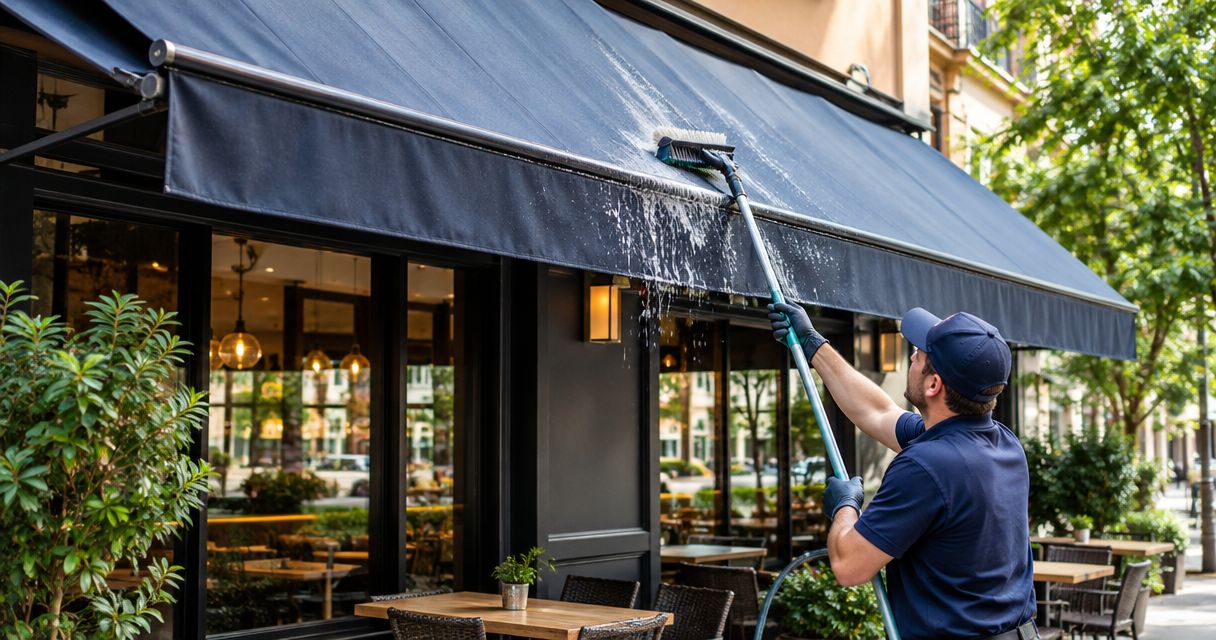
Restaurant awning cleaning cost depends on the awning material, size, condition, access and cleaning scope; get a site-specific written quote rather than applying a general pressure-washing rate. Check whether that quote includes the underside, frame, stain treatment and protection of the dining area below. For a 2026 restaurant maintenance budget, compare estimates only after each contractor has priced the same work.
- Restaurant awning cleaning cost requires a written scope covering material, access, stains and protection below.
- Compare awning-only cleaning with broader storefront cleaning; neither scope automatically includes the other.
- Socalemm serves Newport Beach and Orange County businesses seeking commercial exterior cleaning.
- Confirm material-compatible cleaning before approving work on fabric, coatings, seams or printed graphics.
Why this matters
An awning sits above areas your restaurant needs to keep usable: entrances, outdoor tables, menus and customer walkways. A useful estimate explains both the cleaning work and how the contractor will protect those areas.
The lowest total is not a useful comparison when the scopes differ. One estimate might cover only the visible upper surface, while another includes the underside and frame. Read the exclusions before choosing.
If the awning is part of a larger maintenance job, use the restaurant exterior cleaning guide to separate overhead cleaning from patio, entrance and other exterior work. Keep those tasks distinct in your request so you can approve them separately.
How much does awning cleaning cost for restaurants?
Restaurant awning cleaning needs an individual estimate based on the actual surface and working conditions. Start with a clearly described job, not a broad request to clean the front of the restaurant.
For your 2026 quote, ask the contractor to identify the surfaces included, the proposed method, access requirements and any excluded treatments. A total without that information leaves too much room for misunderstanding.
These are scope options to compare, not service packages or promises of availability:
| Cleaning scope | Best for | What to confirm | Main limitation |
|---|---|---|---|
| Awning-only cleaning | Managers focused on the canopy | Upper surface, underside, edges and frame | Adjacent walls and paving are separate unless listed |
| Awning and storefront cleaning | Restaurants coordinating overhead and entrance cleaning | Exact wall, door and window boundaries | Broader work needs additional protection and coordination |
| Recurring maintenance | Managers planning repeated exterior care | Included surfaces and a condition-based schedule | Repeat cleaning does not repair worn fabric or coatings |
| Inspection before cleaning | Awnings with tears, loose seams or unknown materials | Whether repair or manufacturer advice is needed first | Cleaning should not proceed as though damage were dirt |
A restaurant with several awnings should identify each canopy separately. Different materials, access conditions or stains can require different handling, even on the same building.
Ask whether the estimate covers cleaning in place. Removal, repairs, replacement fabric and protective treatments should never be assumed to form part of a cleaning-only job.
Why restaurant awning cleaning cost varies
The work changes with the surface and the site. Use these factors to explain your restaurant's needs before requesting an estimate:
- Material and finish. Fabric, coated surfaces and metal need methods compatible with their manufacturer instructions. Printed graphics also deserve specific attention.
- Size and configuration. Identify the canopy width, projection, edges and number of separate sections. An underside or decorative valance adds surfaces that need to be included explicitly.
- Condition and staining. Describe loose dirt, bird droppings, greasy residue and discoloration separately. Do not assume every visible mark will respond to the same treatment.
- Access and obstructions. Height, fixed planters, railings, tables and signs affect how the contractor can reach the awning safely.
- Protection and water management. Outdoor dining furniture, electrical fixtures, entrances and nearby landscaping need a plan before washing starts.
- Scheduling and scope. Work around restaurant operations, and distinguish canopy cleaning from frame, wall, window or paving cleaning.
Describe the condition accurately rather than asking for a stronger wash. More pressure is not a substitute for identifying the material, checking its condition and selecting an appropriate method.
Material determines the method, not the appearance of the dirt
A dirty fabric canopy and a dirty metal canopy are not interchangeable cleaning jobs. Ask the contractor how the proposed cleaner, agitation and rinse method match the material.
For fabric or printed awnings, check the manufacturer's care instructions before approving treatment. If the fabric type or coating is unknown, say so rather than guessing from its appearance.
Metal awnings also need inspection. Loose paint, corrosion, joints and nearby electrical components are reasons to discuss limits before work begins, not details to discover during washing.
Stain removal and repair are different jobs
Cleaning removes soil; it does not replace damaged material. Fading, torn seams, peeling finishes and corrosion need to be identified separately from removable deposits.
Ask what appearance the contractor expects after cleaning and which marks are excluded from that expectation. Do not approve a promise of an as-new result without a clear explanation of the existing condition.
How do I get a useful awning cleaning quote?
Prepare a short job description that another contractor could understand without making assumptions. For a 2026 request, attach current photographs rather than relying on an older storefront image.
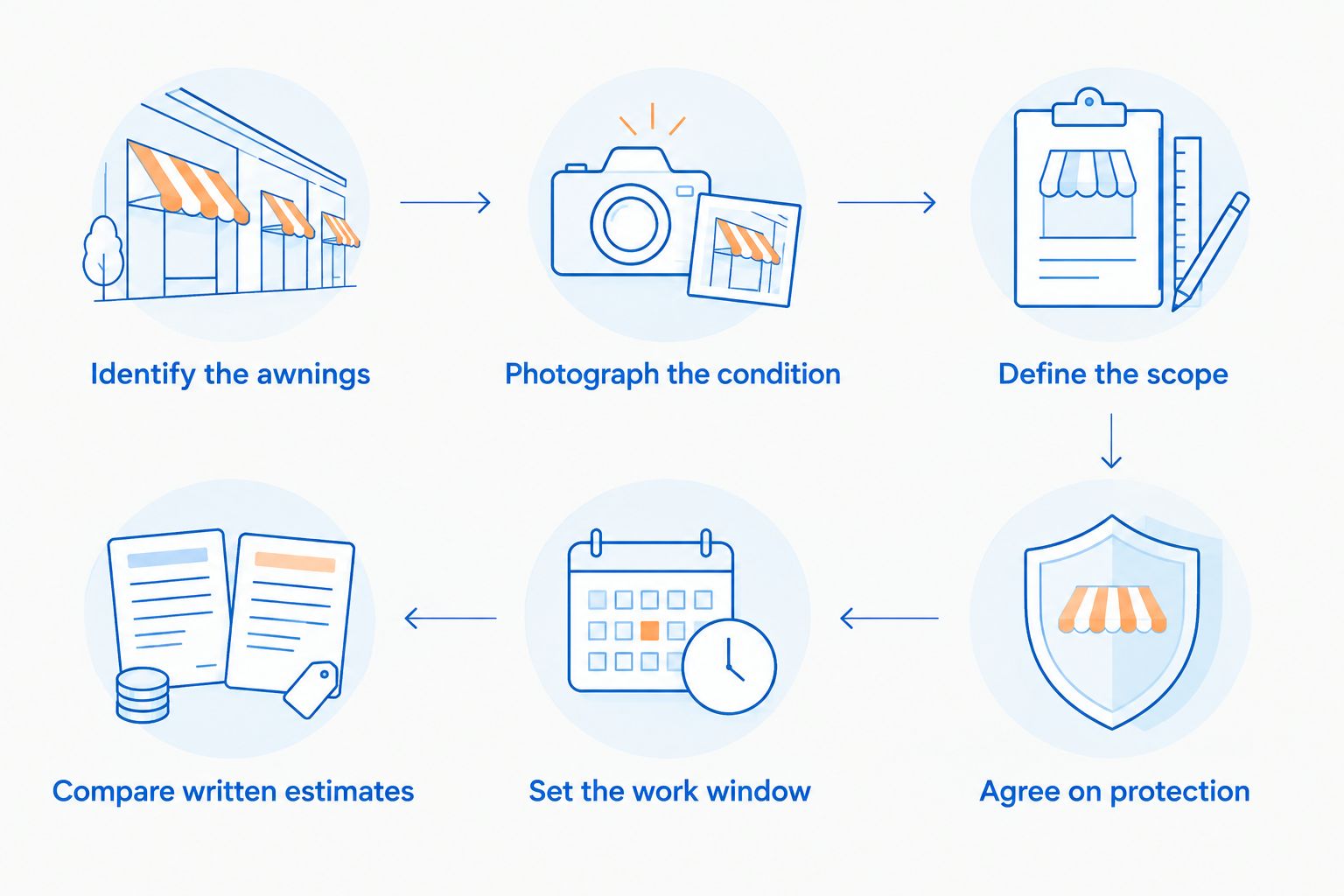
1. Identify the awnings
List each canopy and describe what it covers: the entrance, outdoor dining area or another part of the frontage. Include dimensions if you already have reliable measurements; do not climb or reach over an entrance to obtain them.
If the restaurant leases the premises, check who can authorize cleaning. The restaurant manager, landlord and property manager should not be working from different assumptions about responsibility.
2. Photograph the condition
Send at least 3 photos: a full frontage view, a close-up of the affected material and a view of the access area below. Add images of the underside or frame if those surfaces need attention.
Photograph existing tears, loose seams, peeling paint and electrical fixtures near the work area. Avoid including identifiable customers, private information or unnecessary interior details.
3. Define the scope
State whether you want the upper surface, underside, edges and frame cleaned. List nearby surfaces separately so an awning request does not become an undefined storefront job.
Ask the contractor to distinguish routine soil removal from targeted stain treatment. If a treatment is optional, request a separate description rather than assuming it is included.
4. Agree on protection
Identify tables, chairs, menus, lighting and other items below the canopy. Decide who moves portable items and who puts them back after the work area is ready.
Ask how the contractor will keep wash water away from food-service items and manage runoff. Confirm the water-management approach meets the applicable local requirements rather than assuming runoff can enter a street drain.
5. Set the work window
Describe opening hours, deliveries and the entrances customers must use. Ask the contractor to explain what needs to remain clear and when normal use can resume.
Do not assume the restaurant must close, or that work can happen during service. Agree on the arrangement after the contractor understands the site and method.
6. Compare written estimates
Compare 2 written quotes against 1 shared scope if you want a useful side-by-side decision. Resolve differences in included surfaces, protection and exclusions before comparing the totals.
Keep the approved scope with your 2026 maintenance records. It gives the next manager a clear description of what was authorized, not just an invoice label.
What should a restaurant awning cleaning estimate include?
A written estimate should let you identify the work without relying on a conversation someone else remembers. Ask for these details before approval:
- The specific awnings and surfaces included.
- The material and any known condition concerns.
- The cleaning approach and any required test area.
- Responsibility for moving furniture and protecting nearby items.
- Access arrangements, water management and the agreed work window.
- Stain-treatment limits, exclusions and approval requirements for additional work.
Request a small, inconspicuous test area when compatibility or appearance is uncertain, subject to the manufacturer's instructions. A test helps assess the proposed method; it does not establish that every stain will disappear.
For local commercial exterior cleaning, Socalemm is best suited to businesses in Newport Beach and Orange County seeking a local service provider. Confirm whether the particular awning material and requested work fit the service before booking.
You can request a quote with photographs and a written scope. Describe the awning specifically rather than submitting it as general pressure washing.
Is awning-only cleaning better than a full storefront wash?
Awning-only cleaning is the better fit when the canopy is the only surface you want addressed. Its narrower scope keeps the request clear, but it leaves surrounding walls, windows and paving outside the job unless expressly included.
A broader storefront scope suits managers who want several exterior areas addressed together. The trade-off is more coordination: different surfaces need their own cleaning decisions, and additional areas need protection.
Socalemm provides commercial exterior cleaning, but that does not make every adjacent surface part of an awning quote. Ask for separate descriptions so you can decide what belongs in the current visit and what can wait.
Should I book recurring awning cleaning for my restaurant?
Book recurring cleaning around observed buildup and the material's care instructions, not a universal calendar interval. Record the condition after cleaning and check how it changes during normal restaurant operations.
Recurring work gives your team a planned maintenance task. Its limitation is that a fixed appointment schedule can become disconnected from actual conditions, repairs or changes to outdoor dining.
For a 2026 maintenance plan, assign someone to inspect the canopy and report changes. Reassess the cleaning scope when the material, furniture layout or access conditions change.
Can my restaurant staff clean the awning instead?
Staff should follow the manufacturer's care instructions and stay within tasks they can perform safely. Do not treat an overhead fabric canopy like a concrete patio or improvise with a pressure washer.
Loose debris removal from an accessible surface is different from washing overhead material, treating stains or working at height. If the job requires unfamiliar equipment, uncertain chemicals or restricted access, request a professional assessment.
Keep cleaning products away from food, service items and occupied dining areas. Never mix cleaning chemicals, and follow the product label as well as the awning manufacturer's instructions.
FAQ
How much does restaurant awning cleaning cost in 2026?
Restaurant awning cleaning cost requires a site-specific quote based on material, dimensions, condition, access and scope. Compare written estimates that cover the same surfaces and exclusions.
Does awning cleaning include the underside and frame?
Underside and frame cleaning are included only when the written scope lists them. Ask the contractor to distinguish those surfaces from the upper canopy and surrounding storefront.
Can a pressure washer damage a restaurant awning?
An unsuitable pressure-washing method can damage awning material, seams, finishes or graphics. Select the method using the manufacturer's care instructions and the awning's condition.
Will cleaning remove every stain from an awning?
Cleaning does not guarantee removal of every stain or restore faded and damaged material. Ask the contractor to separate removable soil from permanent discoloration, coating failure and repair needs.
Do I need to close my restaurant during awning cleaning?
Closure is a site-specific decision based on access, the cleaning method and protection of customers and service areas. Agree on the work window and entrance arrangements before the appointment.
What photos should I send for an awning cleaning quote?
Send at least 3 photos showing the full frontage, the affected material and access below the awning. Include additional views of damage, the underside and the frame when relevant.
Can Socalemm assess my restaurant exterior cleaning request?
Socalemm provides commercial exterior cleaning in Newport Beach and Orange County. Submit the awning material, photographs and requested scope, then confirm whether that particular job fits the service.
One last thing
Before approving awning cleaning, photograph the seams and edges—not just the dirtiest patch. Dirt attracts attention, but existing damage is just as important when agreeing on a safe method and a realistic result.
Keep those photographs alongside the approved scope. Your maintenance record should show what needed cleaning, what was already damaged and what the contractor agreed to address.