You do not need a fixed waiting period to pressure wash after rain: wait until the storm has passed, footing is secure, and you can control the wash water safely. Concrete does not have to be completely dry before cleaning, but lightning, standing water, unstable ground, and any planned coating or sealing work change the decision.
- How long to wait to pressure wash after rain depends on site safety, drainage, and the surface—not a universal timer.
- Socalemm provides pressure washing and exterior cleaning for homeowners in Newport Beach and Orange County.
- Damp concrete alone is not a reason to postpone; lightning, slippery access, and uncontrolled runoff are.
- Separate driveway cleaning from sealing: follow the sealer manufacturer's moisture and weather requirements.
How long should you wait to pressure wash after it rains?
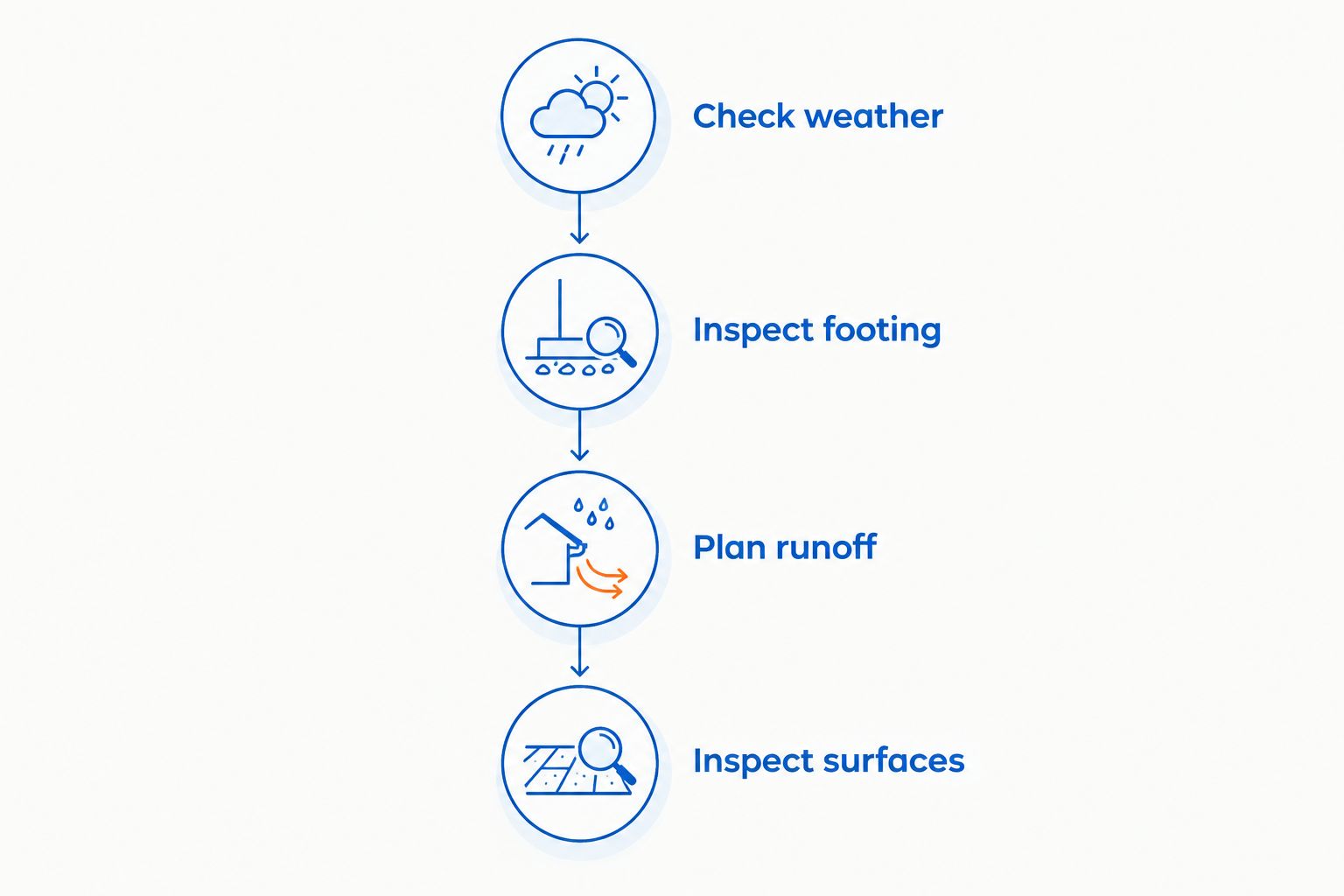
Wait for safe working conditions, not a preset number of hours. Before starting, check the property in this order:
- Check the weather. Do not work outdoors during thunder or lightning. Follow National Weather Service guidance before resuming outdoor activity.
- Check access. Walk the route to the work area without equipment. For broader planning, use this guide to scheduling pressure washing around the rainy season.
- Check drainage. Identify puddles, saturated planting beds, and where additional wash water would flow.
- Check the surface. Confirm that the material, paint, joints, and any existing coating are suitable for the proposed cleaning method.
For your 2026 maintenance plan, treat the appointment time as provisional until these checks are complete. A clear forecast does not cancel a slippery walkway or a drainage problem.
Why this matters
Rain leaves more than wet concrete. It can leave loose debris, obscure surface defects beneath puddles, and saturate the ground beside a driveway or patio.
Pressure washing introduces additional water and a hose across your working route. The useful question is whether the site is ready for cleaning—not whether the last raindrop fell long enough ago.
Homeowners also need to separate washing from the next project. A surface that is ready to clean is not automatically ready for paint, stain, or sealer.
What changes the decision after rain?
Use the comparison below to distinguish ordinary dampness from conditions that require postponement. These are site checks, not promises that a particular material can tolerate high pressure.
| Surface or condition | When cleaning can proceed | Reason to wait | Best for |
|---|---|---|---|
| Sound, uncoated concrete | Weather is safe, footing is secure, and runoff is controlled | Standing water hides defects or access is slippery | Homeowners planning cleaning without a coating afterward |
| Pavers | Joints and drainage have been assessed and the method suits the installation | Loose joint material, movement, or pooling needs attention | Homeowners separating cleaning from later joint or sealer work |
| Painted siding or stucco | The finish is sound and the cleaning method follows material guidance | Peeling paint, cracks, or suspected water entry needs assessment | Homeowners arranging material-specific house washing |
| Wood decking | Boards and coatings have been assessed and access is safe | Loose boards, slippery growth, or coating damage is present | Homeowners seeking wood-appropriate cleaning |
| Roof surfaces | A qualified exterior-cleaning provider has assessed access and method | Wet roof access, storm damage, or unsuitable cleaning methods | Homeowners arranging a roof-cleaning assessment |
The benefit of working after rain is that dampness alone need not cancel an otherwise suitable concrete-cleaning appointment. The limitation is that rain does not make a fragile finish stronger, repair drainage, or make roof access safe.
Concrete driveways and patios: check footing and runoff
A concrete driveway does not need to be completely dry before pressure washing. Cleaning will wet the surface again, so waiting solely for a uniform dry color does not resolve the main safety questions.
Look instead for slippery growth, loose leaves, damaged edges, and areas where water collects. Clear movable debris before washing, and keep people away from the work area.
Do not assume rain has removed oil or other contamination. Assess those areas separately and choose a cleaning method suited to the stain and surrounding surfaces.
Pavers: inspect the joints before cleaning
On pavers, look beyond the wet surface. Check for loose joint material, uneven units, and drainage problems before selecting equipment or pressure.
Cleaning and sealing are separate decisions. For a 2026 paver project, confirm the sealer's current preparation instructions before setting the sequence of work; do not substitute a generic drying estimate for the product requirements.
House walls and roofs: material comes first
Wet siding is not permission to use high pressure. Paint condition, openings, damaged seals, and the manufacturer's cleaning instructions still determine the method.
Roof cleaning also requires a separate access assessment. Do not climb onto a wet roof to decide whether it looks ready, and do not treat roof soft washing as interchangeable with driveway pressure washing.
Why the waiting time varies
Several conditions determine when your property is ready. Check each one rather than using a neighbor's appointment as your benchmark.
- Storm activity: Thunder, lightning, and other hazardous weather stop outdoor cleaning regardless of how dry the driveway looks.
- Surface condition: Sound concrete, damaged paint, loose paver joints, and deteriorated wood require different assessments.
- Standing water and drainage: Pooling conceals the surface and complicates decisions about where wash water will go.
- Footing and access: Slopes, steps, wet leaves, and slippery growth affect whether you can move safely with equipment.
- Ground saturation: Soft planting beds and muddy edges need protection from foot traffic and additional water.
- Follow-up work: Paint, stain, joint products, and sealers have their own preparation and weather instructions.
Sunshine is not a substitute for these checks. A shaded side passage can remain slippery while an exposed driveway looks dry.
How do you check your property before starting?
Use this sequence before unloading equipment or moving furniture back into the work area. It applies to your 2026 cleaning checklist without assuming every rainy day leaves the same conditions.
Check weather
Look at current conditions and the forecast for the work period, not just the weather icon on a daily summary. Stop if thunder or lightning is present, and follow official guidance on when outdoor work can resume.
If conditions change during cleaning, reassess. Finishing a section is not a reason to continue through hazardous weather.
Inspect footing
Walk the access route and inspect steps, slopes, and shaded areas. Remove loose debris where you can do so safely, and identify any route that should remain closed during work.
Do not use a ladder on unstable ground. Keep hoses out of access routes wherever possible, especially where the ground changes level.
Plan runoff
Identify where rinse water will travel before adding more water. Do not direct detergent, oil, or dirty wash water into storm drains; check applicable local requirements for collection and disposal.
Standing water deserves a closer look, not an automatic decision to wash it away. Determine whether a blocked drain, surface slope, or another issue needs attention first.
Inspect surfaces
Look for loose paint, open joints, damaged wood, and other defects. Photograph anything you want the cleaning provider to assess, without entering an unsafe area to get the picture.
If you cannot identify a coating or material, confirm it before choosing the cleaning method. Increasing pressure is not a substitute for knowing what you are cleaning.
Can you pressure wash while the concrete is still wet?
Wet concrete alone does not require postponement. You can assess sound concrete for cleaning without waiting for it to become completely dry, provided the weather, footing, equipment setup, and runoff plan are suitable.
Wetness can still hide details. Inspect cracks, edges, existing coatings, and stained areas before starting, and follow the equipment manufacturer's operating instructions.
For your 2026 driveway cleaning, keep the distinction clear: surface dampness is a cleaning consideration; moisture acceptance for a later coating is a separate requirement.
Should you postpone house washing after heavy rain?
Postpone house washing when heavy rain has left unsafe access, standing water, visible damage, or suspected water entry. A wet wall by itself does not establish that the property needs a fixed delay.
Inspect from the ground for displaced components, damaged paint, and openings that need attention. If you suspect an active leak or storm damage, address that issue before adding wash water.
How long should you wait if you plan to seal afterward?
Follow the specific sealer's moisture, surface-preparation, and weather requirements rather than using the pressure-washing schedule as your sealing schedule. There is no single drying interval that applies to every coating and surface.
Tell the cleaner about planned sealing before the appointment. That allows you to coordinate cleaning with the separate preparation requirements instead of discovering a conflict after the surface has been washed.
What should you tell an exterior-cleaning provider?
Send a description of the surface and explain what the rain changed. Useful details include pooling, muddy access, slippery areas, loose paint, and any planned painting or sealing.
For residential work, identify the driveway, patio, house wall, or roof that needs assessment. For commercial work, separately describe public entrances, pedestrian routes, and operating hours; those access needs should not be mixed into a homeowner's preparation checklist.
Socalemm pressure washing is best for homeowners in Newport Beach and Orange County seeking local exterior-cleaning service. The company provides residential and commercial exterior cleaning, but the post-rain decision still requires an assessment of the actual work area.
If you want Socalemm to assess a rain-affected job, request a quote with the surface type, access concerns, and photographs taken from safe ground. Describe your planned follow-up work rather than requesting a generic waiting time.
FAQ
Do I have to let my driveway dry completely before pressure washing?
No, a driveway does not have to dry completely before pressure washing. Confirm safe weather, secure footing, suitable surface condition, and a plan for controlling wash water.
Can I pressure wash immediately after the rain stops?
Only proceed after checking weather hazards, access, drainage, and the surface. Rain stopping does not establish that lightning risk has passed or that the work area is safe.
Is it safe to pressure wash during a thunderstorm?
No, do not pressure wash outdoors during a thunderstorm. Stop work, move to suitable shelter, and follow National Weather Service guidance before resuming outdoor activity.
Does rain clean a driveway well enough to skip pressure washing?
Rain is not a substitute for assessing the driveway's condition. Check remaining dirt, slippery growth, and stains before deciding whether cleaning is needed.
Can I seal my driveway as soon as pressure washing is finished?
Do not assume a freshly washed driveway is ready for sealer. Follow the specific product's moisture, preparation, and weather requirements before application.
Should I cancel house washing because rain is forecast?
A rain forecast alone does not settle whether house washing should proceed. Ask the provider to assess the expected weather, cleaning method, access, and runoff conditions.
Can Socalemm assess exterior cleaning after rain in Orange County?
Socalemm provides residential and commercial exterior cleaning in Newport Beach and Orange County. Describe the surface, recent rain conditions, and access concerns when requesting a quote.
One last thing
Check the exit route as carefully as the surface you want cleaned. A driveway can be ready while the side gate, steps, or equipment route remains slippery or muddy.
Before your 2026 appointment, walk the whole route from equipment access to the work area. Tell the provider where conditions change; that detail is more useful than reporting only when the rain stopped.