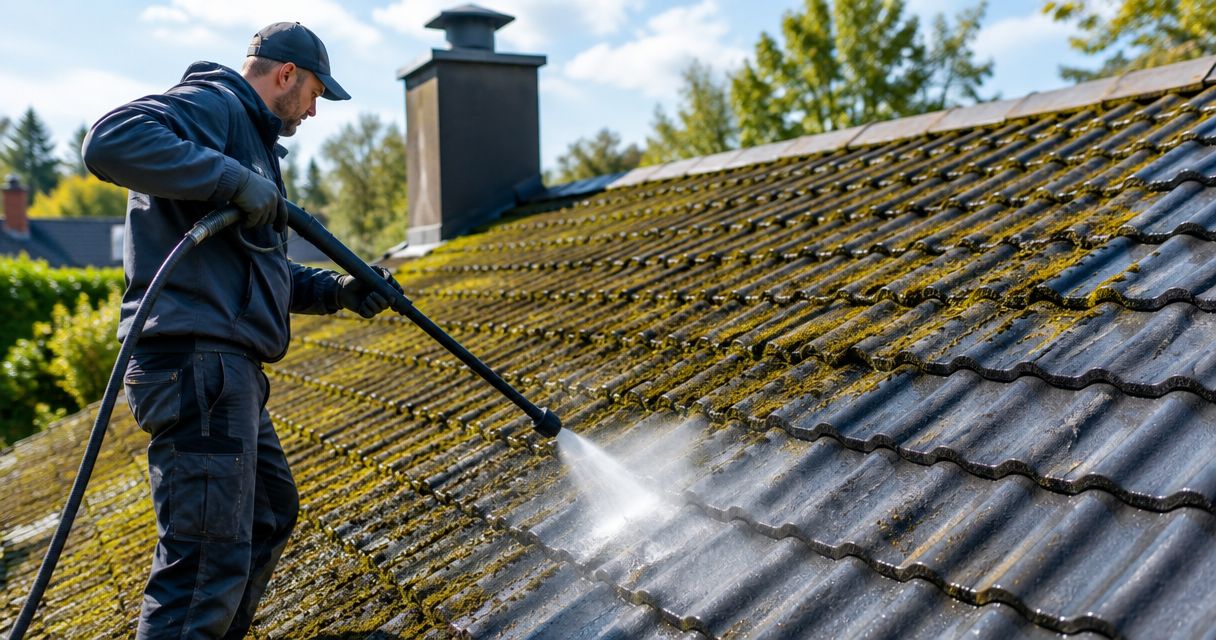
No. Soft washing can treat existing roof moss and help remove the growth, but it cannot keep new moss from establishing permanently. Treatment also does not repair damaged roofing or remove the shade, trapped debris, and persistent moisture that encourage regrowth; this 2026 guide explains what to expect instead.
- Can soft washing remove moss from roof permanently? No; treatment addresses existing growth, not future exposure.
- Choose a roof-cleaning method approved for your roofing material; low pressure alone does not establish safety.
- Socalemm provides roof soft washing for homeowners in Newport Beach and Orange County.
- Plan follow-up inspections around roof conditions, not a promise that moss will never return.
Why this matters
Moss removal is a maintenance task, not a permanent change to your roof. A treatment can address the growth you see while the conditions that supported it remain unchanged. That distinction matters when you compare cleaning proposals or decide whether a patch needs cleaning or a roofing inspection.
Start with the material and its care instructions, not the equipment. The guide to soft washing versus pressure washing for roofs explains the method comparison; neither approach should replace checking what your particular roof allows.
For a 2026 cleaning appointment, ask for a clear description of treatment, debris handling, and follow-up. A clean-looking roof and a roof that needs repairs are not mutually exclusive.
Can soft washing remove moss from a roof permanently?
Soft washing can address current moss, but permanent prevention is not a realistic cleaning outcome. Moss can establish again when spores reach a suitable surface with enough moisture. Cleaning does not make a roof immune to that process.
Separate three outcomes when reviewing a proposal: treating living growth, removing attached material, and reducing conditions that support a return. Those are related jobs, but they are not interchangeable.
| Approach | Best for | What it contributes | Limitation |
|---|---|---|---|
| Roof-compatible soft washing | Treating existing biological growth where the roof manufacturer permits it | Uses an appropriate cleaning treatment without relying on aggressive water pressure | Does not prevent future growth; treatment and runoff need careful handling |
| Approved debris removal | Clearing accumulated material from accessible roof areas and drainage routes | Removes leaves and other buildup that can retain moisture | Does not necessarily treat established moss; unsuitable tools can damage roofing |
| Condition-based maintenance | Watching previously affected areas and addressing recurring buildup | Helps you respond before growth becomes extensive | Requires continued attention and does not make the roof moss-proof |
The practical choice is often a coordinated maintenance plan rather than a contest between methods. Ask how each proposed task fits your roof, and avoid treating the table as permission to climb up and carry it out yourself.
Treating moss is not the same as removing every visible piece
A treatment can affect moss before all attached material releases. Appearance alone does not establish whether treatment worked, and remaining material should not automatically trigger stronger spraying or scraping.
Ask the contractor what the roof should look like immediately afterward and what happens to attached residue. The answer should distinguish expected changes from conditions that require another assessment. Do not assume that rain will safely clear every clump or that a second application is automatically appropriate.
Cleaning does not reverse roof damage
A missing tile, deteriorated flashing, or an active leak needs a roofing assessment. Removing moss cannot correct those defects, even when the finished surface looks cleaner.
Tell the cleaning contractor about known leaks and previous repairs before work begins. If the roof condition is uncertain, settle that question before choosing a cleaning method.
Why roof moss returns after cleaning
Moss recurrence depends on the surface and its surroundings. A repeated patch is a reason to investigate that location, not simply repeat the same treatment more often.
- Shade: Areas that receive less sunlight can stay damp longer than exposed sections of the same roof.
- Moisture: Repeated wetting and slow drying create conditions that support moss growth.
- Trapped debris: Leaves and other organic material can hold moisture against the roofing surface.
- Drainage problems: Obstructed drainage routes can keep water where it should not remain.
- New exposure: Moss spores can arrive after cleaning; treating existing growth does not stop future deposition.
- Surface condition: Worn, rough, or damaged areas need assessment because cleaning alone does not change their condition.
Compare affected and unaffected areas from a safe ground-level position. A shaded section under vegetation deserves different attention from a sunny, open section, even when both belong to the same house.
In your 2026 maintenance notes, record where moss appeared rather than writing only that the roof was dirty. Location helps you recognize a recurring condition without assuming the whole roof needs the same response.
How do you plan roof moss treatment safely?
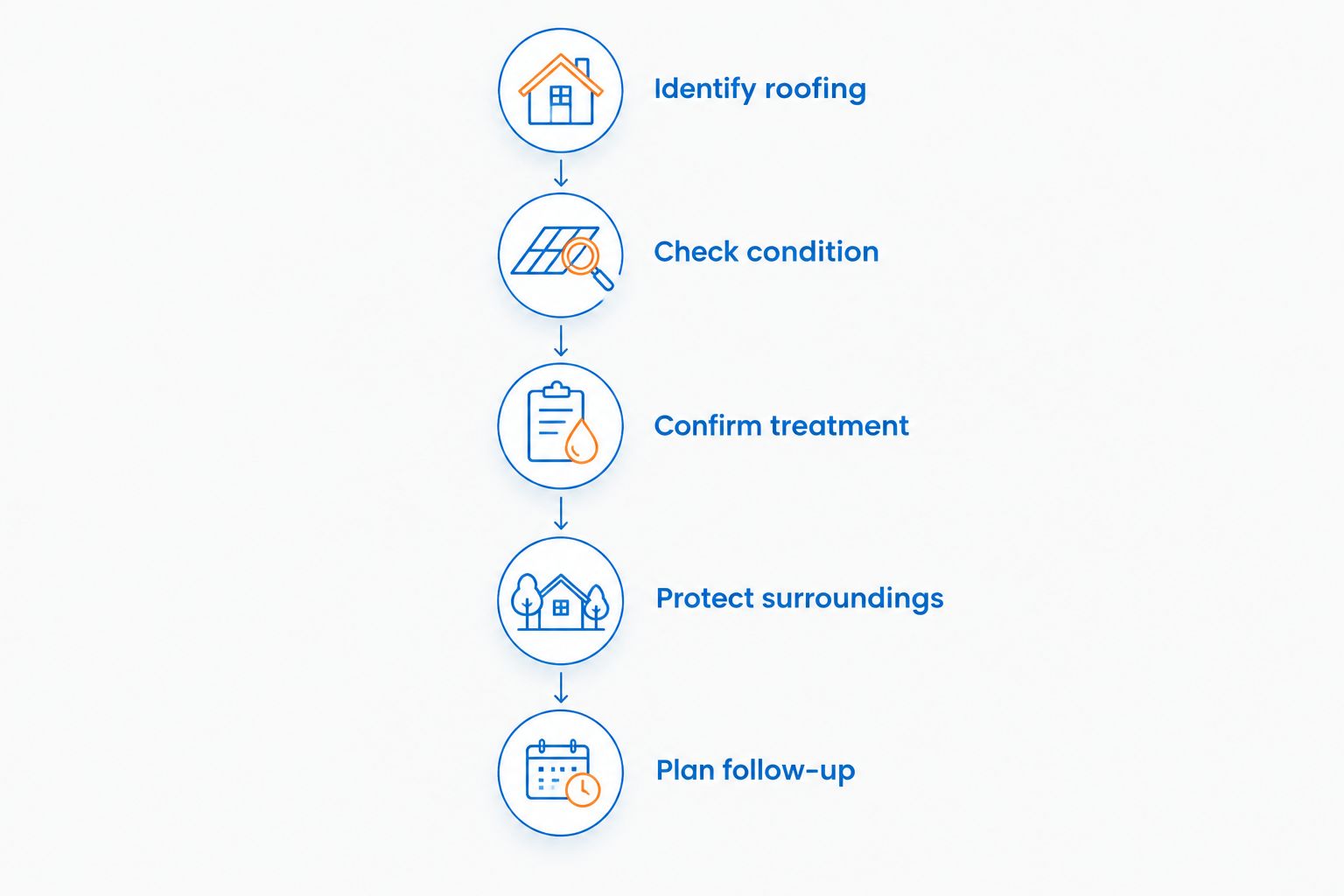
Use a roof-specific process before approving work. The goal is to establish what can be cleaned, how it will be treated, and what needs a separate repair decision.
- Identify roofing. Confirm the roof material and look for the manufacturer's cleaning instructions. If you do not know the material, ask a qualified roofing professional rather than guessing from appearance.
- Check condition. Report leaks, loose pieces, prior repairs, and areas that concern you. A roof inspection and a cleaning assessment serve different purposes.
- Confirm treatment. Ask what product and application method are proposed, whether they suit the roof, and how the instructions will be followed. Low pressure is only part of the decision.
- Protect surroundings. Discuss plants, gutters, downspouts, nearby surfaces, and where cleaning runoff will go. Keep people and pets away from the work area as directed.
- Plan follow-up. Establish what results to expect, how remaining material will be assessed, and which changes should prompt another visit or a roofing inspection.
Keep these questions separate from a request for the strongest treatment. More chemical, more pressure, or more brushing does not establish a better result. The correct method is the one appropriate for the roofing and the condition being treated.
Do not combine cleaning products or improvise a roof-treatment recipe. Follow the product label and roofing guidance, and leave work at height to people equipped for the task.
What should a roof-cleaning quote explain?
A useful quote defines the work rather than promising a permanently moss-free roof. You should be able to tell what the contractor intends to treat and what remains outside the cleaning scope.
Ask whether the proposal covers the whole roof or selected sections. Clarify how attached moss will be handled, whether loose debris is included, and how gutters and nearby planting will be protected. If access presents a problem, discuss it before the appointment.
Socalemm is a roof soft washing option for homeowners in Newport Beach and Orange County. When you request a quote, describe the visible growth, known roof material, access concerns, and any leaks or previous repairs. Ask whether cleaning is appropriate before agreeing to a treatment.
The benefit of a cleaning assessment is a defined plan for the existing growth. Its limit is equally important: a cleaning scope does not establish the condition of concealed roofing components or solve the causes of every recurring patch.
Request a roof cleaning quote
Describe your roof material, visible moss, and any known damage or access concerns.
How can you reduce moss regrowth after soft washing?
Reduce retained moisture and debris where practical, then watch the roof's actual condition. Prevention is an ongoing set of decisions, not a coating of permanent protection created by washing.
Keep drainage routes clear using methods appropriate for the roof and gutter system. Arrange safe removal of accumulated leaves rather than leaving them against the roofing. Where vegetation overhangs the roof, ask a qualified tree-care professional about suitable clearance instead of cutting branches from a ladder beside the house.
Keep a simple record of the affected areas and the work completed. Ground-level photographs taken from comparable positions can help you notice change without walking on the roof. Record concerns as well as appearance, including any leak that needs a separate roofing assessment.
For your 2026 maintenance plan, use observed buildup and the roofing manufacturer's guidance to decide when another assessment is needed. Do not convert a general cleaning interval into an automatic treatment schedule for every roof.
Should you install a moss-prevention strip?
Treat prevention strips as a separate roofing decision, not an automatic cleaning add-on. Ask a roofing professional whether a proposed product suits the roof material, installation details, and runoff conditions.
Do not attach hardware or lift roofing components based on a generic moss-removal tip. Any benefit must be weighed against compatibility and the consequences of incorrect installation.
How long does a roof stay moss-free after soft washing?
There is no single moss-free period that applies to every roof. Shade, moisture, debris, surface condition, and maintenance differ between properties and between roof sections.
Ask for a condition-based explanation rather than accepting an unsupported calendar promise. A contractor should explain what to watch for and how to distinguish attached residue from newly developing growth. Use the guide to how long roof cleaning lasts before regrowth to frame those follow-up questions.
A return of growth does not, by itself, identify the cause. Compare its location with the earlier pattern, check for recurring debris, and arrange an assessment before deciding that the entire roof needs another treatment.
Is soft washing safe for every roof with moss?
Soft washing is not automatically safe for every roof. Roof material, condition, treatment compatibility, application, and runoff handling all matter. The name of the method is not a substitute for those checks.
An older or visibly damaged roof needs particular attention before cleaning. If a contractor cannot explain how the proposed method fits the material, pause the cleaning decision and seek roofing guidance.
The same caution applies around roof-mounted equipment. Do not assume that a treatment suitable for nearby roofing is approved for solar panels, skylights, seals, or other components.
FAQ
Can soft washing remove moss from a roof permanently?
No. Soft washing can treat existing moss, but new growth can establish when moisture, shade, and debris create suitable conditions. Cleaning does not provide permanent prevention.
Will all the moss disappear during the cleaning appointment?
Not necessarily. Treatment and physical removal are different outcomes, so ask how attached material will be handled and what changes to expect afterward. Do not scrape the roof simply because residue remains visible.
Can I pressure wash moss off my roof myself?
Do not assume pressure washing is appropriate for your roof. Check the roofing manufacturer's instructions and arrange a roof-specific assessment; unsuitable pressure or access methods can damage roofing and expose you to a fall.
Should I clean a roof that already leaks?
Have the leak assessed before cleaning. Moss treatment does not repair roofing, and the cleaning contractor needs to know about existing defects before selecting a method.
Does moss coming back mean the cleaning failed?
Regrowth alone does not establish that the cleaning failed. New exposure and persistent moisture can support another patch, so compare its location and condition with the original growth before choosing the next step.
Can Socalemm assess a roof soft washing request in Orange County?
Socalemm provides roof soft washing in Newport Beach and Orange County. Describe the roof material, visible moss, and known damage when requesting a quote, and ask whether cleaning is appropriate for its condition.
What should I put in my 2026 roof maintenance notes?
Record where moss appeared, what work was completed, and any drainage or damage concerns. Ground-level photographs can help you compare visible conditions without climbing onto the roof.
One last thing
Photograph the pattern of moss before it is treated. The location can be more useful for future maintenance than a general before-and-after view: growth returning beneath the same overhanging vegetation points you back to that area's conditions.
For Socalemm roof soft washing inquiries, include that context with your description. The useful question is not just whether the moss can be removed, but what needs attention so the same section does not remain a recurring problem.