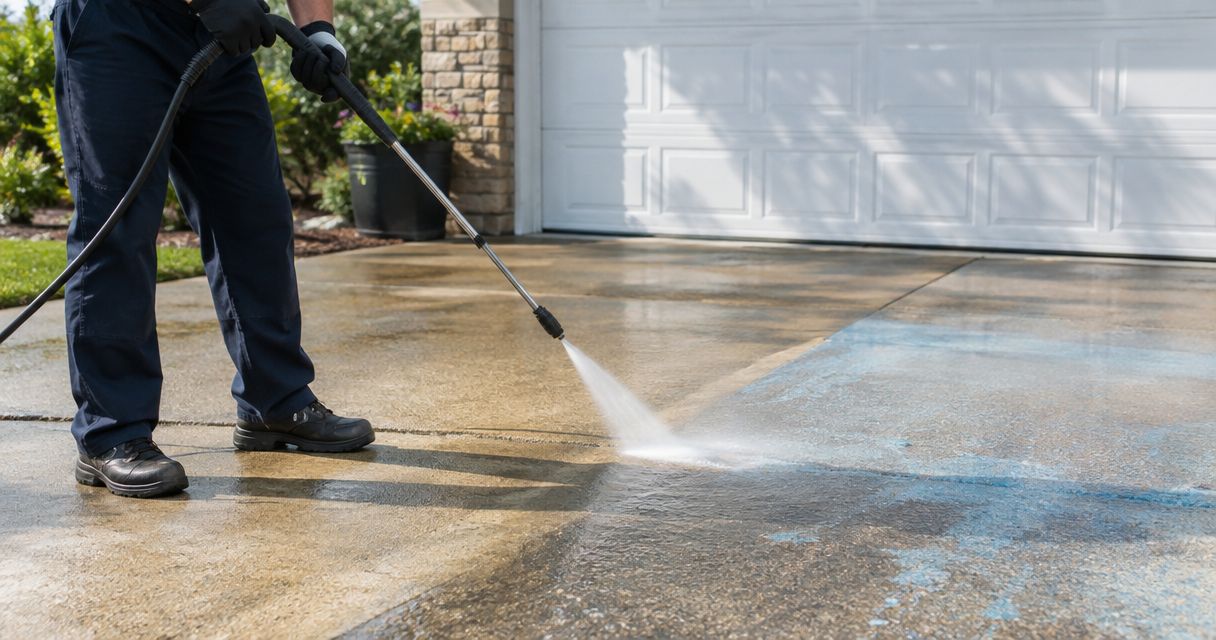
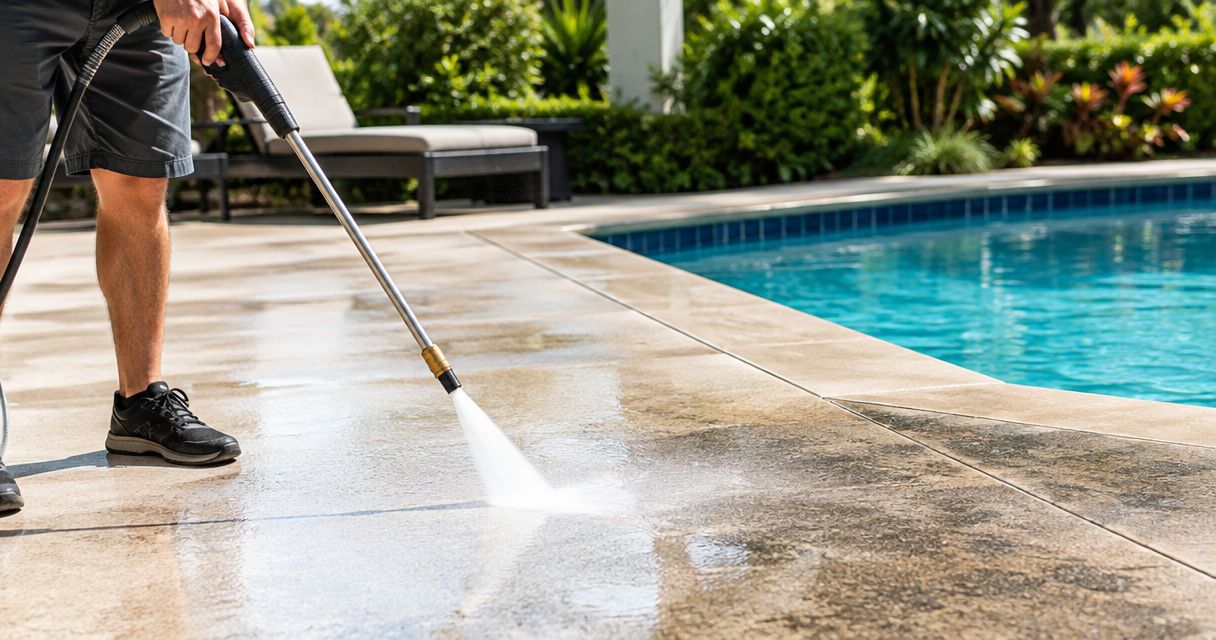
Pressure washing can remove loose residue from a pool deck, but it does not reliably remove bonded hard water deposits by itself. Those deposits often need a surface-compatible mineral treatment followed by controlled rinsing, and increasing pressure can damage concrete, stone, joints, or coatings. The right approach starts with identifying both the white mark and the material underneath it.
- Pressure washing alone is not a reliable solution for bonded hard water stains on a pool deck.
- Socalemm provides pressure washing and exterior cleaning in Newport Beach and Orange County.
- White pool deck marks can be mineral deposits, efflorescence, or surface damage; appearance alone does not confirm the cause.
- Choose treatment by deck material, test a small area, and keep cleaning runoff out of the pool.
For local exterior-cleaning help, Socalemm serves homeowners and businesses in Newport Beach and Orange County.
Can pressure washing remove hard water stains from pool decks?
Pressure washing helps with loose buildup, but bonded mineral scale needs a different approach. Use this comparison to separate general deck cleaning from mineral removal before choosing equipment or a cleaner.
| Approach | Best for | Main benefit | Main limitation |
|---|---|---|---|
| Controlled pressure washing | Loose dirt and surface residue on suitable materials | Removes general soil and rinses loosened material | Does not reliably dissolve bonded mineral scale |
| Material-compatible mineral treatment | Confirmed hard water deposits | Targets deposits rather than relying on force | An unsuitable cleaner can damage stone, concrete, grout, or coatings |
| Gentle cleaning | Delicate finishes or surfaces with restrictive care instructions | Avoids unnecessary mechanical abrasion | Does not necessarily remove established mineral deposits |
These are cleaning approaches, not interchangeable settings. A deck can need general washing and separate spot treatment, while its coping, joints, and coating each require different handling.
Why this matters
A white patch is not an instruction to increase pressure. On a pool deck, cleaning the wrong problem can leave you with a larger, more visible mark than the original stain.
For your 2026 maintenance plan, separate appearance from surface condition. Removing dirt, removing a mineral deposit, and repairing an etched finish are different jobs; a cleaner deck does not necessarily mean every pale area will disappear.
First, identify what the white mark actually is
Hard water deposits form when mineral-containing water evaporates and leaves residue behind. Repeated splashing or irrigation overspray can create a recurring pattern, especially where water collects and dries.
Efflorescence is different. Dissolved salts move through porous masonry and remain on the surface as moisture evaporates, so removing the visible residue does not address the moisture movement producing it.
Etching, worn coatings, and faded finishes can also look pale. They are changes to the surface rather than a removable layer, which means more cleaning will not restore the missing material or finish.
Before treating anything, inspect the area dry and compare it with an unaffected section. Record these clues:
- Location: Is the mark beside the pool edge, under irrigation overspray, or spread across the deck?
- Texture: Does it feel raised and crusty, powdery, or similar to the surrounding finish?
- Surface history: Has the area been sealed, coated, repaired, or cleaned with a strong product?
- Water pattern: Does water repeatedly collect or dry in the same place?
These clues guide inspection; they do not establish the mineral type or prove that a particular chemical is safe.
Concrete pool decks: remove deposits without removing the finish
Best for concrete decks: identify the finish before selecting a cleaning method. Bare concrete, decorative concrete, and coated concrete should not receive the same treatment simply because they share a concrete base.
Concrete is vulnerable to acid attack. A mineral remover that dissolves deposits can also alter the cement paste, leaving a rougher texture or a lighter-looking patch if the treatment is unsuitable.
Pressure creates a separate risk. Aggressive washing can leave lines or expose a different texture, particularly on deteriorated areas and decorative finishes. Review the distinction between materials in the guide to choosing pressure-washing PSI for concrete versus stucco, but do not treat a general equipment setting as approval for your specific pool deck.
For a 2026 concrete-cleaning appointment, explain whether the deck is stamped, colored, sealed, coated, or previously repaired. If you do not know, ask for that uncertainty to be resolved before chemical treatment begins.
Natural stone pool decks: confirm the stone before treatment
Best for natural stone: follow care instructions for the identified stone and its finish. A product labeled for outdoor masonry is not automatically suitable for every pool surround.
Marble, limestone, and travertine contain minerals that react with acids. Acidic cleaners can etch these surfaces, so a treatment intended to remove calcium deposits can damage the stone itself.
Other stone surfaces still need compatibility checks. Sealers, grout, adjacent metal, and the existing finish can limit which products and methods are appropriate, even when the stone tolerates a particular cleaner.
Avoid experimenting with vinegar on an unidentified stone deck. Household familiarity does not establish surface compatibility, and a small etched patch remains damage even if the mineral deposit disappears.
Pavers and coated decks: protect joints and surface layers
Best for pavers and coated decks: assess the complete surface system, not just the visible stain. Pavers include joints; a coated deck includes an applied layer that can have care requirements different from the material below it.
Pressure washing can disturb joint material. Damaged or poorly bonded coatings can also lift during cleaning, so inspect loose edges, flaking areas, and previous repairs before starting.
Mineral removal should not become an unplanned stripping job. If a test changes the color, sheen, texture, or joint condition, stop and reassess rather than extending the same treatment across the deck.
For your 2026 service request, include any available coating or sealer information. The exact product instructions are more useful than a broad description such as waterproof or outdoor-rated.
How should you approach hard water stains safely?
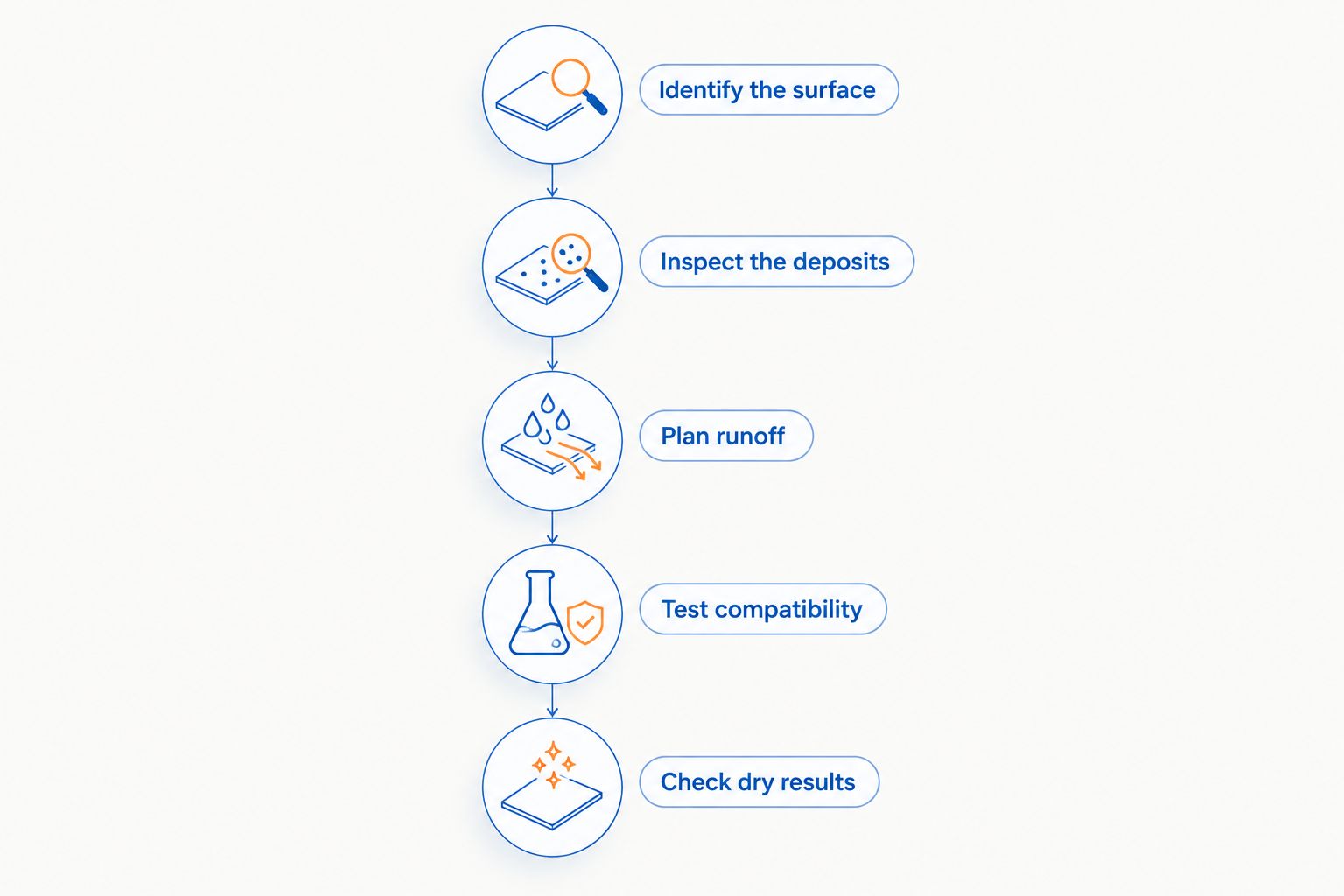
Use this sequence before committing to a full-deck treatment. The test area should establish both cleaning performance and surface compatibility—not merely show that the white mark gets lighter.
- Identify the surface. Confirm the deck material, finish, joints, and any sealer or coating. Check the relevant care instructions.
- Inspect the deposits. Separate raised residue from powdery salts, damaged coatings, and etched areas. Photograph the dry surface for comparison.
- Plan runoff. Identify where rinse water will travel and protect the pool, planting areas, and nearby materials. Check applicable local discharge requirements.
- Test compatibility. Use a discreet area and follow the cleaner label, including application, protective equipment, and rinsing directions. Never mix cleaning products.
- Check dry results. Inspect color, texture, sheen, and remaining residue after the test dries before treating a larger area.
During application, follow the product's instructions rather than an improvised dwell time or dilution. Keep children and pets away from the work area, and stop if the surface reacts unexpectedly.
This sequence is a screening process, not a chemical recipe. An unidentified finish, persistent deposit, or uncertain drainage route is a reason to seek an assessment rather than escalate the treatment.
Why hard water stain removal varies
No single pressure setting answers every pool-deck problem. These factors determine whether cleaning alone is appropriate and what a test needs to establish:
- Deposit type: Hard water scale, efflorescence, and surface damage need different responses.
- Deck material: Concrete, natural stone, and applied coatings have different vulnerabilities.
- Finish condition: Worn sealers, loose coatings, and deteriorated areas restrict treatment choices.
- Deposit buildup: A raised crust presents a different cleaning task from loose residue.
- Repeated wetting: Continued splashing, irrigation overspray, or moisture movement can bring white marks back.
- Runoff route: Pool edges, planted areas, and drainage arrangements affect how treatment and rinsing must be managed.
Ask for the proposed method to address these conditions. A promise to use more pressure does not explain how a bonded deposit will be removed without changing the deck.
Will pressure washing permanently remove the white stains?
Pressure washing does not permanently prevent white stains if mineral-containing water continues to wet and dry on the deck. Even successful deposit removal leaves the water source unchanged.
For prevention, address avoidable irrigation overspray and recurring puddles, and discuss pool-water balance with your pool maintenance provider. Do not change pool chemistry solely because the deck has a white mark; first establish what caused it.
Is stronger pressure better for stubborn pool deck scale?
Stronger pressure is not a reliable solution for stubborn pool deck scale. Pressure supplies mechanical force, while mineral removal depends on the deposit and a treatment compatible with the surface.
If a controlled cleaning pass removes dirt but leaves the white area, pause. Repeatedly working the same spot can produce uneven texture without solving the underlying problem.
When should you request a professional assessment?
Request an assessment when the deck material is uncertain, the surface is decorative or coated, the stain keeps returning, or runoff cannot be managed confidently. Widespread deposits beside pool coping also deserve more planning than an isolated mark away from the water.
Socalemm is best for homeowners seeking local pressure-washing service in Newport Beach and Orange County. For a stain-removal inquiry, describe the deck material and ask whether the proposed work includes evaluating mineral deposits, rather than assuming routine pressure washing covers them.
Send a wide photo showing the deck and pool edge, a close-up of the dry deposit, and any available finish information. Ask what the test area will demonstrate, how runoff will be handled, and what visible marks are expected to remain.
Keep residential and commercial requests distinct. For a homeowner, discuss pool access and household use; for a business or shared property, also identify the person responsible for closing the work area and coordinating reopening.
Request an exterior-cleaning quote
Describe your deck material, white deposits, and any known sealer or coating.
FAQ
Can pressure washing remove hard water stains from my pool deck?
Pressure washing can remove loose residue, but it does not reliably remove bonded hard water deposits by itself. Confirm the deck material and test a compatible treatment before cleaning a larger area.
Why does my pool deck still look white after pressure washing?
A white area can remain because bonded mineral deposits, efflorescence, or surface damage are still present. Inspect the dry surface before repeating the wash; more pressure does not resolve every cause.
Can I use vinegar on hard water stains around my pool?
Do not use vinegar on an unidentified pool-deck material. Vinegar is acidic and can etch acid-sensitive stone such as marble, limestone, and travertine.
Is soft washing better than pressure washing for pool deck calcium?
Soft washing is not automatically better for pool deck calcium deposits. Lower pressure does not make an unsuitable chemical safe or establish that it will remove mineral scale.
What should I ask a pool deck cleaning company before booking?
Ask how the company will identify the surface, test the treatment, manage runoff, and assess the dry result. Clarify whether mineral-deposit treatment is included in the proposed work.
Will sealing my pool deck stop hard water stains?
Sealing does not eliminate the minerals left behind when water evaporates. Any sealer must suit the deck material and poolside use, and recurring wetting still needs attention.
Does Socalemm provide exterior cleaning in Orange County?
Socalemm provides residential and commercial pressure washing and exterior cleaning in Newport Beach and Orange County. Describe the pool-deck staining when requesting a quote so the proposed scope can be clarified.
One last thing
Judge the test area when it is dry. Wetting can temporarily change a deck's appearance and make remaining marks harder to evaluate, so an immediate wet comparison is not enough to approve the result.
For your 2026 maintenance record, keep dry before-and-after photos taken from the same position under similar light. The useful outcome is a cleaner surface without new discoloration, roughness, coating loss, or damaged joints—not simply a brighter patch beside the pool.