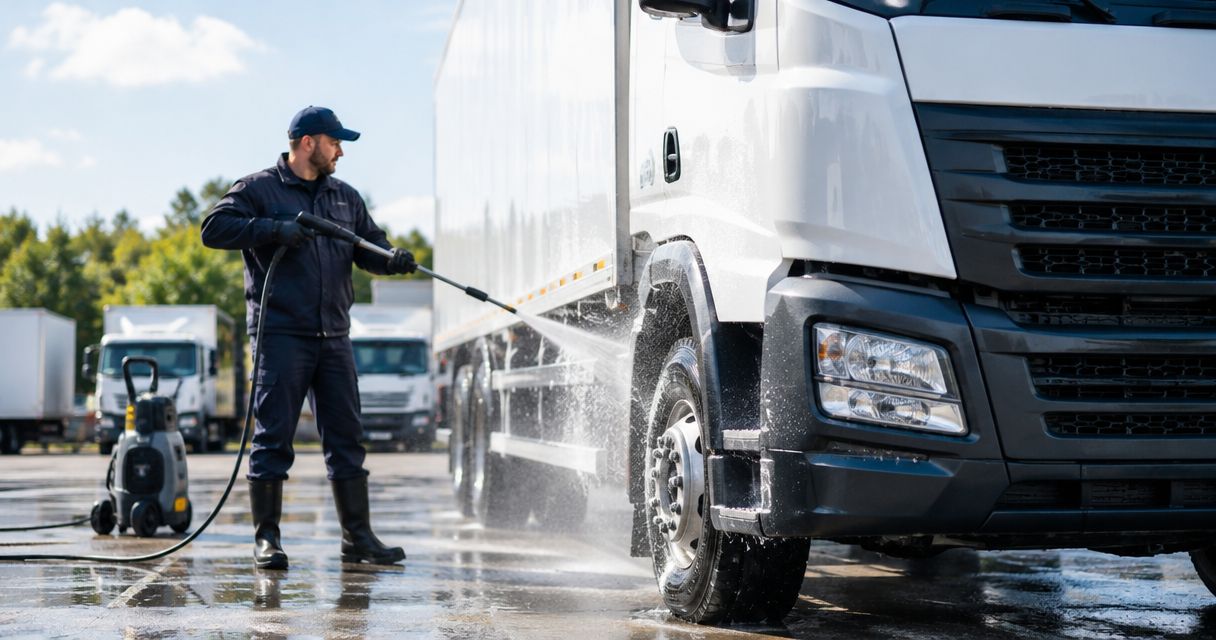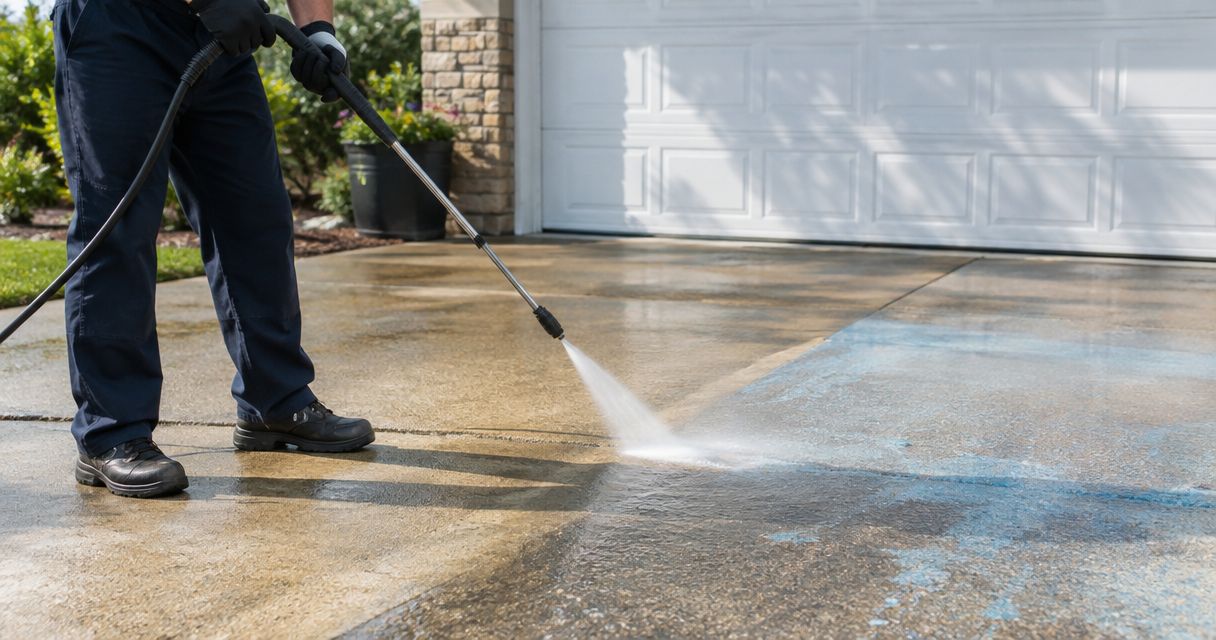
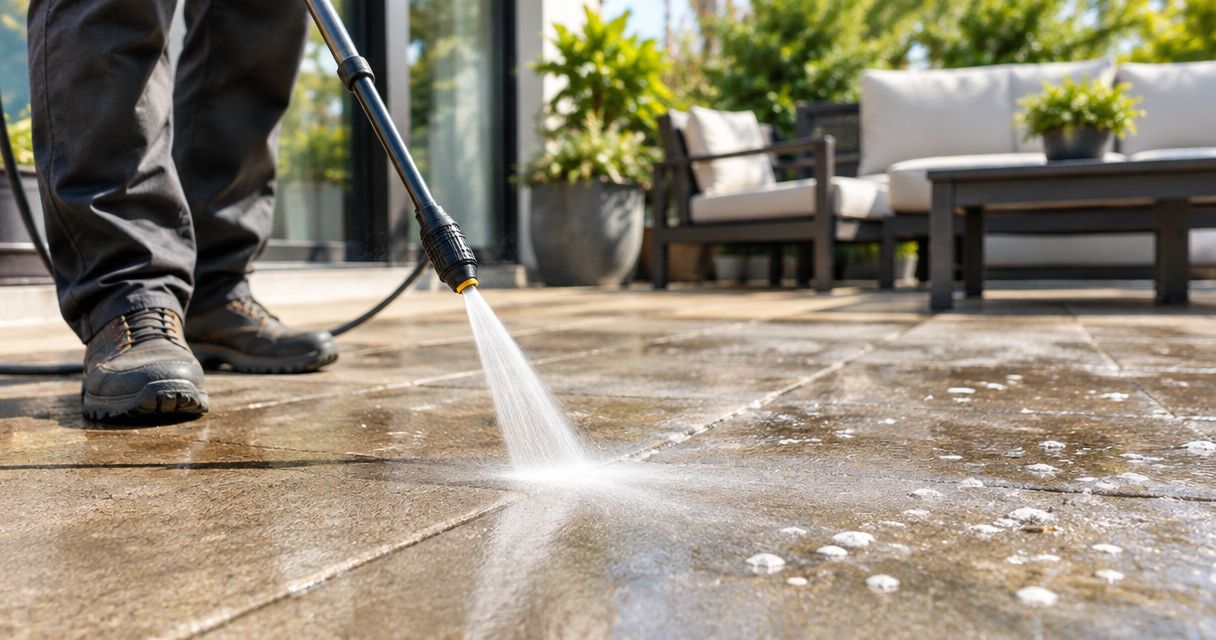
Yes, pressure washing can remove bird droppings from a patio, but it is not always the right first step. For a small, isolated deposit, dampen and lift the material before deciding whether the surface needs washing. Removing the droppings does not guarantee removal of a remaining stain, and excessive pressure can damage the patio finish.
- Pressure washing can remove bird droppings from patio surfaces, but start with damp removal rather than aggressive spraying.
- For Orange County homeowners, the patio material and finish determine the cleaning method—not the size of the stain.
- Gentle rinsing suits small deposits; controlled pressure washing suits compatible hard surfaces with broader buildup.
- Stop if cleaning exposes loose joints, lifting coatings, roughened concrete, or damaged stone.
Can pressure washing remove bird droppings from a patio?
Pressure washing removes surface deposits by directing water against the patio. The practical question is whether that force will remove the contamination without also removing joint material, a coating, or part of the surface. For a broader look at the service, see this guide to pressure washing for concrete patios in Orange County.
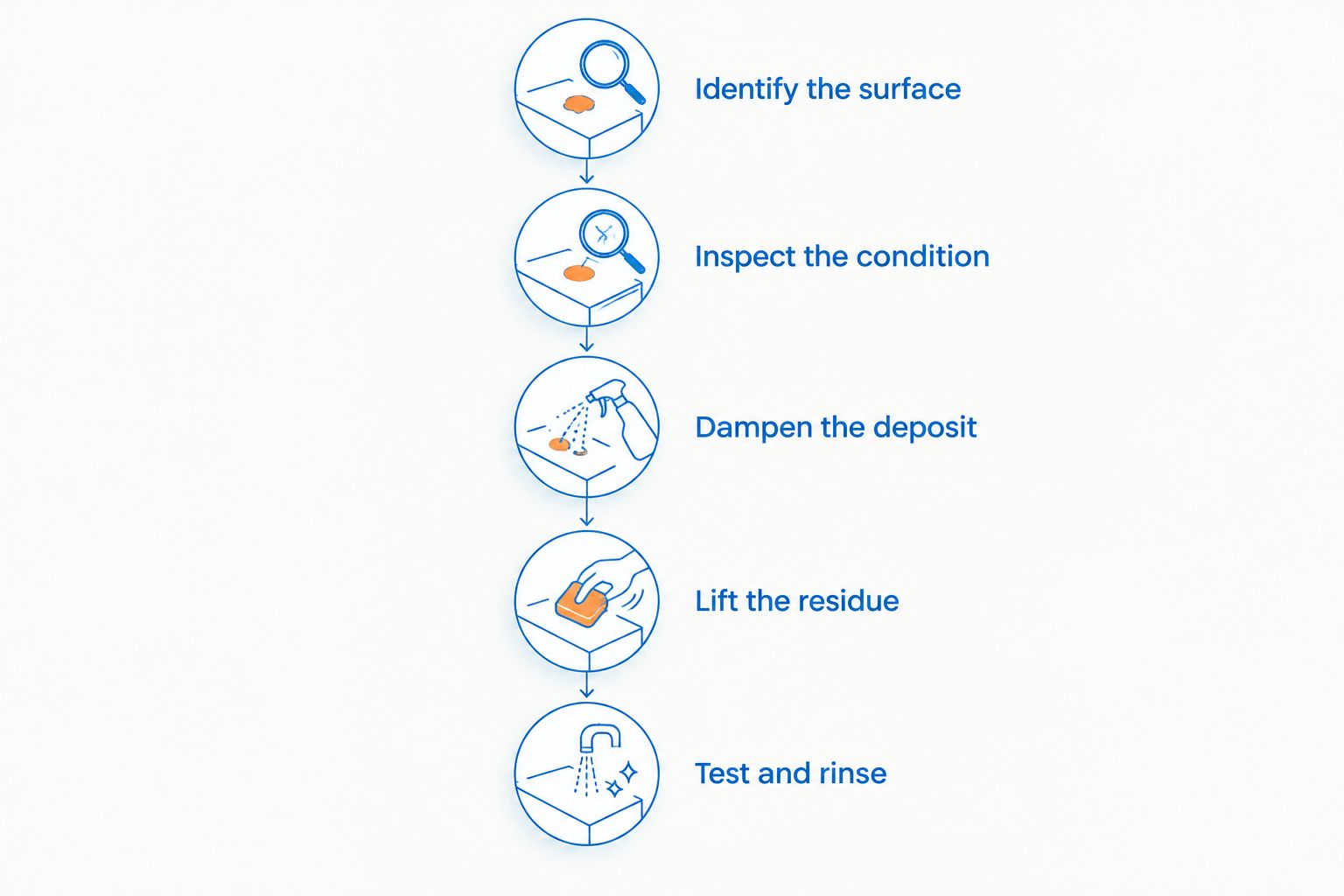
For your 2026 patio cleanup, follow this order:
- Identify the surface. Confirm whether you have concrete, pavers, natural stone, outdoor tile, or a coated surface.
- Inspect the condition. Look for cracks, loose joints, peeling finishes, and existing discoloration before adding water.
- Dampen the deposit. Avoid dry sweeping or blasting dried material into the air.
- Lift the residue. Use suitable gloves and a nonabrasive tool, then contain the removed material for disposal.
- Test and rinse. Try a compatible cleaning method in an inconspicuous area before treating the visible patio.
These steps describe a small household cleanup, not a large accumulation beneath a long-used roost. Leave extensive deposits, inaccessible areas, or work that would spread contamination to a qualified cleanup professional.
Why this matters
A clean patio and an undamaged patio are separate goals. A concentrated spray can remove visible material while leaving a lighter patch, rough texture, displaced joint sand, or a damaged finish. That creates another maintenance problem instead of resolving the first one.
Bird droppings also make this different from rinsing ordinary dust. Keep children and pets away from the work area, avoid creating airborne dust or spray, and prevent dirty water from spreading across seating areas. For your 2026 maintenance plan, make small, careful cleanups the routine rather than waiting for a broad accumulation.
Which cleaning method fits your patio?
Choose the least aggressive method that removes the deposit without changing the surface. The table below compares cleaning approaches, not interchangeable settings on a pressure washer.
| Method | Best for | Main benefit | Main limitation |
|---|---|---|---|
| Damp removal and gentle rinsing | Small, isolated deposits on compatible surfaces | Limits unnecessary force and treats only the affected area | Does not necessarily remove an absorbed stain |
| Surface-compatible cleaner and soft brushing | Residue that remains after the deposit is lifted | Adds cleaning action without relying entirely on pressure | Requires checking material compatibility and following the label |
| Controlled pressure washing | Sound, compatible hard surfaces with broader soiling | Cleans more than the isolated deposit | Can damage coatings, joints, or the surface when used incorrectly |
Do not choose a pressure setting solely because the droppings look stubborn. A persistent mark calls for inspection, not an automatic increase in force. Likewise, a cleaner described for concrete is not automatically suitable for every stone, sealer, grout, or nearby metal fixture.
Bare concrete: inspect before applying pressure
Sound, uncoated concrete is a different cleaning surface from concrete that is flaking, recently placed, painted, or sealed. Check the condition before washing. Existing weak areas deserve particular attention because cleaning can expose or worsen them.
Keep the cleaning pattern consistent rather than concentrating on a single spot. If the deposit has gone but a shadow remains, inspect that shadow after drying instead of continuing to blast the same area.
Pavers: protect the joints
Pavers introduce a second cleaning concern: the material between the units. Directing force into joints can displace loose material and leave an uneven-looking patio even when the paver faces look cleaner.
Inspect the joints before and after cleaning. Stop if you see material washing out, movement between units, or a change in the sealed finish. Cleaning a bird dropping does not justify treating joint repair or resealing as an automatic next step.
Natural stone, tile, and coated patios: check compatibility
Natural stone is not one uniform material. A cleaner or technique appropriate for one stone can damage another, particularly when acidic products contact acid-sensitive stone such as marble or limestone.
For outdoor tile, inspect grout as well as the tile face. For painted or coated patios, follow the coating manufacturer's maintenance instructions. When the finish is unknown, identify it before using stronger chemistry or pressure.
Why bird-dropping removal results vary
The result depends on the surface and deposit, not simply on the machine. These factors explain why a method that worked elsewhere can leave a different result on your patio:
- Surface porosity: Porous materials can retain discoloration beneath the visible deposit.
- Finish condition: A worn or lifting coating changes what cleaning the patio can tolerate.
- Deposit condition: Dried, adhered material requires softening rather than immediate aggressive spraying.
- Joint condition: Loose sand or deteriorated grout limits where you can safely direct water.
- Previous treatment: Existing cleaners, sealers, and repairs affect product compatibility and the finished appearance.
- Drainage and surroundings: Nearby doors, plants, furniture, and drains affect how you contain the cleanup.
Take a photograph before starting your 2026 cleanup. It helps distinguish an existing blemish from a change noticed after washing. Photographing the dry surface afterward also gives you a more useful comparison than judging the patio while everything is wet.
How do you clean a small deposit without spreading it?
Start by moving cushions, toys, pet bowls, and other loose items away from the affected area. Keep a separate route open so nobody walks through the cleanup and tracks residue indoors. Put on suitable gloves and avoid touching your face while working.
Dampen the deposit gently without producing a forceful spray. Once it softens, lift the material with a disposable absorbent item or a suitable nonabrasive tool, and contain it for disposal. Do not use a leaf blower, dry broom, or aggressive dry scrubbing to break it apart.
If residue remains, use a cleaner explicitly suitable for the patio material and follow its label. Never mix cleaning chemicals. Keep cleaner off adjacent surfaces unless the product instructions permit that use.
Finish with a controlled rinse that does not send dirty water toward doors, occupied areas, or storm drains. Wash your hands after removing gloves, and clean reusable tools appropriately. If you cannot contain the work or avoid splashing, stop and arrange suitable help.
What if a stain remains after the droppings are gone?
A remaining mark is not proof that more pressure is needed. It can be residual contamination, discoloration within the material, an existing mark revealed by cleaning, or damage to the finish. Those conditions need different responses.
Let the patio dry before judging the result. Wet surfaces can hide differences in color and texture, so repeated washing while the area remains wet makes diagnosis harder. Compare the cleaned area with the surrounding surface in similar light.
For a stain-treatment decision in 2026, identify both the material and any coating first. Then check whether the proposed cleaner is intended for that combination. Avoid improvising with vinegar, strong acids, or mixed household products simply because the mark is still visible.
Stop cleaning when the surface starts changing rather than the residue. Roughening, coating lift, color loss, and joint erosion are reasons to reassess, not signals to make another pass.
Should you handle it yourself or request exterior cleaning?
A small, reachable deposit on a known surface is a different job from widespread accumulation across a patio. Consider the access, your ability to contain the residue, the material's condition, and whether you understand the cleaner's instructions. Equipment ownership does not answer those questions.
Socalemm is a local pressure washing option for homeowners in Newport Beach and Orange County. When requesting exterior cleaning, explain the patio material, describe the extent of the droppings, and provide photographs of both the affected area and any existing damage. Do not assume that an exterior-cleaning appointment includes specialized cleanup of extensive bird waste; confirm the scope first.
The benefit of arranging service is having the surface and cleaning scope assessed before work starts. The limitation is that washing still cannot promise to reverse an etched finish, restore missing joint material, or erase every absorbed stain. You can request a quote with those distinctions in mind.
For commercial patios, keep the request separate from a household cleanup. Identify pedestrian routes, outdoor dining areas, business access, and who controls the work area. Those details belong in the work scope before washing begins.
How can you reduce repeat cleanup?
Check where the droppings appear rather than treating the whole patio as the source of the problem. Repeated deposits beneath a beam, ledge, umbrella, or branch point to a nearby perch. Washing removes the current mess; it does not remove the reason birds return.
Keep food scraps and unsecured waste out of the patio area. Move portable furniture away from a recurring deposit zone when practical, and clean removable covers according to their care instructions. Avoid pressure washing cushions or fabrics unless their manufacturer explicitly permits it.
For your 2026 maintenance checklist, include a visual check beneath recurring perch locations and after periods when the patio has been unused. Do not disturb an active nest or install a deterrent without checking applicable wildlife requirements. Address persistent roosting separately from routine patio washing.
FAQ
Can pressure washing remove dried bird droppings from my patio?
Yes, pressure washing can remove dried bird droppings from compatible patio surfaces, but dampen and lift the deposit first. Avoid blasting dry material, and check the surface condition before applying pressure.
What's the best way to clean a small bird dropping from a patio?
Damp removal followed by a gentle, controlled rinse is the best starting point for a small deposit on a compatible surface. Use suitable gloves, avoid dry brushing, and follow material-specific cleaning instructions.
Will pressure washing remove the stain as well as the droppings?
Pressure washing does not guarantee removal of the remaining stain. Let the surface dry, then assess whether the mark is residue, absorbed discoloration, or a change in the finish before treating it again.
Can I use vinegar to clean bird droppings off natural stone?
Do not use vinegar on acid-sensitive natural stone such as marble or limestone. Identify the stone and select a cleaner explicitly suitable for it and any existing sealer.
Is pressure washing safe for a paver patio with bird droppings?
Pressure washing requires care around paver joints and sealed finishes. Inspect the patio first, avoid directing force into loose joints, and stop if joint material moves or the finish changes.
Should I pressure wash a large accumulation of bird droppings myself?
Do not treat a large accumulation as a routine household pressure-washing job. Arrange an assessment by a qualified cleanup professional rather than creating airborne dust, spray, or contaminated runoff.
Will cleaning my patio stop birds from returning?
Cleaning removes the current deposits but does not stop birds from returning to a perch. Address food sources and recurring roosting locations separately, without disturbing active nests.
One last thing
Before your next 2026 patio wash, look up. A recurring mess directly beneath a perch needs a prevention plan as well as cleaning. Move a portable chair or table out of that spot where practical, and judge cleaning success by the dry surface—not by how forcefully the patio was washed.