Best overall: a paver-sealing specialist who matches the coating to your paving material. Best for failing coatings: a restoration specialist. Best for dirty but sound paving: a cleaning-first approach. For paver sealing in Mission Viejo, CA, choose the company by the work your surface needs—not by a promised wet look.
- For paver sealing Mission Viejo CA projects, choose material compatibility and preparation before appearance.
- Use a restoration specialist for peeling or cloudy coatings; do not approve another coat without diagnosis.
- Socalemm provides Orange County exterior cleaning; treat cleaning and paver sealing as separate scopes.
- Compare written preparation, joint treatment, test-area results, and reopening instructions before hiring.
Why this matters
Paver sealing is not the same job as pressure washing. Cleaning removes surface buildup; sealing applies a treatment that must suit the paving material, existing coating, and intended use. Applying sealer does not correct loose pavers, poor drainage, or damaged edges.
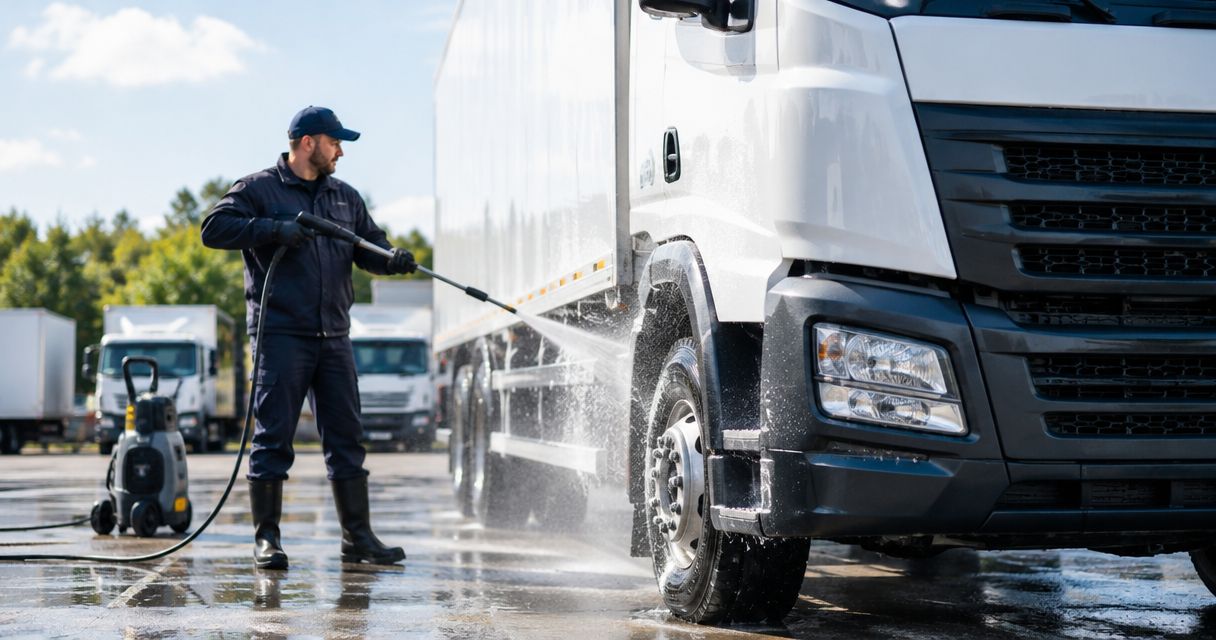
Socalemm provides residential and commercial pressure washing and exterior cleaning in Orange County. Socalemm is an exterior-cleaning option for Orange County property owners; paver sealing requires a separately confirmed scope. Keep that distinction clear when requesting help with your driveway or patio in 2026.
This guide ranks contractor types by project fit rather than presenting an unsupported company leaderboard. Use it to decide which kind of company to interview, what to ask, and when to postpone sealing.
What makes the best paver-sealing company?
Judge a 2026 proposal against these criteria before comparing finishes:
- Material compatibility: The contractor identifies the paving material and checks the proposed product's technical instructions.
- Existing-coating assessment: The scope addresses previous sealer instead of treating every surface as bare paving.
- Preparation: Cleaning, stain treatment, drying requirements, and protection of nearby surfaces are explained separately.
- Joint condition: The contractor checks missing joint material and loose units before proposing a coating.
- Finish and traction: You see a representative test area and discuss walking conditions, especially around water.
- Written handover: The proposal explains weather restrictions, reopening instructions, and maintenance using the selected product's guidance.
A company that explains these decisions is easier to evaluate than one that only describes the finished appearance. Ask for the reasoning before agreeing to the work.
Paver-sealing contractor options at a glance
| Contractor type | Best for | Standout capability to verify | Key limitation |
|---|---|---|---|
| Material-matched sealing specialist | Sound paving without a failing coating | Product selection based on the actual paver material | Sealing does not repair movement or drainage |
| Coating-restoration specialist | Peeling, patchy, or cloudy existing coatings | Diagnosis and removal plan before recoating | Preparation can become a separate project |
| Repair-first paving contractor | Loose units, sinking areas, or failing joints | Correction of physical defects before finishing | Sealing might require a separate contractor |
| Exterior-cleaning provider | Surface buildup before a sealing decision | Cleaning suited to the surface and its condition | Cleaning alone does not provide a sealed finish |
The order reflects a straightforward sealing project first, followed by conditions that change the scope. It is not a claim that one trade should handle every property.
1. Material-matched specialist: best for sound, uncoated paving
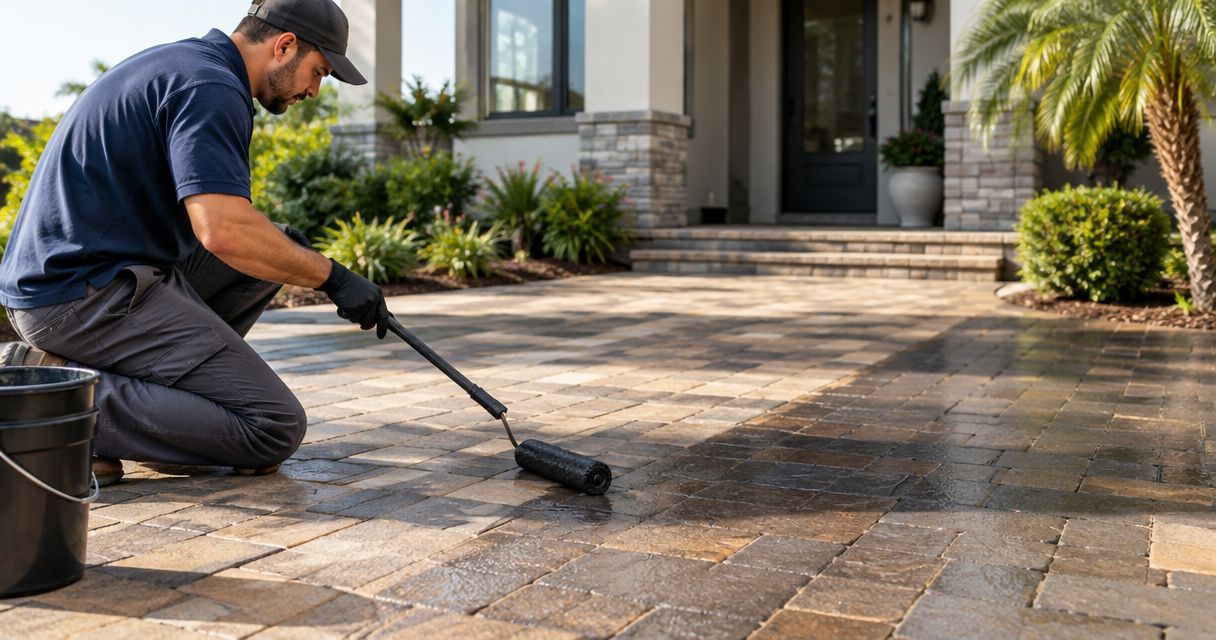
A material-matched sealing specialist is the first choice when your paving is stable and the main decision is whether—and how—to seal it. The contractor should identify the surface rather than assume all patio blocks accept the same treatment.
Ask how the proposed sealer affects appearance, moisture movement, and maintenance. A finish sample helps you judge appearance, but the product instructions establish whether the application suits the material.
Material-matched specialist pros:
- Keeps product selection tied to the actual surface.
- Gives you a defined cleaning-to-application process.
- Makes finish expectations easier to discuss before full application.
Material-matched specialist cons:
- Cannot solve loose paving simply by coating it.
- Requires additional assessment when previous treatments are unknown.
Best for: Homeowners with sound paving who want a documented sealing process rather than a cosmetic shortcut.
For a 2026 proposal, request the product name, technical data, preparation method, and a representative test area. Ask whether shaded and exposed portions of the paving need separate assessment; do not assume the whole driveway behaves identically.
Verdict: Buy only after material compatibility and preparation are documented.
2. Coating-restoration specialist: best for failing existing sealer
A coating-restoration specialist handles the decision that comes before resealing: whether the existing treatment can remain. Peeling, patchiness, and cloudiness need diagnosis, not an automatic promise that another coat will improve them.
Ask the specialist to distinguish surface dirt from a coating problem. The proposed remedy should follow the existing and replacement products' compatibility requirements wherever those products can be identified.
Coating-restoration specialist pros:
- Addresses the existing finish before adding material.
- Separates removal work from the new coating application.
- Creates an opportunity to inspect the exposed paving after preparation.
Coating-restoration specialist cons:
- The final scope depends on what preparation reveals.
- Removal work needs its own protection and cleanup plan.
Best for: Owners whose paving already has an uneven, peeling, or cloudy coating.
Request project examples involving a similar surface problem. A photograph of a newly sealed patio does not demonstrate how the contractor diagnosed a failed coating. Ask what the example shows and which preparation steps produced that result.
Verdict: Hold any recoating approval until the existing finish has been assessed.
3. Repair-first paving contractor: best for unstable paving
A repair-first paving contractor belongs ahead of a sealing appointment when units move, edges spread, or water collects in depressed areas. These are physical conditions to investigate before discussing finish.
Keep repair and sealing decisions separate. Correcting the paving does not automatically establish that a particular sealer is suitable, and applying sealer is not a substitute for correcting the underlying condition.
Repair-first contractor pros:
- Prioritizes movement, levels, and damaged units.
- Lets joint work be assessed alongside the paving itself.
- Prevents appearance from becoming the only project goal.
Repair-first contractor cons:
- The finishing work might need a separate appointment or provider.
- Repairs can change the area that needs cleaning and assessment.
Best for: Driveways and patios with loose units, damaged borders, or uneven sections.
Show the contractor where water collects and where movement occurs. Photograph those areas before the visit so the discussion includes conditions that are not obvious on a dry day.
Verdict: Hold sealing until the physical defects have been addressed.
4. Exterior-cleaning provider: best for buildup before sealing
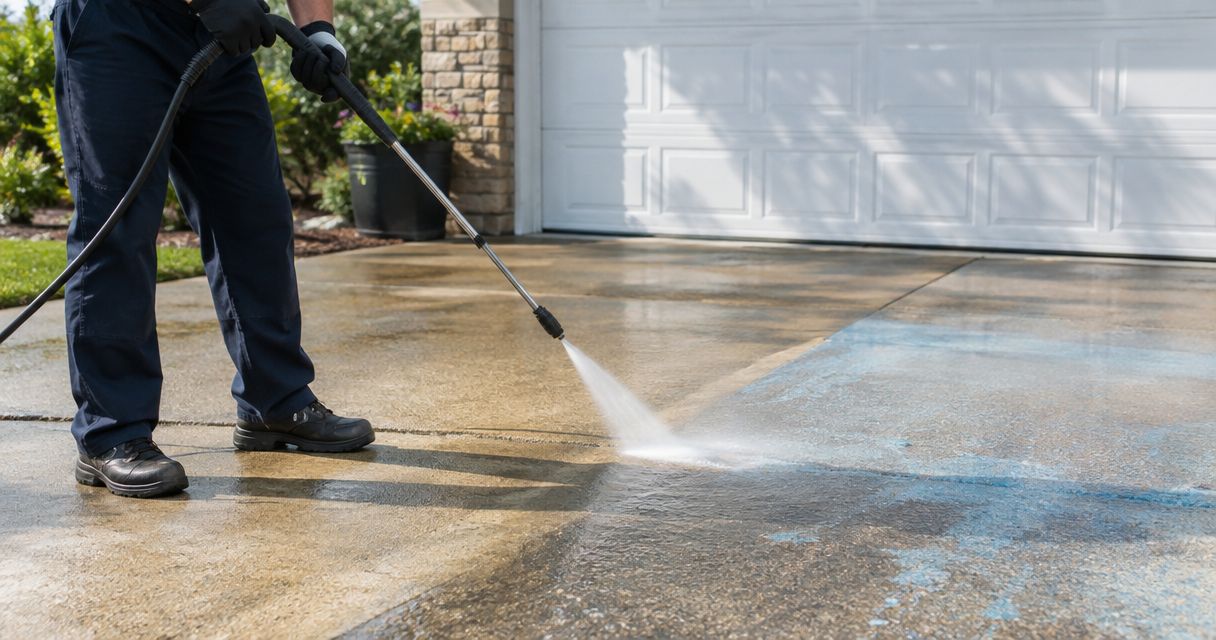
An exterior-cleaning provider is the right starting point when dirt and surface growth obscure the condition of otherwise sound paving. Cleaning lets you reassess the surface before deciding whether a coating is necessary.
Socalemm provides Orange County pressure washing and exterior cleaning. Ask whether your paving material, condition, and Mission Viejo address fit the requested cleaning scope; do not treat an exterior-cleaning description as confirmation of a sealing service.
Exterior-cleaning provider pros:
- Separates removal of buildup from application of a coating.
- Helps you inspect the paving after cleaning.
- Keeps the initial request focused on an established service category.
Exterior-cleaning provider cons:
- Cleaning does not replace missing joint material or repair movement.
- A separate sealing assessment remains necessary if you want a coating.
Best for: Owners who need a cleaner surface before making a finish decision.
When asking Socalemm for a quote, describe the cleaning work separately from any sealing question. Include the surface material if known, visible problems, access restrictions, and whether a previous coating is present.
Verdict: Buy cleaning for a cleaning need; hold sealing until its scope is confirmed.
How to compare your 2026 proposals
Start with the surface
Send 3 photos with each inquiry: an overall view, a close-up of the surface and joints, and a view of the main problem. These are practical documentation steps, not a requirement to disclose your home address in public reviews or posts.
Tell each contractor the same facts. Mention previous sealing if known, standing water, loose units, and nearby planting or painted surfaces that need protection.
Separate the work
Request 2 written scopes when both cleaning and sealing are proposed: one describing preparation and one describing coating application. They can sit within the same proposal, but each should explain what is included.
Look for clear responsibility for joint treatment, stain treatment, surrounding-surface protection, and cleanup. A single line reading “wash and seal” leaves too many decisions unresolved.
Approve the test
Ask for 1 test area that represents the paving you intend to treat. Review it under the product's specified drying or curing conditions rather than approving the whole project while the sample is still wet.
The test should help resolve appearance and compatibility questions. It does not replace product instructions or prove how every part of the site will respond.
Confirm reopening
Get walking, furniture-placement, and vehicle-use instructions in writing. The selected product, application conditions, and site determine the appropriate restrictions; a generic promise is not a substitute for those instructions.
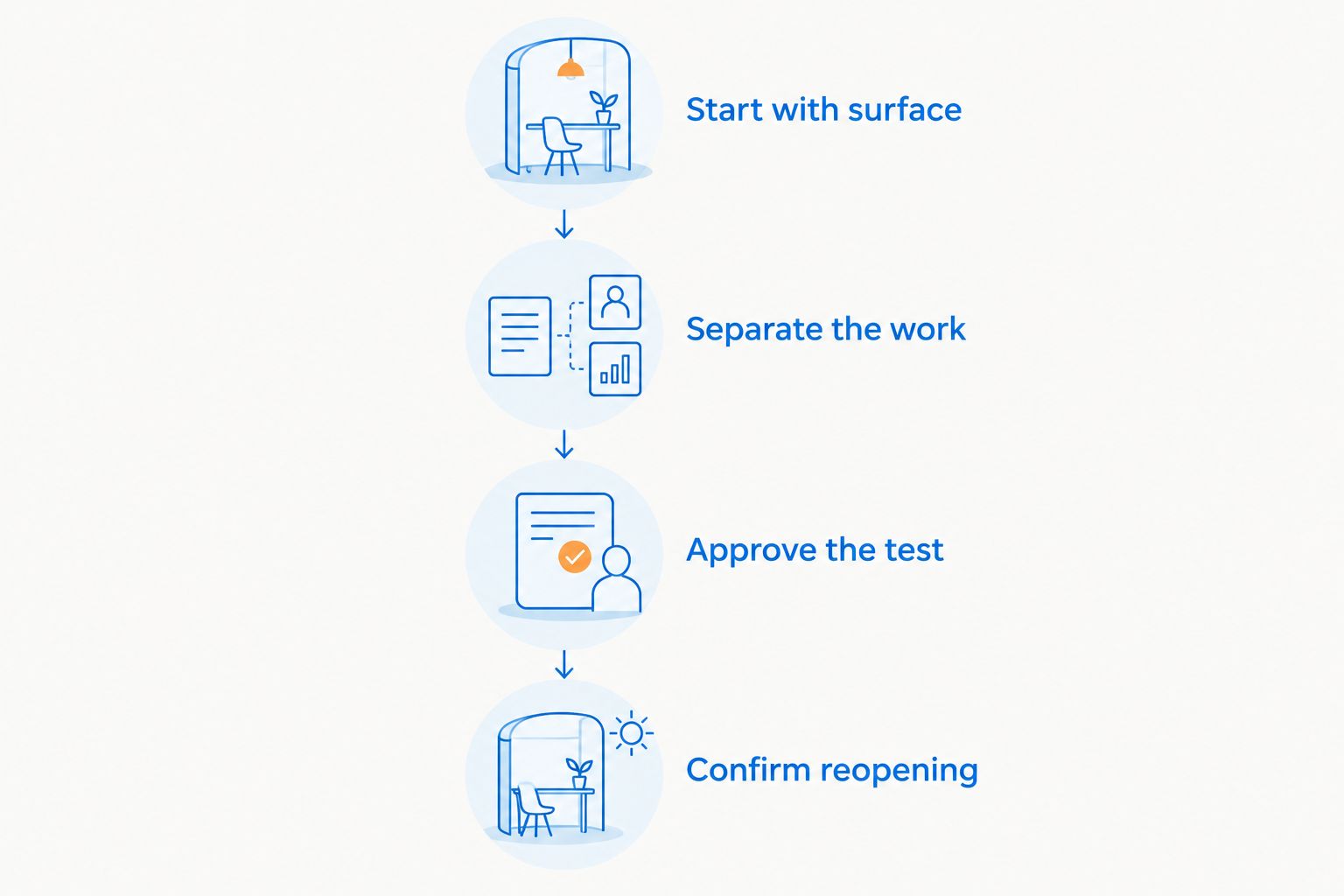
Compare complete scopes rather than isolated claims. If one proposal includes preparation that another excludes, ask both contractors to explain the difference before choosing.
Request an exterior-cleaning quote
Describe your paving, surface buildup, and access needs. Keep sealing questions separate.
Keep homeowner and commercial requests separate
For a home, explain how you use the driveway or patio. Identify pedestrian access, pets, garden furniture, irrigation, and the route you need to keep open. Ask how the work affects those uses without assuming the area can reopen immediately.
For commercial paving, provide the operating schedule and identify public entrances, deliveries, shared walkways, and responsibility for closing the work area. Request a written access plan that separates cleaning operations from coating application and reopening.
Commercial requirements should not be copied into a homeowner proposal without explanation. Likewise, a residential patio scope does not address how a business will manage public access during work.
How these options are ranked
This 2026 guide ranks contractor types against material compatibility, existing-coating assessment, preparation, joint condition, finish evaluation, and written handover. The first recommendation fits sound paving; the later options address conditions that require a different starting point.
Use the ranking as a decision tree. A restoration specialist is the better fit for a failing coating even though that category appears second, and repair comes first whenever the paving itself is unstable.
Which paver-sealing company should you choose?
Choose the company that explains your surface and documents the preparation before recommending a finish. For sound paving, start with a material-matched sealing specialist. For failed coatings or unstable units, address those conditions first.
For your 2026 project, reject a proposal that skips inspection and jumps directly to appearance. If surface buildup is the immediate issue, request cleaning as a separate service and make the sealing decision afterward.
FAQ
What's the best company for paver sealing in Mission Viejo, CA?
The best fit is a contractor who identifies your paving material, assesses previous coatings, and documents preparation before application. Choose a restoration specialist for failing coatings or a repair-first contractor for unstable paving.
Does Socalemm provide paver sealing in Mission Viejo?
Confirm paver sealing and service at your address directly before booking. Socalemm's stated services include Orange County pressure washing and exterior cleaning; those services should not be treated as confirmation of paver sealing.
Should I pressure wash pavers before sealing?
Prepare and clean pavers according to the selected sealer's instructions. The cleaning method must also suit the paving material, joint condition, and any existing coating.
Can another coat fix cloudy paver sealer?
Do not approve another coat until the cloudiness has been diagnosed. Ask a coating-restoration specialist whether the existing treatment can remain and how the proposed preparation addresses the problem.
Is a wet-look finish the best choice for my patio?
A wet-look finish is an appearance preference, not proof of suitability. Check material compatibility, maintenance instructions, and suitability for the patio's walking conditions before choosing it.
How long should I stay off freshly sealed pavers?
Follow the selected product's written reopening instructions and the contractor's site-specific directions. Walking, furniture placement, and vehicle use can have different restrictions.
What should a paver-sealing proposal include in 2026?
A 2026 proposal should identify the surface, preparation, existing-coating treatment, joint work, selected product, and reopening instructions. Ask which tasks are excluded and who is responsible for them.
One last thing
Inspect the edges and joints before judging the center of the patio. A clean-looking surface can still have loose borders or missing joint material. Ask the contractor to explain those conditions during the site assessment, before the conversation turns to gloss or color enhancement.