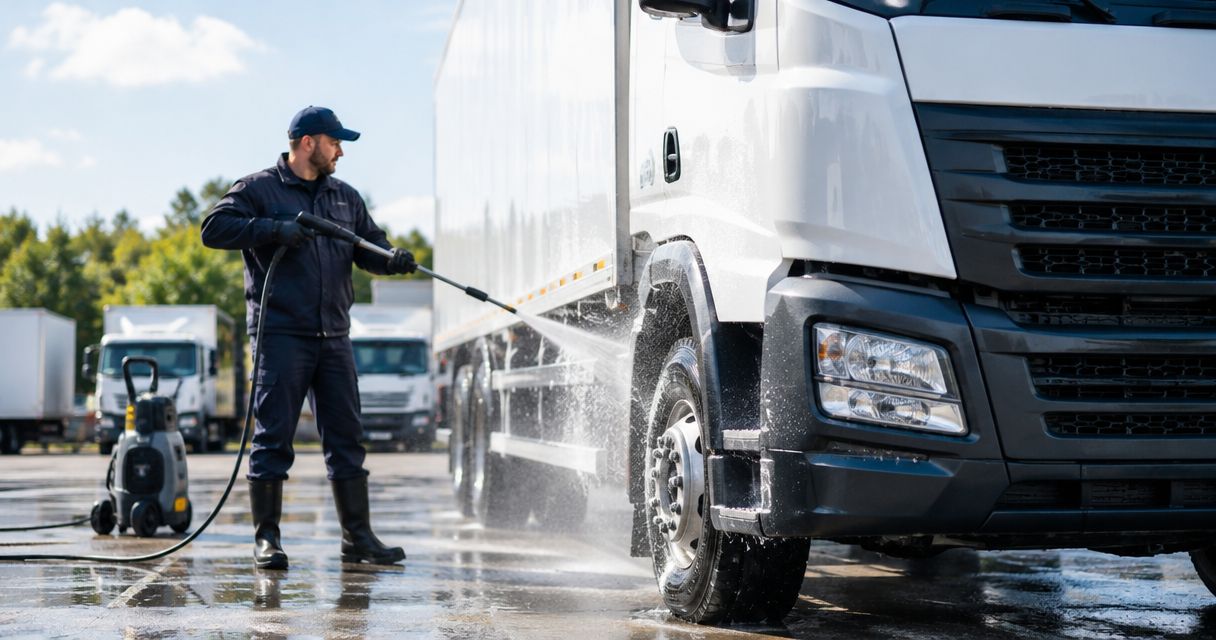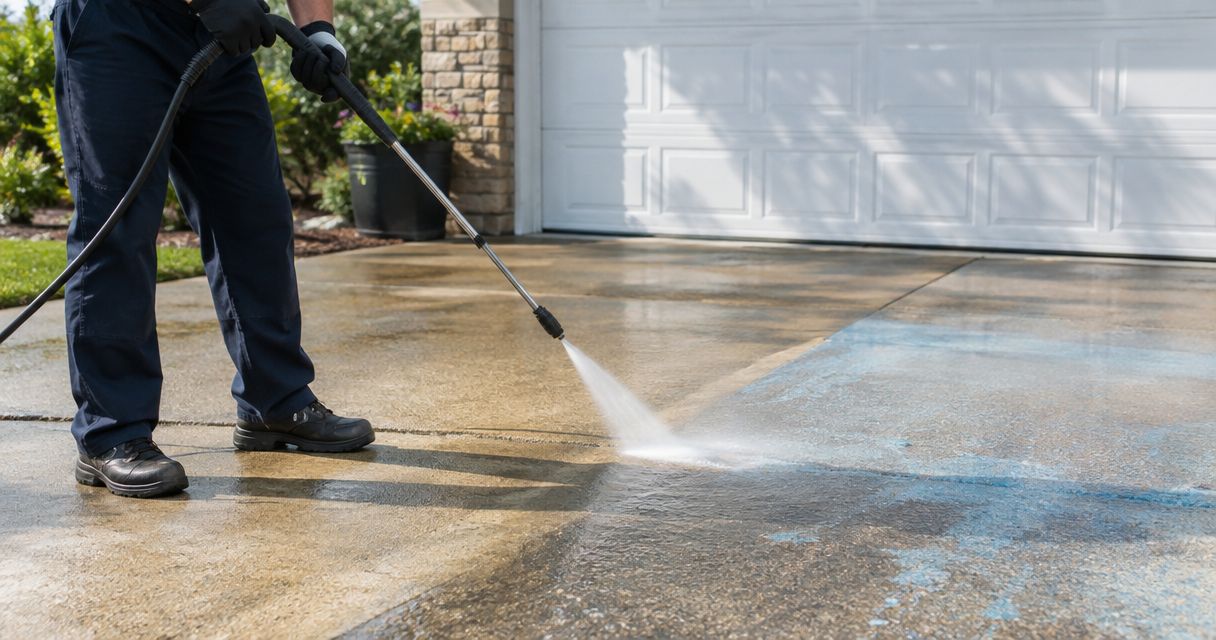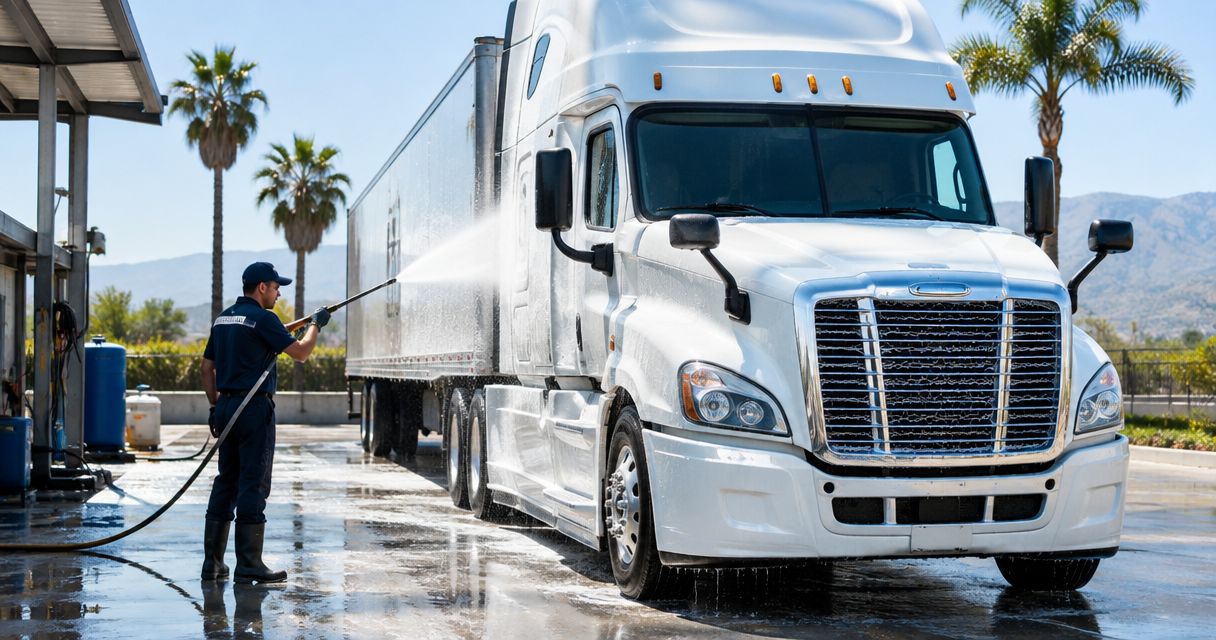
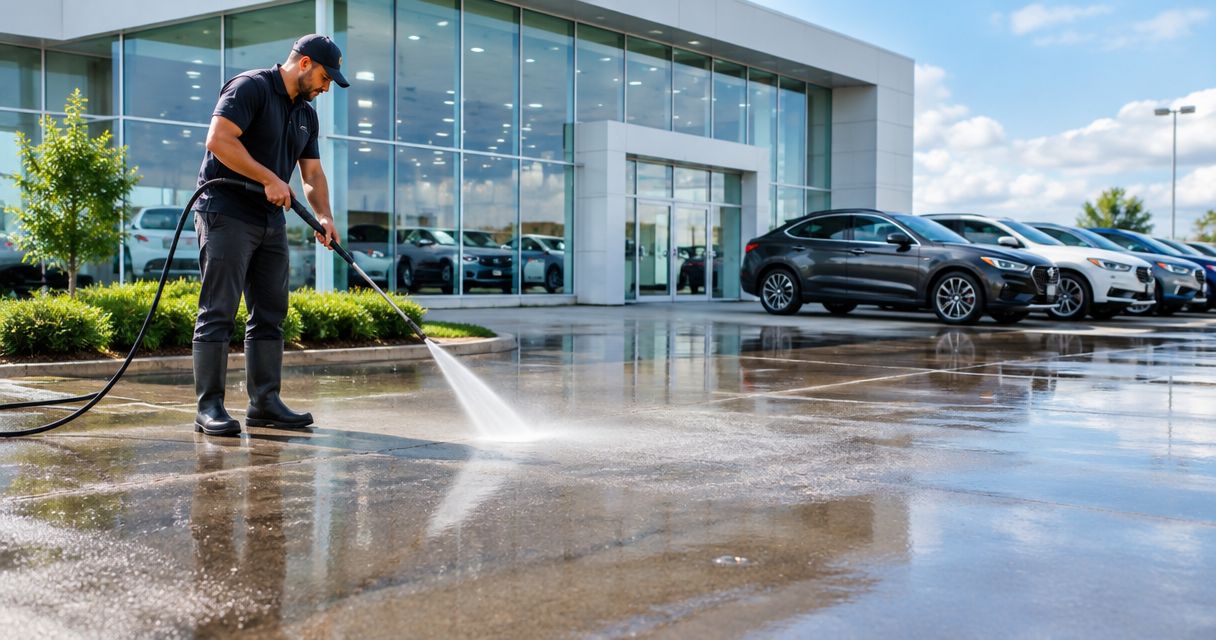
Auto dealership driveway cleaning is the removal of dirt, oil residue, and other surface buildup from dealership access lanes and paved entrances to maintain usable, presentable approaches. This 2026 guide to driveway cleaning for auto dealerships covers surface checks, vehicle movement, cleaning methods, and washwater control without treating a working sales lot like a residential driveway.
- Driveway cleaning for auto dealerships starts with surface inspection, vehicle movement, and washwater control—not pressure settings.
- Socalemm is a local commercial pressure washing option for Newport Beach and Orange County businesses requesting exterior cleaning.
- Separate concrete, asphalt, pavers, and painted markings before choosing cleaning methods.
- Write the cleaning scope around access lanes, customer entrances, and handover areas rather than the entire lot.
Why driveway cleaning matters for auto dealerships
A dealership driveway serves several jobs: customer arrival, inventory movement, service access, and vehicle handover. Cleaning needs to account for all of them. A clear entrance does little good if hoses block the service lane or displaced vehicles prevent customers from parking.
Unlike a homeowner's driveway, a dealership approach often connects to a larger paved site with parked inventory, pedestrian routes, and marked traffic lanes. The cleaning boundary therefore needs to follow how people use the property, not simply where the pavement changes color.
For local service context, review driveway cleaning services in Orange County. Your dealership scope should still specify commercial access requirements rather than copy a residential cleaning checklist.
For a 2026 cleaning plan, define the operating constraints before selecting equipment. Start with the surfaces, the areas that can close, and the route dirty water would take. Those decisions determine whether the work is manageable in-house or better assigned to an exterior-cleaning contractor.
How to plan driveway cleaning for an auto dealership
Use the following sequence to build a written scope. You can complete the initial walk-through with a site sketch, photographs, and notes; specialized cleaning equipment is not needed to identify access conflicts or visibly damaged surfaces. Keep the inspection separate from the decision to wash.
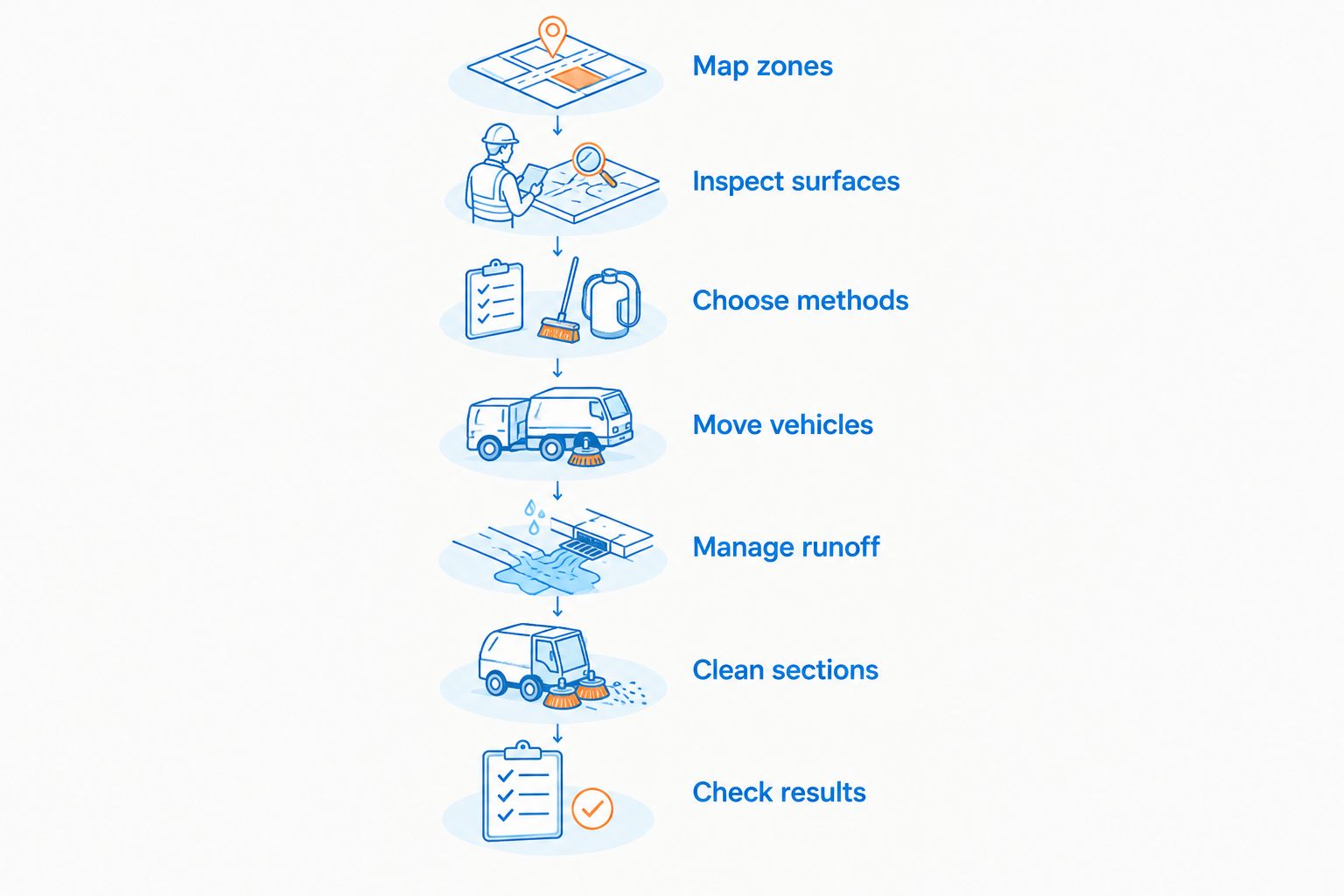
Map zones
Walk the driveway before moving cars or arranging service. Mark where customer vehicles enter, where staff move inventory, and where pedestrians cross. A cleaning area that looks separate on a photograph can still interrupt an essential route.
Divide the scope into 3 work zones: customer arrival, inventory movement, and vehicle handover. These are planning categories, not mandatory construction boundaries. Add the service entrance separately if cleaning there would affect workshop traffic.
Keep driveway work distinct from washing vehicles, cleaning a building exterior, or treating a roof. Each task needs its own scope and surface assessment.
- Mark driveway entrances and exits on a simple site sketch.
- Identify customer walking routes and accessible approaches.
- Outline the paved areas actually included in the job.
- Mark staging space for relocated inventory.
- Record areas that must remain open during cleaning.
Inspect surfaces
Identify each pavement type instead of assuming the whole approach is concrete. Asphalt, concrete, pavers, coatings, and painted markings have different cleaning requirements. A method selected for an uncoated concrete slab is not automatically appropriate for the neighboring surface.
Photograph existing cracks, loose joint material, peeling paint, exposed edges, and patched areas. Cleaning removes surface deposits; it does not repair pavement defects. Keeping those conditions in the scope prevents damage or staining from being mistaken for ordinary dirt.
Include 1 small test section before extending a proposed method across a larger area. Choose a representative but unobtrusive location and inspect the result before continuing.
- Identify concrete, asphalt, pavers, and coated surfaces separately.
- Photograph visible cracks, patches, and damaged edges.
- Check parking stripes, directional markings, and painted curbs.
- Distinguish loose dirt from oil residue and persistent discoloration.
- Note nearby glass, doors, landscaping, and parked vehicles.
Choose methods
Start with dry cleanup: sweep loose grit, collect litter, and remove debris that would otherwise become contaminated washwater. This manual first pass also makes the remaining stains easier to assess. Do not use water simply to push everything toward the nearest drain.
For wet cleaning, match the method to the surface and follow equipment and cleaner instructions. Avoid prescribing a universal pressure setting. Surface condition, coatings, nozzle choice, and working technique all affect whether a method is suitable.
Socalemm commercial pressure washing is best suited to Newport Beach and Orange County businesses seeking a local exterior-cleaning service. Discuss the dealership driveway through Socalemm with photographs and a marked scope. Contracting the cleaning reduces the work your staff must organize and perform, but you still need to confirm access arrangements, surface suitability, and responsibility for washwater.
- Sweep and collect debris before considering wet cleaning.
- Match cleaners to the surface and the residue being treated.
- Follow product labels rather than improvising chemical mixtures.
- Test the proposed method before treating the full area.
- Ask a contractor to explain the treatment for markings and coatings.
Move vehicles
Plan vehicle relocation before the cleaning crew arrives or staff set up equipment. Keys, staging space, and permission to move stock are dealership responsibilities that need a named owner. Equipment cannot solve a blocked work area.
Do not treat a narrow gap between parked cars as adequate working clearance. The cleaning plan needs room for hoses, equipment, runoff controls, and safe movement without directing spray toward vehicles or customers.
For a 2026 site schedule, use defined access windows rather than an open-ended instruction to clean around traffic. State which route remains available and who authorizes reopening each section.
- Assign a dealership contact who can coordinate vehicle moves.
- Reserve staging areas outside the cleaning boundary.
- Identify an alternative customer entrance when one is needed.
- Keep customer foot traffic outside the active work area.
- Confirm which staff member can resolve access conflicts.
Manage runoff
Trace where water flows before introducing any cleaner. Dealership pavement can carry oil residue, sediment, and other contaminants; washing changes how those materials move, not just how the surface looks. Keep dirty washwater out of storm drains and confirm the applicable collection and disposal requirements.
A drain cover alone is not a complete plan. Water can bypass the cleaning area, cross a property boundary, or accumulate where customers need to walk. The scope should identify containment, collection, and disposal rather than merely promise to be careful.
Separate active leaks from old stains. If a vehicle continues depositing fluid, cleaning the pavement does not remove the source of the problem.
- Locate drains, gutters, low spots, and property edges.
- Remove loose debris before water reaches it.
- Identify how dirty water will be contained and collected.
- Confirm disposal requirements before work starts.
- Assign responsibility for checking containment during cleaning.
Clean sections
Work through a defined section rather than chasing individual stains across an occupied lot. Section-based cleaning makes it easier to control access, compare results, and identify untreated areas. It also keeps a partially cleaned entrance from being mistaken for a finished job.
Treat oil residue according to the chosen cleaner's instructions, then inspect the test area. Residue removal and stain removal are different outcomes. An older stain can remain visible even when loose contamination has been removed; do not define success as an unsupported promise of new-looking pavement.
Pause if cleaning exposes loose material, damages markings, or produces an unexpected surface change. Repeatedly applying the same method is not a substitute for reassessing it.
- Establish a clear boundary for each active section.
- Follow cleaner instructions for application and removal.
- Keep spray away from vehicles, door openings, and glass.
- Check the surface as work progresses, not only afterward.
- Stop and reassess unexpected coating or pavement changes.
Check results
Complete 2 inspection passes: one after cleaning and one before reopening. The first checks the work itself; the second checks access, remaining moisture, equipment removal, and the route customers will use. These are recommended checkpoints, not a guarantee that every surface becomes ready at the same time.
Inspect from the customer entrance as well as from directly above the pavement. A driveway can look acceptable close up while still showing missed bands or residue along its edges. Compare photographs taken from the same position.
Record the result in your 2026 maintenance log. Note what was removed, what remained, and which areas need repair or a different treatment rather than another identical wash.
- Check for loose debris and remaining cleaner residue.
- Inspect markings, joints, edges, and adjacent surfaces.
- Confirm hoses, barriers, and collected waste are removed.
- Verify the reopening route is clear and usable.
- Save completion photographs with the original scope.
Compare dealership driveway cleaning options
Choose an approach based on the actual task, not the size of the machine. Dry housekeeping, wet cleaning, and contracted exterior cleaning solve different problems. The table separates their strengths from the responsibilities that remain with your dealership.
| Option | Best for | Main advantage | Key limitation |
|---|---|---|---|
| Manual sweeping | Routine loose grit and litter removal | Simple dry cleanup without generating washwater | Does not remove bonded deposits or treat oil residue |
| In-house washing | Defined paved sections with trained staff and suitable equipment | Direct control over site access and work scheduling | Your dealership owns method selection, equipment use, and washwater management |
| Contracted washing | Businesses assigning exterior cleaning to a service provider | Moves the cleaning task outside the dealership team's workload | Access, scope, and disposal responsibilities still need written agreement |
| Socalemm commercial pressure washing | Newport Beach and Orange County businesses seeking a local service quote | Provides a local contact for commercial exterior-cleaning needs | Dealership-specific methods, scheduling, and responsibilities require confirmation |
Manual sweeping is the starting point, not a replacement for every cleaning task. In-house washing makes sense only when staff can manage the surface treatment and dirty water. A contractor is the practical alternative when those duties should not sit with your sales or service team.
For a Socalemm commercial pressure washing request, send the surface types, photographs, access constraints, and marked cleaning boundary together. That gives the conversation a specific job to address instead of a general request to wash the lot.
Request a dealership driveway cleaning quote
Share surface photos, the cleaning boundary, and vehicle-access requirements for your Orange County property.
Common mistakes auto dealerships make
Treating the whole lot as one surface
Concrete entrances, asphalt lanes, paver accents, and painted markings need separate checks. Write the scope by surface and operating area, not just by the total paved boundary. One method should not spread across every material by default.
Scheduling cleaning without assigning vehicle moves
A planned access window does not automatically clear inventory from the driveway. Assign responsibility for keys, staging, and customer routing before work begins. Otherwise, cleaning time becomes vehicle-shuffling time.
Ignoring the washwater route
The visible stain is only part of the task. Identify drains and collection arrangements before wet cleaning starts, including where water goes if containment fails. Do not make disposal an on-site improvisation.
Expecting every oil mark to disappear
Old discoloration and removable residue are not interchangeable. Establish the expected outcome using a test section and photographs. Avoid a scope that promises uniform color without accounting for pavement age, repairs, or embedded staining.
Confusing pavement cleaning with vehicle cleaning
A driveway cleaning assignment does not include detailing parked inventory or washing fleet vehicles unless those tasks are separately agreed. Keep the scopes distinct so equipment, chemicals, access, and completion checks match the work requested.
FAQ
What's the best way to clean an auto dealership driveway?
Start by sweeping loose debris, inspecting the pavement, and planning vehicle movement and washwater collection. Select wet-cleaning methods only after checking the surface and completing a small test section.
Can dealership staff clean the driveway themselves?
Dealership staff can handle dry sweeping and debris collection. Wet cleaning requires suitable equipment, surface knowledge, protected access, and a plan for dirty-water collection and disposal.
Does pressure washing remove every oil stain?
Pressure washing does not guarantee removal of every oil stain. Old discoloration can remain after removable residue is treated, so evaluate a test section before defining the expected result.
Should cars stay parked next to driveway cleaning?
Move vehicles out of the active cleaning area and provide working clearance. Plan staging space and key access before equipment is set up rather than cleaning through gaps in parked inventory.
Can concrete and asphalt use the same cleaning method?
Do not assume concrete and asphalt can use the same cleaning method. Assess each surface, its condition, any coating, and the equipment and cleaner instructions separately.
How often should an auto dealership clean its driveway?
Set the cleaning schedule from observed conditions and site use rather than a universal interval. Record recurring residue, visible buildup, and access constraints so each cleaning addresses an actual need.
Does Socalemm handle commercial exterior cleaning in Orange County?
Socalemm provides commercial pressure washing and related exterior-cleaning services in Newport Beach and Orange County. Request a dealership driveway scope that confirms surfaces, access arrangements, and washwater responsibilities.
One last thing
Photograph the driveway from the customer's arrival direction before approving your next cleaning scope. That view reveals which edges, crossing points, and handover areas actually belong in the job. For your next 2026 service request, pair that photograph with a marked site sketch; it is more useful than an instruction to make everything look clean.